Table of Contents
Introduction to Global Shipping Containers
Global shipping containers are essential to the modern economy, facilitating the movement of goods across international borders. These standardized metal boxes have revolutionized logistics and supply chain management, enabling businesses to transport products efficiently and cost-effectively. This article explores the various aspects of global shipping containers, including their types, significance in trade, challenges faced in the industry, and future trends.
Understanding Shipping Containers
What Are Shipping Containers?
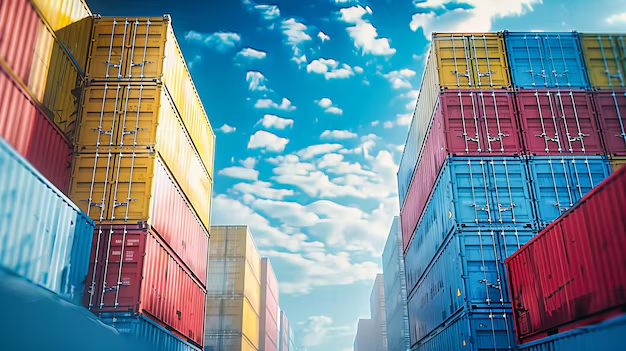
Shipping containers are large, standardized metal boxes used to transport goods by sea, land, and rail. They come in various sizes, with the most common being 20-foot and 40-foot containers. These containers are designed to be easily loaded onto ships, trucks, and trains, allowing for seamless transfer between different modes of transportation.
Types of Shipping Containers
Shipping containers are available in several types, each designed for specific cargo needs. Some of the most common types include:
- Dry Containers: These are the standard containers used for transporting non-perishable goods. They are fully enclosed and provide protection against the elements.
- Refrigerated Containers (Reefers): These containers are equipped with temperature control systems, making them ideal for transporting perishable goods such as food and pharmaceuticals.
- Open Top Containers: These containers have no roof, allowing for the transport of oversized cargo that cannot fit through standard container doors.
- Flat Rack Containers: These are used for heavy or bulky items that need to be loaded from the top or sides.
- Tank Containers: Designed for transporting liquids, these containers are built to hold bulk liquids safely.
The Importance of Shipping Containers in Global Trade
Facilitating International Trade
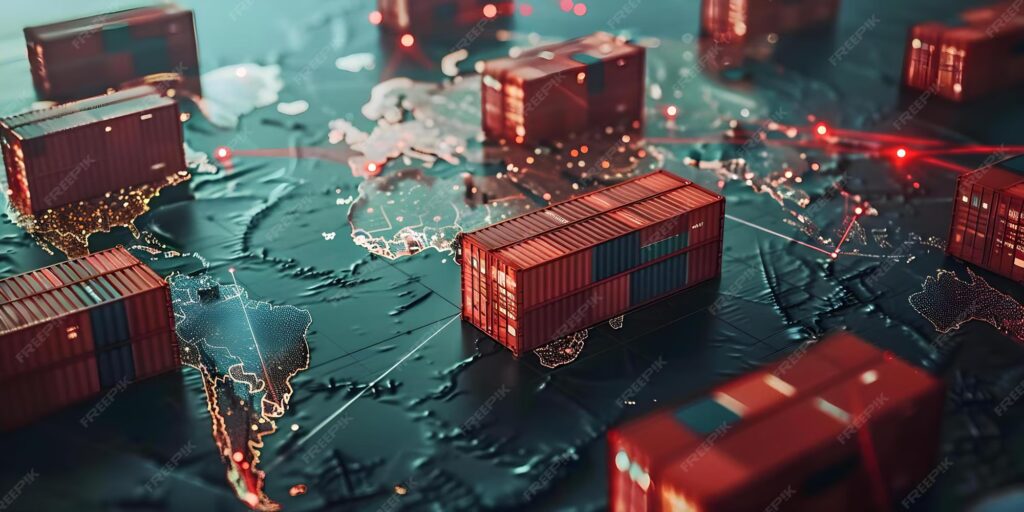
Shipping containers have transformed global trade by standardizing the transportation process. Before their introduction, goods were often loaded and unloaded manually, leading to inefficiencies and increased costs. The use of containers has streamlined this process, allowing for faster loading and unloading at ports.
Cost-Effectiveness
The standardization of shipping containers has led to significant cost savings in logistics. By using containers, shipping companies can maximize the use of space on ships, reducing the cost per unit of cargo transported. This efficiency has made it more affordable for businesses to engage in international trade.
Security and Protection
Shipping containers provide a secure environment for transporting goods. Their robust construction protects cargo from damage during transit, reducing the risk of loss. Additionally, containers can be sealed to prevent tampering, ensuring the integrity of the goods being transported.
Challenges Facing the Shipping Container Industry
Container Shortages
One of the most pressing issues facing the shipping container industry is the shortage of containers. This shortage has been exacerbated by the COVID-19 pandemic, which disrupted manufacturing and logistics operations worldwide. As demand for goods surged during the pandemic, the supply of containers could not keep pace, leading to delays and increased shipping costs.
Port Congestion
Port congestion is another significant challenge in the shipping container industry. Major ports around the world have experienced delays due to increased cargo volumes and labor shortages. This congestion can lead to longer wait times for ships, further exacerbating the container shortage.
Environmental Concerns
The shipping industry is under increasing pressure to reduce its environmental impact. Shipping containers contribute to carbon emissions, and the industry is exploring ways to make container transport more sustainable. This includes investing in cleaner technologies and optimizing shipping routes to reduce fuel consumption.
Future Trends in Global Shipping Containers
Technological Advancements
The shipping container industry is embracing technological advancements to improve efficiency and reduce costs. Innovations such as blockchain technology are being used to enhance transparency and traceability in the supply chain. Additionally, the use of IoT devices in containers allows for real-time monitoring of cargo conditions, improving safety and reducing losses.
Sustainable Practices
As environmental concerns continue to grow, the shipping industry is focusing on sustainability. This includes the development of eco-friendly containers made from recyclable materials and the adoption of alternative fuels to power ships. Companies are also exploring ways to reduce waste and improve energy efficiency in their operations.
Increased Automation
Automation is set to play a significant role in the future of the shipping container industry. Automated ports and container handling systems can improve efficiency and reduce labor costs. As technology continues to advance, we can expect to see more automated solutions implemented in the shipping process.
Conclusion
Global shipping containers are a vital component of international trade, enabling the efficient movement of goods across borders. While the industry faces challenges such as container shortages and environmental concerns, technological advancements and sustainable practices offer promising solutions for the future. As the global economy continues to evolve, shipping containers will remain at the forefront of logistics and supply chain management.
As you explore the vital role of global shipping containers in international trade, seize the opportunity to enhance your logistics solutions with innovative products available at LooperBuy—check it out now! Visit https://looperbuy.com/.
Related Questions & Answers
· What are the different types of shipping containers used in global trade? The main types of shipping containers include dry containers, refrigerated containers, open top containers, flat rack containers, and tank containers, each designed for specific cargo needs.
· How do shipping containers facilitate international trade? Shipping containers standardize the transportation process, allowing for faster loading and unloading, reducing costs, and providing security for goods during transit.
· What challenges does the shipping container industry currently face? The industry faces challenges such as container shortages, port congestion, and increasing pressure to reduce environmental impact.
· What technological advancements are being implemented in the shipping container industry? Technological advancements include the use of blockchain for transparency, IoT devices for real-time monitoring, and automation in ports and container handling.
· How is the shipping industry addressing environmental concerns? The industry is focusing on sustainability by developing eco-friendly containers, adopting alternative fuels, and optimizing shipping routes to reduce carbon emissions.
Hot Tags: Shipping Containers; Global Trade; Logistics; Container Shortages; Port Congestion; Environmental Concerns; Technological Advancements; Sustainable Practices; Automation