As a B2B sourcing and logistics strategist with over 15 years of experience helping global brand owners, wholesalers, and manufacturers move products from China to markets worldwide, I’ve seen one question surface constantly from importers tracking their containers: “What is the meaning of in transit?”
For a B2C shopper, “In Transit” is reassuring—it means the package is coming. For a B2B Supply Chain Manager, however, “In Transit” is often a “Black Box” status that hides delays, rollovers, and accruing costs[reference:0]. In 2026, understanding what is the meaning of in transit for your business is essential for controlling inventory, managing customer expectations, and protecting your profit margins.
In this guide, I’ll explain the true meaning of in transit for B2B importers, the hidden costs of vague tracking, and how LooperBuy gives you real-time visibility from Chinese factory to your warehouse door.
Table of Contents
What Is the Meaning of In Transit? A Clear Definition for B2B Importers
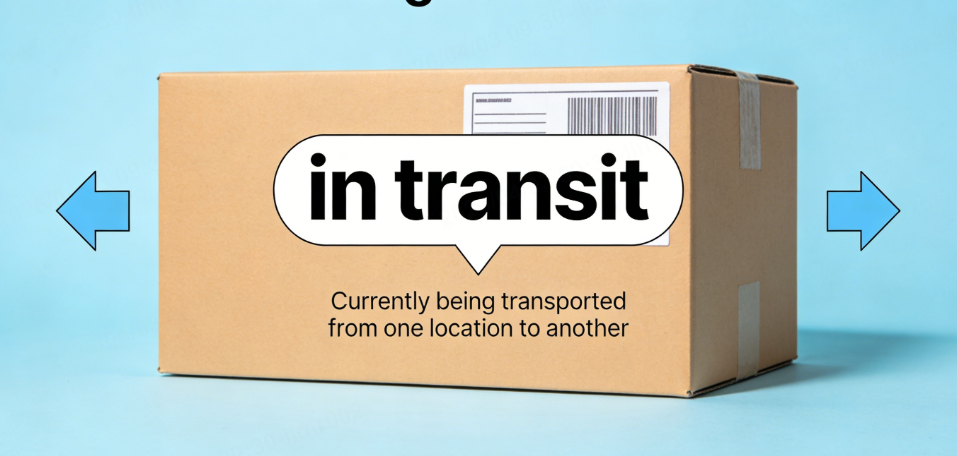
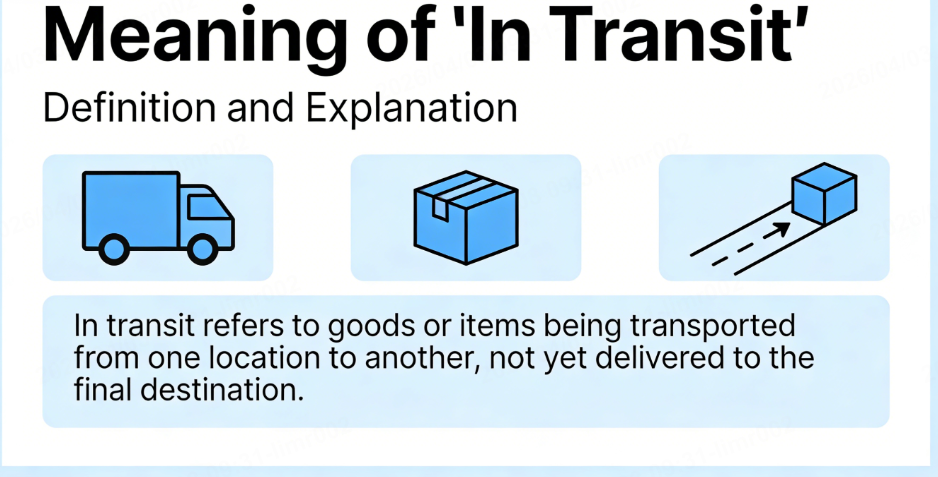
Let’s start with the basics. In the simplest terms, “In Transit” means a package or shipment is anywhere en route from its origin to its final destination[reference:1]. A carrier applies this status when a delivery is in progress, not yet covered by a more specific status like “Out for Delivery”[reference:2].
However, the meaning of in transit varies dramatically depending on whether you are a consumer tracking a parcel or a B2B importer tracking a full container:
Aspect
B2C (Parcel)
B2B (Container)
Update frequency
Every 4 hours (scan-based)
Every 24–48 hours (or longer)
Data source
Single unified closed network
Fragmented (truck → port → ship)
“In Transit” means
Physically moving on a truck/plane
Could be moving, or sitting at a port
Delay alerts
Instant push notification
Often retroactive (after the fact)
Granularity
High (package-level)
Low (Bill of Lading level)
For many carriers, “In Transit” serves as a catch-all label. Your shipment may actually be: waiting at a consolidation warehouse, sitting in an export cage for airline uplift, inside a sealed bag with hundreds of other parcels, or even already in the destination country—but not scanned into the next network[reference:3].
Expert note: The meaning of in transit for ocean freight is especially problematic. Standard carrier tracking systems were designed to trigger invoices, not to help you manage inventory[reference:4].
In Transit vs Out for Delivery: What’s the Difference?
One of the most common confusions is between “In Transit” and “Out for Delivery.” Here’s the simple distinction:
Status
Meaning
In Transit
The shipment is anywhere on the way from origin to destination—moving through the carrier’s logistics network[reference:5]
Out for Delivery
The package has been loaded on a local delivery vehicle and is moving toward the recipient’s address—the final stage[reference:6]
In most cases, you’ll receive an “In Transit” status update before you receive an “Out for Delivery” update[reference:7]. If a package is “Out for Delivery,” it is typically expected to be delivered the same day if there are no unforeseen delays[reference:8].
Key takeaway: “In Transit” is a broad umbrella status. “Out for Delivery” is the final mile signal. Don’t confuse them—especially when communicating with your own customers.
The 5 Hidden Reasons “In Transit” Statuses Lie to You
Understanding what is the meaning of in transit requires knowing why tracking often freezes. Based on industry data, here are the five most common reasons:
Reason
Why It Happens
What It Means for You
Consolidation waiting
Parcels wait to travel as a batch to fill containers
Your goods arrive early but sit idle for days[reference:9]
Handoff gaps
One carrier ends, the next hasn’t started
Systems don’t sync fast—tracking freezes between scans[reference:10]
Customs processing
A pipeline of data review, risk screening, and inspection
Each step can queue up; one delay slows everything[reference:11]
Technology lag (EDI 315)
Carriers use 1980s EDI standards, batching updates daily
48-hour-old data means you think cargo is moving when it’s actually sitting at port[reference:12]
Transshipment rollovers
Cargo misses scheduled vessel due to congestion
Hidden stop adds days or weeks without tracking updates[reference:13]
Real example: A LooperBuy client once thought their container was “In Transit” across the Pacific when it had actually been sitting in a transshipment port for 12 days. The carrier’s EDI system never updated. They lost $18,000 in demurrage fees.
New Section: The Financial Impact of “In Transit” Blind Spots
When you don’t understand what is the meaning of in transit beyond the dictionary definition, you risk significant financial losses. Here’s a real breakdown:
Cost Category
Typical Impact
How “In Transit” Blind Spots Hide It
Demurrage fees
$200–$500 per day after free time expires
You don’t know cargo arrived—fees accumulate silently[reference:14]
Lost sales (stock-outs)
5–15% of revenue per delayed week
“In Transit” doesn’t distinguish between moving and stuck
Detention charges
$100–$300 per day for container use
You return container late because you didn’t know it was ready
Shadow inventory
Stock appears “In Transit” but is actually delayed or misplaced
Creates false availability, leading to over-ordering and markdowns[reference:15]
According to 2026 logistics data, global on-time performance for container shipping has been volatile. In January 2026, only 29% of shipments arrived on time, down from 34-37% in Q2 and Q3 2025[reference:16]. Average delays increased from 3.7 days to 4.2 days at berth arrival[reference:17]. When nearly three-quarters of shipments are late, vague “In Transit” statuses become a major business risk.
Expert insight: “Shadow inventory”—stock marked as ‘In Transit’ but actually delayed, misplaced, or sitting idle—is creating hidden risks in supply chains[reference:18]. Many teams show delayed goods as ‘In Transit’ even while incurring detention fees[reference:19].
How LooperBuy Transforms “In Transit” from a Black Box to a Transparent Dashboard
At LooperBuy, we’ve built our one-stop B2B sourcing platform to eliminate the guesswork from what is the meaning of in transit for your business. When you source from China through LooperBuy, you get:
Real-time vessel tracking via AIS satellite data—not batch EDI updates
40+ milestone alerts including: factory pick-up, customs clearance, vessel departure, transshipment events, arrival at destination port, and final delivery
Proactive delay notifications that tell you why your shipment is delayed, not just that it’s “In Transit”
Automated demurrage monitoring that warns you before free time expires
Unified dashboard showing every shipment from supplier to warehouse—no logging into multiple carrier portals
Client result: A US-based electronics importer reduced their “In Transit” uncertainty by 85% after switching to LooperBuy. They eliminated $47,000 in surprise demurrage fees in their first year.
Call to Action: Stop Guessing – Start Tracking for Real
You don’t have to accept vague “In Transit” statuses as the best you can get. With LooperBuy, you gain end-to-end visibility from factory ETD to final delivery ETA—all in one dashboard.
Ready to know exactly where your China-sourced goods are at every moment? [Sign up for LooperBuy] – free account, transparent pricing, and real-time tracking built in.
Frequently Asked Questions (FAQ)
1. What is the meaning of in transit in shipping?
“In Transit” means a shipment is anywhere on the way from its origin to its final destination. It’s a broad status that covers everything from initial pickup to final sortation before local delivery[reference:20].
2. Does “In Transit” mean my package will arrive today?
Not necessarily. “In Transit” indicates movement through the carrier’s network—your package could still be days away. “Out for Delivery” is the status that signals same-day arrival in most cases[reference:21].
3. Why does my shipment stay “In Transit” for weeks?
Common reasons include: consolidation waiting (batch travel), handoff gaps between carriers, customs processing queues, technology lag (EDI batch updates), and transshipment rollovers at congested ports[reference:22].
4. Can “In Transit” mean my package is lost?
Rarely. Most long “In Transit” periods follow predictable logistics rules, not “lost package” drama[reference:23]. However, if tracking hasn’t updated for 7–10 days beyond the expected delivery window, contact your carrier to initiate a trace.
5. How does LooperBuy improve “In Transit” visibility?
LooperBuy provides AIS satellite tracking (not just batch EDI), 40+ milestone alerts, proactive delay notifications, automated demurrage monitoring, and a unified dashboard. You know exactly where your goods are—and why.
6. What’s the difference between “In Transit” and “Out for Delivery”?
“In Transit” covers the entire journey from origin to destination. “Out for Delivery” is the final stage—your package has been loaded on a local delivery vehicle and is heading to your address[reference:24].
Article Summary
What is the meaning of in transit? A B2B expert’s 2026 guide: definition, vs “out for delivery,” 5 hidden reasons tracking fails, financial impacts (demurrage, shadow inventory), and how LooperBuy delivers real visibility from China.
Hot Tags
in transit meaning, what does in transit mean, in transit vs out for delivery, shipment tracking explained, B2B logistics visibility, ocean freight tracking, in transit delays, demurrage fees prevention, LooperBuy real time tracking, China import shipping status, supply chain visibility 2026, in transit black box problem, cargo tracking solutions, EDI 315 ocean freight, shadow inventory risk
References
nShift. (2026). Normalized status names – In Transit definition. Retrieved from https://helpcenter.nshift.com/hc/en-us/articles/8187489923100-Normalized-status-names
Postal & Parcel. (2026). Global Shipping: 7 Shocking “In Transit” Delays. Retrieved from https://www.postalparcel.com/global-shipping-7-reasons-in-transit-delays/
Shiprocket Quick. (2025). Out for Delivery Meaning: What It Is and Why Delays Still Happen. Retrieved from https://www.shiprocket.in/blog/out-for-delivery/
Packsend. (2025). In Transit Meaning: What is It and Why It’s Important. Retrieved from https://www.packsend.com.au/blog/in-transit-meaning/
Routific. (2023). What Does “Out for Delivery” Actually Mean? Retrieved from https://www.routific.com/blog/what-does-out-for-delivery-mean
Air Cargo Week. (2026). The Hidden Cost of Shadow Inventory. Retrieved from https://aircargoweek.com/the-hidden-cost-of-shadow-inventory/
Xeneta. (2026). Schedule Reliability Scorecard – January 2026. Retrieved from https://www.worldports.org/xeneta-schedule-reliability-scorecard-january-2026-monthly-update/
Sea-Intelligence. (2026). Global container schedule reliability – December 2025. Retrieved from https://asiacargonews.com/en/news/detail?id=11721
LooperBuy. (2026). Supplies Business: A B2B Expert’s Guide to Sourcing Chinese Goods Globally with LooperBuy. Retrieved from https://blog.looperbuy.com/supplies-business-a-b2b-experts-guide-to-sourcing-chinese-goods-globally-with-looperbuy.html
Fareye. (2025). Shipment Visibility: Key Components and Implementation Tips. Retrieved from https://fareye.com/ph/en/resources/blogs/shipment-visibility
Bertling Logistics. (2026). Why is shipment visibility important for my business? Retrieved from https://www.bertling.com/news-pool/blog/shipment-visibility/


-700x490.jpeg)