In today’s rapidly evolving global marketplace, businesses face immense pressure to balance speed, cost, and reliability. Whether you are a brand, wholesaler, or manufacturer sourcing products globally, the decision to compare air vs ocean freight for supply chain efficiency is more than a simple logistics choice—it is a fundamental strategic move that directly impacts your bottom line.
As we navigate 2026, the logistics landscape is defined by “structural change” rather than single-event shocks theloadstar. Achieving competitive advantage requires proactive planning, digital agility, and a clear understanding of when to leverage specific transport modes.
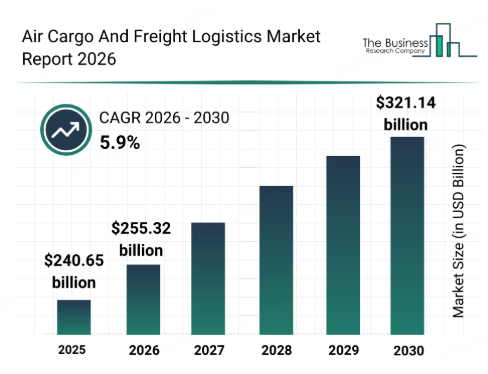
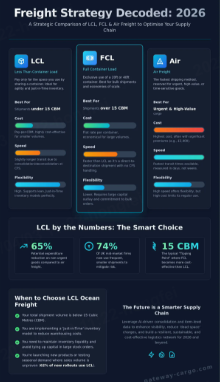
Table of Contents
Understanding the Fundamentals: Air vs. Ocean Freight
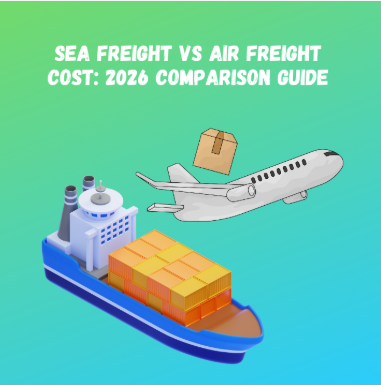
When choosing between air and ocean transport, the core trade-off remains the same: speed versus cost. However, in the current market, these boundaries are becoming increasingly nuanced.
Ocean Freight: The Foundation of Global Trade
Ocean freight remains the most cost-effective solution for bulk shipments and non-urgent inventory freightamigo.
- Primary Benefit: Significantly lower costs per unit, especially for FCL (Full Container Load) shipments freightamigo.
- Ideal For: Large, heavy, or non-perishable goods where transit time is less critical.
- Sustainability: It is notably more environmentally friendly, producing lower greenhouse gas emissions per ton-mile compared to air transport linkedin.
Air Freight: The Speed-to-Market Accelerator
Air freight is the strategic choice for businesses prioritizing rapid inventory turnover and reliability for time-sensitive cargo freightamigo.
- Primary Benefit: Unmatched speed and precision, essential for high-value goods or meeting tight market deadlines linkedin.
- Ideal For: High-value items, perishables, electronics, or emergency restocks to prevent supply chain disruptions freightamigo.
- Security: Air cargo generally offers tighter security and lower risk of cargo damage compared to sea transport freightamigo.
Comparative Snapshot: Strategic Decision Matrix
| Feature | Ocean Freight | Air Freight |
|---|---|---|
| Primary Driver | Cost Efficiency freightamigo | Speed & Reliability linkedin |
| Transit Time | Slow (Weeks/Months) freightamigo | Fast (Days) freightamigo |
| Cost | Low freightamigo | High freightamigo |
| Best Cargo | Bulky, Heavy, Stable freightamigo | High-value, Urgent, Fragile linkedin |
| Environmental Impact | Lower Emissions linkedin | Higher Emissions linkedin |
2026 Industry Landscape: Why Proactive Planning Matters
The logistics environment of 2026 demands that companies move away from legacy assumptions transimpact.
- Ocean Freight Dynamics: Shippers are in a strong position for contract rate negotiations supplychaindive. However, structural overcapacity at sea persists, and reliability remains fragile when networks run “hot” icontainers, forto.
- Air Freight Complexity: While capacity is generally ample, shippers must navigate operational volatility caused by trade policies, geopolitics, and export controls supplychaindive. Air freight is no longer just a “panic move”—it has become a planned “control lever” for supply chain resilience icontainers.
Deep Dive: Calculating the True Cost of Logistics
When comparing air vs ocean freight for supply chain management, many decision-makers mistakenly focus solely on the “port-to-port” rate. To make an informed decision, you must calculate the Total Landed Cost.
1. Inventory Carrying Costs
When goods sit on a vessel for 30–45 days, capital is tied up. If interest rates remain elevated, the cost of financing that idle inventory can erode the savings gained from cheaper ocean rates. Air freight, by contrast, frees up working capital by accelerating the cash-to-cash cycle.
2. Warehousing and Buffer Stock
Ocean freight requires more sophisticated demand planning. Because of the long lead times, companies must hold larger “safety stock” in regional warehouses to hedge against transit delays. This increases real estate and labor costs. Air freight allows for a “Just-in-Time” (JIT) model, significantly reducing the need for massive local inventory footprints.
3. Risk Mitigation Premiums
In 2026, geopolitical instability and climate-related disruptions are regular occurrences. Shippers are increasingly adding a “risk premium” to their logistics cost modeling. Air freight is often used as an insurance policy—a faster, though more expensive, alternative to bypass congested ports or restricted maritime lanes.
Innovative Strategies: Multimodal & Beyond
To stay competitive, top-performing supply chains are adopting more flexible models.
- Integrated Sea-Air Services: Many businesses are bridging the gap by pairing cost-effective sea routes with faster transport once goods reach regional hubs pamcargo. This allows for reliable coverage without the premium cost of full air transportation pamcargo.
- Digitalization and Visibility: Leveraging business intelligence software to track landed costs—including accessorials, fuel surcharges, and compliance fees—is critical for modern sourcing transimpact. Using AI for freight forecasting is now a standard practice for nearly half of North American shippers descartes.
- Lane Diversification: Don’t rely on a single route or mode. Proactive shippers now build flexibility by diversifying carrier mixes and remaining ready to shift between modes as market conditions fluctuate chrobinson.
Expert Insight: The LooperBuy Perspective
For businesses sourcing from China, the complexity of managing export documentation, quality control, and freight consolidation can be overwhelming. The advantage of a platform like LooperBuy is the aggregation of these services into a single, cohesive workflow. Instead of juggling multiple freight forwarders, platforms that integrate the sourcing process with logistics allow businesses to see freight options in real-time, side-by-side with product costs.
Actionable Steps for Sourcing Managers:
- Analyze SKU velocity: Identify high-turnover items that require air freight consistency.
- Standardize packaging: Optimize product dimensions to minimize volumetric weight, which significantly lowers air freight costs.
- Forecast by seasonality: Plan ocean shipments for base-load demand 90 days in advance, while keeping a smaller “agile” budget for air-freight restocks.
- Partner for scale: Use consolidated sourcing platforms to access volume-based freight discounts that individual mid-sized businesses might not secure on their own.
Conclusion: Streamline Your Sourcing with LooperBuy
Choosing the right shipping method is a critical balancing act. Whether you need the cost advantages of ocean freight or the speed of air transport, LooperBuy is your strategic partner. Our One-Stop B2B Sourcing Platform simplifies global procurement, giving you direct access to Chinese goods with optimized, flexible logistics solutions tailored to your business needs.
Take control of your supply chain today. Visit LooperBuy to explore our comprehensive sourcing services and streamline your international trade operations.
Frequently Asked Questions (FAQ)
- Q: When should I choose air freight over ocean freight?
A: Choose air freight for urgent shipments, high-value electronics, or when the cost of a stockout exceeds the premium price of air transport linkedin, freightamigo. - Q: Is ocean freight always the cheaper option?
A: Generally, yes, for bulk and heavy cargo freightamigo. However, you must consider the “total landed cost,” including inventory holding costs, insurance, and potential warehousing fees icontainers, transimpact. - Q: What is a sea-air service?
A: It is a hybrid model that utilizes ocean freight for the primary leg and air freight for the final, faster delivery to a regional hub, offering a balance of cost and speed pamcargo. - Q: How are 2026 freight rates looking?
A: While ocean shippers have better negotiation power due to capacity, air rates remain sensitive to geopolitical disruptions and volatile trade lane conditions supplychaindive, icontainers. - Q: How can I make my supply chain more resilient in 2026?
A: Adopt digital tools for real-time visibility, diversify your carrier and transport mode options, and perform regular scenario planning to proactively manage trade risks icontainers, transimpact, descartes.
References
- Supply Chain Dive: 2026 Logistics Outlook
- GetTransport: Ocean vs Air Freight Trends 2026
- iContainers: Ocean & Air Freight Market Outlook 2026
- DHL Logistics of Things: Ocean/Air Divergence 2026
- Forto: Q1 2026 Logistics Outlook
- The Loadstar: Freight & Supply Chains 2026
- Freightos: 2026 Ocean & Air Forecast
- LinkedIn: Why Use Air Freight in 2026
- YouTube: Q1 2026 Market Update
- PAM Cargo: 2026 Multimodal Guide
- FreightAmigo: Ocean vs Air Pros & Cons
- UPS: 2026 Global Freight Trends
- TransImpact: 2026 Supply Chain Trends
- CH Robinson: 2026 Rate Forecast
- Air Cargo Week: Navigating 2026
- Descartes: 2026 Logistics Trends
- CH Robinson: Trade Trends 2026
- LinkedIn: Sea vs Air Sustainability
Article Description:
This authoritative guide helps global businesses compare air vs ocean freight for supply chain optimization in 2026. It balances cost, speed, and reliability, incorporating 2026 market trends, landed cost analysis, and multimodal strategies. LooperBuy is presented as the essential one-stop partner for streamlined, efficient cross-border sourcing and logistics management.
Hot tags: Global B2B sourcing platform, air vs ocean freight, supply chain optimization, international logistics solutions, total landed cost, wholesale import from China, cross-border procurement, multimodal shipping strategies, freight forwarding services, B2B inventory management.