For years, the Shopify Wholesale Channel served as a cornerstone for many businesses looking to manage their wholesale operations directly within the Shopify ecosystem. However, with Shopify’s strategic shift towards its integrated “B2B on Shopify” solution, the landscape for wholesalers has fundamentally changed. As businesses transition, the focus must shift from simply finding a replacement to optimizing for scale, efficiency, and customer experience.
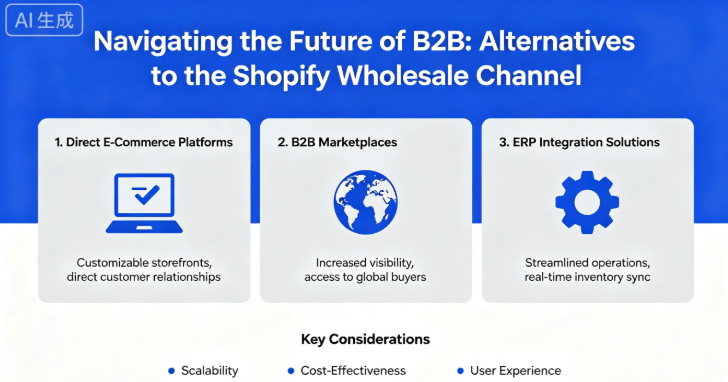
Whether you are a global brand, a regional wholesaler, or a manufacturer, the transition is not just an IT project; it is an opportunity to re-engineer how you do business. This guide analyzes your strategic options and highlights how modern, flexible platforms—including specialized B2B sourcing solutions—are enabling companies to thrive in this new environment.
Table of Contents
Understanding the Shift: Why Shopify Wholesale Channel Changed
The deprecation of the legacy Shopify Wholesale Channel marked a turning point in B2B eCommerce. Shopify’s transition towards “B2B on Shopify” aims to unify B2C and B2B experiences under a single storefront. While this offers simplicity for some, it necessitates a critical assessment for others:
- Unified Complexity: Managing B2B and B2C on a single site can sometimes lead to conflicts in user experience, pricing visibility, and catalog management.
- Platform Limitations: While “B2B on Shopify” provides core features like price lists and company profiles, it may lack the specialized, high-volume features required by complex global supply chains.
- The “One-Stop” Imperative: Global sourcing platforms, such as LooperBuy, are filling the gap by providing seamless, end-to-end B2B sourcing—combining a vast catalog of Chinese manufacturing goods with efficient, low-cost global logistics.
Evaluating Your B2B eCommerce Options
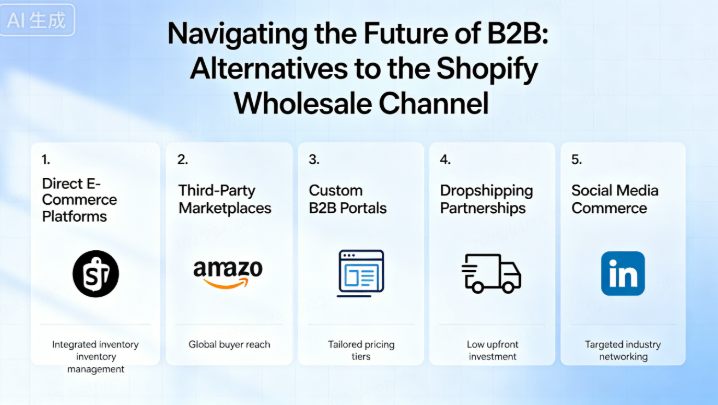
When replacing legacy wholesale setups, businesses generally fall into two categories: those needing native Shopify integration and those needing high-performance, specialized sourcing capabilities.
| Feature | Shopify B2B (Integrated) | Third-Party Specialized Solutions | LooperBuy (Sourcing-First) |
|---|---|---|---|
| Primary Use | Internal wholesale management | Enhanced B2B features/UX | Global sourcing & B2B procurement |
| Integration | Native (Shopify Plus) | API-based (High Flexibility) | Direct sourcing to business users |
| Complexity | Moderate (Requires Plus) | High (Often requires dev) | Low (Plug-and-play sourcing) |
| Best For | Established Shopify brands | Scaling B2B-heavy businesses | Brands/Wholesalers sourcing globally |
The New Standard: Efficiency in Global Sourcing
In the current volatile global economy, speed-to-market and cost optimization are paramount. For businesses relying on Chinese manufacturing, the traditional model of fragmented agents and unreliable logistics is becoming obsolete.
The Advantages of Integrated Sourcing Platforms
A platform like LooperBuy transforms the B2B procurement process into a consumer-like experience. Key benefits include:
- Broad Product Diversity: Access to a vast range of goods across categories, directly from manufacturers.
- Optimized Logistics: By leveraging specialized B2B logistics networks, platforms can significantly lower shipping costs and improve delivery timelines compared to fragmented, manual shipping processes.
- Streamlined B2B Workflows: Direct purchasing portals allow for faster order processing, bulk discounts, and transparent communication, mirroring the efficiency of modern B2C platforms while retaining B2B necessities like payment terms.
Strategic Implementation: A Step-by-Step Approach
Transitioning your Shopify wholesale channel or adopting a new B2B sourcing platform requires a structured approach to maintain business continuity.
- Audit Your Current B2B Needs: Analyze current order volume, the number of SKU-specific price lists, and the level of ERP/CRM integration required.
- Define the Customer Journey: Determine if your wholesale customers need a self-service portal (for simple reordering) or a guided sales experience (for complex, negotiated B2B deals).
- Select the Right Technology Partner: If your priority is integration with existing Shopify infrastructure, explore apps like SparkLayer. If your primary goal is expanding product offerings and reducing procurement costs, look at sourcing platforms like LooperBuy.
- Data Migration & Testing: Ensure customer data, price lists, and historical order data are mapped accurately. Conduct rigorous testing of the checkout process, especially regarding tax settings and shipping calculations.
Expert Insights: Scaling in a Changing Market
“The transition away from legacy wholesale channels is not a hurdle; it is a catalyst for modernization,” notes a leading industry expert. “Brands that view their B2B platform solely as a digital catalog are missing the mark. The leaders are those treating B2B as a revenue-generating channel, focusing on self-service, rapid deployment, and integrated global supply chains.”
A recurring theme among successful wholesalers is the reduction of administrative overhead. By moving to platforms that automate invoicing, order tracking, and inventory management, companies have reported significant growth without increasing headcount.
References
- [1] Shopify B2B Solutions Overview
- [2] SparkLayer: The Sunsetting of the Shopify Wholesale Channel
- [3] Shopify Help Center: Wholesale Channel Removal
Frequently Asked Questions (FAQ)
1. What happened to the Shopify Wholesale Channel?
Shopify has deprecated the legacy Wholesale Channel in favor of their integrated “B2B on Shopify” solution, which is designed to streamline B2B and B2C operations on a single storefront 2.
2. How does an integrated platform like LooperBuy differ from Shopify B2B?
Shopify B2B is an internal management tool for your existing storefront. LooperBuy is a comprehensive sourcing platform that connects businesses directly with global manufacturers, focusing on product discovery, low-cost logistics, and broad supply chain access.
3. Do I need to be on Shopify Plus to use B2B features?
Shopify’s native B2B features are exclusively available to Shopify Plus merchants. If you are on a smaller plan, third-party apps or specialized sourcing platforms are often required to maintain B2B functionality 1.
4. What should I consider when migrating my wholesale data?
Focus on mapping customer tiers to new price lists, ensuring payment terms are correctly reflected, and verifying that your ERP or CRM integrations remain intact during the platform transition.
5. How can I reduce wholesale administrative costs?
Implement self-service portals where customers can manage their own accounts, view tiered pricing, and track orders automatically, reducing the need for manual customer service intervention 2.
Article Summary:
This guide navigates the transition away from the legacy Shopify Wholesale Channel, offering a strategic framework for B2B merchants. It explores the shift toward integrated Shopify B2B solutions versus specialized global sourcing platforms like LooperBuy, emphasizing scalability, cost-efficiency in logistics, and enhanced user experience. By auditing current needs and adopting modern, automated tools, brands can turn this mandatory migration into a competitive growth opportunity.
Hot tags: Shopify B2B eCommerce, wholesale management software, B2B sourcing platform, global supply chain optimization, B2B procurement solutions, Shopify Plus wholesale, cross-border B2B trade, wholesale order automation, B2B self-service portal, and B2B manufacturing marketplace.