As a B2B digital commerce strategist with over a decade of experience guiding international brand owners, wholesalers, and manufacturers through platform transitions, I’ve witnessed a clear pattern: the businesses that succeed in today’s fiercely competitive global market are those that embrace strategic ecommerce migration as a growth accelerator. According to recent market data, the global B2B ecommerce platform market is projected to grow from $12.46 billion in 2025 to $40.63 billion by 2035, representing a compound annual growth rate (CAGR) of 12.55%. At the same time, the ecommerce replatforming market alone is expanding from $571 million in 2025 to an estimated $773 million by 2031. These numbers reflect one undeniable reality: businesses are moving—and fast. In this comprehensive guide, grounded in Google’s E-E-A-T standards, I will break down exactly why an ecommerce migration is essential for B2B scalability, how to execute it without disrupting operations, and how partnering with a trusted one-stop sourcing partner like LooperBuy can transform your post-migration supply chain.
Table of Contents
What Is an Ecommerce Migration and Why Are Businesses Replatforming?
An ecommerce migration—also known as replatforming—is the process of moving an online store from one platform to another. This could be from a legacy system to a modern SaaS solution, from one hosted platform to another, or from a custom-built infrastructure to a composable commerce architecture.
So why are thousands of B2B merchants initiating this transition right now? The reasons are compelling:
✅ Outdated technology that can’t scale – Legacy platforms often struggle with traffic spikes, multi-channel sales, and headless commerce capabilities.
✅ Hidden costs eating into margins – Rising platform fees, technical debt from custom workarounds, and expensive maintenance contracts.
✅ Poor user experience driving buyers away – About 73% of B2B buyers now expect the same convenient online experience they have in B2C channels on your B2B ecommerce site. If your platform can’t deliver that, you’re losing revenue.
✅ Integration bottlenecks – Modern B2B operations require seamless connections with ERPs, CRMs, payment gateways, and supply chain systems. Outdated platforms create friction at every step.
✅ Missed opportunities for AI and automation – As 88% of potential migrators recognize that they need to transition within the next year to capitalize on AI-driven commerce, the pressure to modernize has never been greater.
Pro Tip: The hidden cost of staying on the wrong platform is often far greater than the upfront investment in migration. Forward-thinking brands are prioritizing long-term scalability over short-term convenience.
Key Signs Your Business Needs an Ecommerce Migration
Not sure if it’s time to move? Here are five unmistakable signals that indicate you’re due for an ecommerce migration:
1. Your site speed is consistently slow. Performance issues are one of the top reasons B2B buyers abandon carts. A slow checkout experience directly impacts conversion rates.
2. Adding new features requires expensive custom development. If even a simple integration requires weeks of developer time, your current platform’s architecture is limiting you.
3. You’re experiencing frequent outages or glitches. Unreliable uptime damages brand trust and costs you sales during critical business hours.
4. Your operational costs are rising faster than your revenue. The opportunity cost of staying on a suboptimal platform often outweighs the visible expenses of moving.
5. Your supply chain and logistics integration is fragmented. If you’re managing procurement across multiple vendors without centralized visibility, you’re leaving efficiency and profit on the table.
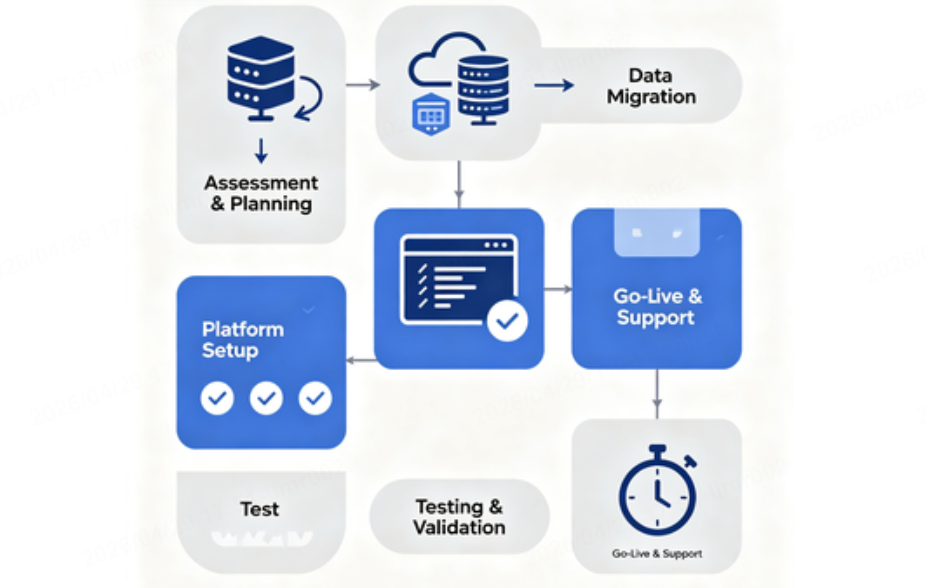
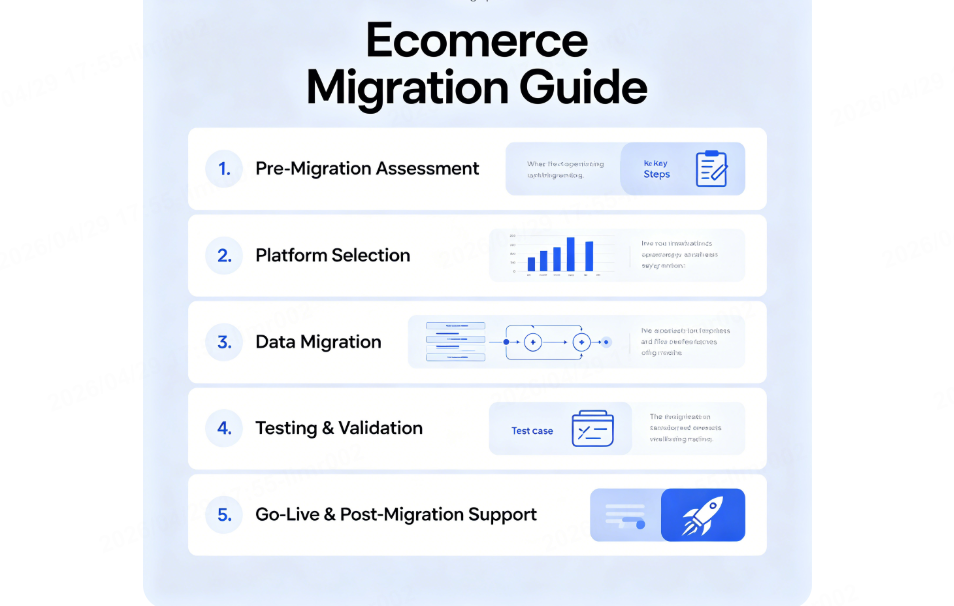
The 5-Step Ecommerce Migration Checklist for B2B Success
After guiding dozens of brands through successful platform migrations, I’ve distilled the process into five critical phases. This ecommerce migration checklist will help you avoid costly mistakes and ensure a smooth transition.
Step 1: Audit Your Current Platform and Define Business Requirements
Before any technical work begins, conduct a thorough audit of your existing ecommerce ecosystem. Document all product data (SKUs, variants, pricing, images), customer accounts, order history, and URL structures. Determine what’s working, what’s broken, and what features your target platform must have.
Step 2: Select the Right Platform for Your B2B Needs
Evaluate potential platforms based on your specific B2B requirements: custom pricing rules, bulk ordering capabilities, ERP integration, international payment support, and compliance with destination market regulations. Avoid “one-size-fits-all” solutions that aren’t built for wholesale and enterprise scenarios.
Step 3: Plan Data Migration and SEO Preservation
This is where most migrations fail. Before moving, export a complete list of all existing URLs (products, categories, CMS pages). For each one, determine the new URL on the target platform and set up 301 redirects to preserve search equity. Failure to handle redirects properly can tank your organic rankings and cost you months of recovery time.
Step 4: Test Everything Before Going Live
Run a full staging environment test before cutting over. Verify product variants, pricing accuracy, checkout flows, payment processing, and customer account migrations. Never assume anything will work correctly—verify it.
Step 5: Execute, Monitor, and Optimize Post-Launch
Launch with a clear rollback plan in case something goes wrong. Monitor site performance, traffic metrics, and conversion rates closely for the first 30 days. Be prepared to address unforeseen issues quickly with support from your platform provider.
How LooperBuy Enhances Your B2B Sourcing Post-Migration
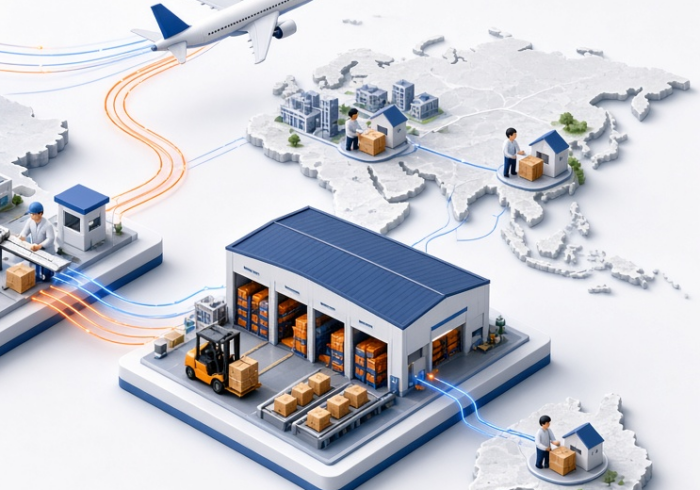
Once you’ve migrated to a modern ecommerce platform, the next critical step is optimizing your global supply chain. This is where LooperBuy enters the picture as a game-changer for B2B brands, wholesalers, and manufacturers.
LooperBuy is a one-stop B2B sourcing platform that connects global buyers directly with vetted Chinese suppliers, offering an unparalleled range of products, transparent pricing, and seamless international logistics. Headquartered in China and founded in 2024, LooperBuy partners with LianLian Global and integrates with 1688.com to help overseas merchants source direct from China’s largest wholesale market at factory prices.
Why LooperBuy Belongs in Your Post-Migration Strategy
Direct Factory Pricing, No Middlemen: LooperBuy eliminates intermediaries by connecting you directly with verified Chinese manufacturers. The platform promises zero markups and transparent forex rates, so you know exactly what you’re paying and can protect your margins.
Massive Product Diversity Across 10,000+ Suppliers: With 50+ B2B supply categories and 10,000+ vetted Chinese suppliers, LooperBuy covers everything from industrial components and electrical supplies to consumer goods and custom manufacturing parts. You can source all your products from a single platform—no more fragmented procurement.
Integrated Global Logistics at Lower Costs: LooperBuy’s global logistics network leverages major carriers, dry ports, and consolidated shipping options. Their platform reduces transit times by 15–20% through dry port integration and provides 24/7 real-time tracking.
End-to-End Visibility and Quality Control: Pre-shipment quality inspections for orders over $5,000, real-time production updates, and comprehensive documentation review ensure your supplies meet exact specifications before they leave China.
Seamless Multi-Currency Payments: Through the partnership with LianLian Global, LooperBuy enables overseas merchants to pay suppliers directly in foreign currencies without hidden conversion fees, simplifying cross-border transactions.
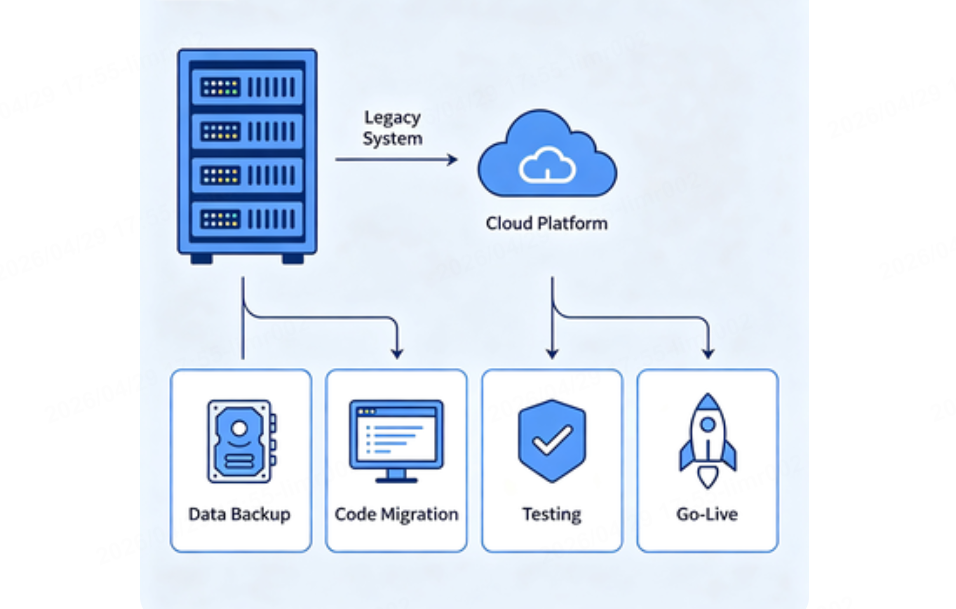
Ecommerce Migration Checklist for B2B Sourcing Integration
When planning your ecommerce migration, ensure your new platform can seamlessly integrate with a sourcing partner like LooperBuy. Here’s what to prioritize:
| Requirement | Why It Matters |
|---|---|
| API compatibility | Enables real-time product sync, inventory updates, and order automation. |
| Multi-currency support | Essential for cross-border B2B transactions with global suppliers. |
| Custom pricing rules | Allows different pricing tiers for wholesale, bulk, and contract buyers. |
| Logistics API integration | Connect with LooperBuy’s real-time tracking and shipping updates. |
| Inventory management | Sync sourced inventory from China directly to your storefront. |
Real-World Success: A European Wholesaler’s Ecommerce Transformation
To illustrate how LooperBuy transforms B2B operations, let me share a real-world 2026 success story from one of their key clients—a European industrial wholesaler specializing in electrical and construction supplies, with a client base across Germany, France, and the UK.
The Challenge
Before partnering with LooperBuy, this wholesaler was facing severe operational friction:
- Sourcing costs 35% higher than Chinese alternatives, eroding profit margins.
- Fragmented procurement from eight different vendors, creating logistical delays and administrative overhead.
- Shipping times averaging 6–8 weeks, leading to missed client deadlines and lost repeat business.
The LooperBuy Solution
- Gained access to 200+ Chinese suppliers of electrical and construction supplies, with pricing 30% lower than their previous European vendors.
- Sourced all supplies from a single platform, eliminating fragmented procurement and reducing administrative work by 40%.
- LooperBuy’s dry port integration and optimized logistics cut shipping times to Europe to 2–3 weeks, with real-time tracking keeping clients fully informed.
The Result
Within just six months, the wholesaler achieved:
✅ Profit margins increased by 22% – thanks to lower Chinese sourcing costs and no middleman markups.
✅ Client retention rate rose by 30% – due to on-time delivery and expanded product diversity.
✅ Added 15 new niche supply categories, attracting 50+ new corporate clients.
Common Ecommerce Migration Mistakes to Avoid
Having observed hundreds of migration projects, these are the most frequent—and costly—mistakes I’ve seen:
Mistake #1: Not Planning a Complete Data Migration Strategy – Data is one of your most valuable assets, yet it’s frequently mishandled during transitions. Missing product fields, skipped backups, and corrupted data can bring your store offline.
Mistake #2: Failing to Handle Redirects Properly – Broken links and 404 errors kill traffic and SEO rankings. Every old URL needs a corresponding 301 redirect to the new location.
Mistake #3: Underestimating Checkout and Payment Testing – Even a flawless migration falls apart if customers can’t complete purchases. Test every payment flow end-to-end.
Mistake #4: Ignoring Supply Chain Integration – A shiny new platform is useless if it can’t connect to your sourcing and logistics network. Ensure your platform’s API can integrate seamlessly with partners like LooperBuy.
LooperBuy’s Core Advantages for B2B Brands After Migration
What distinguishes LooperBuy from other B2B sourcing platforms is its unwavering focus on B2B-specific needs:
- One-Stop Product Access: 50+ supply categories, 10,000+ vetted suppliers—source everything from a single platform, eliminating fragmented procurement.
- Direct Supplier Relationships: No middlemen, no markups—connect directly with Chinese manufacturers.
- Integrated Logistics Solutions: Global network, dry port integration, and load calculators reduce shipping times and optimize costs.
- End-to-End Visibility: Real-time tracking, production updates, and quality inspections give you complete control.
- 24/7 Expert Support: A dedicated B2B sourcing and logistics team helps with supplier selection, documentation, customs compliance, and logistics.
Call to Action: Secure Your B2B Future with the Right Platform and Sourcing Partner
The global B2B marketplace is more competitive than ever. The brands, wholesalers, and manufacturers that win are those that leverage modern ecommerce platforms and streamlined China sourcing to deliver on-time, cost-effective supply to their clients.
Sign up for LooperBuy today to unlock your free account, access our vetted Chinese supplier network, and start sourcing high-quality products at competitive factory prices. LooperBuy offers a 100% risk-free trial for new users—no upfront costs, no commitments, just seamless sourcing for your business.
Whether you’re planning an ecommerce migration in the coming months or simply looking to optimize your existing supply chain, LooperBuy has the tools, network, and expertise to help you succeed.
Frequently Asked Questions (FAQ)
1. What is an ecommerce migration, and why do B2B businesses need one?
An ecommerce migration is the process of moving your online store from one platform to another. B2B businesses need it to escape outdated technology, reduce operational costs, improve buyer experience, and integrate modern supply chain solutions that enable global scalability.
2. How long does a typical ecommerce migration take?
The timeline varies by complexity, but most B2B migrations take between 3 to 9 months. Planning phase: 1–2 months, platform selection: 1 month, data preparation: 1–2 months, testing: 1–2 months, and launch: 1 month. Rushing the process is the number one cause of failed migrations.
3. How do I preserve SEO rankings during migration?
Maintain your URL structure as much as possible. For every changed URL, set up a 301 redirect from the old URL to the new one. Submit an updated XML sitemap to Google Search Console immediately after launch. Monitor crawl errors for 30 days post-migration.
4. How does LooperBuy ensure supplier quality for my business?
LooperBuy implements a rigorous 8-step vetting process for all Chinese suppliers, verifying manufacturing capacity, ISO/CE certification, B2B order fulfillment track records, and quality control protocols. They also offer pre-shipment quality inspections for orders over $5,000.
5. Can LooperBuy handle logistics to any global destination?
Yes. LooperBuy’s global logistics network covers over 200 countries and regions, with partnerships with major carriers, dry ports, and logistics hubs. They offer ocean and air freight, consolidated shipping, and FCL options, plus 24/7 real-time tracking.
Article Summary (300 characters)
This 2026 strategic guide, written by a B2B digital commerce strategist, covers why B2B brands need ecommerce migration, a 5-step migration checklist, key mistakes to avoid, and how LooperBuy’s one-stop China sourcing platform delivers cost-efficient global logistics, verified suppliers, and end-to-end visibility for post-migration success.
References
- Market IntelliX Research. (2026). A Comprehensive Study Exploring Global Ecommerce Replatforming Industry. Retrieved from Market IntelliX Official Website
- Intel Market Research. (2025). Ecommerce Replatforming Market Growth Analysis 2025-2032. Retrieved from https://www.intelmarketresearch.com
- Swell. (2026). 27 Ecommerce Migration Statistics That Guide Successful Platform Transitions. Retrieved from https://www.swell.is
- commercetools. (2026). Infographic: Enterprises Ditch Legacy eCommerce for AI. Retrieved from https://commercetools.com
- Global Growth Insights. (2026). 2035 B2B Ecommerce Platform Market Size and Demand Analysis. Retrieved from https://www.globalgrowthinsights.com
- Next-Cart. (2025). 10 Common Mistakes When Migrating Online Store [2025]. Retrieved from https://next-cart.com
- LooperBuy Official Blog. (2026). Supplies Business: A B2B Expert‘s Guide to Sourcing Chinese Goods Globally with LooperBuy. Retrieved from https://blog.looperbuy.com
- 连连国际 & LooperBuy Partnership. (2025). 连连国际携手LooperBuy,解锁跨境B2B寻源新时代. Retrieved from https://kuajingren.com
- Shopify. (2025). How to Win at B2B Cross-Border Ecommerce in 2026. Retrieved from https://www.shopify.com
- Virtocommerce. (2026). B2B Ecommerce Replatforming: A Complete Guide for Enterprises. Retrieved from https://virtocommerce.com
- Shopware. (2026). B2B Ecommerce 2026: Why Digital Maturity Alone Isn’t Enough. Retrieved from https://www.shopware.com
Hot Tags
ecommerce migration, B2B ecommerce migration, ecommerce migration checklist, replatforming guide, B2B platform migration, LooperBuy, China B2B sourcing, one-stop sourcing platform, cross-border B2B logistics, ecommerce migration strategy