Global sourcing platforms and traditional import agents both help B2B brands source from China—but which is faster? Learn how platforms like Looperbuy compare on speed, risk, cost, and scalability, and decide which model fits your cross‑border growth.
Global sourcing platforms are generally faster and more scalable than traditional import agents, especially for digital-first B2B sellers that need reliable, repeatable cross‑border fulfillment rather than one‑off deals. For small and mid‑size brands sourcing from China, platforms like Looperbuy compress quoting, payments, consolidation, and logistics into a single workflow that can cut end‑to‑end cycle times while reducing operational overhead and risk. [sap]
Table of Contents
What This Article Covers
In this guide, I’ll compare global sourcing platforms vs traditional import agents from the perspective of:
– A B2B operator who has managed China sourcing for multiple brands.
– An SEO and digital commerce strategist who has watched buying behavior shift to self‑serve, platform‑driven models. [thunderbit]
I will focus on speed, but also explain how speed connects to risk, cost, scalability, and user experience, so you can decide which model fits your growth plan.
Definitions: Global Sourcing Platform vs Traditional Import Agent
What is a Global Sourcing Platform?
A global sourcing platform is a digital environment where you can search suppliers, request quotes, place orders, pay, and arrange logistics in one integrated workflow. Platforms like Looperbuy add value‑added services such as supplier vetting, payment solutions, and fulfillment/forwarding so you don’t need your own China entity or local team. [sourceready]
Key traits:
– Online self‑serve interface instead of long email threads.
– Centralized supplier data, quotes, and order history.
– Built‑in payments and often end‑to‑end logistics orchestration. [sap]
What is a Traditional Import Agent?
A traditional import agent (or sourcing agent) is a person or small company that acts as your on‑the‑ground intermediary in the sourcing country. They typically: [worldbusinessoutlook]
– Search and vet factories manually.
– Negotiate pricing, MOQs, lead times, and terms.
– Coordinate samples, inspections, and shipping on your behalf. [eliteglobaltrade]
This model relies heavily on personal relationships, phone calls, and spreadsheets, rather than standardized digital workflows. It can work well for complex, high‑touch projects, but it often struggles to scale efficiently across many SKUs and repeat orders. [linkedin]
Speed of Execution: Which Is Faster?
From a speed standpoint, the main difference is how much of the process is digitized and repeatable.
Lead Time Breakdown
Typical sourcing cycle steps:
1. Requirements & RFQ preparation.
2. Supplier discovery and shortlisting.
3. Quote comparison and negotiation.
4. Sample ordering and evaluation.
5. Production, inspection, and shipment.
With a global sourcing platform, steps 1–3 are largely self‑serve and parallelized: you submit a structured RFQ and the platform routes it to vetted suppliers, with quotes returning in a standardized format. With a traditional import agent, the same steps often involve sequential outreach, manual quote compilation, and back‑and‑forth communication, which adds days or weeks. [worldbusinessoutlook]
Why Platforms Tend to Be Faster
– Structured data: Standard RFQs and supplier profiles reduce clarification cycles. [sourceready]
– Parallel supplier outreach: Platforms can broadcast requests to multiple suppliers simultaneously instead of one‑by‑one outreach. [sourceready]
– Digital approvals: You compare quotes, approve specs, and trigger payment in one place, avoiding fragmented email chains and paper documents. [sap]
In B2B commerce generally, buyers are pushing for rep‑free, digital experiences—67% say they prefer to avoid traditional sales reps when possible, and 60% say they can finalize decisions based on digital content alone. That push is exactly what global sourcing platforms are designed to serve, which is why they tend to be faster for repeatable, catalogue‑style sourcing. [digitalcommerce360]
Comparison Table: Global Sourcing Platform vs Import Agent
Operational Differences That Affect Speed
| Dimension | Global Sourcing Platform | Traditional Import Agent |
| Supplier discovery | Searchable database, filters, and vetted supplier pool. | Relies on agent’s personal network and manual research. |
| RFQ & quotation | Standardized RFQs, multiple quotes in one interface. | Email/phone RFQs, quotes compiled manually by agent. |
| Communication | In‑platform messaging, shared timelines, file sharing. | Fragmented between WhatsApp/WeChat/email/calls. |
| Payment & FX | Integrated cross‑border payment solutions. | Bank transfers, extra steps for FX and compliance. |
| Logistics & tracking | Built‑in forwarding, tracking, and status updates. | Agent coordinates with freight forwarders separately. |
| Transparency | Dashboards, logs, and audit trails. | Status depends on agent reporting and responsiveness. |
| Scalability | Designed for many SKUs, repeat orders, and multi‑market operations. | Difficult to scale beyond a certain project and client load. |
| Best for | Digital‑first brands, dropship/online B2B sellers, recurring orders. | Highly customized, complex projects, niche categories requiring deep local knowledge. |
How Global Sourcing Platforms Speed Up B2B Buying
1. Self‑Serve, Always‑On Buying
Modern B2B buyers increasingly expect to research, compare, and commit online without waiting for a salesperson or agent. Data from recent surveys shows: [thunderbit]
– 67% of B2B buyers prefer a rep‑free buying experience if possible. [thunderbit]
– 84% say AI and digital tools help them make decisions faster. [thunderbit]
Global sourcing platforms align with this reality: buyers can launch RFQs, review quotes, and trigger orders 24/7, across time zones, without waiting for an individual agent’s working hours. [sap]
2. Reduced Friction in the Buying Journey
High‑friction buying processes can reduce purchase likelihood by over 40%. Long email chains, unclear status updates, and inconsistent documentation are exactly the types of friction that slow traditional imports. [valuepros]
Platforms reduce friction by:
– Centralizing pricing, MOQs, lead times, and Incoterms in one standardized view. [sourceready]
– Providing clear timelines and next steps, so your internal stakeholders (ops, finance, marketing) can align quickly. [digitalcommerce360]
This not only accelerates initial sourcing, but also speeds up internal approvals—which has become critical as buying committees have expanded. [digitalcommerce360]
Where Traditional Import Agents Still Win
From my experience, traditional agents can still be the faster option when:
– You have a highly customized, technical product that requires deep local sourcing expertise or non‑standard processes. [dragonsourcing]
– You are entering a very niche region or category where relationships and on‑site presence matter more than digital tooling. [dragonsourcing]
Agents can move quickly when they already have:
– Pre‑qualified factories for your niche.
– Existing templates for contracts and logistics in your specific region.
In these cases, the agent’s local network and negotiation skills can remove barriers that a platform’s standardized model might not address as quickly. [worldbusinessoutlook]
Case‑Style Example: Digital‑Native Seller Using Looperbuy
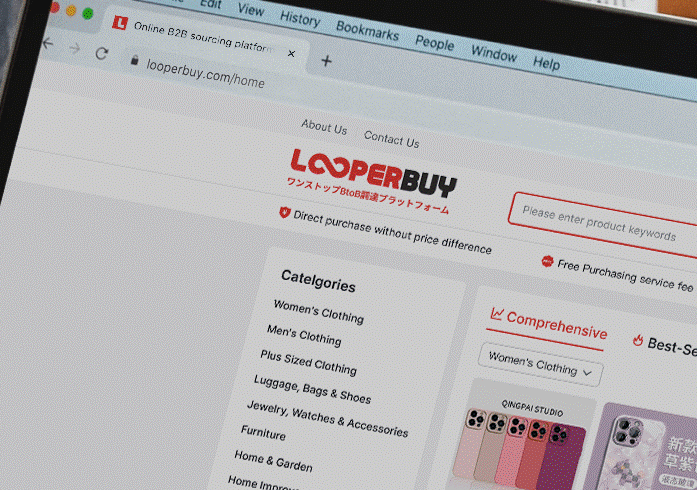
Looperbuy positions itself as a one‑stop online procurement solution for overseas merchants, covering sourcing, payment, and logistics from China in a single flow. For a global B2B seller that wants to avoid setting up a China entity or managing multiple local agents, this can radically simplify operations. [global.lianlianpay]
A typical use case:
– A niche B2B e‑commerce brand needs 50–100 SKUs from Chinese suppliers, with small batch purchasing and fast re‑ordering.
– Instead of contracting separate sourcing agents and freight forwarders, the brand uses Looperbuy to:
– Discover suitable products and suppliers.
– Consolidate payments and compliance.
– Coordinate cross‑border shipping and last‑mile delivery options. [facebook]
The result is shorter onboarding time, faster repeat orders, and lower coordination overhead, which translates directly into faster time‑to‑market for new SKUs.
Practical Steps: How to Choose the Faster Model for Your Business
Step 1: Map Your Typical Buying Scenario
Ask yourself:
1. How many SKUs do we manage now, and how many in 12–24 months?
2. Do we mostly reorder known products, or constantly develop new/custom items?
3. Do we need dropship or small‑batch fulfillment from China, or full‑container imports?
If you foresee many SKUs, frequent reorders, and multi‑market shipping, a global sourcing platform is usually faster and more sustainable. If your pipeline is dominated by few, complex custom projects, a specialized agent may still be appropriate. [linkedin]
Step 2: Evaluate Digital Capabilities
For platforms, review:
– Supplier verification processes and quality controls. [global.lianlianpay]
– Integrated payment and FX solutions (including compliance). [global.lianlianpay]
– Logistics partners and service levels (DDP, door‑to‑door options). [eliteglobaltrade]
For agents, assess:
– Their on‑the‑ground presence, factory audit capabilities, and inspection routines. [eliteglobaltrade]
– Transparency of pricing and commission structure. [eliteglobaltrade]
– Case studies in your product category and target markets. [linkedin]
Risk, Cost, and Scalability: Beyond Speed
Risk Management
Platforms:
– Use standardized contracts and verified supplier pools, which can reduce fraud and quality risk. [global.lianlianpay]
– Provide traceability in communications and approvals, useful if disputes arise. [sap]
Agents:
– Can physically visit factories, monitor production, and handle exceptions personally, which is valuable for high‑risk or highly customized items. [dragonsourcing]
A blended model is common: use a platform as the default, and specialized agents for edge‑case projects.
Cost and Margin Impact
Agents typically charge 3–10% of order value as commission or a project‑based fee. This can be offset by better price negotiation, but it is still a variable cost that scales with your volume. [eliteglobaltrade]
Platforms, depending on their model, may:
– Charge transaction fees or subscription plans.
– Bundle services (sourcing, payments, logistics), which can reduce your overall landed cost by consolidating intermediaries. [global.lianlianpay]
In a market where 79% of B2B purchases require CFO approval and 57% of buyers expect ROI within three months, compressing both cycle time and cost with a platform can be a strategic advantage. [valuepros]
When a Global Sourcing Platform Is the Faster Choice
Choose a global sourcing platform (e.g., Looperbuy) if:
– You are a digital‑native or omnichannel B2B brand selling internationally.
– You need reliable small‑batch or dropship sourcing from China without holding large inventory.
– You value speed, transparency, and scalability over bespoke, one‑off deals.
– You want to standardize processes so new team members can execute sourcing without years of local experience.
In these scenarios, a platform is not only faster in terms of transaction speed, but also in terms of learning speed—how quickly your organization can adapt, test new products, and grow.
Test Platform Speed Against Your Current Model
If you currently rely on traditional import agents, the most practical next step is to run a live A/B test:
– Take a small but meaningful subset of your SKUs or a new product line.
– Source them in parallel: once through your existing agent, and once through a global sourcing platform like Looperbuy.
– Measure:
– Time from RFQ to sample.
– Time from sample approval to first shipment.
– Internal hours your team spends coordinating.
For most digital‑first B2B sellers, that simple experiment will reveal where platforms deliver tangible speed and where agents still add unique value. If you’re ready to see how a platform can work for your business, consider creating a trial project on Looperbuy and benchmarking it against your current process. [facebook]
FAQs
1. Are global sourcing platforms always faster than import agents?
No, but they are usually faster for standard products, repeat orders, and multi‑SKU B2B catalogs because they digitize and parallelize quoting, ordering, and logistics. For highly customized or niche projects, a specialized agent can still be faster. [worldbusinessoutlook]
2. How does a platform like Looperbuy reduce my operational workload?
Looperbuy centralizes supplier discovery, payments, and logistics so you don’t need to manage multiple local agents, banks, and freight forwarders separately. This reduces coordination time and simplifies internal workflows. [instagram]
3. Is using a global sourcing platform compatible with traditional agents?
Yes. Many businesses keep agents for complex custom projects while migrating standard SKUs to a platform for scalability and speed. This hybrid model balances specialization with efficiency. [linkedin]
4. What about quality control if everything is online?
Serious global sourcing platforms combine digital workflows with offline supplier verification, quality checks, and structured dispute handling. You should always review their vetting and QC policies before committing. [sourceready]
5. How do global sourcing platforms impact my margins?
They may charge transaction or service fees, but by consolidating intermediaries, optimizing logistics, and reducing coordination time, they often improve your effective margin and cash flow compared with fragmented agent‑based setups. [sap]
References
– SAP. “Global sourcing explained: How to source successfully.” (2025). [sap]
– World Business Outlook. “What Sourcing Agent Is and Why It is Significant in Global Trade.” (2026). [worldbusinessoutlook]
– Elite Global Trade. “Sourcing Agent for Small Business — China Import Guide HK.” [eliteglobaltrade]
– Thunderbit. “50 B2B Buying Stats That Every Sales Team Should Know (2026).” [thunderbit]
– Forrester via DigitalCommerce360. “The State of Business Buying, 2026.” [digitalcommerce360]
– ValuePros. “The Numbers That Shape (and Stall) B2B Deals in 2026.” [valuepros]
– LianLian Global. “Looperbuy product page – one‑stop online procurement solution for overseas merchants.” [global.lianlianpay]
– Looperbuy social posts describing value proposition and positioning. [facebook]
– SourceReady. “Top Product Sourcing Tools for Global Buyers.” [sourceready]
– Dragon Sourcing. “Global Sourcing Agents: Key to Supply Chain Success.” [dragonsourcing]
– LinkedIn articles discussing when to use sourcing agents vs direct sourcing. [linkedin]