Confused between starting a trading business or investing in manufacturing in China? This in‑depth guide from a B2B sourcing strategist explains costs, risks, and real‑world scenarios—and shows how platforms like Looperbuy can reduce risk and maximize margins.
Choosing between starting a trading business or investing in manufacturing is one of the most important strategic decisions a B2B seller will make when sourcing from China. As someone who has spent years helping cross‑border sellers optimize their supply chains and as part of the Looperbuy team serving global B2B buyers every day, I’ve seen both models succeed—and fail—in very different ways. [ralfvanveen]
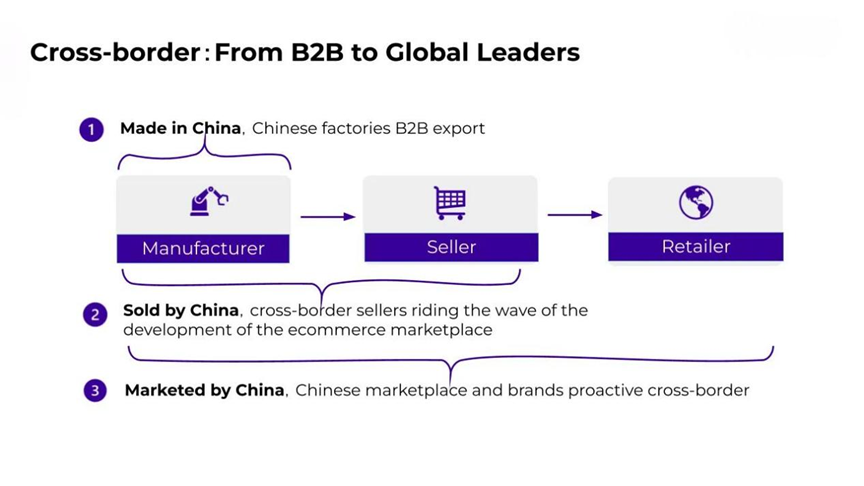
Table of Contents
What This Guide Will Help You Decide
By the end of this article, you’ll be able to:
– Understand the core differences between trading and manufacturing in practical, day‑to‑day terms. [ralfvanveen]
– Match each model to order volume, capital, risk tolerance, and product complexity. [journeyh]
– See how hybrid models and China‑based sourcing platforms like Looperbuy can give you “best of both worlds” flexibility. [zjxw.hqcswzx]
Trading vs Manufacturing: What’s the Real Difference?
At a high level, traders sell finished products sourced from factories, while manufacturers own and run the production facilities. But in day‑to‑day operations, the gap is much bigger than that simple definition suggests. [adroll]
Trading business in China
A trading company:
– Sources products from multiple factories.
– Consolidates SKUs and orders for you.
– Often handles quality checks, packaging, and sometimes shipping coordination. [zjxw.hqcswzx]
From a seller’s perspective, trading is fast, flexible, and lower‑risk—ideal when you’re still testing markets or changing product lines frequently. [ralfvanveen]
Manufacturing business in China
A manufacturing company:
– Invests in machines, molds, workers, and compliance.
– Controls production processes, BOM, and cost structure.
– Can deliver better margins and stronger product differentiation at scale—but with far higher upfront risk. [salesforce]
In practice, most B2B sellers don’t jump straight into owning factories. They start with trading or third‑party sourcing, then move gradually upstream only once demand is proven.
Pros and Cons at a Glance
When Trading Makes More Sense
From my experience with B2B sellers in Europe, the US, and emerging markets, trading is usually the right starting point when you are:
1. Testing new markets or categories
– You don’t yet know which SKUs will be long‑term winners.
– You need to iterate on price points, branding, and positioning quickly. [salesforce]
2. Working with limited capital
– You want to avoid large fixed costs and long payback periods.
– You prefer to pay per order and keep your balance sheet light. [salesforce]
3. Operating with lean teams
– You lack in‑house engineering or production management.
– You’d rather outsource factory scouting, price negotiation, and QC to experts. [zjxw.hqcswzx]
4. Needing wide product coverage
– For B2B marketplaces, wholesalers, or dropshippers handling thousands of SKUs, sourcing across many factories via a trading platform is far more realistic than owning multiple plants. [ralfvanveen]
In these situations, an online sourcing partner like Looperbuy effectively acts as your extended procurement department in China, giving you access to multiple factories without requiring you to manage them one‑by‑one. [zjxw.hqcswzx]
When Manufacturing Becomes the Better Option
On the other hand, I’ve seen clients successfully move into manufacturing when three conditions line up:
1. Stable, repeatable demand
– You have multi‑year contracts or large, predictable purchase orders.
– Your current suppliers struggle to keep up with volume or lead times. [salesforce]
2. Need for deep product differentiation
– Commodity products are driving a race to the bottom on price.
– You need proprietary designs, customized materials, or special certifications that traders cannot easily guarantee. [adroll]
3. Strong operational expertise (or reliable partners)
– You have access to experienced factory managers, engineers, and compliance specialists.
– You understand labor regulations, environmental standards, and export documentation in China—or have a trusted local partner who does. [salesforce]
Even then, many B2B sellers choose a phased path: they start with trading, then negotiate exclusive production lines with a partner factory, and only later consider direct investment or joint ventures.
Cost, Risk, and Cash Flow: A Practical Breakdown
Instead of thinking in abstract pros and cons, it helps to view trading and manufacturing through three lenses: cost, risk, and cash flow. [salesforce]
Cost structure
– Trading: You pay a product price that includes the trader’s margin and overhead. Your direct unit cost is higher, but you avoid fixed costs and capex. [adroll]
– Manufacturing: Your unit cost can be significantly lower once volume is high enough, but you are responsible for capex, maintenance, and manpower. [salesforce]
Risk profile
– Trading concentrates risk in inventory and demand, but not in physical assets. [ralfvanveen]
– Manufacturing adds asset, regulatory, and operational risk on top of demand risk. [salesforce]
Cash‑flow dynamics
– Trading allows you to align cash outflows with orders and often negotiate smaller MOQs, especially through platforms that aggregate demand across buyers. [zjxw.hqcswzx]
– Manufacturing demands heavy upfront investment before you see any revenue; mis‑forecasting demand or mismanaging operations can quickly erode margins. [salesforce]
How Online Sourcing Platforms Like Looperbuy Change the Equation
Traditional debates around trading vs manufacturing often assume you’re either dealing directly with factories or working with a generic trading company. But the rise of specialized online B2B sourcing platforms has changed that reality. [blog.csdn]
Aggregated access to Chinese factories
Platforms like Looperbuy give overseas B2B buyers:
– Access to thousands of vetted Chinese factories through a single interface.
– Consolidated procurement across categories, from small accessories to bulk industrial components. [blog.csdn]
– Transparent communication, documentation, and order tracking in one place. [zjxw.hqcswzx]
Reduced logistics and inventory burden
Looperbuy’s one‑stop sourcing and dropshipping model is particularly valuable if you want to avoid building your own warehouse network:
– You can ship directly from Chinese suppliers to your end buyers or overseas fulfillment centers.
– You reduce costs related to inventory, warehousing, and local logistics management. [zjxw.hqcswzx]
– You can rapidly test new SKUs without committing to large stock levels. [ralfvanveen]
For many B2B sellers, this model offers 90% of the margin benefit of “getting closer to the factory” while keeping the operational complexity closer to trading.
Real‑World Scenarios: Which Path Fits You?
Below are simplified but realistic profiles I’ve seen in the field and the model that usually works best.
Scenario 1: Amazon / marketplace B2B reseller
– Broad catalog, moderate volumes per SKU.
– High competition, fast product rotation.
– Limited in‑house technical expertise.
Best fit: Start as a trading‑based business using Looperbuy or similar platform, with an emphasis on flexible MOQs and direct‑to‑customer shipping. [ralfvanveen]
Scenario 2: Industrial OEM supplier
– Narrower product range but very high volume per SKU.
– Heavy focus on certification, safety, and lifetime cost.
– Long‑term contracts with enterprise buyers.
Best fit: Start with deep partnerships with specific factories and gradually explore joint manufacturing arrangements once demand is stable. [journeyh]
Scenario 3: Niche product innovator
– Highly differentiated design or technology.
– Strong brand strategy, IP, or proprietary know‑how.
– Willing to invest time in engineering and QC.
Best fit: Hybrid approach—use factory partners for key components while relying on trading‑style sourcing for non‑core parts, all coordinated through a central sourcing platform. [ralfvanveen]
Practical Steps to Choose Your Model
If you’re unsure where to start, use this simple decision pathway.
1. Clarify your constraints
– How much capital can you realistically commit?
– What minimum margin do you need?
– How quickly do you need to launch? [salesforce]
2. Map your demand profile
– Are you expecting many SKUs with low volume each, or few SKUs with high volume?
– How certain are your sales forecasts?
3. Assess your capabilities
– Do you have people who understand production, engineering, and quality systems?
– Are you able to manage on‑the‑ground relationships in China—or is a platform/trading partner better? [linkedin]
4. Start lean, then upgrade
– In most cases, begin with a trading‑based model through a sourcing platform, validate your product‑market fit, then negotiate closer collaboration with key factories. [ralfvanveen]
When a Hybrid Approach with Looperbuy Works Best
In reality, the most resilient B2B sellers don’t lock themselves into a single model. They adapt:
– For proven high‑volume SKUs, they negotiate factory‑direct pricing and deeper customization.
– For experimental or long‑tail SKUs, they keep using trading‑style sourcing through Looperbuy to avoid over‑committing. [zjxw.hqcswzx]
Because Looperbuy aggregates different factories and logistics options, you can gradually shift parts of your catalog closer to manufacturing while still enjoying the operational simplicity of trading. [zjxw.hqcswzx]
Trading vs Manufacturing Is Not a One‑Time Decision
Choosing between trading and manufacturing in China is not a single, irreversible choice—it’s a timeline. Early on, most global B2B sellers benefit more from low‑risk, trading‑based sourcing via platforms like Looperbuy; later, some products justify deeper manufacturing involvement. [ralfvanveen]
The key is to:
– Stay brutally honest about your capital, capabilities, and demand certainty.
– Use trading and sourcing platforms to test and scale before touching heavy assets.
– View manufacturing as a strategic lever, not a badge of honor.
Explore a Low‑Risk Path to China Sourcing
If you’re still debating trading vs manufacturing, the most practical next step is to test your product ideas with a flexible, trading‑based sourcing model first. Looperbuy can help you:
– Source reliable Chinese products across multiple categories.
– Ship directly to your B2B buyers to avoid inventory and warehousing costs.
– Gradually deepen cooperation with factories once your demand is proven. [zjxw.hqcswzx]
Start by submitting your product requirements on Looperbuy and compare quotes from vetted Chinese suppliers before you commit to any manufacturing investment. [zjxw.hqcswzx]
FAQs
1. Is a trading company or manufacturing company more profitable for B2B sellers?
Manufacturing can offer higher long‑term margins once demand is stable and capacity is fully utilized, but trading is usually more profitable in the early stages because you avoid heavy fixed costs and high risk. [ralfvanveen]
2. How much capital do I need to start a trading business in China?
Many cross‑border traders begin with relatively small capital, focusing on lean operations, online sourcing platforms, and dropshipping or just‑in‑time inventory rather than owning warehouses or factories. [salesforce]
3. Can I switch from trading to manufacturing later?
Yes. A common path is to start with trading, then negotiate exclusive SKUs or production lines with specific factories, and only later consider joint ventures or direct manufacturing investments once demand is proven. [ralfvanveen]
4. Are sourcing platforms like Looperbuy a replacement for traditional trading companies?
In many use cases, yes. They centralize supplier discovery, communication, quality checks, and logistics, making it easier for overseas B2B buyers to manage China sourcing without building a large local team. [zjxw.hqcswzx]
5. How does E‑E‑A‑T affect my trading vs manufacturing content?
Google evaluates signals of experience, expertise, authority, and trust, so your content should include first‑hand insights, transparent sourcing practices, real data, and clear author information rather than generic, rewrittten descriptions. [linkedin]
References
1. Salesforce – “B2B Content Marketing Best Practices” (2025). [salesforce]
2. Hallam – “How brands can E‑E‑A‑T better in 2024.” [hallam]
3. Ralf van Veen – “SEO for comparison websites: My gids.” [ralfvanveen]
4. Looperbuy‑related article on Chinese sourcing and cross‑border procurement. [zjxw.hqcswzx]
5. JourneyH – “B2B Content Pillars to transform B2B Content Marketing Strategy.” [journeyh]
6. Talha Aslam – “The Importance of E‑E‑A‑T in SEO: How to Build Trust and Authority.” [linkedin]
7. AdRoll – “Product Page SEO: How to Boost Rankings For Your Product Content.” [adroll]
8. CSDN – “全球顶级的16个b2b网站,国际贸易的考虑对象.” [blog.csdn]