As a B2B sourcing and supply chain strategist with over 15 years of experience advising international brand owners, wholesalers, and manufacturers, I’ve watched the retail pricing landscape transform dramatically. One question I hear constantly from business buyers is: “Does Walmart match Amazon pricing?”
The short answer is no — but the full story is far more nuanced, and understanding it could save your business thousands of dollars in procurement costs. Let me break down exactly what‘s happening, why it matters for B2B buyers, and how smart sourcing strategies can help you win regardless of retail price wars.
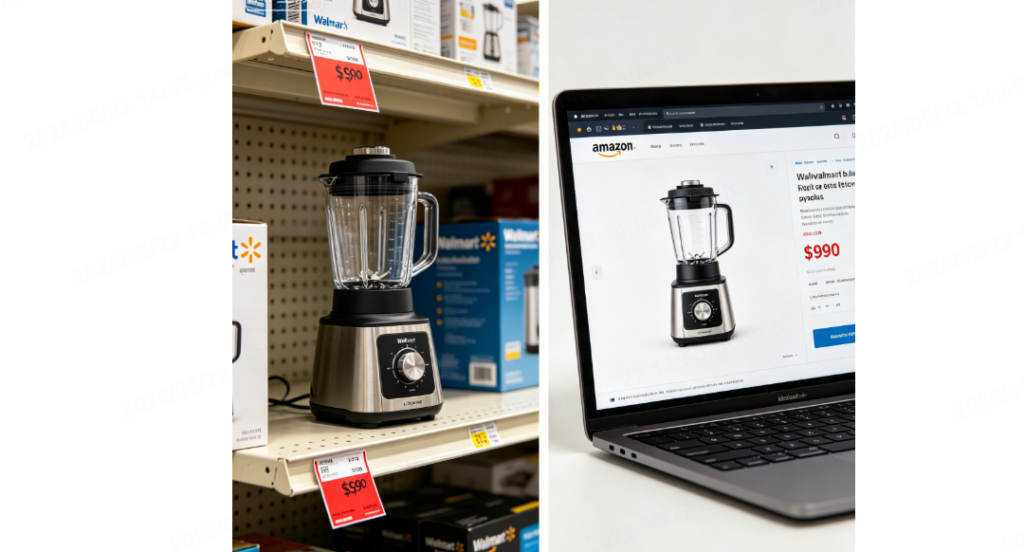
Table of Contents
The 2026 Reality: Walmart’s Price Match Policy Explained
Let‘s cut through the confusion. Walmart’s official price match policy for 2026 is straightforward but limited:
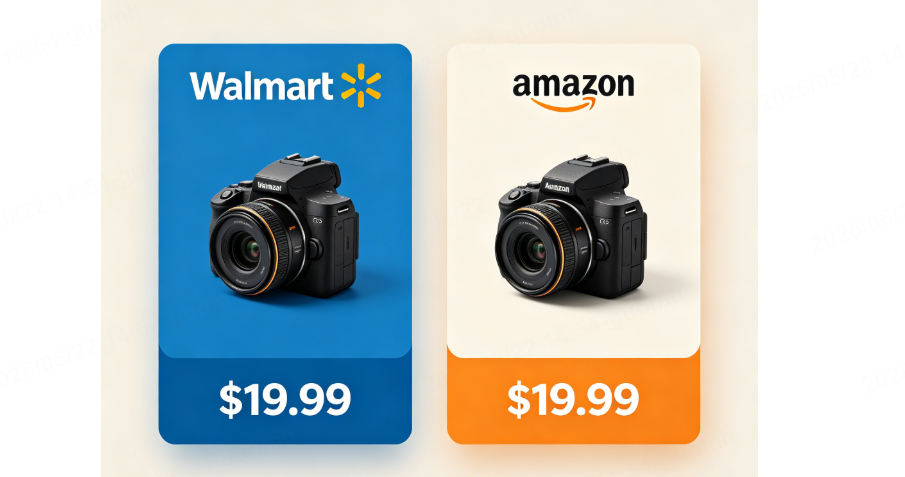
Walmart in-store will match a lower price from Walmart.com for an identical item — but that is the only match it offers. No Amazon. No Target. No Best Buy.
The store officially states it does not match competitor prices, and that policy has held firm since roughly 2020. On the online side, Walmart.com offers no price matching at all — not for competitor prices, not for previous purchases, not for in-store prices.
Key policy limitations to know:
- Customers are limited to one price match per day
- The policy does not apply to residents of Alaska, Hawaii, or Puerto Rico
- The store manager has the final say on every price match request
- Exclusions include Marketplace items, third-party sellers, Rollback, Black Friday, and Cyber Monday deals
Walmart stopped matching competitors at the register in 2017. Two years later, the company discontinued its Savings Catcher price-match service, which had offered refunds via gift cards. In an email to customers at the time, the company said it already offered the lowest prices on most items.
So to directly answer the question: No, Walmart does not match Amazon pricing in 2026.
Amazon’s Counter-Strategy: No Price Matching, But Constant Price Adjustments
Amazon does not have a formal price-matching policy either. It discontinued post-purchase price adjustments in 2016. Instead, Amazon relies on dynamic pricing algorithms that adjust product prices in real-time based on demand, inventory, and competitor pricing.
This creates an interesting dynamic. When Walmart reduces the price of a high-volume SKU, Amazon‘s algorithms will align shortly after. The two giants effectively “price match” each other through automated systems — just not in a way consumers can request at checkout.
During major shopping events like Prime Day and Black Friday, the two retailers “price-match each other more often than not”. But this is algorithmic competition, not customer-facing policy.
The Bigger Picture: Why Price Matching Is Disappearing
The decline of price matching isn‘t unique to Walmart and Amazon. Target officially ended its extensive price-matching policy with competitors like Amazon and Walmart starting July 28, 2025.
As retail analyst Carol Spieckerman put it: “[Price matching] really is a relic of simpler retail times. With dynamic pricing and multiple shopping channels, with third-party sellers and the rise of marketplaces and even the proliferation of private brands, all of these dynamics make price matching not only complicated, but also really past its prime and unnecessary.”
Why this matters for B2B buyers: Retailers have shifted from reactive price matching to proactive algorithmic pricing. They‘re investing in AI-driven systems that adjust prices using demand signals and elasticity data. Walmart has secured patents for AI tools that can optimize markdowns and forecast demand.
The game has changed. You can no longer rely on retail price match policies to secure competitive B2B pricing.
What the Data Tells Us About Walmart vs. Amazon Pricing
Despite having no formal price match policy, Amazon retained its position as the lowest-priced online retailer for the ninth consecutive year in 2025, maintaining a 14% average price advantage versus competitors. However, Walmart is closing the gap:
- Walmart narrowed its average price gap with Amazon from 5% to 4% year over year
- In video games, Walmart reduced its price difference from 12% to just 3% — a 9 percentage point improvement
- Walmart‘s eCommerce sales grew by 79% in 2020 as it continued to close the gap with Amazon
During Prime Day 2026, 76% of shoppers planned to shop during the event, with 43% shopping at Walmart and 28% at Target. Just over a quarter of shoppers (28%) compare prices between Amazon and other retailers before buying anything.
The takeaway: Both retailers are fiercely competitive on price, but neither offers a traditional price match guarantee. For B2B buyers, this means the retail price you see is the price you get — unless you‘re sourcing through a different channel entirely.
The B2B Sourcing Perspective: Why Retail Price Matching Doesn’t Matter for Your Business
Here‘s what I tell my B2B clients: If you‘re relying on retail price matching to get competitive pricing, you‘re sourcing at the wrong level.
Retail prices — whether from Walmart, Amazon, or any other consumer platform — already include significant markups. These markups cover:
- Retailer profit margins
- Marketing and advertising costs
- Fulfillment and storage fees
- Return processing and shrinkage
- Brand licensing and exclusivity agreements
For B2B buyers — brand owners, wholesalers, and manufacturers — the real opportunity isn‘t matching retail prices. It‘s bypassing retail entirely and sourcing directly from manufacturers.
How LooperBuy Delivers What Retail Price Matching Cannot
This is where LooperBuy fundamentally changes the game for B2B sourcing. As a One-Stop B2B Sourcing Platform, LooperBuy connects global buyers directly with vetted Chinese suppliers — eliminating the middlemen that drive up retail prices.
Real results from real businesses:
- Jake (T-shirt business, Texas): “I was shocked when I saw the prices. Like, why was I paying middlemen this whole time? LooperBuy hooked me up straight with the factory — my profit margins said THANK YOU.”
- Tina (Pet brand, Milan): “I sent them this janky sketch of my dog toy idea and y‘all — THEY MADE IT REAL. My corgi‘s face is now on actual products. Mind blown.”
- Liam (Gift shop, Toulouse): “My ‘supplier‘ ghosted me 2 weeks before Christmas. LooperBuy found the SAME product in their Europe inventory. Saved my holiday sales AND my sanity.”
- Jamie (Organic Skincare, Portland): “As a new seller with just 50 orders/month, I thought wholesale wasn‘t an option. LooperBuy‘s 1-piece MOQ let me get proper wholesale prices without huge upfront inventory. Now I‘m at 500 units/month and their bulk discounts automatically kick in as I grow.”
Why LooperBuy outperforms retail price matching:
- China direct factory pricing — B2B pricing that is 25-40% lower than European or North American alternatives
- Product range covering 90% of global B2B supply categories — from industrial components and electrical supplies to consumer goods and custom manufacturing
- Global logistics network with over 200 major ports capable of shipping to every corner of the globe
- Free warehousing up to 90 days with quality inspections before dispatch
- 1-piece MOQ — wholesale access without massive upfront inventory
Beyond Price: The Hidden Costs of Retail Sourcing
When B2B buyers ask about matching retail prices, they‘re often overlooking the full cost picture. Let me break down what you‘re really paying for when you source at retail:
| Cost Factor | Retail Channel | Direct Sourcing (LooperBuy) |
|---|---|---|
| Product cost | Retail markup (40-60%) | Factory-direct (25-40% lower) |
| Middlemen fees | Multiple layers | Zero — direct factory connection |
| Logistics | Consumer shipping rates | Bulk shipping, 40% cost reduction |
| Storage | None or premium | Free 90-day warehousing |
| Quality control | Unverified | Basic inspection before dispatch |
| MOQ flexibility | Limited | 1-piece to bulk, scalable |
Source: LooperBuy platform data and industry analysis
Strategic Recommendations for B2B Buyers in 2026
Based on my years advising global sourcing operations, here‘s my expert guidance:
1. Stop chasing retail price matches. The policy no longer exists in any meaningful form at major retailers. It‘s a waste of time and energy.
2. Shift your sourcing strategy upstream. Instead of comparing Walmart vs. Amazon prices, compare factory-direct pricing through platforms like LooperBuy.
3. Leverage algorithmic pricing to your advantage. Both Walmart and Amazon use dynamic pricing — which means prices fluctuate. For B2B buyers, this inconsistency is a risk. Direct sourcing offers stable, predictable pricing.
4. Consider total landed cost. Retail price isn‘t the full story. Factor in logistics, storage, quality control, and scalability. LooperBuy‘s integrated platform handles all of these in one streamlined workflow.
5. Test with small orders. LooperBuy‘s 1-piece MOQ lets you validate products and suppliers before committing to large volumes. Scale up as you validate demand.
The Bottom Line
Does Walmart match Amazon pricing? No — and neither offers meaningful price matching in 2026. But that question misses the point entirely for B2B buyers.
The real question should be: Why are you buying at retail prices at all?
With LooperBuy, global businesses gain direct access to China‘s manufacturing ecosystem — verified suppliers, comprehensive product selection, integrated logistics, and pricing that makes retail comparisons irrelevant.
Whether you‘re a brand owner launching a new product line, a wholesaler scaling your inventory, or a manufacturer sourcing components, LooperBuy delivers the competitive advantage that retail price matching never could.
Ready to stop paying retail and start sourcing direct? Visit LooperBuy.com to explore millions of products, connect with verified suppliers, and transform your supply chain economics.
References
- Walmart Official Price Match Policy. Walmart Help Center. https://www.walmart.com/help/article/walmart-price-match-policy/6295d9e1a501489b9aa40a60c899b288
- Walmart Corporate. Does Walmart Price Match? https://corporate.walmart.com/askwalmart/does-walmart-price-match
- Don‘t Pay Full. Walmart Price Match Policy 2026: Rules, Exceptions, and How to Request a Match. https://www.dontpayfull.com/explorer/walmart-price-match-policy
- MetricsCart. Price Matching on Amazon vs. Walmart: E-Commerce Insights. https://metricscart.com/insights/price-matching-on-amazon-vs-walmart/
- Modern Retail. ‘It wasn‘t really necessary‘: The slow decline of price matching at big-box retailers. https://www.modernretail.co/operations/it-wasnt-really-necessary-the-slow-decline-of-price-matching-at-big-box-retailers/
- Profitero+. 2025 Price Wars Study. https://www.profitero.com/blog/amazon-retains-lead-in-lowest-online-prices-as-walmart-narrows-the-gap
- RetailMeNot. Prime Day 2026 Shopping Data. https://www.retailmenot.com/blog/prime-day-shopping-data.html
- SPS Commerce. Retail News: Retailers Manage Slower Buying & Faster Delivery. https://www.spscommerce.com/community/articles/retail-news-walmart-dynamic-pricing-discount-retailers-2026-03-27
- LooperBuy. Supplies Business: A B2B Expert‘s Guide to Sourcing Chinese Goods Globally. https://blog.looperbuy.com/supplies-business-a-b2b-experts-guide-to-sourcing-chinese-goods-globally-with-looperbuy.html
- LooperBuy Official Website. https://www.looperbuy.com
Frequently Asked Questions
Q1: Does Walmart price match Amazon in 2026?
No. Walmart only matches prices from Walmart.com when you shop in-store. It does not match Amazon, Target, Best Buy, or any other competitor.
Q2: Does Amazon offer price matching?
No. Amazon does not have a formal price-matching policy. It uses dynamic pricing algorithms to adjust prices in real-time based on competitor pricing, demand, and inventory.
Q3: When did Walmart stop matching competitors‘ prices?
Walmart stopped matching competitors at the register in 2017 and discontinued its Savings Catcher price-match service in 2019.
Q4: What retailers still price match Amazon?
Some retailers like Staples, Home Depot, and Dick‘s Sporting Goods still offer price matching against Amazon. However, policies vary by location and are subject to change.
Q5: How can B2B buyers get competitive pricing without retail price matching?
B2B buyers should source directly from manufacturers through platforms like LooperBuy, which offers factory-direct pricing 25-40% lower than retail alternatives, with flexible MOQs and integrated global logistics.
Hot Tags
B2B sourcing platform, China direct sourcing, wholesale sourcing, global logistics B2B, factory direct pricing, LooperBuy B2B, B2B supply chain solutions, cross-border procurement, one-stop sourcing platform, B2B product sourcing