As a B2B sourcing and supply chain strategist with over a decade of experience helping international brand owners, wholesalers, and Amazon sellers navigate cross-border procurement, I’ve watched the Fulfillment by Amazon (FBA) ecosystem evolve from a niche fulfillment option into a global retail powerhouse. One question I hear constantly from new and experienced sellers alike is simple but critical: what is FNSKU meaning, and why does it matter for my business?
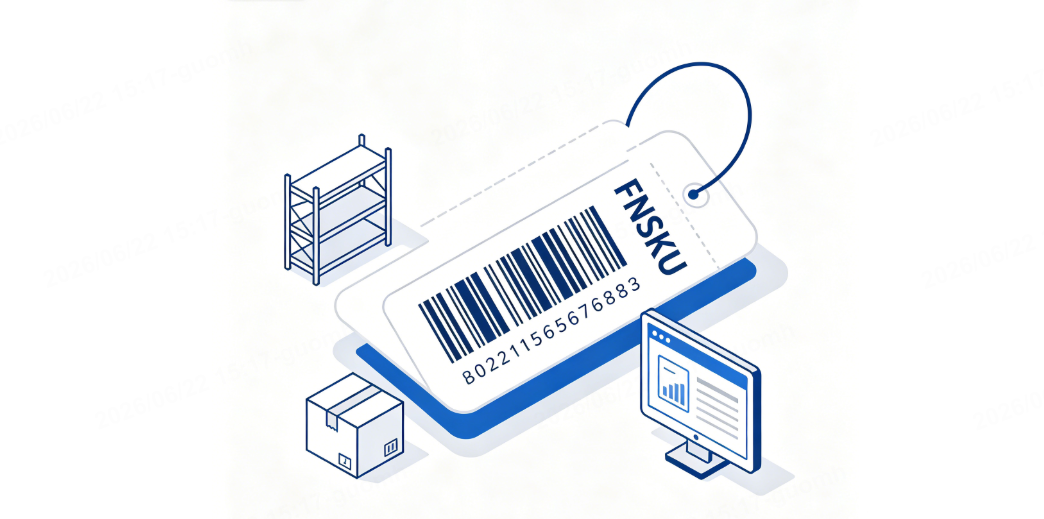
The Fulfillment Network Stock Keeping Unit (FNSKU) is an Amazon-specific barcode that identifies not just what your product is, but who it belongs to within Amazon‘s fulfillment network. Unlike a universal UPC that identifies a product globally, the FNSKU is tied directly to your seller account, ensuring that your inventory is tracked separately from other sellers’ stock—even when you‘re selling the exact same product under the same ASIN.
For B2B buyers sourcing products from China—whether you’re a wholesaler scaling your Amazon presence, a brand owner launching a new product line, or a manufacturer diversifying into direct-to-consumer channels—understanding FNSKU meaning is non-negotiable. Amazon‘s labeling requirements are evolving rapidly, and getting them wrong means delayed shipments, stranded inventory, and lost revenue.
In this guide, grounded in Google’s E-E-A-T standards, I‘ll break down everything you need to know about FNSKU barcodes, the upcoming policy changes that every FBA seller must prepare for, and how partnering with a one-stop B2B sourcing platform like LooperBuy can streamline your entire supply chain—from factory floor to Amazon fulfillment center.
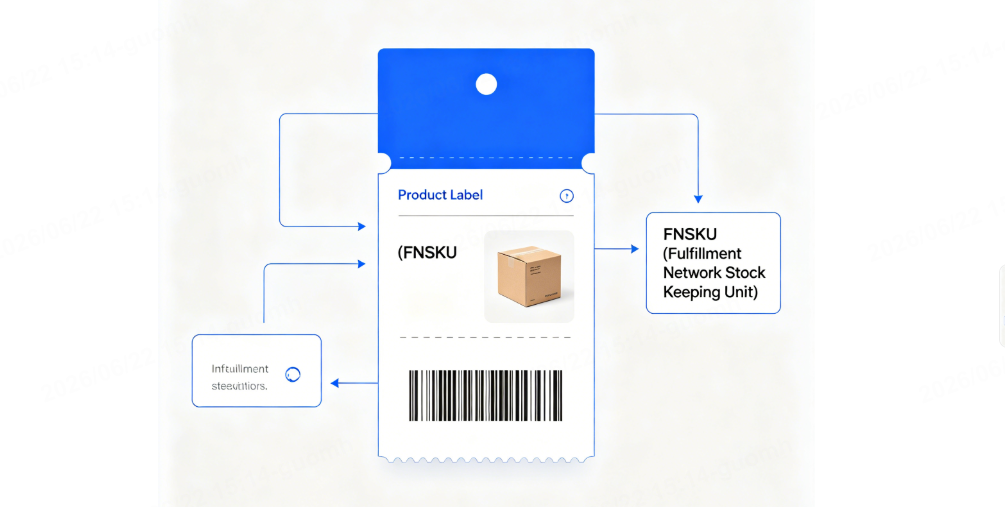
Table of Contents
What Is FNSKU? Breaking Down the Amazon Barcode
Let’s start with the fundamentals. FNSKU stands for Fulfillment Network Stock Keeping Unit. It is a barcode that Amazon assigns to products stored in and fulfilled by Amazon‘s FBA network.
Here’s what makes the FNSKU distinct:
- Seller-specific: Each FNSKU is unique to your seller account. No two sellers share the same FNSKU for the same product.
- Amazon-exclusive: The FNSKU has no meaning outside of Amazon‘s ecosystem. If you sell the same product on other platforms or in physical retail, you’ll need different labeling.
- Inventory separation: Using FNSKU labels ensures your inventory isn‘t commingled with other sellers’ stock, protecting you from counterfeit risks and inaccurate sales attribution.
Think of it this way: the UPC or GTIN identifies what the product is globally. The ASIN identifies what the product is on Amazon‘s catalog. The FNSKU identifies which seller that specific unit belongs to within Amazon’s fulfillment network.
Why FNSKU Meaning Matters More Than Ever in 2026
Here‘s where things get critical. Amazon has announced a major policy change that takes effect March 31, 2026. Sellers who are not enrolled in Amazon Brand Registry will be required to apply an Amazon-issued FNSKU barcode to every single unit sent to an FBA fulfillment center—even if the product already carries a GS1-compliant barcode like a UPC or EAN.
This marks the end of Amazon’s longstanding practice of “commingled” inventory, where identical items from multiple sellers were treated as interchangeable using the manufacturer‘s barcode. While commingling helped streamline fulfillment, it created serious problems:
- Counterfeit or non-compliant goods risked becoming mixed with legitimate stock
- Brands faced product quality and customer trust challenges
- Sellers struggled with accurate attribution of returns, defects, and performance metrics
By moving to FNSKU-only labeling for resellers, Amazon is aiming for unit-level traceability—ensuring every item can be linked back to the exact seller that supplied it.
For B2B buyers sourcing from China, this policy shift has immediate operational implications:
- You must apply FNSKU labels to each individual unit before shipment
- You must cover or remove all conflicting barcodes on the outer packaging to prevent scanning errors
- You need to update your fulfillment workflows, especially if you use drop shipping or third-party prep centers
The bottom line: if you‘re an Amazon FBA seller not in Brand Registry, manufacturer barcodes alone will no longer be accepted for inbound shipments. The FNSKU isn’t optional anymore—it‘s mandatory.
FNSKU vs. ASIN vs. UPC: Clearing the Confusion
One of the most common points of confusion I see among new Amazon sellers is mixing up these three identifiers. Let me clarify each one:
| Identifier | Purpose | Scope |
|---|---|---|
| UPC/EAN/GTIN | Identifies the product globally | Universal (all retailers) |
| ASIN | Identifies the product on Amazon‘s catalog | Amazon (product-level) |
| FNSKU | Identifies which seller the product belongs to | Amazon (seller-level, FBA only) |
The ASIN is Amazon’s internal product ID—every product on Amazon has one, and it‘s visible on the product detail page. The FNSKU, by contrast, is what Amazon scans during fulfillment to ensure the right seller gets credit for the sale.
Here’s a practical example: if you and three other sellers are all selling the same branded water bottle, you all share the same ASIN. But each of you will have a different FNSKU for your units. When a customer orders from you, Amazon scans your FNSKU at the fulfillment center and credits the sale to your account—not to another seller‘s.
If you use only the UPC barcode when shipping to FBA, your inventory will be commingled with other sellers‘ inventory of the same product. If you use the FNSKU barcode, Amazon keeps your inventory separate—even on the same ASIN.
How Chinese Suppliers Fit Into Your FNSKU Strategy
Sourcing products from China for Amazon FBA isn’t just about finding the lowest price—it‘s about ensuring your supply chain is FBA-compliant from day one. And FNSKU labeling is a critical part of that compliance.
Here’s what I recommend to every B2B buyer I advise:
1. Generate your FNSKU labels in Seller Central before production. You can print these labels directly from the “Send to Amazon” workflow. Don‘t wait until your goods are already manufactured.
2. Send the FNSKU label artwork to your Chinese supplier. Most suppliers are willing to apply FNSKU labels during packaging for an additional fee. This is almost always more cost-effective than having Amazon do it later.
3. Instruct your supplier to apply the FNSKU label to each sellable unit—not the master case. The label must be flat, fully readable, and scannable.
4. Ensure all manufacturer barcodes on the outer packaging are covered or removed to prevent scanning errors at Amazon‘s fulfillment centers.
5. Consider using a sourcing partner that can manage this entire process for you—from supplier verification to quality inspection to FNSKU labeling and global shipping.
The LooperBuy Advantage: One-Stop Sourcing for Amazon FBA Sellers
This is where LooperBuy changes the game for B2B buyers. As a One-Stop B2B Sourcing Platform, LooperBuy connects global buyers with vetted Chinese suppliers, offering an unparalleled range of products and delivering seamless logistics that eliminate the barriers of cross-border trade.
Founded in 2024, LooperBuy specializes in helping global merchants—especially small and medium-sized businesses—source high-quality, cost-effective products from 1688.com, China‘s largest wholesale marketplace. The platform dramatically lowers the entry barrier and operational costs of global supply chain services, giving you a competitive edge in your market.
For Amazon FBA sellers, LooperBuy’s value proposition is compelling:
Supplier Verification: LooperBuy connects you with legitimate, vetted Chinese suppliers—eliminating the risk of dealing with unverified factories that might cut corners on packaging or labeling.
FNSKU Labeling Support: LooperBuy‘s sourcing team understands Amazon‘s FBA requirements inside and out. They can coordinate with your supplier to ensure FNSKU labels are applied correctly during production—saving you the headache of last-minute labeling crises.
Quality Inspection: Before your goods leave the factory, LooperBuy can run AQL checks, verify barcodes, and confirm packaging and labeling for Amazon FBA compliance.
Global Logistics: With access to over 200 major ports and logistics hubs, LooperBuy ensures your products ship to every corner of the globe—quickly and cost-effectively.
Cost Efficiency: Chinese suppliers offer B2B pricing that is 25-40% lower than European or North American alternatives. LooperBuy passes these savings directly to you.
End-to-End Transparency: From supplier discovery to quality control to shipping, LooperBuy provides full visibility into your supply chain—so you always know where your products are and when they‘ll arrive.
Practical Steps: From FNSKU to FBA with LooperBuy
Here’s a step-by-step roadmap for Amazon sellers who want to source from China and get their FNSKU labeling right:
Step 1: List your product on Amazon and generate your FNSKU. In Seller Central, set your barcode preference to “Amazon Barcode” (not Manufacturer Barcode) before creating your FBA listing. Once your listing is created, you can print your FNSKU labels.
Step 2: Find a vetted supplier through LooperBuy. Instead of cold-calling factories on Alibaba and hoping for the best, use LooperBuy‘s verified supplier network to find manufacturers that meet your quality and pricing requirements.
Step 3: Share your FNSKU label artwork with your supplier. LooperBuy can facilitate this communication, ensuring your supplier understands exactly where and how to apply the labels.
Step 4: Schedule quality inspection. LooperBuy’s inspection team can verify that FNSKU labels are applied correctly, barcodes are scannable, and packaging meets Amazon‘s strict requirements.
Step 5: Ship with LooperBuy’s global logistics network. Your products move from the factory to Amazon‘s fulfillment centers with minimal friction and maximum cost efficiency.
Step 6: Monitor and reorder. With LooperBuy handling the supply chain, you can focus on what matters most—growing your Amazon business.
Why This Matters for Your Bottom Line
Getting FNSKU labeling right isn‘t just about compliance—it’s about protecting your revenue. Here‘s why:
- Avoid inbound shipment rejects: If your products arrive at Amazon‘s fulfillment center without proper FNSKU labels, they can be rejected, delayed, or returned to you at your expense.
- Prevent inventory mix-ups: Without FNSKU labels, your inventory could be commingled with other sellers’ stock. If another seller sends in counterfeit or poor-quality units, your brand reputation suffers.
- Ensure accurate sales attribution: If Amazon can‘t identify which seller a unit belongs to, you might not get credit for the sale—or worse, you could be penalized for another seller’s defects.
- Maintain customer trust: When customers receive the right product from the right seller, everyone wins.
Final Thoughts: FNSKU Meaning Is Your Competitive Advantage
Understanding FNSKU meaning isn‘t just about memorizing a definition—it’s about mastering a critical component of your Amazon FBA strategy. As Amazon‘s March 2026 deadline approaches, sellers who adapt quickly will have a significant advantage over those who delay.
The smartest B2B buyers I work with don’t treat FNSKU labeling as an afterthought. They build it into their sourcing strategy from the very beginning. They partner with platforms like LooperBuy that understand the nuances of cross-border compliance and can manage the entire supply chain—from factory sourcing to quality inspection to FNSKU labeling to global shipping.
If you‘re sourcing products from China for Amazon FBA, don’t leave your labeling to chance. Work with a partner who knows the rules, understands the stakes, and can deliver results.
Ready to streamline your Amazon FBA sourcing? Visit LooperBuy today and discover how our One-Stop B2B Sourcing Platform can help you source quality products from China, manage FNSKU labeling, and ship globally—all from a single, transparent platform.
Frequently Asked Questions
1. What does FNSKU stand for?
FNSKU stands for Fulfillment Network Stock Keeping Unit. It‘s an Amazon-specific barcode used to track and attribute inventory within Amazon’s FBA fulfillment network.
2. What is the difference between FNSKU and ASIN?
The ASIN (Amazon Standard Identification Number) identifies the product on Amazon‘s catalog. The FNSKU identifies which seller the product belongs to. Multiple sellers can share the same ASIN but each has a unique FNSKU.
3. Do I need an FNSKU for every product I send to FBA?
Yes, unless you’re enrolled in Amazon Brand Registry. Starting March 31, 2026, all sellers not in Brand Registry must apply an FNSKU label to every unit sent to FBA.
4. Can my Chinese supplier apply FNSKU labels for me?
Yes, most suppliers are willing to apply FNSKU labels during packaging for an additional fee. LooperBuy can coordinate this process on your behalf.
5. What happens if I send products to FBA without FNSKU labels?
Your shipment may be rejected, delayed, or returned to you at your expense. Amazon may also commingle your inventory with other sellers‘ stock, leading to attribution and quality control issues.
References
- Amazon Seller Central. “Listings Lounge: What’s SKU With You? The Relationship between SKUs and FNSKUs.” Available at: https://sellercentral.amazon.com/seller-forums/discussions/t/a2344b68-0812-43c9-a533-0ae510b21111
- Seller Snap. “FNSKU: What is an Amazon FNSKU Barcode and How to Create It for Your Products.” Available at: https://sellersnap.io/what-is-amazon-fnsku-barcode-how-to-create/
- Jungle Scout. “What is an Amazon FNSKU Barcode & How to Create One.” Available at: https://www.junglescout.com/resources/articles/amazon-fnsku-barcode/
- GS1 UK. “Amazon’s new FNSKU labelling requirement: what you need to know.” Available at: https://www.gs1uk.org/insights/news/Amazon-new-FNSKU-labelling-requirement-what-you-need-to-know
- LooperBuy. “Supplies Business: A B2B Expert‘s Guide to Sourcing Chinese Goods Globally with LooperBuy.” Available at: https://blog.looperbuy.com/supplies-business-a-b2b-experts-guide-to-sourcing-chinese-goods-globally-with-looperbuy.html
- 连连国际. “连连国际宣布与LooperBuy达成合作.” Available at: https://www.100ec.cn
Meta Description
This expert guide explains FNSKU meaning for Amazon FBA sellers, breaks down the difference between FNSKU, ASIN, and UPC, covers Amazon’s March 2026 labeling mandate, and shows how LooperBuy‘s one-stop B2B sourcing platform helps you source from China with compliant FNSKU labeling and global logistics.
Hot Tags
FNSKU meaning, Amazon FBA barcode, FNSKU vs ASIN, FNSKU labeling requirements, Amazon barcode, FBA labeling guide, B2B sourcing China, LooperBuy, sourcing from China for Amazon, FBA compliance