Modalyst connects online retailers with curated US/EU and AliExpress suppliers, offering fast shipping, branded products, and automation for small to mid‑size stores. This expert review explains how the platform works, where it excels, and when to pair it with a B2B procurement partner like Looperbuy.
Running a lean online retail business in 2026 means selling without tying up cash in inventory, warehousing, or complex logistics—but still meeting customers’ “Prime‑level” expectations for speed and reliability. Among the platforms built to make that possible, Modalyst stands out as a curated marketplace connecting merchants with verified US and EU suppliers and selected AliExpress sellers, while automating product import, pricing, and order routing. [ecomm]
For merchants and B2B operators who want to reduce inventory risk while still offering premium brands and fast shipping, Modalyst can be a powerful tool—if you understand where it shines and where you’ll need complementary infrastructure or alternative sourcing partners such as Looperbuy.
Table of Contents
What Is Modalyst And Who Is It For?
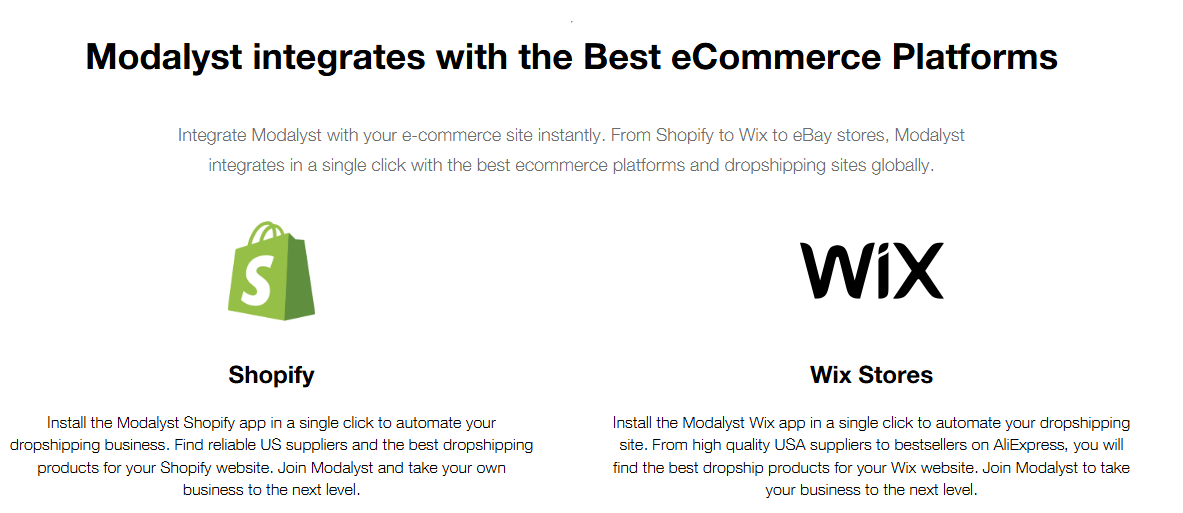
Modalyst is a cloud‑based ecommerce application that plugs into platforms like Shopify, Wix, and BigCommerce, allowing retailers to import products from a curated marketplace of US/EU suppliers and selected AliExpress vendors, and then dropship those products directly to end customers. [365dropship]
From an operator’s perspective, Modalyst is best suited for:
– Small to mid‑size online stores scaling catalog breadth without owning stock.
– Retailers focused on fashion, accessories, home goods, and lifestyle brands with an emphasis on trend‑driven assortments.
– Merchants who want branded products and reliable Western suppliers, but don’t have the bandwidth to manually vet hundreds of factories.
Unlike pure supplier directories, Modalyst provides automation around catalog updates, pricing, and fulfillment that reduces operational overhead for non‑technical store owners. [merchize]
How Modalyst Works: A Practical Setup Walkthrough
From an operator and consultant standpoint, Modalyst’s onboarding process can be broken down into four core steps that define your eventual margins and customer experience. [365dropship]
Step 1: Connect Your Store
You start by connecting Modalyst to your ecommerce store, typically via native integrations with Shopify, Wix, or BigCommerce. Once connected, your store can receive synchronized product data—titles, images, descriptions, and inventory—directly from Modalyst’s marketplace and AliExpress partners. [ecomm]
Step 2: Define Pricing Rules And Margin Strategy
The next critical step is configuring pricing rules. Modalyst allows you to set automatic markups that factor in product cost and shipping, enabling you to show “free shipping” front‑end while keeping margins intact by embedding shipping costs into product prices. [merchize]
From a strategic perspective, this is where experienced operators:
– Map out minimum target margins per category.
– Account for potential returns and refunds.
– Align price positioning with competitor benchmarks and perceived brand value.
Step 3: Source Products From The Marketplace And AliExpress
Modalyst’s catalog is accessible via a “Find Products” interface, letting you filter by category, supplier region, and brand, and then add selected products to your import list. [365dropship]
Two main sourcing modes:
– Modalyst Marketplace (US/EU suppliers and luxury brands) – ideal for fast delivery and premium positioning. [merchize]
– AliExpress integration – useful for broad product coverage and lower base costs, with longer shipping times and more variable quality.
For operators, the optimal mix typically combines core hero SKUs from vetted US/EU suppliers with experimental or long‑tail products from AliExpress to test demand without overcommitting.
Step 4: Edit, Sync, And Launch
Before syncing products to your live store, you can edit titles, descriptions, and images to match your brand voice and SEO strategy, then push them to your storefront. [365dropship]
Once synced:
– Inventory and price updates are automatically propagated from suppliers.
– Orders placed in your store are routed back to suppliers for fulfillment, with tracking data shared to customers.
This automation significantly reduces manual catalog maintenance and order processing overhead, especially for solo founders or small teams.
Key Features That Matter In Real Operations
Curated US/EU Supplier Network
Modalyst emphasizes a curated network of suppliers based primarily in the United States and Europe, often offering products that are difficult to find on mass marketplaces.
In practice, this delivers:
– Shorter shipping times (often 3–8 days) compared with typical AliExpress shipments. [merchize]
– Higher baseline quality and more consistent packaging, especially for fashion and lifestyle categories. [365dropship]
– Better customer satisfaction and lower refund rates in Western markets where delivery speed is critical.
Trend‑Driven Fashion And Lifestyle Products
Modalyst’s catalog skews heavily toward on‑trend apparel, footwear, accessories, and home goods, particularly for women’s fashion. Retailers can tap into: [365dropship]
– Affordable, trend‑aligned styles, suitable for fast‑moving fashion stores.
– Warehouses in major markets, which help reduce transit times even for products originally sourced from China. [merchize]
Access To Global Luxury Brands At Wholesale Pricing
One of Modalyst’s differentiators is access to well‑known luxury brands (such as Calvin Klein, Lacoste, Diesel, Puma, and others) at wholesale prices, shipped globally with relatively quick turnaround. [merchize]
For merchants, this allows:
– Blending recognized brands with independent labels to elevate perceived store credibility.
– Testing premium price points without holding expensive stock.
Deep Integration With Major Ecommerce Platforms
Modalyst integrates directly with Shopify, Wix, and BigCommerce, and has onboarded tens of thousands of merchants through these ecosystems. This integration supports: [ecomm]
– Real‑time updates of inventory, imagery, and pricing.
– Centralized management of suppliers and their products.
– Automated order notifications to suppliers and tracking visibility for customers. [365dropship]
This kind of connective tissue is vital for merchants who want to avoid building custom middleware or relying on manual CSV uploads.
Customized Label Dropshipping (Private Label)
Through a partnership with Savoy Active, Modalyst supports private label dropshipping, where retailers can add their own logos and branding to selected products before shipment. [365dropship]
This enables:
– Brand‑first positioning, even when products are sourced from shared supplier pools.
– Building perceived uniqueness and loyalty beyond generic reselling.
Automated Markups And Profit Visibility
Modalyst’s automatic markup system and built‑in profit calculator help store owners quickly visualize earnings per product based on the rules they’ve set. [365dropship]
For operators juggling multiple product lines, this reduces:
– Spreadsheet overhead for margin analysis.
– Risk of underpricing or miscalculating shipping‑inclusive margins.
Responsive Customer Support
The platform offers an accessible Help Center and email support, complemented by social channels like Facebook and Twitter. While support quality can vary across platforms in the dropshipping space, Modalyst’s dedicated help resources are a key reassurance for non‑technical merchants. [merchize]
Strengths And Limitations From An Expert’s Perspective
Where Modalyst Performs Well
From a consultant viewpoint, Modalyst is particularly strong in:
– Fast, low‑friction rollout for new fashion and lifestyle stores on Shopify, Wix, or BigCommerce. [365dropship]
– Reliable US/EU sourcing for premium and mid‑range brands, with better quality control than many anonymous AliExpress suppliers. [merchize]
– Automation around catalog and orders that keeps small teams focused on marketing and customer service instead of low‑value operational tasks.
Where You Need Complementary Infrastructure Or Alternatives
However, Modalyst is not a one‑size‑fits‑all solution:
– Limited industrial/B2B focus – its core strength is consumer fashion and lifestyle, not complex B2B procurement, OEM/ODM, or specialized manufacturing. [merchize]
– Dependence on third‑party fulfillment – while shipping is relatively fast, merchants still rely on supplier performance and cannot fully control logistics. [teemdrop]
– Less suitable for large‑scale cross‑border B2B operations requiring consolidated warehousing, custom compliance handling, or multi‑warehouse inventory optimization.
For global merchants who want no‑inventory operations with tighter logistics control and cost optimization, working with a dedicated B2B sourcing and fulfillment partner—such as Looperbuy—alongside or instead of Modalyst can be strategically superior.
How Modalyst Fits Into A Modern No‑Inventory Strategy
Building A Resilient Supply Chain Beyond Single‑Platform Dependence
Experienced operators rarely rely on a single platform. Instead, they:
– Use Modalyst for curated Western suppliers and branded fashion, where quality and brand recognition matter. [merchize]
– Use China‑based sourcing platforms or agents for broader catalogs, OEM/ODM, and bulk B2B orders, often combined with dedicated logistics to reduce costs. [teemdrop]
– Layer in a B2B procurement platform like Looperbuy to centralize purchasing, dropshipping, and cross‑border logistics for diverse product lines.
This multi‑platform approach mitigates risk and ensures that stockouts, supplier failures, or policy changes on any single platform don’t cripple your business.
Practical Checklist For Choosing A Dropshipping Platform Or Partner
When advising merchants, the core evaluation criteria typically include: [linkedin]
1. Supplier quality and vetting – Are suppliers verified? Are product samples tested?
2. Shipping speed and coverage – Can you consistently deliver within your target markets’ expectations?
3. Catalog relevance – Does the platform offer depth in your niche (fashion, electronics, industrial components, etc.)?
4. Automation capabilities – How much manual work will you still need to do around catalog updates and order routing?
5. Cost structure – Are fees transparent? Do you pay per order, monthly subscription, or a mix?
6. Scalability and support – Will the platform grow with you, and does support handle complex issues promptly?
Modalyst scores strongly on supplier vetting, catalog relevance for fashion, and automation, but may require complementary solutions for deeper B2B and large‑scale procurement use cases.
Where A Platform Like Looperbuy Can Complement Modalyst
For merchants who grow beyond pure consumer fashion into multi‑category B2B sourcing, international wholesale, or dropshipping with customized logistics, a B2B procurement platform like Looperbuy can add:
– Access to a wide range of China‑sourced products across manufacturing verticals, beyond consumer fashion. [teemdrop]
– Centralized warehousing and dropshipping, eliminating the need to manage multiple fragmented storage locations.
– Cost optimization across shipping, inventory, and payment flows, reducing the overhead many retailers struggle with as they scale.
In practice, merchants may keep Modalyst for certain premium SKUs while shifting bulk catalog and operational backbone to a B2B partner that offers more control over sourcing and logistics.
Actionable Steps For Retailers Considering Modalyst
For merchants evaluating Modalyst today, here is a simple implementation roadmap:
1. Define your core product strategy. Are you mainly selling fashion, accessories, and lifestyle goods, or do you plan to expand into broader B2B categories?
2. Pilot Modalyst with a focused catalog. Start with 20–50 products from its curated US/EU suppliers to test order flow, delivery times, and customer satisfaction. [365dropship]
3. Measure key metrics. Track margins, refund rates, shipping times, and support responsiveness over 60–90 days.
4. Layer in additional sourcing. Once you understand Modalyst’s strengths and limits in your niche, introduce a B2B sourcing partner for categories or volumes where Modalyst is less competitive.
5. Standardize a multi‑platform operational playbook. Document how products move from sourcing platforms into your store, how orders route to each supplier or B2B partner, and how you handle exceptions.
This approach gives you data‑driven clarity on whether Modalyst should remain central or become a complementary tool in your broader no‑inventory ecosystem.
If you’re evaluating Modalyst or already using it and want to reduce inventory risk, cut logistics costs, and expand beyond fashion into broader B2B categories, it’s time to combine your current setup with a more robust procurement backbone.
Explore how a dedicated B2B platform like Looperbuy can connect you to reliable China‑based suppliers, handle dropshipping and fulfillment, and centralize your operations so you can focus on growth instead of inventory and logistics management.
Frequently Asked Questions
Q1: Is Modalyst suitable for complete beginners?
Yes. Modalyst’s integrations with Shopify, Wix, and BigCommerce, plus its automated pricing and product import, make it accessible for merchants who are new to running an online store, especially in fashion and lifestyle niches. [merchize]
Q2: How fast does Modalyst deliver orders to customers?
Shipping times vary by supplier and product origin, but many Modalyst suppliers deliver within 3–8 days to US customers and offer relatively fast service to Europe compared with typical AliExpress shipping. [merchize]
Q3: What kind of products perform best on Modalyst?
Trend‑driven apparel, accessories, shoes, and branded lifestyle products generally perform best, thanks to Modalyst’s curated US/EU supplier base and access to recognized brands. [merchize]
Q4: Can I build my own brand while using Modalyst?
Yes. Through its private label dropshipping capabilities, you can add your logo and branding to selected products, allowing you to build a unique brand presence while still leveraging shared supplier infrastructure. [365dropship]
Q5: Do I need additional platforms beyond Modalyst as I grow?
As you scale into broader categories, cross‑border selling, or B2B procurement, you will likely benefit from additional sourcing and logistics partners that offer deeper manufacturer access, warehousing, and cost‑optimized cross‑border shipping, complementing Modalyst’s strengths in curated Western fashion. [linkedin]
References
1. Merchize – “Top 10 Best Dropshipping Platforms for Beginners in 2026″[merchize]
2. 365dropship – “10 Best Dropshipping Platforms 2026: Ranked Honestly”[365dropship]
3. Ecomm.design – “Best Ecommerce Platforms for Dropshipping: My Picks for 2026” [ecomm]
4. TeemDrop – “Best Dropshipping Platforms in 2026: TeemDrop & Top Alternatives”[teemdrop]
5. LinkedIn – “Best Dropshipping Platforms for 2026 Compared” [linkedin]