
Demandware is no longer the only option for complex B2B commerce. This expert guide compares Salesforce Commerce Cloud, Magento, BigCommerce, Weebly, Virto Commerce, and sourcing platforms like Looperbuy to help global B2B sellers reduce risk and build a modern, flexible stack.
As a B2B buyer or supplier today, you are no longer choosing “a shopping cart”; you are choosing the commerce infrastructure that will power your entire digital business for the next 5–10 years. From my experience working with manufacturers, distributors, and global B2B sellers, platforms like Salesforce Commerce Cloud (formerly Demandware), Magento, BigCommerce, Weebly, Virto Commerce, and newer B2B procurement solutions such as Looperbuy each solve different problems — and choosing the wrong one can quietly lock you into technical debt, high operating costs, and limited growth.
Table of Contents
Understanding Salesforce Commerce Cloud (Demandware) in 2026
Salesforce Commerce Cloud is still a powerful enterprise SaaS platform that helps brands sell across multiple channels, manage multi-store setups, handle inventory, and provide robust shopping cart capabilities. As a cloud solution, it removes the burden of hosting, infrastructure maintenance, and security patching, which is attractive for global retailers and brands with complex omnichannel operations. [bigcommerce]
However, the reality I see in many B2B projects is that Salesforce Commerce Cloud often demands significant development resources, specialized skills, and a sizable budget to unlock its full potential. Few developers are deeply experienced in its proprietary environment, which drives up implementation and maintenance costs — a serious issue for mid-market suppliers or B2B sellers trying to operate lean. For companies running catalog-heavy B2B operations with complex pricing rules and long buying cycles, this can lead to long launch times and slow iteration. [stackshare]
Magento: Flexibility with a Heavy Technical Footprint
Magento (Adobe Commerce) has long been one of the most popular and flexible commerce platforms, especially for small and medium-sized businesses that need deep customization. It offers rich functionality out of the box — from configurable products and advanced promotions to multi-store support — and a vast ecosystem of extensions and plugins for virtually any use case. [semrush]
The trade‑off is that Magento typically requires development and DevOps capacity to perform well at scale. Without at least basic programming expertise, merchants struggle to fully leverage its capabilities, and improper setups often result in performance bottlenecks, security risks, or fragmented integrations. For B2B organizations, Magento is attractive when you need complete control over the storefront and workflows, but it may not be ideal if you want to minimize in‑house technical overhead. [bigcommerce]
BigCommerce: Intuitive SaaS for Growing Brands
BigCommerce positions itself as a modern SaaS platform that can serve as an alternative to solutions like Shopify, Volusion, or legacy shopping carts. The platform is known for its intuitive admin interface, extensive documentation, and learning resources that help new merchants launch quickly — elements that are especially valuable for teams without deep in‑house ecommerce expertise. [wizcommerce]
At the same time, BigCommerce’s native feature set and template base can feel limited for enterprises that require heavy customization or B2B‑specific functions baked into the core platform. As a closed, proprietary SaaS, subscription and transaction costs can also become significant at scale, particularly for businesses with tight margins or high volume. In practice, BigCommerce often works best for brands that value speed to market and ease of use over fine‑grained technical control. [orderease]
Weebly: Accessible Commerce for Micro and Small Businesses
Weebly offers a user-friendly way for smaller businesses to build functional online stores without advanced technical skills, and it does so at a relatively low monthly cost. Its drag‑and‑drop interface, built‑in content management tools, and the ability to add product descriptions, images, feedback, and surveys from a simple dashboard make it a realistic option for first‑time online merchants. [globalsources]
Pricing tiers such as starter plans with transaction fees can be compelling for early‑stage businesses that want to validate product-market fit before investing in a more sophisticated platform. The main limitation is that Weebly is not designed around complex B2B use cases such as contract pricing, multi‑account hierarchies, or ERP integration, which means it generally serves as a bridge solution rather than a long‑term backbone for growing B2B suppliers. [globalsources]
Virto Commerce: Composable B2B and Marketplace Capabilities
Virto Commerce is explicitly built with B2B complexity in mind, focusing on modular, API‑first architecture that can support multi‑vendor marketplaces and enterprise‑grade scenarios. Its technology stack — including .NET, modern frontend frameworks, and liquid templating — enables rapid storefront deployment while offering the flexibility to adapt to custom business logic. [virtocommerce]
From an industry perspective, Virto stands out for features like multi‑vendor marketplaces, agile functionality, and strong support for scaling on cloud infrastructure such as Microsoft Azure. Businesses can implement multi‑channel strategies and expand into new regions without rebuilding the entire stack, which is critical for manufacturers and distributors working with multiple brands, partners, or dealer networks. Paired with responsive customer support, Virto becomes a serious contender among Demandware alternatives for organizations that need B2B‑native capabilities without the lock‑in and cost of heavy proprietary platforms. [virtocommerce]
Where B2B Dropshipping and Procurement Platforms Fit (Looperbuy’s Angle)
While platforms like Salesforce Commerce Cloud, Magento, BigCommerce, Weebly, and Virto Commerce focus on building and operating your owned storefront, B2B procurement solutions such as Looperbuy address a different, but increasingly important, layer: sourcing and order fulfillment. [tripleareview]
Modern B2B sellers often face four structural challenges:
– High inventory risk from large purchase orders and uncertain demand.
– Rising warehouse and logistics costs across borders.
– Complex payment flows with multiple suppliers in different currencies.
– Operational overhead in managing supplier relationships and quality control. [tripleareview]
A platform like Looperbuy can mitigate these pain points by helping global B2B sellers source reliable Chinese products, consolidate procurement, and leverage dropshipping or direct fulfillment to reduce stock‑holding requirements. In practice, this means merchants can pair a front‑end commerce platform (e.g., Virto, BigCommerce, Magento) with a procurement backbone (Looperbuy) to achieve: [globalsources]
– Faster catalog expansion without tying up capital in inventory.
– Lower warehousing and logistics costs through supplier‑side fulfillment.
– More predictable cash flow because payment and supply chain operations are centralized. [orderease]
This combination is particularly powerful for cross‑border sellers targeting marketplaces or multi‑channel B2B customers who demand broad, up‑to‑date assortments and short lead times.
How to Choose the Right Demandware Alternative
Key Evaluation Criteria for Modern B2B Commerce
From a practitioner’s standpoint, platform selection should start with your operating model, not just feature checklists. Based on recent industry analyses of B2B platforms, the following criteria consistently influence long‑term success: [wizcommerce]
– B2B‑native features: Company accounts, buyer roles, custom price lists, net payment terms, and quote‑to‑order workflows.
– Integration depth: Native or API‑first connectivity to ERP, PIM, WMS, and procurement platforms such as Looperbuy.
– Scalability and performance: Ability to handle catalog growth, multi‑region traffic, and large orders without major rework.
– Total cost of ownership: Licensing, hosting, development, and ongoing optimization costs over a 3–5‑year horizon.
– Vendor ecosystem and support: Availability of knowledgeable partners, documentation quality, and support responsiveness.
Practical Selection Steps for B2B Sellers
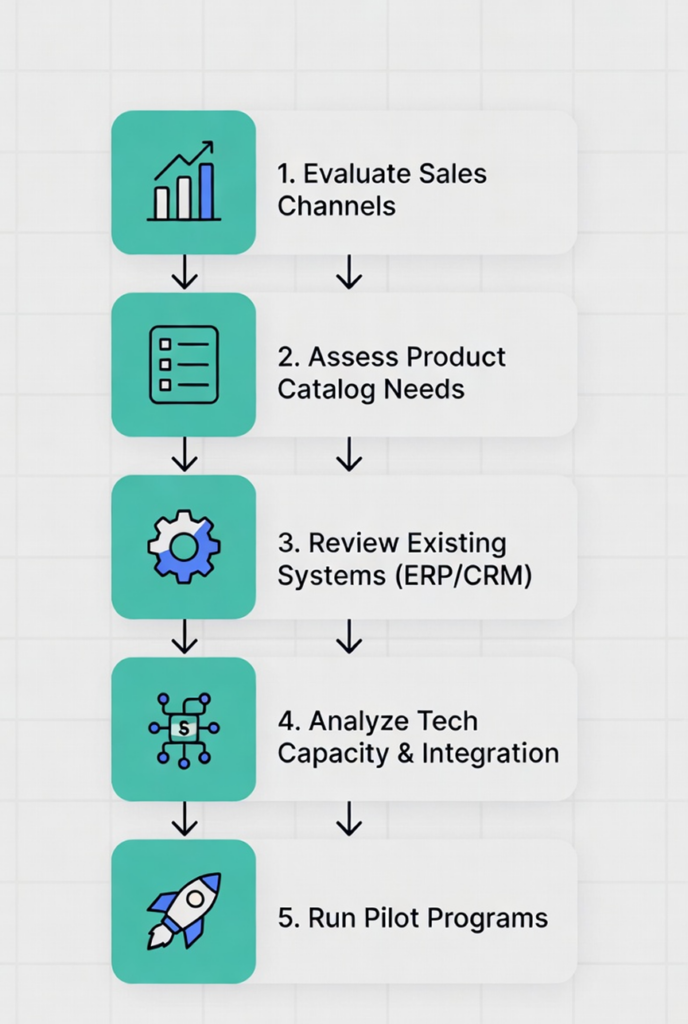
For B2B organizations evaluating Demandware alternatives today, a pragmatic selection process often looks like this: [orderease]
1. Map your sales channels and regions (direct, reseller, marketplace, offline reps, etc.).
2. Define your catalog and pricing complexity (tiered pricing, contracts, region‑specific assortments).
3. Audit your current systems (ERP, CRM, procurement, logistics) and list integration requirements.
4. Estimate your in‑house technical capacity and budget for external development or managed services.
5. Shortlist platforms that match your complexity level, then run pilot implementations with limited product ranges.
For example, a mid‑market manufacturer with contract pricing and ERP integration needs might shortlist Virto Commerce or OroCommerce, while a fast‑growing brand blending DTC and B2B may lean toward BigCommerce or Shopify Plus. A cross‑border seller focused on sourcing from China with minimal inventory could combine a lean storefront with Looperbuy to handle sourcing, consolidation, and dropshipping. [virtocommerce]
Demandware Alternatives: Expert Comparison Snapshot
The table below summarizes the strategic positioning of common Demandware alternatives and where a procurement platform like Looperbuy fits in the ecosystem. [wizcommerce]
| Platform / Solution | Best suited for | Technical control | B2B‑native capabilities | Procurement / dropshipping focus |
| Salesforce Commerce Cloud | Large enterprises with omnichannel retail | Medium (proprietary) | Strong for complex retail B2B | Low – relies on external systems |
| Magento (Adobe Commerce) | SMBs to mid‑market needing customization | High (open‑source + PaaS) | Good, extensible via modules | Low – requires custom integration |
| BigCommerce | Growing brands and mid‑market | Medium (SaaS) | Solid, especially with B2B Edition | Low – external procurement tools needed |
| Weebly | Micro and small businesses | Low–medium (template driven) | Limited for complex B2B | Low – basic ecommerce only |
| Virto Commerce | Manufacturers, distributors, marketplaces | High (composable, API‑first) | Strong B2B and multi‑vendor features | Medium – can integrate with sourcing platforms |
| Looperbuy (procurement) | Global B2B sellers sourcing from China | Medium (platform APIs) | Supports B2B procurement workflows | High – focuses on sourcing, dropshipping, logistics cost control |
From Evaluation to Implementation
For most B2B organizations, the ideal future state is not “replacing Demandware with another monolith”, but building a modular stack: a storefront tailored to your customers’ buying experience, connected to a sourcing and fulfillment backbone that minimizes inventory risk and logistics complexity. [virtocommerce]
If your business relies on Chinese suppliers or wants to expand product lines without tying up capital in stock, pairing a B2B‑optimized commerce platform with a solution like Looperbuy can give you a more agile, cost‑efficient operating model. Rather than trying to force one platform to handle everything from UX to supplier vetting, you orchestrate specialized tools: one for front‑end commerce and one for reliable sourcing and dropshipping. [tripleareview]
A practical next step is to review your current tech stack, identify where costs and bottlenecks arise (development, warehousing, logistics, supplier management), and then explore how a demand‑side platform (e.g., Virto, BigCommerce, Magento) plus Looperbuy on the supply side could reduce complexity while improving margins. [wizcommerce]
If you share a bit more about your current tech stack and buyer profile, I can outline a concrete content structure tailored to Looperbuy’s positioning on your blog.
Frequently Asked Questions
1. Is Salesforce Commerce Cloud still a good choice for B2B brands?
Yes, it remains strong for large enterprises with complex omnichannel requirements, but it often requires substantial development resources and budget, which may not suit lean B2B teams. [bigcommerce]
2. When should a manufacturer choose Virto Commerce over Magento?
Virto is better suited when you need B2B‑native features, multi‑vendor marketplaces, and composable architecture, while Magento is ideal when deep storefront customization is the top priority and you have solid technical capacity. [semrush]
3. Can BigCommerce support complex B2B use cases?
Yes, especially with BigCommerce B2B Edition, which adds features such as shared shopping lists, quote‑to‑order workflows, and corporate account structures, though extremely complex setups may require customization. [bigcommerce]
4. How does a procurement platform like Looperbuy complement my ecommerce platform?
It centralizes sourcing, quality control, and dropshipping from Chinese suppliers, helping you reduce inventory risk, warehouse costs, and logistics complexity while expanding product assortment. [tripleareview]
5. What is the main risk of starting on a very simple platform like Weebly?
While Weebly is excellent for quick entry, its limited B2B features and integration capabilities can become constraints as you scale, often requiring a migration to a more specialized platform later. [globalsources]
References
1. Virto Commerce Blog – “Demandware Alternatives and Competitors”.
2. WizCommerce – “15 Best B2B E-Commerce Platforms in 2026”. [wizcommerce]
3. Virto Commerce – “Best B2B eCommerce Platforms in 2026: The Expert Overview”. [virtocommerce]
4. BigCommerce – “Best B2B Ecommerce Platforms of 2026 (Know Your Options)”. [bigcommerce]
5. Global Sources – “Top 20 B2B E-Commerce Platforms in 2026 – Elevate Your Business”. [globalsources]
6. OrderEase – “Best B2B eCommerce Platforms for Manufacturers (2026)”. [orderease]
7. StackShare – “What are some alternatives to Demandware?”. [stackshare]
8. Semrush – “The 21 Best B2B Ecommerce Platforms”. [semrush]

-700x490.png)