Discover the wholesale fashion trends shaping online retail in 2026. Learn how to source, test, inspect, and scale apparel, accessories, footwear, and sustainable fashion products from China with a flexible, low-inventory dropshipping strategy.
Fashion buyers no longer win simply by spotting the next popular color or silhouette. In today’s market, the strongest wholesale fashion businesses combine trend awareness, disciplined product validation, supplier due diligence, and flexible fulfillment.
For online sellers, boutique owners, marketplace merchants, and emerging fashion brands, the goal is not to buy more inventory. It is to identify products with real demand, test them with manageable risk, and replenish proven winners without carrying unnecessary stock.
The wholesale fashion market still offers major opportunities across streetwear, athleisure, gender-neutral basics, statement accessories, comfort footwear, retro-inspired items, and functional fashion. However, consumers are becoming more value-conscious, supply chains are facing cost volatility, and product discovery is changing rapidly through social platforms and AI-assisted shopping tools. Businesses that make faster, evidence-based purchasing decisions are better positioned to protect margins and build repeat demand.
This guide explains the most relevant wholesale fashion trends for online sellers and, more importantly, shows how to turn them into a practical sourcing strategy with China product sourcing and dropshipping support from Looperbuy.
Table of Contents
What Is Driving Wholesale Fashion Demand in 2026?
Fashion trends matter, but a sellable wholesale assortment needs to answer three commercial questions:
1. Will shoppers understand the product’s value quickly?
2. Can the product be priced with enough margin after shipping, returns, and advertising?
3. Can you replenish it consistently if it sells?
The current market rewards products that offer visible value. That can mean comfort, versatility, novelty, durability, a clear material story, or a stronger perceived quality level than similarly priced alternatives.
McKinsey projects low single-digit global fashion growth in 2026, while describing consumers as increasingly value-conscious. In this environment, brands cannot rely on price increases alone. They need better product quality, stronger differentiation, and operational efficiency.
For wholesale buyers, this shifts the purchasing mindset from “What is trending?” to “What trend can I reliably turn into a repeatable product offer?”
The Wholesale Fashion Categories Worth Watching
| Wholesale category | Why it attracts buyers | Products to test first | Main sourcing concern |
| Streetwear and athleisure | Comfort, everyday wear, social-media visibility | Oversized tees, zip hoodies, joggers, matching sets | Fabric weight, shrinkage, print quality |
| Gender-neutral basics | Broader audience and easier assortment planning | Boxy tees, relaxed shirts, crewnecks, utility pants | Inclusive fit grading and clear size charts |
| Retro-inspired fashion | Familiarity plus visual differentiation | Wide-leg denim, vintage wash tees, sporty jackets | Avoiding overly generic or copied designs |
| Minimalist staples | Repeat purchase potential and lower trend risk | Knit tops, neutral trousers, fitted tanks, blazers | Stitching, opacity, pilling, fit consistency |
| Statement accessories | Lower unit cost and strong impulse-buy appeal | Bags, sunglasses, hair accessories, chunky jewelry | Material durability, plating quality, packaging |
| Comfort footwear | Practical demand and high styling flexibility | Cushioned slides, casual sneakers, ergonomic sandals | Sizing accuracy, sole adhesion, odor control |
| Functional and smart-adjacent accessories | Appeal through utility and gifting | Tech pouches, wearable accessories, smart eyewear cases | Product safety, batteries, compliance requirements |
The most resilient product mix usually includes both stable essentials and limited trend-led products. Basics provide predictable conversion opportunities, while fashion-forward items create freshness and content potential.
Trend 1: Streetwear and Athleisure Remain Commercially Strong
Streetwear and athleisure remain central to wholesale fashion because they sit at the intersection of comfort, casual identity, and easy styling. Products such as hoodies, joggers, oversized T-shirts, leggings, sports bras, sneakers, and backpacks continue to translate well across direct-to-consumer stores, social commerce, and marketplace listings.
The opportunity is not simply to source another generic hoodie. The opportunity is to create a defined product angle.
Product angles that make basic apparel easier to sell
– Heavyweight oversized T-shirts with transparent GSM details and garment-wash finishes
– Co-ord sets that make outfit decisions easy for shoppers
– Travel-friendly activewear with pockets, stretch, and wrinkle resistance
– Modest athleisure with longer tops, relaxed silhouettes, and layering options
– Campus-inspired streetwear with limited graphic drops
– Neutral unisex loungewear with clear fit guidance for all body types
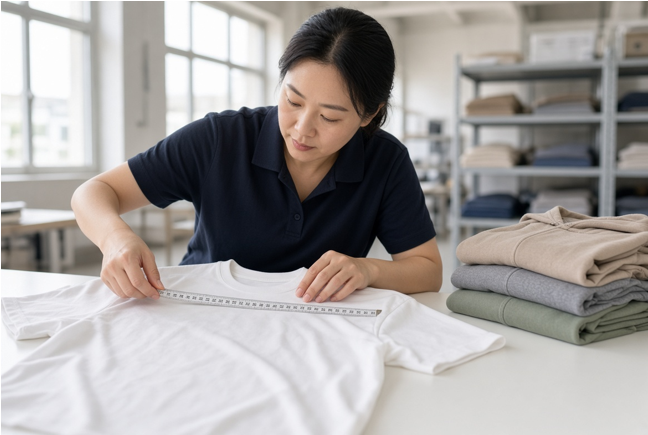
When evaluating these products, request precise details from suppliers. Ask for fabric composition, GSM, size tolerance, wash-care information, colorfastness expectations, and photos or videos of the actual production sample rather than only edited catalog images.
A practical quality-control checklist for apparel
Before listing a new clothing product, inspect or verify:
– Fabric composition matches the product description
– Measurement chart includes garment measurements, not only body measurements
– Stitching is even at hems, armholes, waistbands, and seams
– Prints and embroidery remain intact after a wash test where possible
– Dark and saturated colors do not visibly rub off
– Zippers, drawstrings, snaps, and elastic function consistently
– Product photos accurately reflect color, thickness, and fit
– Packaging protects the item without adding unnecessary bulk
Trend 2: Gender-Neutral and Inclusive Fits Create Larger Product Opportunities
Gender-neutral fashion is more than a color palette of black, beige, and grey. For a wholesale buyer, it is a product-planning strategy that can reduce assortment complexity and expand the number of potential customers for a single SKU.
Relaxed shirts, oversized tees, utility trousers, hoodies, knitwear, caps, and outerwear can often be offered in a unisex format. But the product must be designed and presented intentionally. A label alone does not make a garment inclusive.
How to source gender-neutral clothing correctly
Focus on fit communication, not vague language. Your product page should include:
– A detailed size chart with chest, shoulder, sleeve, waist, hip, inseam, and length measurements
– Model height and the size worn
– Front, back, and side product images
– A note explaining whether the fit is oversized, standard, cropped, or relaxed
– Styling suggestions for different customers
– Clear fabric stretch information
For example, instead of simply writing “unisex oversized hoodie,” write:
> “Designed with dropped shoulders and a relaxed body. Choose your usual size for an oversized fit, or size down for a closer fit. Please compare the garment chest measurement with a favorite hoodie before ordering.”
This type of detail can reduce sizing confusion and improve buyer confidence.
Trend 3: Sustainable Fashion Needs Proof, Not Vague Claims
More shoppers want products with better material, packaging, and durability stories. Yet “eco-friendly” is not a product specification. Fashion sellers should avoid unverified sustainability claims and ask suppliers for records that support any material or certification statement.
The scale of the material challenge is significant. Global fiber production reached approximately 132 million tonnes in 2024, up from about 125 million tonnes in 2023. Polyester represented 59% of global fiber output, and 88% of that polyester was fossil-based. Textile Exchange also reports that recycled fibers accounted for 7.6% of all global fiber production, while less than 1% came from pre- and post-consumer textile recycling.
These figures do not mean sellers should avoid recycled materials. They mean brands should describe materials accurately.
Better ways to build a responsible fashion assortment
| Avoid this claim | Use this approach instead |
| “100% sustainable clothing” | State the exact material composition and available documentation |
| “Made from recycled textiles” | Confirm whether the recycled input comes from textiles, bottles, or another source |
| “Eco-friendly packaging” | Specify material, recycled content if verified, and recyclability conditions |
| “Ethically made” | Describe the evidence available, such as factory audits, certification scope, or traceability records |
| “Zero-waste fashion” | Explain the specific waste-reduction method and its limitations |
Ask suppliers for documents relevant to your claim, including material test reports, transaction certificates where applicable, fiber certificates, factory audit information, and packaging specifications. Do not imply certification applies to every component of a finished product unless the documentation confirms that scope.
A practical starting assortment might include:
– Organic or certified cotton basics, when documentation is available
– Recycled polyester activewear with accurate material labeling
– Durable canvas bags and reusable shopping bags
– Small-batch upcycled accessories with clear material origin
– Timeless garments designed for repeat wear rather than single-event use
– Reduced-plastic or right-sized packaging options
Trend 4: Retro, Bold Details, and Statement Accessories Improve Content Performance
Retro-inspired fashion remains useful for online sellers because it gives shoppers an immediate visual reference. High-waisted denim, vintage-inspired washes, sporty track jackets, oversized sunglasses, bright color blocking, floral prints, animal-inspired patterns, metallic finishes, mesh, faux leather, velvet, and sequins all create scroll-stopping product imagery when used selectively. These categories were also identified in the original guide as recurring wholesale fashion directions.
However, fashion retailers should avoid building an entire catalogue around short-lived novelty. A safer approach is to pair a trend-led visual element with a practical product base.
Low-risk product combinations
– A classic neutral blazer with a limited-run bold lining
– A simple activewear set in one high-demand core color plus one seasonal colorway
– A minimalist dress with a textured fabric or adjustable detail
– A standard shoulder bag in neutral colors plus one metallic or printed option
– Basic earrings paired with one statement accessory collection
– Straight-leg jeans in standard denim plus a limited vintage wash
Accessories are especially helpful for testing market demand. They usually require less sizing complexity than clothing, can support bundles, and often make effective add-on items at checkout.
For example, a store selling neutral athleisure can test a bundle of ribbed socks, a sport tote, a cap, and a water-bottle pouch before committing to a large apparel collection. The accessories can validate the audience’s style preferences while increasing average order value.
Trend 5: Comfort Footwear and Functional Products Require Extra Verification
Comfort footwear continues to attract buyers who want products that work for commuting, travel, daily errands, and casual styling. Cushioned slides, ergonomic sandals, knit-upper sneakers, and lightweight casual shoes can fit well into a wholesale fashion assortment.
But footwear has a higher risk of return because sizing, comfort, odor, sole durability, and visual expectations vary widely. A good product photo is not enough.
What to check before sourcing footwear
1. Request the supplier’s size conversion chart and confirm whether it uses EU, US, UK, or foot-length sizing.
2. Ask for insole length measurements for every size.
3. Verify upper material, lining, insole, outsole, and adhesive method.
4. Review images of the outsole pattern, stitching, gluing points, and finished edge.
5. Order samples in more than one size where possible.
6. Ask about carton dimensions, individual shoe-box options, and shipping weight.
7. Confirm destination-market requirements for labeling and any material-related restrictions.
8. Avoid medical or orthopedic claims unless the product is properly substantiated and compliant in the market where you sell.
The same discipline applies to fashion technology and smart accessories. Wearables, LED accessories, heated apparel, and products with batteries can be commercially attractive, but they need extra safety, transportation, and compliance review.
A Low-Inventory Sourcing Framework for Fashion Sellers
The biggest sourcing mistake is treating a supplier quote as a purchase signal. A quote is only the beginning. Before committing to inventory, validate the product, supplier, and unit economics.
For businesses using China sourcing and dropshipping services, the advantage is flexibility: you can test different products, compare supplier options, consolidate suitable items, and scale only when demand becomes clear.
Step 1: Start with a focused product hypothesis
Choose one customer, one use case, and one product angle.
Instead of: “I want to sell women’s clothing.”
Use: “I want to test modest, breathable matching sets for women who want polished travel outfits.”
This gives you a clearer supplier brief, better product-page messaging, and more useful ad or creator content.
Step 2: Build a short supplier shortlist
Compare at least several potential options using consistent criteria:
– Product materials and construction
– Minimum order quantity
– Unit price at different quantities
– Sample availability and cost
– Lead time
– Customization options
– Quality-control process
– Communication speed and clarity
– Packaging capability
– Shipping compatibility
Step 3: Request samples before scaling
A sample lets you inspect the real product and identify gaps between listing images and production quality. Photograph and measure it yourself. If you will use dropshipping, verify whether the fulfillment partner can inspect products, combine orders, and send your preferred packaging.
Step 4: Calculate landed cost, not factory price
Your decision should account for more than the supplier’s unit quote:
Landed Cost=Product Cost+Domestic Handling+Quality Inspection+Packaging+International Shipping+Duties/Taxes Where Applicable+Payment Fees
Then allow room for marketing spend, refunds, replacements, platform fees, and margin.
Step 5: Run a small demand test
Test a limited group of products or variants. Use product pages, organic social content, creator seeding, waitlists, pre-orders where appropriate, or small paid campaigns. Look beyond clicks. Track add-to-cart rate, conversion rate, questions from customers, refund reasons, and repeat purchase signals.
Step 6: Scale winners and remove friction
When a product proves demand, improve it before increasing volume:
– Negotiate better pricing based on actual sales volume
– Improve size charts and imagery
– Add product bundles
– Offer better packaging
– Set reorder thresholds
– Create replacement procedures for defects
– Use customer feedback to refine colors, sizing, and product descriptions
Why Flexible China Sourcing and Dropshipping Matter
Fashion demand is difficult to forecast. A product can gain momentum overnight through a creator video, a seasonal event, or a new styling trend. It can also slow down quickly when the market becomes crowded.
That is why flexible fulfillment matters. A sourcing and dropshipping model can help sellers:
– Test more ideas without buying large quantities upfront
– Reduce cash tied up in slow-moving inventory
– Avoid managing separate warehousing and international shipping workflows
– Source from a wider range of Chinese product suppliers
– Consolidate suitable products into fewer shipments
– Scale replenishment after identifying proven products
– Spend more time on merchandising, customer experience, and brand building
Looperbuy helps global B2B sellers source China products and arrange fulfillment without requiring them to manage every supplier, stockholding, payment, or logistics detail alone. The right workflow is not “source everything cheaply.” It is to source products that meet your market requirements, verify quality before customers receive them, and use inventory only where it creates a real commercial advantage.
Start Testing Your Next Fashion Collection With Looperbuy
The best wholesale fashion strategy combines creativity with operational control. Keep your core collection practical. Use trend-led products to create discovery. Verify every supplier claim. Test products before committing capital. Then scale only the items that your customers repeatedly choose.
Ready to source fashion products from China without taking on unnecessary inventory risk? Share your product ideas, target market, quantities, packaging needs, and fulfillment destinations with Looperbuy. We can help you evaluate sourcing options, coordinate product checks, and support a more flexible global dropshipping workflow.
FAQs About Wholesale Fashion Sourcing
1. What are the best wholesale fashion products to sell online?
The best products depend on your audience and price point, but reliable starting categories include oversized T-shirts, matching athleisure sets, neutral basics, casual bags, jewelry, sunglasses, comfort footwear, and seasonal accessories. Prioritize products with clear visual appeal, manageable return risk, and enough margin after shipping and marketing costs.
2. How can I buy wholesale clothing from China without holding inventory?
You can use a sourcing and dropshipping workflow. First, identify suitable suppliers and request samples. After product quality is verified, a sourcing partner can help arrange purchasing, product inspection, storage when needed, packaging, and individual order fulfillment. This allows you to test demand before placing larger inventory orders.
3. What should I ask a wholesale clothing supplier before buying?
Ask about materials, size tolerance, minimum order quantity, sample cost, production lead time, color options, customization, packaging, quality-control procedures, defect handling, shipping weight, and required certifications or test reports. Always request real product photos or videos and inspect a sample where possible.
4. Is recycled polyester always a better fashion material choice?
Not automatically. Recycled polyester can reduce reliance on virgin material, but its environmental profile depends on source material, manufacturing process, durability, end-of-life options, and the accuracy of the product claim. Textile Exchange reports that most recycled polyester is still made from plastic bottles rather than recycled textiles, so sellers should describe the source precisely.
5. How do I reduce fashion product returns?
Use accurate garment measurements, model details, close-up material photos, fit videos, transparent fabric information, clear care instructions, and realistic color representation. For footwear, include insole lengths and a clear sizing conversion chart. Quality checks before fulfillment also reduce avoidable defects.
6. Should I follow every fashion trend when sourcing wholesale products?
No. Build your assortment around a stable core of versatile products, then test a limited number of trend-led items. This approach reduces exposure to short-lived demand while keeping your store visually fresh and relevant.
7. How do I know whether a fashion product can be profitable?
Calculate the complete landed cost, including product cost, inspection, packaging, shipping, payment fees, duties where applicable, returns, marketplace fees, and customer acquisition costs. Then compare that figure with a realistic selling price based on your market and competitors.
References
1. [Global Sources — Ultimate Guide to Wholesale Fashion Trends]. Source for the foundational trend categories discussed in this article, including streetwear, athleisure, sustainable fashion, gender-neutral fashion, bold patterns, comfort footwear, retro styles, minimalist pieces, innovative materials, statement accessories, and smart fashion.
2. [McKinsey & Company and The Business of Fashion — The State of Fashion 2026: When the Rules Change]. Source for 2026 industry outlook, low single-digit growth projection, value-conscious consumer behavior, supply-chain volatility, AI-led discovery, resale momentum, and the need for agility.
3. [Textile Exchange — Materials Market Report 2025]. Source for global fiber-production data, polyester’s share of worldwide output, recycled-fiber data, and certification-related material statistics.