Amazon dropshipping remains possible in 2026, but success requires policy-compliant fulfillment, reliable suppliers, strict account-health control, and realistic margins. Learn how to reduce risk through product testing, China sourcing, quality inspection, multi-channel selling, and a scalable fulfillment workflow with Looperbuy.
Amazon dropshipping is still possible in 2026, but it is no longer a shortcut built on retail arbitrage, copied listings, and manual order forwarding. Sellers must operate as the seller of record, control the customer experience, protect account health, and use suppliers that can meet Amazon’s packaging, shipping, returns, and inventory requirements.
For global B2B sellers, the more durable opportunity is to treat dropshipping as a supply-chain model—not a “list first, figure it out later” business model. A reliable China sourcing and fulfillment partner such as Looperbuy can help sellers test products without buying deep inventory upfront, while giving them more control over product selection, quality checks, consolidation, branding options, and international fulfillment.
> Important note: This article is for general business information. Amazon policies, seller-performance requirements, product rules, tax obligations, and import requirements can change. Review the applicable Amazon Seller Central policies and seek professional legal, tax, or compliance advice where necessary.
Table of Contents
Is Amazon Dropshipping Allowed in 2026?
Yes—Amazon permits dropshipping when the seller follows its Drop Shipping Policy and remains fully responsible for the sale. The central rule is simple: you must be the seller of record.
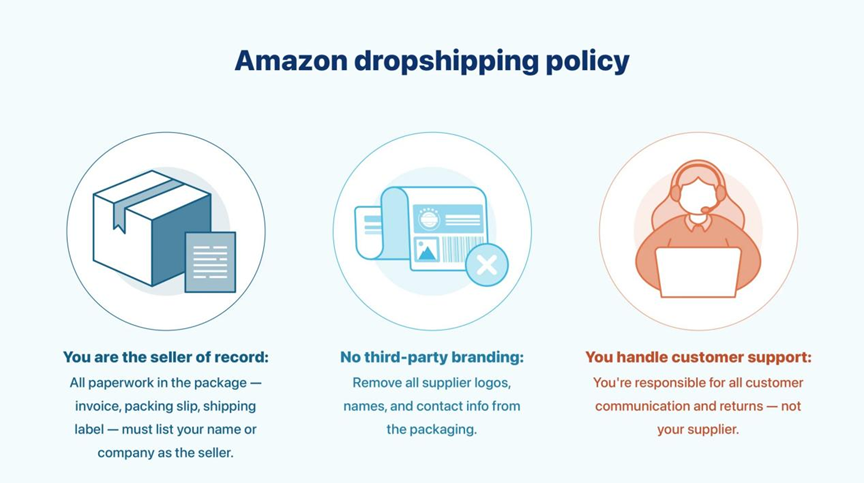
That means your business, rather than a retailer, marketplace, or unknown supplier, must appear as the seller to the customer. Amazon states that sellers using a third party for fulfillment must:
– Identify themselves as the seller of record on packing slips, invoices, external packaging, and other included materials.
– Remove information that identifies the third-party supplier or dropshipper.
– Accept and process customer returns.
– Provide customer service that meets Amazon’s performance standards.
– Comply with all applicable Amazon policies and relevant laws.
This distinction separates compliant supplier fulfillment from risky retail-arbitrage dropshipping.
What Amazon Does Not Want
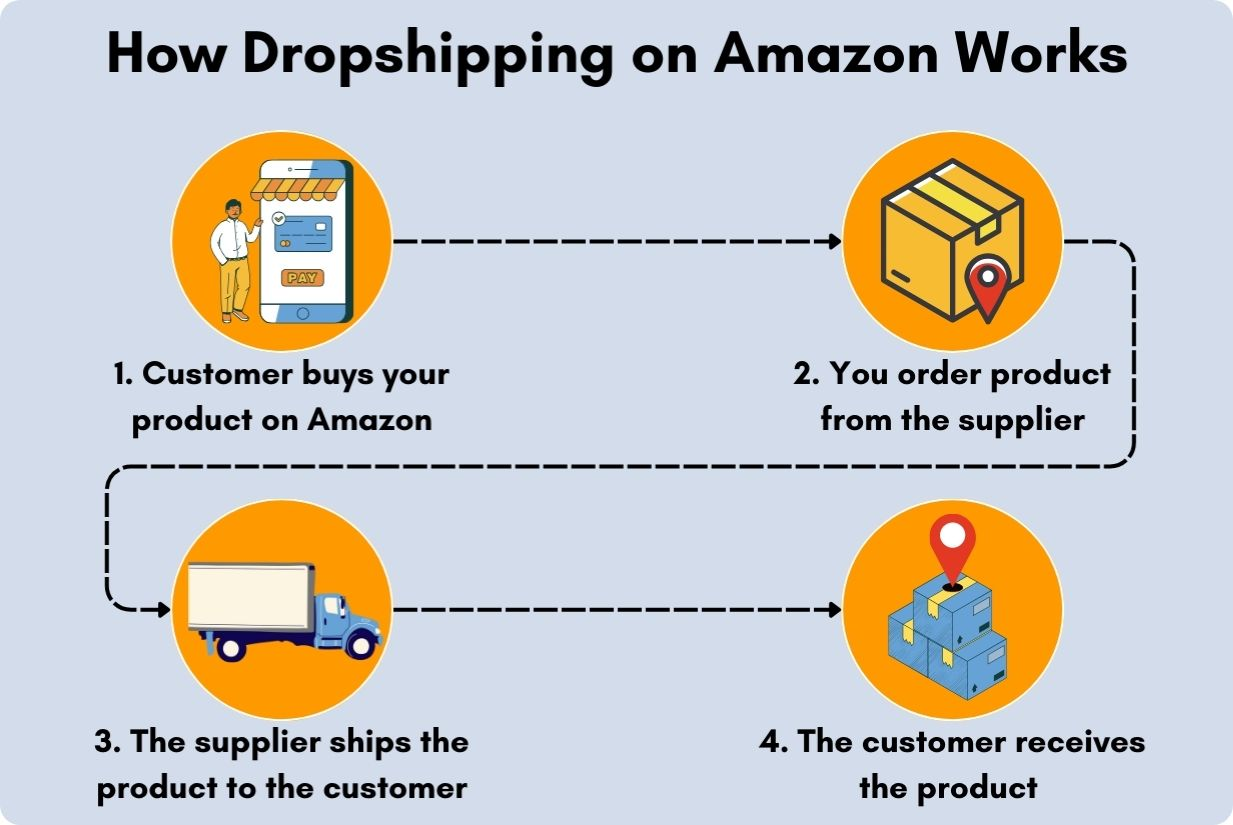
A common high-risk model is to receive an Amazon order, buy the same item from another retailer, then ship it directly to the Amazon customer. The customer may receive packaging, invoices, promotional materials, or a return label showing another retailer’s name.
That creates two problems:
1. The buyer sees a different seller identity than the one they purchased from.
2. You lose control over fulfillment speed, stock status, packaging, product condition, and returns.
For a serious B2B seller, this model creates avoidable operational risk. A single late shipment, wrong item, branded retail invoice, or stockout can trigger negative feedback, an A-to-z Guarantee claim, a chargeback, or a policy review.
The Four Biggest Amazon Dropshipping Risks
Amazon is a valuable sales channel, but it is not a forgiving environment for sellers who lack supply-chain control.
1. Seller-of-Record and Packaging Violations
Amazon’s policy requires your business to be the seller of record. If a customer receives a package with the supplier’s branding, a retail receipt, or another company’s invoice, the shipment may fail the policy test.
This is why sourcing cannot be separated from compliance. Before listing any product, sellers should confirm:
– Can the supplier ship without its own promotional inserts?
– Can the supplier remove third-party invoices and retail receipts?
– Can the packing slip show your required seller information?
– Does the return process match the policy and your customer-service promise?
– Can the supplier consistently provide valid commercial invoices and product documentation?
Expert perspective: A supplier saying “we can dropship” is not enough. Ask for a sample shipment to your own address first. Inspect the box, label, packing slip, product condition, included paperwork, and delivery time before you ever send customer orders.
2. Account Health Can Deteriorate Quickly
Amazon’s Order Defect Rate (ODR) measures the percentage of seller-fulfilled orders with one or more customer-service defects, including negative feedback, A-to-z Guarantee claims, and credit card chargebacks. Amazon requires sellers to maintain an ODR below 1%.
ODR=Orders with one or more defects÷(Total seller-fulfilled orders)×100
For example, if you fulfill 300 orders over the relevant period, three defective orders would put you at 1%. That is why a supplier’s inconsistency can become an account-level problem.
| Operational issue | What the customer experiences | Potential business impact |
| Inventory is not synchronized | Order is canceled after purchase | Negative feedback or cancellation issues |
| Supplier ships late | Delivery promise is missed | Customer dissatisfaction and account-health pressure |
| Wrong product or variation | Buyer receives an incorrect item | Refunds, claims, returns, and poor reviews |
| Poor packaging | Product arrives damaged | Higher return and claim rates |
| Weak product quality | Listing does not match buyer expectations | Negative reviews and loss of repeat business |
Actionable rule: Do not scale a product until your supplier has demonstrated stable quality, traceable inventory, predictable lead times, and clear return handling.
3. Margin Compression
Amazon seller fees vary by category. Amazon charges a referral fee on every item sold, calculated as a percentage of the total sales price or a minimum fee, whichever is greater. Many categories are commonly associated with a 15% referral-fee structure, although actual rates differ by category.
A product can look profitable before launch but become unprofitable after accounting for:
– Product purchase cost
– Domestic or international freight
– Amazon referral fees
– Advertising costs
– Returns and replacement orders
– Currency conversion and payment fees
– Customs duties, taxes, or import-related charges where applicable
– Customer-service labor
– Packaging, labeling, inspection, or branding costs
Example: Build a Real Margin Model
| Cost component | Example amount |
| Selling price | $49.99 |
| Product and supplier fulfillment cost | -$24.00 |
| Amazon referral fee at 15% | -$7.50 |
| Average advertising cost per order | -$6.00 |
| Returns, replacements, and service reserve | -$3.00 |
| Estimated contribution margin | $9.49 |
The apparent gross margin is not your true margin. Sellers should build a reserve for refunds, delivery exceptions, damaged parcels, customer support, and price changes before deciding whether to scale.
4. You Do Not Own the Marketplace Customer Relationship
Amazon provides traffic, buyer trust, and conversion potential. However, it controls the marketplace environment and customer relationship. Your listing can lose visibility, the Buy Box can change, fees can change, or account-level issues can disrupt sales.
That does not mean Amazon should be avoided. It means Amazon should not be your only commercial asset.
A stronger strategy is to build multiple paths to revenue:
– Amazon for demand capture and marketplace visibility
– Your independent store for brand storytelling and repeat-purchase growth
– Social commerce for product discovery and content-led demand
– B2B wholesale channels for larger orders and longer customer relationships
– Email and customer-support systems that comply with platform rules and applicable privacy requirements
A Safer Amazon Dropshipping Workflow
A compliant operation begins with product and supplier validation—not listing volume.
Step 1: Choose Products With Operational Simplicity
Start with products that are easier to inspect, ship, explain, and return. Avoid products with high breakage risk, complicated sizing, unclear compliance requirements, frequent defects, or a large number of fragile components.
For early-stage testing, prioritize products with:
– Clear use cases and measurable buyer benefits
– Low return complexity
– Stable supply availability
– Reasonable shipping size and weight
– Strong product photography or the ability to create original content
– A practical margin after every operating cost
– Documents available when relevant, such as material details, test reports, certificates, or invoices
Step 2: Vet the Supplier Before You List
For China sourcing, do not judge a supplier only by its quoted product price. The lowest unit cost can become expensive if the seller faces quality problems, poor packaging, delayed dispatch, communication gaps, or expensive replacements.
Use a supplier qualification checklist:
1. Request product specifications, dimensions, materials, packaging details, and product photos.
2. Order samples to verify build quality, functionality, appearance, and packaging.
3. Confirm current stock, production lead time, and replenishment capacity.
4. Ask whether customized packaging, inserts, labeling, or unbranded fulfillment are available.
5. Clarify the supplier’s defect, replacement, and refund process in writing.
6. Verify whether quality inspection can take place before shipment.
7. Confirm shipping methods, tracking availability, destinations served, and expected transit ranges.
8. Retain invoices, purchase records, correspondence, and product documentation.
Looperbuy can fit into this process by helping B2B sellers source Chinese products, consolidate orders, inspect goods, and arrange fulfillment. This can reduce the need to purchase and warehouse large quantities before validating market demand. The key is to establish a documented workflow for inspection, packaging, inventory visibility, and delivery expectations before connecting supply to an Amazon listing.
Step 3: Order Samples and Create Original Assets
Never rely exclusively on supplier images or generic descriptions. Order the item and document what the buyer will actually receive.
Create original listing assets based on real testing:
– Product photos from multiple angles
– Dimension and comparison graphics
– Short demonstration videos
– Setup or usage instructions
– Packaging images
– Honest product limitations
– Frequently asked buyer questions
This helps reduce expectation gaps—the difference between what customers think they are buying and what they receive. Fewer expectation gaps generally mean fewer returns and fewer negative reviews.
Step 4: Launch Small and Measure Exceptions
Start with a controlled product set rather than hundreds of untested listings.
Monitor these operating signals daily or weekly:
– Orders shipped on time
– Tracking upload accuracy
– Customer messages and response speed
– Refund rate
– Return reasons
– Product defects
– Delivery exceptions
– Stockouts and canceled orders
– Negative feedback and claims
– Actual contribution margin after advertising and returns
If a product receives repeated complaints about quality, size, shipping, or packaging, pause it. Scaling a problematic product only multiplies the cost.
The Hybrid Model: Marketplace Reach, Independent Brand Control
The most resilient sellers do not rely on a single channel. They combine marketplace demand with an independent brand and controlled sourcing.
| Channel | Primary role | Main advantage | Main limitation |
| Amazon | Capture high-intent buyer demand | Built-in traffic and buyer trust | Strict rules, fees, and limited customer ownership |
| Independent store | Build a long-term brand asset | Full control over merchandising and customer journey | Requires traffic generation |
| Social commerce | Create discovery and product education | Strong visual storytelling potential | Demand can be volatile |
| B2B wholesale | Win larger and repeat orders | Potentially larger order values | Longer sales cycles |
| Looperbuy sourcing and fulfillment | Support product sourcing and operational execution | Lower inventory exposure and China supply access | Requires clear quality and logistics processes |
For example, a seller can use an independent site to explain a product category in depth, publish authentic demo videos, collect wholesale inquiries, and build a recognizable brand. At the same time, Amazon can serve shoppers who are ready to buy immediately. A sourcing partner can then help consolidate product procurement, quality inspection, and fulfillment coordination from China.
This is not about abandoning Amazon. It is about ensuring that one platform decision does not determine the future of your entire business.
When China Sourcing Makes Sense
China sourcing can be highly effective when the seller needs product variety, customization, competitive factory pricing, small-batch testing, or access to OEM and ODM capabilities. However, it works best when sellers build quality assurance and logistics planning into the process.
China sourcing is particularly suitable when you need:
– Custom colors, bundles, logos, packaging, or inserts
– Product differentiation beyond generic catalog listings
– Multiple SKUs consolidated into one fulfillment workflow
– Sample-based testing before purchasing deeper inventory
– Supplier communication and order coordination support
– Pre-shipment inspection before goods enter the delivery network
It is less suitable when a product must arrive immediately, when product safety documentation is unclear, or when the seller has not yet tested supplier reliability.
Practical advice: Start with a test order. Verify the product yourself. Then test a small group of customer orders. Only after the supply chain performs reliably should you increase volume.
Build a More Controlled Dropshipping Business
The Amazon dropshipping opportunity in 2026 is real, but it rewards operational discipline rather than shortcuts. Sellers who treat suppliers as interchangeable, ignore packaging requirements, list products without testing, or depend on retail-arbitrage fulfillment expose their business to preventable account, margin, and customer-service risks.
A stronger approach is to validate products carefully, select suppliers with documented capabilities, test samples, track performance, and diversify sales channels. With Looperbuy, B2B sellers can source products from China, reduce early inventory exposure, arrange product inspection and consolidation, and create a more flexible fulfillment foundation for global growth.
Ready to test products without tying up capital in large inventory orders? Contact Looperbuy to source, inspect, consolidate, and fulfill China-made products for your global B2B business.
Frequently Asked Questions
1. Can I legally dropship on Amazon in 2026?
Amazon allows dropshipping when sellers follow its Drop Shipping Policy and all applicable laws. You must be the seller of record, prevent third-party supplier information from appearing in the shipment, handle returns, and remain responsible for customer service.
2. What does “seller of record” mean for Amazon dropshipping?
It means your business is presented as the seller to the customer and takes responsibility for the transaction. Your business should appear on relevant packing slips, invoices, and packaging, while third-party supplier identity information should not be included in customer-facing shipment materials.
3. What is Amazon’s Order Defect Rate?
Order Defect Rate, or ODR, is a seller-performance measure based on orders that receive negative feedback, an A-to-z Guarantee claim, or a credit card chargeback. Amazon requires sellers to keep ODR below 1% for seller-fulfilled orders.
4. Why is retail-arbitrage dropshipping risky on Amazon?
Buying from another retailer after receiving an Amazon order can result in third-party packaging, invoices, inserts, inconsistent inventory, and slower shipping. These issues can conflict with Amazon’s seller-of-record requirement and create customer-service problems.
5. How can I evaluate a China supplier before launching a product?
Order samples, inspect product quality and packaging, verify shipping performance, confirm inventory availability, clarify return and replacement responsibilities, request invoices and relevant documents, and test a small number of orders before scaling.
6. Can I use Looperbuy for Amazon dropshipping?
Looperbuy can support Chinese product sourcing, product procurement, inspection, consolidation, and fulfillment coordination. Before selling on Amazon, you should confirm that every customer-facing package, invoice, packing slip, return process, and fulfillment method meets Amazon’s current policies and the legal requirements of your target market.
7. Should I sell only on Amazon?
Usually, no. Amazon can be an important sales channel, but an independent store, social channels, B2B wholesale outreach, and a controlled sourcing strategy can reduce dependency on one marketplace and help you build a more durable business asset.
References
1. Amazon Seller Central. “[Order Defect Rate].” Explains the ODR calculation, included defect types, 60-day measurement period, and the requirement to maintain an ODR below 1%.
2. Amazon Sell. “[How to Dropship on Amazon].” Outlines Amazon’s requirements for dropshipping sellers, including seller-of-record responsibility, third-party packaging restrictions, returns, customer service, and legal compliance.
3. Amazon Seller Central. “[Important: Drop Shipping Policy Update].” Summarizes the core requirements for third-party fulfillment: seller of record, removal of third-party supplier information, and responsibility for returns.
4. Amazon Sell. “[Standard Selling Fees].” Provides Amazon’s official overview of referral-fee pricing structures by product category.
5. Doba. “[Amazon Dropshipping 2026: Risks, Rules & Best Alternatives].” Provides the source article’s discussion of modern dropshipping risks, supplier reliability, channel diversification, inventory synchronization, and the strategic shift toward more controlled fulfillment.