International dropshipping returns require more than a basic refund policy. This guide explains how dropshipping companies manage returns through local return hubs, return-to-China workflows, returnless refunds, quality inspections, clear customer communication, and data-led reverse logistics. Learn practical ways to cut return costs, improve buyer trust, and scale global fulfillment.
International product returns are one of the most difficult parts of operating a cross-border dropshipping business. A seller may source a product in China, sell it to a customer in the United States, Europe, Australia, or the Middle East, and then face a return request involving customs paperwork, high shipping costs, import duties, inspection standards, refund timing, and customer-experience expectations.
For modern dropshipping companies, international returns are not simply a customer-service task. They are a reverse logistics strategy. The strongest sellers combine a clear return policy, local or regional return options, supplier quality control, real-time order data, and practical refund rules that protect both the buyer and the business.
At Looperbuy, we see that the best way to reduce international returns is not only to process them efficiently. It is to prevent avoidable returns before the order leaves China through supplier verification, product inspection, accurate listings, packaging checks, and proactive communication.
Table of Contents
Why International Dropshipping Returns Are Different
Domestic returns are already costly. International returns add another layer of complexity because the product must move across borders again—or may not need to move at all.
For a conventional retailer, a returned item usually goes back to a domestic warehouse. For a dropshipping company, however, the item may have been shipped directly from a Chinese supplier to an overseas consumer. Sending that item back to China can cost more than the product itself.
This is why international dropshipping companies must make decisions based on the total recovery value of each return, rather than applying one rule to every order.
According to the National Retail Federation, online purchases had a 17.3% return rate in 2023, compared with 10% for in-store purchases. Returns represented an estimated $743 billion in merchandise across U.S. retail that year.
For dropshipping sellers, even a small return-rate increase can reduce margins quickly because they may need to cover:
– Original fulfillment and shipping costs
– Replacement product costs
– International return-label expenses
– Refund processing fees
– Customs duties, taxes, and brokerage charges
– Inspection, repacking, or disposal expenses
– Customer-support labor
– Lost resale value for opened or damaged products
A well-managed international return process protects profitability while giving customers a fair and trustworthy buying experience.
The Main International Return Models
Not every return should be handled in the same way. Experienced dropshipping companies normally use a decision-based system that considers product value, product condition, customer location, reason for return, and local compliance requirements.
1. Return-to-China Model
In the return-to-China model, the buyer ships the product back to the supplier, sourcing agent, or Chinese fulfillment warehouse.
This method can work when the product has enough value to justify the shipping cost. It is most suitable for:
– High-ticket electronics
– Machinery components
– Professional tools
– Branded accessories
– Larger wholesale sample orders
– Products that can be inspected and resold
– Orders with suspected manufacturing defects
However, return-to-China shipping is often unsuitable for low-cost consumer goods. A $12 accessory may cost $20 to $50 or more to return internationally, depending on the country, carrier, package size, tracking level, and insurance.
Before asking customers to return an item to China, dropshipping companies should calculate:
Return Recovery Value=Resale Value−Return Freight−Handling Cost−Import Cost
If the recovery value is negative, a physical return may create an unnecessary loss.
2. Local Return Hub Model
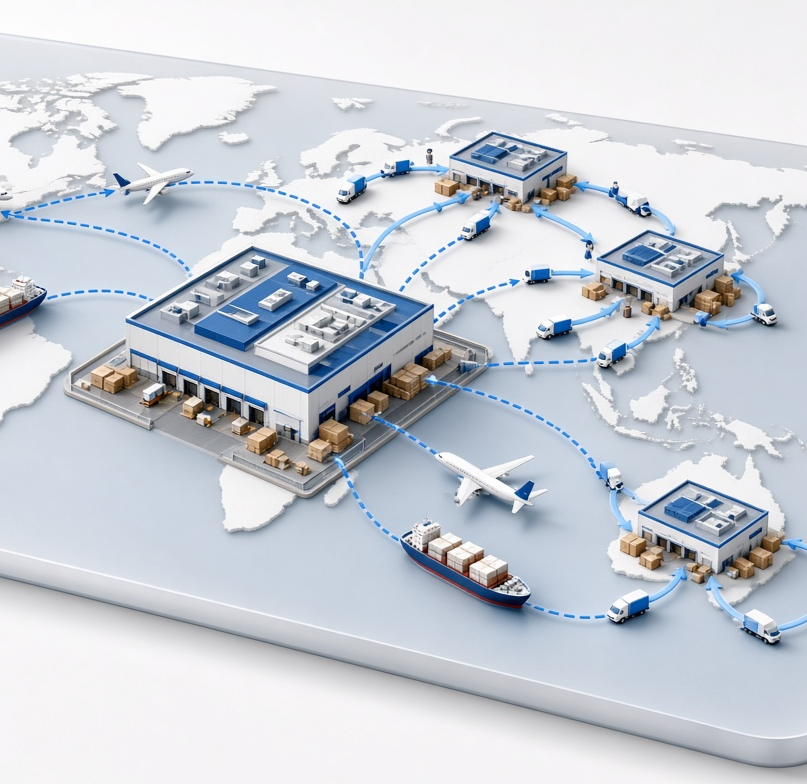
A local return hub allows customers to send products to a warehouse or logistics partner within their own country or region. The returns are then consolidated, inspected, restocked, liquidated, or shipped back in bulk.
This approach is increasingly popular among established international sellers because it can improve both customer satisfaction and operational efficiency.
For example, a seller serving European customers may use a return hub in Germany, the Netherlands, Poland, or the United Kingdom. A seller focused on North America may use a warehouse or third-party logistics provider in the United States or Canada.
Benefits of local return hubs include:
– Faster and cheaper return shipping for buyers
– Better tracking visibility
– Lower customer-service friction
– Consolidated return transportation
– Easier condition inspection
– Opportunities to resell or redistribute products locally
– Faster refund approval for eligible orders
UPS notes that return services can include pre-printed return labels, scheduled pickups, and drop-off options designed to simplify the experience for both customers and merchants.
For a growing dropshipping store, a regional return hub can become a major trust signal—especially for customers who hesitate to buy from an overseas seller.
3. Returnless Refund Model
A returnless refund means the customer receives a refund, partial refund, replacement, or store credit without being required to return the item.
This is often the most economical option for low-value products, heavily damaged items, hygiene-sensitive goods, or products that cannot be resold.
Common situations include:
– The item arrived broken or unusable
– The product is inexpensive to replace
– The return shipping cost exceeds the item value
– The customer received the wrong color, size, or variation
– The item was lost, delayed excessively, or delivered damaged
– A return would create customs complications
– The product is difficult to resell after opening
A returnless refund should not mean an uncontrolled refund policy. Dropshipping companies can reduce abuse by requiring supporting evidence such as:
– Clear photos of the product and packaging
– A short video showing the defect
– A photo of the shipping label
– An unboxing video for high-value goods
– A description of the issue submitted within a defined timeframe
For higher-risk categories, sellers may offer a replacement rather than a cash refund. In other cases, store credit with an added incentive can preserve future customer value.
4. Local Disposal or Donation Model
When an item cannot be resold, repaired, or economically returned, some companies ask the customer to dispose of it responsibly, donate it locally, or keep it.
This model is useful for low-value goods but should be used carefully. Customers should never be asked to discard products that create safety, environmental, or regulatory risks.
For example, batteries, cosmetics, medical-related products, chemicals, and electronic products may be subject to local disposal requirements. Sellers should communicate clearly and avoid giving disposal instructions unless they are confident those instructions are appropriate for the destination market.
A Practical International Return Decision Framework
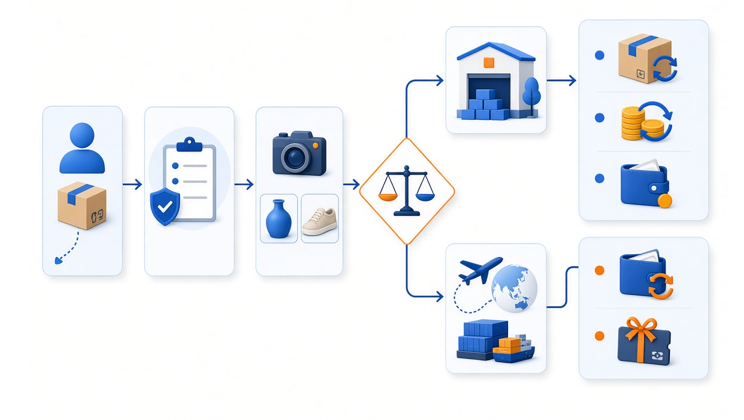
The most efficient dropshipping companies use a return decision tree instead of relying on manual judgment for every request.
| Return factor | Recommended action | Why it matters |
| Product value under $20 | Refund, replacement, or store credit without return | International shipping often costs more than recovery value |
| Product damaged on arrival | Request photo/video evidence; offer refund or replacement | Helps confirm transit or fulfillment issues |
| Wrong item shipped | Replacement, returnless refund, or local return hub | The seller is typically responsible for fulfillment accuracy |
| High-value product | Require tracked return to a local hub or China warehouse | Enables inspection, fraud control, and potential resale |
| Size or preference issue | Follow clearly disclosed policy; offer local return where viable | Reduces disputes and protects margins |
| Faulty product under warranty | Troubleshoot first, then replace, repair, or refund | Some issues can be resolved without physical return |
| Customs refusal or undeliverable parcel | Investigate customs status and address accuracy before refunding | The cause determines cost responsibility |
| Opened hygiene product | Usually non-returnable unless defective or legally required | Protects health, safety, and resale standards |
A structured process makes it easier for support teams to give consistent answers. It also helps a sourcing and fulfillment partner identify repeated problems by supplier, SKU, packaging type, destination country, or shipping carrier.
How Dropshipping Companies Prevent Returns Before Shipping
The lowest-cost return is the one that never happens. Strong international dropshipping operations focus on prevention across the product-selection, sourcing, listing, fulfillment, and post-purchase stages.
Improve Product Information Before Customers Buy
Many returns happen because the product did not match the buyer’s expectations. This is especially common when listings use vague descriptions, misleading images, incomplete size information, or unrealistic delivery promises.
A high-quality product page should include:
– Exact dimensions in metric and imperial units
– Materials, finishes, colors, and compatibility details
– Clear product images from multiple angles
– Videos showing product use where possible
– Size charts with measurement instructions
– Package contents
– Power plug, voltage, and certification information when relevant
– Realistic shipping estimates by destination
– A visible return and refund policy
For apparel, footwear, and wearable items, size-related returns can be reduced by adding body measurements, fit guidance, model details, and customer-review photos.
For electronics, returns often result from compatibility misunderstandings. Sellers should state operating voltage, plug type, app requirements, language availability, wireless standards, and regional restrictions before checkout.
Conduct Supplier and Pre-Shipment Quality Checks
A sourcing partner can help prevent returns by checking products before dispatch. This is particularly valuable for orders from unfamiliar suppliers or products with multiple variations.
Useful inspection points include:
1. Confirm the correct SKU, color, size, quantity, and customization.
2. Check visible product quality, defects, and functional components.
3. Verify packaging condition and label accuracy.
4. Confirm that accessories, manuals, adapters, and spare parts are included.
5. Take product and package photos before shipping.
6. Verify shipping weight and carton dimensions.
7. Flag restricted, sensitive, or country-specific products before dispatch.
For Looperbuy users, combining supplier sourcing with product inspection and order consolidation can reduce fulfillment errors before parcels enter the international shipping network. That matters because a wrong-item claim is much more expensive to fix after the parcel has crossed borders.
Set Realistic Delivery Expectations
Delivery-related complaints often become return requests. Customers may ask for refunds when tracking does not update, when customs processing takes longer than expected, or when the delivery estimate was unclear.
To reduce avoidable disputes, dropshipping companies should communicate:
– Processing time before dispatch
– Estimated shipping range, not just the fastest possible delivery time
– Tracking availability and update frequency
– Customs clearance risk in the destination market
– Potential import duties and taxes
– What happens if a package is delayed, refused, lost, or returned to sender
In the United States, the Federal Trade Commission’s Mail, Internet, or Telephone Order Merchandise Rule requires sellers that cannot ship on time to seek the customer’s consent to a delay or provide a refund for unshipped merchandise.
International Return Policies: What Must Be Clear
A return policy should be easy to find, easy to read, and consistent with the customer’s checkout experience. It should not rely on vague phrases such as “returns accepted under certain conditions.”
A practical policy should address the following points:
| Policy element | What the customer needs to know |
| Return window | Number of days from delivery or receipt |
| Eligible condition | Unused, unopened, unworn, original packaging, or defect-based exceptions |
| Non-returnable goods | Personalized products, hygiene items, clearance products, digital goods, or other applicable exclusions |
| Return destination | Local warehouse, regional hub, supplier address, or no-return process |
| Return shipping responsibility | Whether the seller or customer pays, and when |
| Refund method | Original payment method, store credit, replacement, or partial refund |
| Refund timing | When refund processing begins and typical bank/payment processing time |
| Evidence requirements | Photos, video, order number, shipping label, or other documentation |
| Duties and taxes | Whether import duties, VAT, shipping charges, or brokerage fees are refundable |
| Damaged and incorrect items | How customers should report issues and how quickly |
In the European Union, consumers generally have a 14-day right to withdraw from online purchases, though exceptions apply. The right applies to qualifying distance purchases, and businesses must provide clear information to consumers.
EU consumer guidance also explains that customers may need to pay return costs when this has been disclosed in advance. However, sellers may be responsible for those costs if they failed to provide the required information.
For cross-border sellers, the lesson is simple: do not copy a generic return policy. Adapt the policy to the markets you serve, product categories you sell, and legal obligations that may apply.
The International Returns Workflow
A reliable workflow gives customers a predictable experience while protecting the merchant from unnecessary losses and fraudulent claims.
Step 1: Receive and Categorize the Request
Ask the customer for their order number, reason for return, product condition, photos or video evidence, and whether the packaging is still available.
Then classify the request:
– Damaged or defective product
– Wrong item received
– Missing item or accessory
– Size or fit issue
– Change of mind
– Delivery delay
– Lost package
– Customs rejection
– Suspected counterfeit or quality issue
Step 2: Verify Order and Fulfillment Records
Check order details against supplier records, inspection photos, parcel weight, shipping label, tracking data, and communication history.
This step is especially important when a customer claims that an accessory is missing, a product color is incorrect, or a parcel arrived empty. Accurate fulfillment documentation makes resolution faster and fairer.
Step 3: Choose the Lowest-Cost Fair Resolution
Use the decision framework to determine whether the case requires:
– A full refund
– A partial refund
– A replacement shipment
– Store credit
– Returnless refund
– Return to a local hub
– Return to China
– Carrier claim investigation
– Customs or address verification
A customer who received a $9 damaged item may be better served by an immediate replacement or returnless refund. A customer returning a $250 product may need a prepaid tracked label and inspection before the refund is issued.
Step 4: Issue Return Instructions Clearly
If a physical return is required, provide:
– The exact return address
– Recipient name and phone number if required
– Return authorization number
– Packaging requirements
– Carrier preference
– Customs declaration guidance where appropriate
– Deadline for dispatch
– Tracking-upload instructions
Never assume an overseas customer understands how to complete customs forms. Unclear instructions can lead to delayed, refused, or lost return parcels.
Step 5: Track, Inspect, and Close the Case
Once the product arrives, inspect its condition promptly. Compare it with the customer’s reason for return and the original fulfillment records.
Then issue the approved refund, replacement, or store credit. Send the customer a clear confirmation with:
– The resolution provided
– Refund amount or replacement tracking number
– Any deductions, if disclosed and permitted
– Expected payment processing timeframe
– A support contact for follow-up questions
Fast, transparent communication is often more important to customer loyalty than the return outcome itself. UPS reported that 81% of consumers read return policies before making a purchase, while 71% said a poor return experience would make them less likely to shop with that retailer again.
Returns Data Every Dropshipping Company Should Track
Returns should be treated as operational intelligence, not only as a financial loss. When analyzed properly, returns reveal product, supplier, listing, and delivery problems that may otherwise remain hidden.
Track these metrics monthly:
– Return rate by SKU
– Return rate by supplier
– Return reason by product category
– Return rate by destination country
– Return shipping cost per order
– Refund value as a percentage of revenue
– Replacement rate
– Wrong-item rate
– Damage-on-arrival rate
– Delivery-delay complaint rate
– Returnless refund rate
– Resalable return recovery rate
– Customer satisfaction after resolution
For example, if one supplier’s wireless earbuds generate repeated “not as described” and “battery issue” returns, the answer may not be a stricter return policy. The answer may be changing the supplier, improving inspections, revising the listing, or discontinuing the SKU.
Build a Return Strategy That Supports Growth
International returns are unavoidable, but they do not have to become an uncontrolled cost center. The most resilient dropshipping companies create a layered strategy: prevent avoidable errors, set transparent customer expectations, use local return options where volume justifies them, and apply returnless refunds when shipping a low-value item back makes no financial sense.
For global sellers sourcing from China, the operational advantage comes from having reliable product data, supplier communication, quality inspection, package consolidation, and fulfillment support in one workflow.
Looperbuy can help B2B sellers source products from China, coordinate supplier orders, inspect goods before dispatch, consolidate parcels, and manage international fulfillment more efficiently. By reducing incorrect shipments, damaged products, and avoidable quality issues before shipping, sellers can lower the number of return cases that occur after delivery.
Ready to make cross-border fulfillment more predictable? Use Looperbuy to source, inspect, consolidate, and ship China products with a process designed to reduce costly international return problems before they begin.
FAQ
1. Do dropshipping companies accept international returns?
Yes. Most dropshipping companies accept international returns, but the process varies based on product value, product category, return reason, customer location, and shipping cost. Low-cost items may qualify for a refund or replacement without a physical return, while high-value products may need to be returned to a local hub or China warehouse.
2. Who pays for international return shipping in dropshipping?
It depends on the return reason and the seller’s published policy. Sellers commonly cover return costs when the item is defective, damaged, incorrect, or materially different from the listing. Customers may be responsible for return shipping when they change their mind or select the wrong size, provided this is clearly disclosed and legally permitted.
3. Is it worth returning a product to China?
It may be worthwhile for high-value, resalable, or warranty-related products. For low-value goods, return shipping may cost more than the product itself. In these cases, many dropshipping companies offer a returnless refund, replacement, partial refund, or store credit.
4. What is a returnless refund in dropshipping?
A returnless refund allows a customer to receive money back, a replacement, or store credit without sending the product back. It is commonly used when the product is inexpensive, damaged, unsellable, or too costly to return internationally.
5. How long do international dropshipping refunds take?
The timeline depends on the seller’s policy, payment method, carrier tracking, and whether a physical inspection is required. Refunds for damaged or incorrect low-value items can sometimes be processed quickly after evidence is reviewed. Returns requiring international shipping may take longer because the seller may wait for delivery confirmation and product inspection.
6. How can dropshipping sellers reduce international returns?
Sellers can reduce returns by choosing reliable suppliers, conducting pre-shipment inspections, using accurate product photos and descriptions, publishing detailed sizing and compatibility information, setting realistic delivery expectations, and providing clear return instructions.
7. Are customs duties and VAT refundable on international returns?
Not always. Tax and duty treatment differs by country, shipping terms, payment structure, and the reason for return. Sellers should explain clearly whether duties, VAT, brokerage fees, original shipping charges, and return shipping charges are refundable before customers place an order.
References
1. National Retail Federation. “[The Future of Retail Returns and Reverse Logistics].”
2. U.S. Federal Trade Commission. “[Business Guide to the FTC’s Mail, Internet, or Telephone Order Merchandise Rule].”
3. European Commission. “[Consumer Rights Directive].”
4. Your Europe. “[Your Rights When Shopping in the EU].”
5. Council of the European Union. “[Consumer Protection: Shopping Rights].”
6. UPS. “[Customer Return Services].”
7. UPS. “[Survey Reveals: Easy Returns Can Build Customer Loyalty].”
8. DHL Group. “[Reverse Logistics Goes From Cost Center to Competitive Edge].”