Explore the best Shopify alternatives for dropshipping, including WooCommerce, BigCommerce, Wix, Squarespace, and Magento. Compare costs, features, fulfillment needs, and platform fit, then learn how Looperbuy supports China product sourcing, quality checks, packaging, and global dropshipping delivery.
Shopify remains a strong option for launching a dropshipping store, but it is not automatically the best choice for every seller. The best Shopify alternative for dropshipping depends on how much control you need over your website, checkout, product catalog, payment methods, operational workflow, and long-term fulfillment costs.
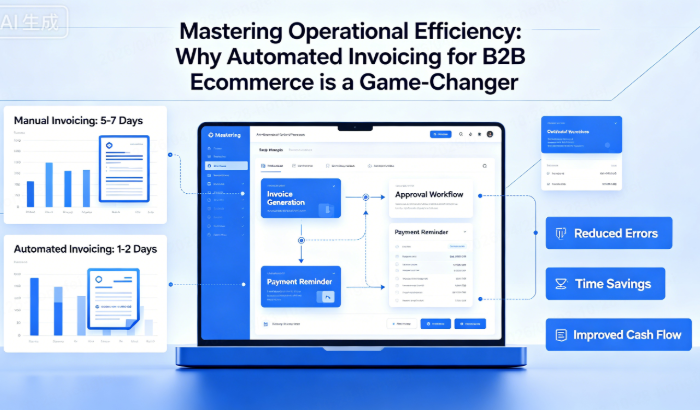
For merchants building a global business, the platform is only one part of the equation. You also need a dependable product-sourcing and order-fulfillment workflow that helps you test products without committing to excessive inventory, warehouse space, or fragmented logistics management. This guide compares the leading ecommerce platforms for dropshipping and explains how to match your storefront with a flexible China sourcing and fulfillment partner such as Looperbuy.
Table of Contents
Why Sellers Look for Shopify Alternatives
Shopify is popular because it offers a hosted storefront, a relatively simple setup process, and a broad app ecosystem. However, dropshipping merchants often change platforms when their needs become more specific.
For example, a seller may want deeper control of site architecture, a different payment-provider setup, lower platform-related costs, stronger content capabilities, or a system that can support a large and complicated catalog.
Shopify’s current pricing information also shows that costs are not limited to the monthly subscription. If a merchant uses a third-party payment provider rather than Shopify Payments, Shopify may charge a third-party transaction fee. The rate varies by plan, with the public pricing page showing rates ranging from 2% on lower-tier plans to lower percentages on higher-tier plans. Payment-processing fees may still apply separately.
That does not make Shopify a poor choice. It means store owners should evaluate its total operating cost in the context of their business model.
Common reasons to consider an alternative
– You want more ownership and flexibility over store design, data, hosting, or checkout customization.
– You rely on content marketing and want a closer connection between your ecommerce store and a content-rich website.
– You sell a complex catalog with many variants, wholesale pricing tiers, bundles, or custom requirements.
– You use a preferred payment provider and want to understand all platform and payment-related charges before scaling.
– You are operating internationally and need stronger control over languages, currencies, local payment options, tax settings, or market-specific storefronts.
– You want a lower-complexity first store while testing a narrow product range.
– You need enterprise-grade architecture for a rapidly expanding product operation.
The key question is not, “Which platform is better than Shopify?” It is:
> Which platform fits your products, marketing workflow, technical resources, and fulfillment model today—and still supports where you want the business to go?
Best Shopify Alternatives for Dropshipping
The following platforms serve different types of sellers. Their suitability depends on the trade-off you are willing to make between convenience, control, design freedom, technical effort, and total cost.
| Platform | Best for | Main advantage | Main consideration |
| WooCommerce | Content-led stores and merchants wanting control | Open-source WordPress commerce with extensive customization | You manage hosting, updates, security, and technical setup |
| BigCommerce | Growing stores and larger catalogs | Built-in ecommerce features and scalable commercial tools | Plan costs can increase as business requirements grow |
| Wix | Beginners and visual-first small stores | Easy drag-and-drop design and fast launch process | Less suitable for highly customized or operationally complex stores |
| Squarespace | Brand-focused niche stores | Polished templates and strong visual presentation | Advanced ecommerce workflows may require careful plan and integration selection |
| Adobe Commerce / Magento Open Source | Technical teams and complex operations | Powerful customization and enterprise potential | Requires development, hosting, security, and ongoing technical resources |
| Big Cartel | Small curated catalogs | Simplicity and low barrier to entry | Not designed for broad catalogs or highly advanced workflows |
| Shift4Shop | Sellers wanting hosted-cart functionality | Established hosted commerce option | Confirm regional availability, payment setup, and integration fit |
| Weebly / Square Online | Very small or local-business storefronts | Straightforward website and commerce tools | May be limiting for aggressive international scaling |
WooCommerce: Best for Content-Driven Dropshipping Stores
WooCommerce is a strong Shopify alternative for dropshipping businesses that want to build their store on WordPress. It is particularly useful when editorial content, product guides, buying guides, category pages, and long-form educational resources are central to customer acquisition.
WooCommerce describes itself as an open-source commerce platform for WordPress that gives merchants control over the storefront, checkout, data, hosting, and extension choices.
For a dropshipping operator, that flexibility can be valuable. You can create a highly customized storefront, integrate product feeds, build detailed landing pages, and shape the store around a specific niche rather than around a standard template.
WooCommerce is usually a good fit when:
– You already use WordPress.
– You publish substantial educational or product-comparison content.
– You want broad design and code-level flexibility.
– You have access to a developer, agency, or internal technical resource.
– You want to choose your own hosting and plugin stack.
However, “free plugin” does not mean “free store.” Budget for hosting, a domain, security, backups, premium extensions, performance optimization, and maintenance. A slow or poorly maintained storefront can reduce conversion rate and create order-management problems.
BigCommerce: Best for Growing Stores With Built-In Commerce Features
BigCommerce is a hosted ecommerce platform designed for merchants who want a more structured commercial platform without managing their own server environment. It can be a practical option for growing dropshipping stores that need stronger catalog tools, multi-channel sales features, and less dependence on numerous third-party apps.
Its current pricing page lists Core, Growth, Scale, and Performance plans. BigCommerce also states that orders processed through eligible Embedded Payment Providers have a $0 platform fee, while orders through Open Payment Providers may incur plan-dependent fees.
This distinction matters for international sellers. Do not select a platform only because its starting subscription price looks attractive. Review the payment-provider rules, payment processing costs, currency requirements, and projected transaction volume before committing.
BigCommerce can be a good choice if you:
– Expect your catalog and order volume to grow.
– Need a hosted platform but want robust built-in commerce functions.
– Sell through multiple channels and marketplaces.
– Want to reduce reliance on a large number of paid apps.
– Need a store that supports increasingly sophisticated operations.
Wix: Best for First-Time Sellers Testing a Product Niche
Wix is often attractive to first-time dropshippers because it makes visual store creation accessible. A seller can use drag-and-drop design tools, launch a branded store relatively quickly, and focus on testing a small group of products.
It is a sensible platform when the objective is validating a niche, audience, product angle, or visual brand concept before investing heavily in a customized ecommerce stack.
Choose Wix when you need:
– A quick, visual setup.
– Little or no coding.
– A limited initial catalog.
– A simple branded landing-page experience.
– A practical environment for early product validation.
The limitation is strategic: as your operations become more complex, you may need more advanced catalog logic, fulfillment integrations, checkout customizations, or multi-market control. Build with a migration plan in mind if you expect rapid expansion.
Squarespace: Best for Design-Led Brands and Curated Collections
Squarespace is often chosen by merchants who place a high value on visual storytelling. It can work well for a carefully selected dropshipping catalog in categories such as home décor, fashion accessories, gift products, lifestyle goods, or creative products.
All paid Squarespace website plans can support selling products or services, although ecommerce features and fees vary by plan. Squarespace also offers monthly and annual subscription options. Its support documentation indicates that some plans include a 2% commerce transaction fee, while higher-tier commerce plans eliminate that platform transaction fee; payment processing charges may still apply.
Squarespace is most suitable when:
– Brand presentation is a major differentiator.
– You sell a focused collection rather than thousands of SKUs.
– Your product imagery, story, and visual identity drive purchases.
– You want a polished store without extensive custom development.
For a general-product dropshipping business, make sure the platform can support the product-feed, inventory, shipping-rule, and supplier-order workflows you need before building the full store.
Adobe Commerce / Magento Open Source: Best for Complex and Technical Operations
Magento Open Source, now closely associated with Adobe Commerce, is a more advanced route. Adobe states that Magento Open Source provides core ecommerce functionality and is available for developers seeking tools to build digital storefronts.
This option may suit businesses with a large catalog, complicated integrations, custom pricing logic, regional storefronts, or a long-term plan to build a highly tailored commerce operation.
It is not the simplest launch option for a new dropshipper.
Consider Magento Open Source or Adobe Commerce when you have:
– A technical team or experienced development partner.
– A complex catalog, multi-store setup, or specialized integrations.
– Significant requirements around custom workflows.
– A budget for infrastructure, maintenance, security, and development.
– A serious plan for long-term scale rather than a quick market test.
The license cost of Magento Open Source may be low or free, but the total cost of ownership can be substantial. Hosting, development, security patches, extensions, testing, and ongoing support must be included in the financial decision.
How to Choose a Dropshipping Platform
A platform comparison should go beyond monthly price. The lowest subscription fee can become expensive if the platform creates friction in fulfillment, payment processing, site maintenance, or conversion.
Use this practical decision framework before choosing a Shopify alternative.
1. Define your selling model
First, decide whether you are building:
– A single-product test store.
– A focused niche store.
– A curated lifestyle brand.
– A large general-product catalog.
– A B2B wholesale storefront.
– A multi-market international store.
A single-product test store may prioritize speed and design. A broad catalog business may prioritize bulk product management, category structure, order synchronization, and fulfillment reliability.
2. Calculate total operating cost
Your monthly platform subscription is only one part of the operating model. Estimate the following costs:
– Store subscription.
– Domain and email.
– Hosting and maintenance, where relevant.
– Payment-processing fees.
– Platform transaction fees, where applicable.
– Apps, plugins, themes, and integrations.
– Product sourcing and sample costs.
– Packaging and fulfillment fees.
– International shipping.
– Customer support, returns, and refunds.
– Advertising and creative production.
Expert perspective: Many new dropshippers focus too heavily on store-building cost and underestimate post-purchase operations. In practice, product quality, dispatch speed, tracking reliability, package presentation, and customer-service response often have a bigger effect on repeat orders and brand reputation.
3. Check supplier and fulfillment compatibility
Your storefront needs to communicate smoothly with your supply chain. Before committing to a platform, ask these questions:
1. Can products be imported or listed efficiently?
2. Can inventory levels be monitored and updated?
3. Can orders be exported, synchronized, or processed without repetitive manual work?
4. Can the supplier support product inspection, bundling, labeling, or custom packaging?
5. Can tracking details be returned to your store or marketplace promptly?
6. Can your fulfillment partner ship to the countries you target?
7. Can you order samples before launching paid advertising?
A storefront may look excellent, but the customer experience fails if the product is unavailable, dispatched late, poorly packed, or difficult to track.
4. Test your full order flow before advertising
Before spending on traffic, complete at least one real test order from your own store. Test the process from product page to final delivery.
Review:
– Mobile product-page experience.
– Checkout speed and payment approval.
– Order confirmation emails.
– Supplier notification.
– Processing time.
– Packaging quality.
– Tracking activation.
– Delivery time.
– Customer-support communications.
– Return or refund workflow.
Build a Lean Dropshipping Supply Chain With Looperbuy
A store platform helps you present and sell products. A sourcing and fulfillment partner helps you deliver on the promise made on the product page.
Looperbuy is positioned as an online B2B purchasing platform that helps global sellers source Chinese products and arrange dropshipping fulfillment. For merchants, the goal is to reduce the operational burden of holding large amounts of inventory, paying for long-term warehousing, managing supplier payments across multiple vendors, and coordinating international logistics independently.
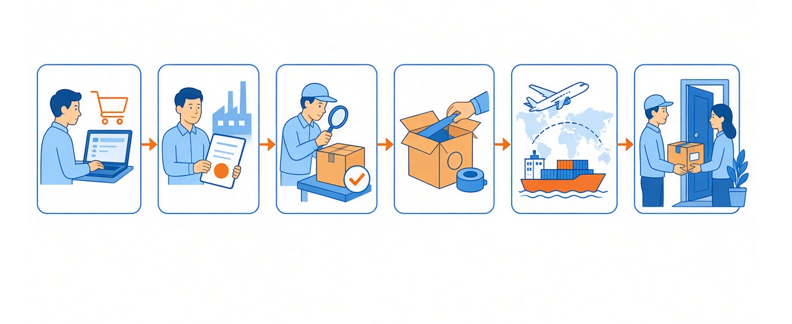
A practical Looperbuy workflow can look like this:
1. Identify a product opportunity. Research the product category, buyer expectations, price range, and competitive offer.
2. Request sourcing support. Share product links, images, specifications, target quantity, or customization requirements.
3. Review product details and samples. Confirm material, size, color, packaging, branding options, and quality expectations.
4. Connect your store operations. Organize product data, variants, retail pricing, shipping policies, and order-routing procedures.
5. Process customer orders. Send or synchronize order details according to your operating workflow.
6. Complete inspection and packaging. Check the product before dispatch and arrange suitable packaging or branding where available.
7. Ship internationally with tracking. Select shipping solutions based on destination, speed, product type, and customer expectations.
8. Use delivery feedback to improve. Track complaints, refund causes, product defects, delivery delays, and conversion performance.
Why sourcing matters as much as store design
A platform switch will not solve supply-chain issues on its own. If a seller receives inconsistent products, unreliable stock information, or slow fulfillment, changing from Shopify to WooCommerce, Wix, or BigCommerce will not address the root cause.
For this reason, a stronger dropshipping business combines:
– A store platform that matches the business model.
– Clear product selection criteria.
– A sourcing partner with China procurement capability.
– Product inspection before dispatch.
– Transparent shipping options.
– Reliable tracking communication.
– A process for handling customer questions and returns.
If you are building or migrating a dropshipping store, contact Looperbuy to discuss product sourcing, China supplier coordination, quality checks, packaging options, and international fulfillment support. Start with a small test order, validate the complete delivery experience, and scale only after the operational workflow performs reliably.
Frequently Asked Questions
1. What is the best Shopify alternative for dropshipping beginners?
Wix can be suitable for beginners who prioritize a visual, simple setup and want to test a small product catalog. WooCommerce can also work well for beginners who already understand WordPress or have technical support. The best choice depends on your comfort with website management and your expected order volume.
2. Is WooCommerce cheaper than Shopify for dropshipping?
WooCommerce’s core platform is open source, but it is not automatically cheaper overall. You still need to pay for hosting, domain registration, security, maintenance, premium plugins, payment processing, and potentially developer support. It can become cost-effective when you need flexibility and can manage the technical stack efficiently.
3. Does Shopify charge transaction fees?
Shopify may charge third-party transaction fees when you use a third-party payment provider. The fee varies by plan. Shopify states that orders processed through Shopify Payments and certain associated payment methods are not subject to those third-party transaction fees, though normal payment-processing rates still apply.
4. Which ecommerce platform is best for a large dropshipping catalog?
BigCommerce and Adobe Commerce/Magento are worth evaluating for large or increasingly complex catalogs. BigCommerce offers hosted scaling tools, while Magento Open Source offers extensive customization for businesses with strong technical resources.
5. Can I use a China sourcing agent with WooCommerce, Wix, BigCommerce, or Squarespace?
Yes, but the exact workflow depends on your platform and fulfillment partner. Before launching, confirm how orders will be transmitted, how inventory information will be managed, how tracking numbers will be added, and whether any integration or export process is required.
6. Should I keep inventory for a dropshipping store?
Not necessarily. Many sellers begin with an order-by-order fulfillment model to reduce upfront inventory and warehouse exposure. However, proven bestsellers may justify small-batch inventory or dedicated stock later, especially when it improves processing speed, packaging control, or unit economics.
7. What should I test before scaling a dropshipping store?
Test the full customer journey: mobile browsing, checkout, payment, supplier processing, product quality, packaging, tracking, delivery time, customer communication, and the refund process. A real test order provides much more useful information than a storefront preview.
References
1. [Doba: Are There Any Alternatives to Shopify for Dropshipping]
3. [Shopify Help Center: Pricing Plans and Billing Overview]
4. [Shopify Help Center: Shopify Payments Fees]
5. [WooCommerce: WordPress Ecommerce Platform]
6. [BigCommerce: Pricing and Plan Information]
7. [BigCommerce: Ecommerce Platform Product Overview]
8. [Squarespace: Pricing Plans and Features]
9. [Squarespace Support: Choosing the Right Plan]