Table of Contents
The Critical Role of Global Shipping Routes
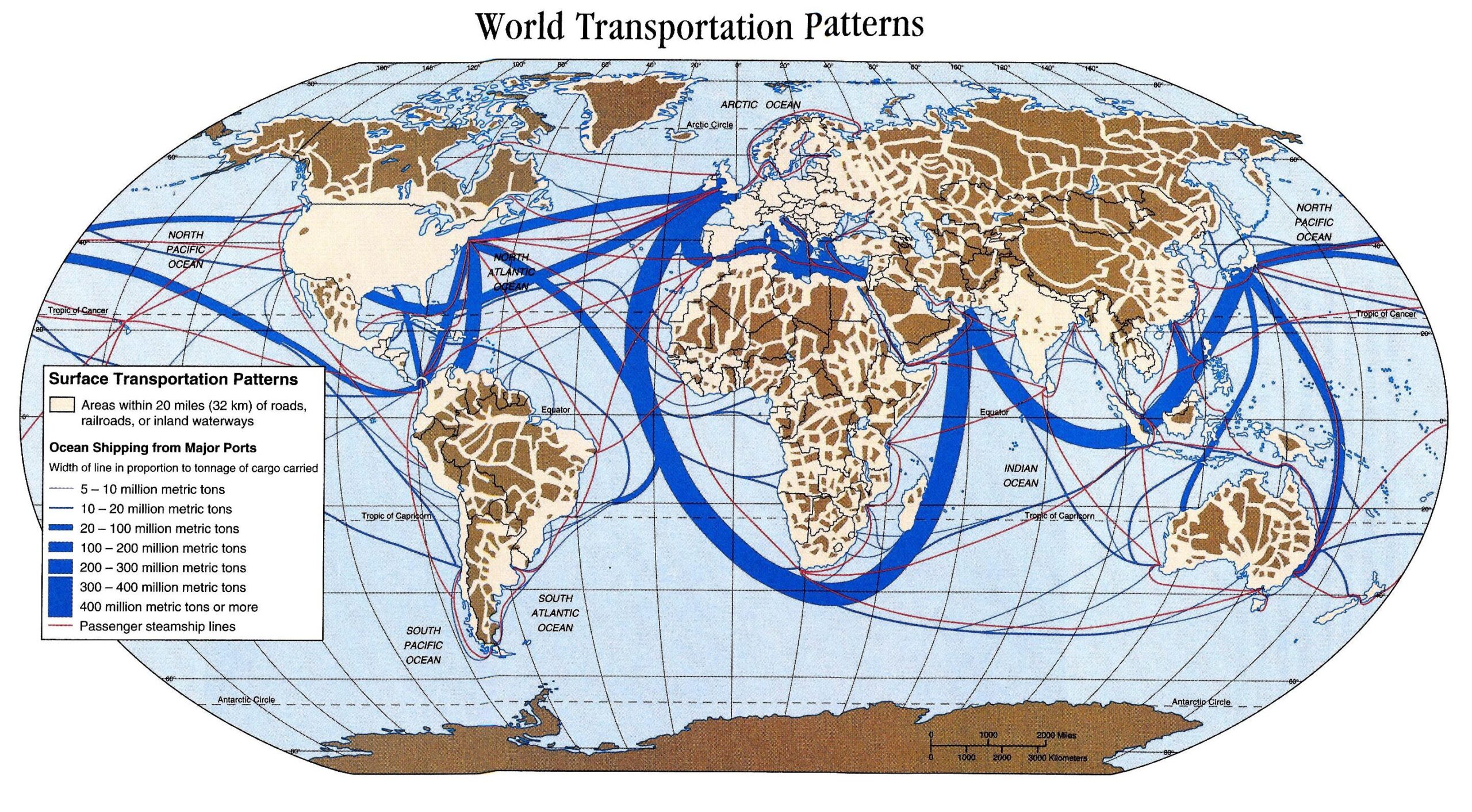
Global shipping routes are the lifeblood of international trade, facilitating the movement of over 80% of global trade by sea. These routes connect continents and enable the efficient transportation of goods across vast distances. Major routes such as the Suez Canal, Panama Canal, and Strait of Malacca serve as vital arteries for global commerce. The Suez Canal handles approximately 12-15% of global trade and 20% of container trade, while the Panama Canal is crucial for trade between the Americas, Europe, and Asia. The Strait of Malacca is a key connector between the Pacific and Indian Oceans, with over 70,000 vessels passing through annually .
Major Shipping Routes and Their Strategic Importance
The Suez Canal
The Suez Canal is a 120-mile-long artificial waterway in Egypt that connects the Mediterranean Sea to the Red Sea. It enables ships to avoid the lengthy and treacherous route around the southern tip of Africa. Approximately 10% of global trade passes through the Suez Canal, making it one of the busiest maritime routes. The canal’s strategic importance was highlighted during the Ever Given incident in 2021, when a grounded container ship blocked the canal for six days, causing significant disruptions to global trade. Recent geopolitical tensions, such as Houthi rebel attacks in the Red Sea, have impacted this route, forcing many ships to divert around the Cape of Good Hope, adding approximately 10 days to their journeys.
The Panama Canal
The Panama Canal connects the Atlantic and Pacific Oceans, significantly reducing the travel distance for ships and avoiding the lengthy trip around South America. This canal is crucial for shipping between the East and West coasts of the Americas and beyond. The canal’s expansion in 2016 allowed for the passage of larger vessels, further boosting its capacity and importance. However, drought conditions in early 2024 reduced its capacity, leading to a 32% decline in ship transits compared to the previous year.
The Strait of Malacca
The Strait of Malacca, between the Malay Peninsula and the Indonesian island of Sumatra, is one of the world’s busiest shipping lanes. It serves as the main channel between the Indian Ocean and the Pacific Ocean, making it essential for trade between Asia and the Middle East. Over 70,000 vessels pass through the strait annually, underscoring its critical role in global trade. The strait is also a key route for oil and bulk cargo, adding to its strategic importance.
Current Challenges Facing Global Shipping Routes
Geopolitical Tensions
Geopolitical conflicts have significantly impacted global shipping routes. The Red Sea crisis, where Houthi forces launched at least 12 major attacks over the past year, has created unprecedented challenges for maritime shipping. These disruptions have extended voyage times and significantly increased operational costs. In response, shipping lines are rerouting their vessels around the Cape of Good Hope, adding two weeks to journeys and unnecessary expense. The international community has launched operations such as Prosperity Guardian and Aspis to secure maritime navigation and safeguard trade flows, but challenges remain.
Environmental Challenges
Climate change and environmental regulations are also affecting global shipping routes. The shipping industry is accountable for 2% of CO2 emissions, and there is growing pressure to reduce emissions. Shipping lines have employed strategies such as “slow steaming” to save on fuel costs and lower CO2 emissions. However, the recent Red Sea crisis has led to the potential end of this strategy as vessels increase their cruising speed to make up for lost time, potentially increasing CO2 emissions for journeys from Asia to Europe.
Economic and Weather Factors
Economic uncertainty and climate events have also disrupted global trade patterns. The maritime industry experienced remarkable volatility in 2024, with global trade patterns disrupted by conflicts and climate events that impacted crucial maritime chokepoints. The Shanghai Containerized Freight Index (SCFI) experienced dramatic fluctuations, peaking in July 2024 before declining and then beginning to rise again in late October. This pattern of peak season sluggishness followed by off-season surges suggests that traditional seasonal patterns may be evolving, requiring new approaches to freight management in 2025.

Future Trends and Adaptations in Global Shipping
New Shipping Corridors
Geopolitical tensions are leading to the formalization of new shipping corridors as companies institutionalize route diversions initially considered temporary. Maritime trade will increasingly flow through longer but more secure routes, with the Cape of Good Hope becoming a standard alternative to the Suez Canal for many operators. This restructuring will permanently extend certain shipping distances, potentially adding 7-10 days to voyages between Asia and Europe.
Technological Innovations
The shipping industry is leveraging technological innovations to enhance efficiency and sustainability. AI-driven route optimization and green fuel hubs are emerging as key trends. These technologies help shipping companies optimize routing, minimize fuel consumption, and reduce emissions. Additionally, the rise of autonomous ships and digital platforms for tracking and managing logistics is expected to significantly impact the industry’s future.
Arctic Shipping Routes
Melting ice is increasing the use of the Northern Sea Route (NSR). This route offers shorter Asia-Europe travel times but has seasonal limitations. As climate change continues to impact Arctic ice cover, the potential for expanded Arctic shipping routes could reshape global trade patterns. However, challenges such as infrastructure limitations and environmental concerns need to be addressed.
Conclusion
Global shipping routes are crucial for the efficient movement of goods across continents. Major routes like the Suez Canal, Panama Canal, and Strait of Malacca play a vital role in facilitating international trade. However, these routes face challenges such as geopolitical tensions, environmental issues, and economic uncertainties. The shipping industry is adapting by exploring new shipping corridors, adopting technological innovations, and considering alternative routes like the Arctic Shipping Route. By staying ahead of these trends and challenges, businesses can maintain competitive advantages in an increasingly complex global shipping landscape.
If you want to ensure your goods are reliably delivered to overseas addresses despite these global logistics complexities, you can use looperbuy, a one-stop purchasing-logistics solution:https://looperbuy.com/.
Related Questions & Answers
· What are the main factors influencing the choice of shipping routes?
The main factors include geopolitical stability, trade agreements, port infrastructure, fuel efficiency, and environmental regulations. Shipping companies must consider these factors to optimize routes for cost-effectiveness and reliability.
· How do shipping companies adapt to disruptions in major shipping routes like the Suez Canal?
Shipping companies can reroute vessels via alternative routes such as the Cape of Good Hope. They can also diversify their supply chains, invest in larger vessels for economies of scale, and adopt AI-driven route optimization to mitigate disruptions.
· What is the significance of the Arctic Shipping Route?
The Arctic Shipping Route offers shorter travel times between Asia and Europe, reducing fuel consumption and travel time. However, it has seasonal limitations due to ice cover and requires further infrastructure development to support expanded use.
· How are environmental regulations impacting the shipping industry?
Environmental regulations are pushing the shipping industry to reduce emissions. Strategies like slow steaming, adopting cleaner fuels, and investing in more fuel-efficient technologies are being employed to meet these challenges.
· What role do ports play in global shipping routes?
Ports serve as critical nodes in global shipping routes, facilitating the loading and unloading of cargo, refueling, and providing essential services for ships. Their efficiency and infrastructure directly impact the overall efficiency of shipping routes.
Hot Tags: Major Global Shipping Routes; International Maritime Trade; Suez Canal Shipping; Panama Canal Trade; Strait of Malacca Traffic; Red Sea Shipping Crises; Arctic Shipping Routes; Geopolitical Shipping Challenges; Maritime Trade Innovations; Shipping Emissions Reduction