Table of Contents
The Fatal Misconception in Cross-Border Procurement
Are you constantly caught in a procurement dilemma? Perhaps you’ve felt the frustration of being blocked by high Minimum Order Quantities (MOQs) when you just wanted to run a small product test, or the panic of a “viral” product crashing because of sudden stockouts and plummeting quality. Maybe you’ve even seen your cash flow strangled by dead inventory once you attempted to scale.
The uncomfortable truth for many cross-border sellers is that they are using the exact same procurement logic to handle fundamentally different business stages. You wouldn’t expect a toddler to wear the same clothes as a teenager, yet many sellers apply “start-up” sourcing tactics to mature businesses, or worse, “scale-up” strategies to unproven products. This article breaks down the correct procurement posture for the Testing Phase, Growth Phase, and Scaling Phase, and explores how a flexible platform like LooperBuy can bridge the gap.
Part I: The “Stage Mismatch” – Why 90% of Procurement Fails
In the world of cross-border e-commerce, there is a visible divide between beginners and veterans. Beginners often complain about “flexibility”—high MOQs, rigid packaging, and slow shipping. Mature sellers, conversely, complain about “stability”—supply chain bottlenecks, inconsistent quality, and the inability to secure production capacity during peak seasons.
While these seem like separate supply-demand issues, they are actually symptoms of the same root cause: Procurement Mismatch. Many sellers get stuck in a “doom loop” where they try to optimize for the wrong metric. They either obsess over unit price at the expense of agility, or they prioritize ease of use at the expense of long-term scalability.
The core shift:
- Testing Phase: The goal is Validation (Survival).
- Growth Phase: The goal is Reliability (The Moat).
- Scaling Phase: The goal is Efficiency (Repeatable Systems).
Using one-size-fits-all logic is the fastest way to drain your working capital and lose your competitive edge.
Part II: The Three Stages of Procurement Maturity
1. The Testing Phase: Don’t Obsess Over Price; “Learning” is the Real Profit
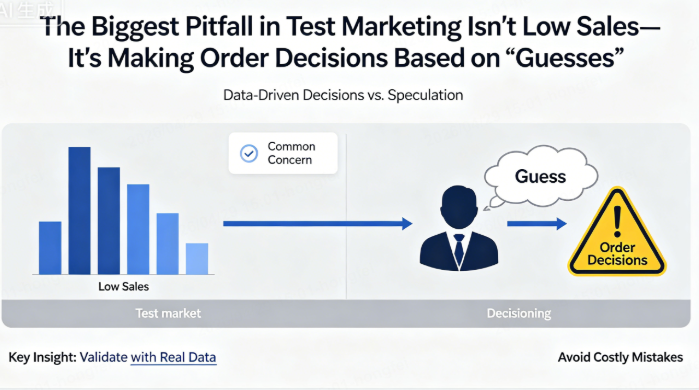
Many new sellers fall for the “Volume Discount” trap. They see a factory offering a lower price for 1,000 units and bite, believing they are being “smart.” Three months later, they are sitting on 950 unsold units in an overseas warehouse, frantically lowering prices to recover a fraction of their cash.
The Correct Strategy: Small Batches, Fast Validation
In the testing phase, your most valuable currency is not the $0.50 you save per unit; it is the speed of your market feedback loop.
- Multi-SKU, Small Batch: Limit your initial order to 50–100 units per SKU. Simultaneously launch 3–5 variations. By testing different titles, main images, and price points, you gather data on what customers actually want without committing your entire budget.
- The “Under 7 Days” Rule: The procurement cycle—from finding a supplier to landing the product in your warehouse—must be fast. If it takes a month to source, the “trend” or “demand” you are testing might be gone.
- Iterative Design: Do not invest in custom molds or expensive private-label packaging yet. Keep your product generic enough to iterate based on early customer reviews.
Core Takeaway: You aren’t “buying inventory” at this stage; you are “buying data.” If you discover a product doesn’t sell, you have saved your business from a massive loss.
2. The Growth Phase: “Stability” as Your Competitive Moat
When you finally hit a winning product, the game changes. You are no longer wondering “if” it will sell, but rather “how fast” you can replenish. This is where most sellers face the “Growth Ceiling.” If you continue using a “small-shop” procurement approach—scrambling to find random suppliers, buying from whoever is cheapest today, or lacking a formal inventory process—you will kill your organic ranking. Stockouts are the death of any Amazon listing.
The Correct Strategy: Steady Supply, Inventory, and Fulfillment
- Lock in Core Suppliers: Transition from transactional relationships to strategic partnerships. A reliable supplier who understands your brand’s quality standards is worth a 5% premium over the cheapest guy on the market.
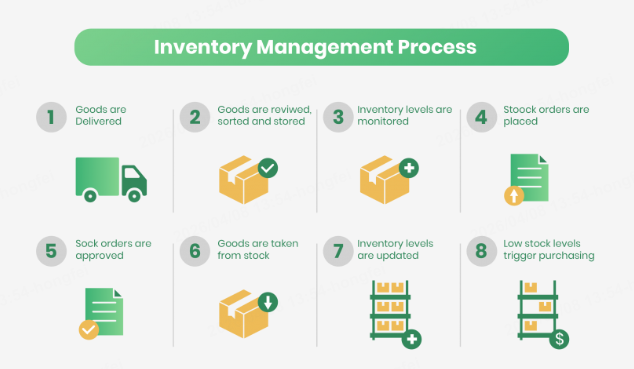
- Implement “Predictive” Replenishment: Move away from “manual” purchasing. Use historical data to set clear thresholds. If your average sales are 10 units a day and your lead time is 20 days, your “Reorder Point” must be established well in advance.
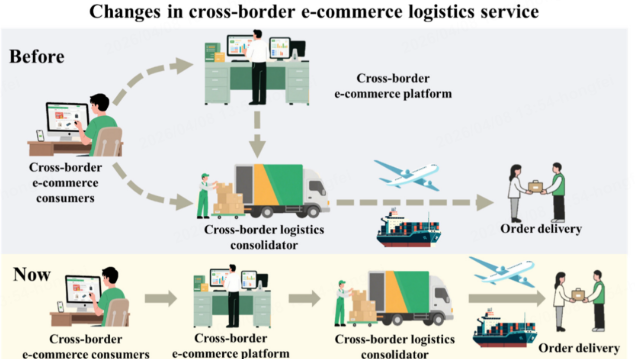
- Integrated Fulfillment (The Consolidation Strategy): As you grow, you likely source from 5–10 different factories. Managing these individually is a nightmare. Use platforms that provide “warehouse consolidation”—a service where all your goods are sent to one central hub in China to be inspected, repacked, and shipped as a single order. This drastically reduces shipping costs and logistics errors.
Core Takeaway: Stability is your growth engine. Your procurement process should be boring, repeatable, and invisible.
3. The Scaling Phase: Supply Chain Management is the New Core Competency
When you reach the scaling phase, you are no longer a “merchant”; you are a “supply chain manager.” Scaling isn’t about buying more; it’s about optimizing the flow of goods and money.
The Correct Strategy: Scalability and Cash Flow Control
- Capacity Planning: Start forecasting 6–12 months out. If you know you’ll need 50,000 units for Q4, you must lock in factory capacity in Q1.
- Financial Leverage: In this stage, your procurement should help manage cash flow. Negotiate payment terms (e.g., Net 30 or Net 60) with your main suppliers based on your historical volume and creditworthiness.
- Cost Optimization through Process: It’s no longer about finding a cheap product; it’s about reducing the landed cost. This involves optimizing packaging dimensions to save on shipping, improving production efficiency, and auditing every step of the logistics chain.
Core Takeaway: The winner at this stage isn’t the one with the cheapest product, but the one with the most efficient supply chain.
Part III: How LooperBuy Ends the “Forced Stage Jumping”
The traditional frustration for cross-border sellers is that platforms are usually one-dimensional. Some are great for drop-shipping but fail when you need to bulk-order. Others are great for massive wholesale but make it impossible to test new products without a massive initial investment.
We designed LooperBuy based on a simple philosophy: The platform must adapt to the seller, not the other way around.
| Stage | The Challenge | The LooperBuy Solution |
|---|---|---|
| Testing | High MOQs / Risk of Overstock | Minimum order of 1 unit; multi-SKU mixing; low-cost entry. |
| Growth | Quality issues / Stockout risks | China-based warehouse consolidation; automated replenishment alerts. |
| Scaling | Cash flow / Capacity limits | 1-on-1 account managers; supplier negotiation; capacity scheduling. |
The LooperBuy Advantage: You don’t have to “switch” suppliers or platforms as you grow. You can use our platform to test a new category with 50 units while simultaneously running a high-volume supply chain for your best-selling product. We remove the structural barriers that force sellers to compromise their business strategy.
Conclusion: Procurement as an Asset, Not a Limitation
If there is one lesson to take away, it is this: Procurement is the “booster,” not the “brake.”
Too many sellers view the supply chain as a necessary evil—a headache to be managed as cheaply as possible. But look at the most successful brands in the industry. They treat their supply chain as their greatest competitive advantage. They know when to be agile in testing, when to be strict in growth, and when to be strategic in scaling.
The “90% failure rate” in procurement is not about bad luck or poor market conditions. It is about a lack of strategic evolution. If you find yourself struggling, stop asking “how can I get this cheaper?” and start asking “is my procurement strategy aligned with my current business stage?”
When your procurement grows with your business, you stop being a trader who fights against the supply chain, and you start being an entrepreneur who orchestrates it. Start treating your procurement with the same level of sophistication as your advertising and product design, and you will find that your supply chain is no longer the thing that slows you down—it is the engine that pulls you ahead of the competition.
Hot tags: #CrossBorderProcurement #SupplyChainManagement #LowMOQsourcing #WarehouseConsolidation #InventoryReplenishment #MultiSKUBatching #GlobalExportSuppliers #EcommerceCostOptimization #ProcurementSOPs #DropshippingToWholesale