As a B2B sourcing and supply chain strategist with over 15 years of experience helping global brand owners navigate cross-border procurement, I often hear a specific question from wholesalers looking to diversify risk: “What products do we get from India?”
In the current global trade environment, the “China + 1” strategy is no longer just a buzzword—it is a risk management necessity. While China remains the undisputed king of high-volume, complex manufacturing (where platforms like LooperBuy excel in providing vetted access), India has emerged as a powerhouse for specific, high-value categories.
However, the reality of sourcing from India comes with nuances. A recent viral post by Indian entrepreneur Chanakya Shah highlighted a critical pain point for buyers: unlike the disciplined, instant responsiveness of Chinese vendors, Indian suppliers can sometimes lag in speed and digital agility. For B2B buyers, understanding what products we get from India is just the first step; knowing how to vet them against the efficiency of markets like China is the real key to scaling your business.
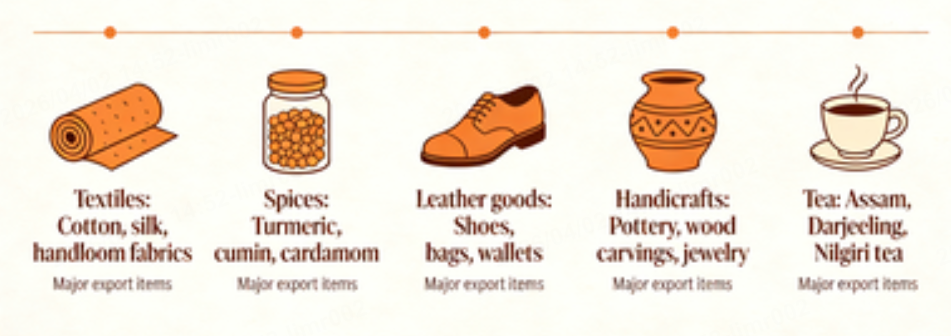
Table of Contents
The Top 8 High-Demand Product Categories Sourced from India
To help procurement managers build a resilient supply chain, I have broken down the Indian export landscape into eight actionable categories. These are the sectors where India offers a true competitive edge, backed by the latest FY2025 trade data.
1. Engineering & Industrial Goods (The Heavy Lifter)
If you are in the industrial supplies business, India is no longer just an alternative; it is a primary source.
- What to Source: Auto components, CNC machinery parts, industrial fasteners, and castings.
- The Data: Engineering goods are India’s top export category. In FY25, engineering exports hit a record $116.67 billion, growing 6.7% year-on-year and accounting for 26.7% of India’s total merchandise exports.
- Why India: Clusters like Pune and Rajkot offer precision manufacturing at costs significantly lower than Western Europe. However, compared to China’s massive scale, Indian engineering is best suited for mid-volume, high-precision OEM contracts.
2. Pharmaceuticals & Nutraceuticals (The Pharmacy)
India is famously the “Pharmacy of the World.”
- What to Source: Generic drugs, active pharmaceutical ingredients (APIs), herbal supplements, and Ayurvedic wellness products.
- The Opportunity: With global GDP growth projected at 7% in 2025, demand for affordable medicine is rising. India excels in FDA-approved generic manufacturing.
- Expert Note: Sourcing APIs requires rigorous regulatory checks. Unlike standard consumer goods, pharma sourcing demands a dedicated quality assurance team.
3. Organic Textiles & Apparel
While China dominates synthetic fast fashion, India rules the cotton and sustainable fashion segment.
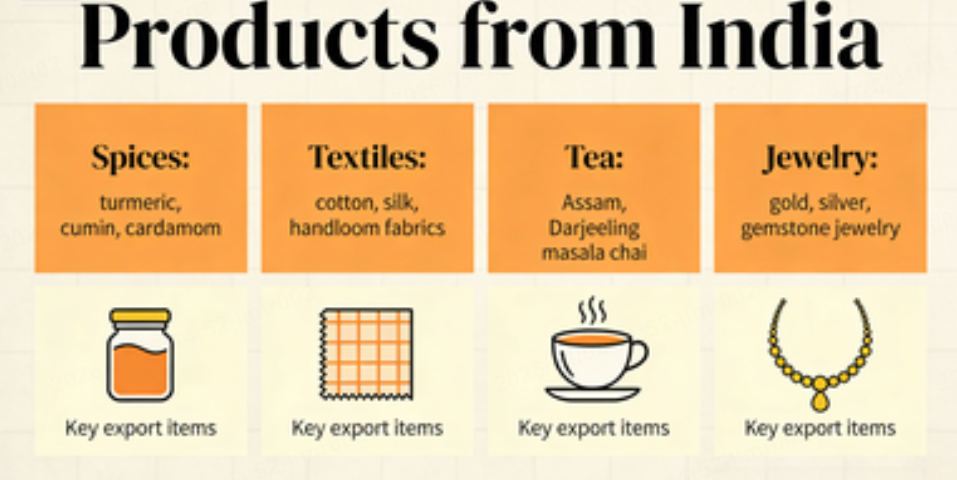
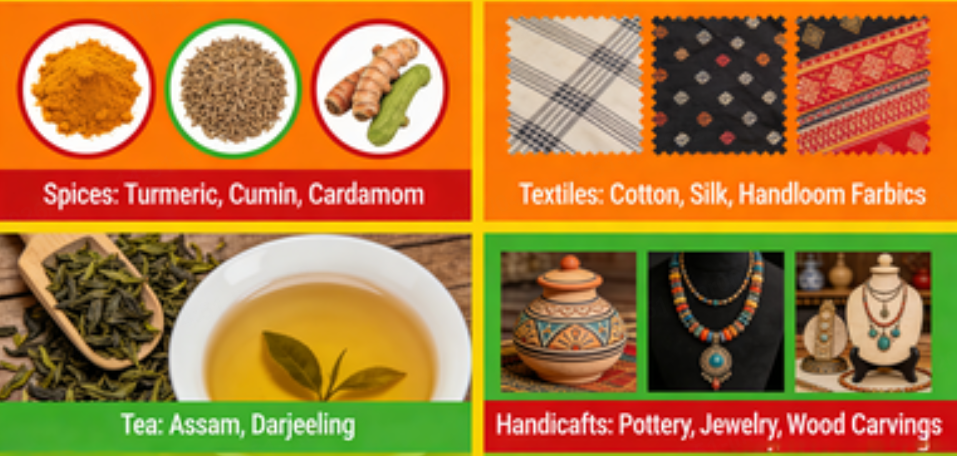
- What to Source: Organic cotton garments, denim, home linens, and technical textiles.
- The Market: Textiles and apparel contributed roughly $36.61 billion in FY25. Global brands are pivoting to India for “Green Textiles” to meet EU sustainability regulations.
- Trend: High demand for GOTS-certified fabrics and artisanal pieces (handloom, khadi) that carry a premium in Western markets.
4. Leather & Leather Goods
- What to Source: Finished leather, bags, wallets, and footwear.
- The Edge: India offers a complete value chain from tanning to finished goods. While Italy is known for luxury, India is the go-to for mass-premium quality at a fraction of the price.
5. Gems & Jewelry
- What to Source: Polished diamonds (Surat handles 90% of the world‘s diamonds), gold jewelry, and silver artifacts.
- Consideration: This is a high-value, capital-intensive category. Logistics and insurance are critical pain points where a platform’s logistics network matters.
6. Home Decor & Handicrafts
- What to Source: Wooden furniture, hand-knotted rugs, ceramic pottery, and ethical homeware.
- The Cultural Edge: India offers unique, culturally rich designs that cannot be replicated by mass manufacturing in China.
7. Spices & Agri-Commodities
- What to Source: Turmeric, cumin, basmati rice, and tea.
- Compliance: Strict FSSAI and APEDA regulations apply. This is a high-consistency category suitable for food brands.
8. Cosmetic & Personal Care Ingredients
- What to Source: Essential oils (Sandalwood, Tulsi), natural hair dyes, and herbal extracts.
- Why now: The global shift toward “Ayurveda” and clean beauty is fueling demand for Indian-origin raw ingredients.
The Ground Reality: Why Speed Still Favors China
While the variety of products we get from India is vast, a successful sourcing strategy requires acknowledging the operational gaps.
According to a recent comparative analysis, while Indian suppliers offer excellent customization and lower MOQs in some sectors, Chinese suppliers generally lead in On-Time Delivery (OTD) and Response Time.
- Response Time: Top-tier Chinese suppliers often reply within 2 hours; Indian suppliers may take 24-48 hours unless they are export-focused firms.
- Logistics: China’s port infrastructure remains more streamlined for rapid global dispatch.
This is where a One-Stop Sourcing Platform like LooperBuy becomes invaluable. You don’t have to choose one or the other. By utilizing LooperBuy for Chinese sourcing (electronics, high-volume manufacturing, speed) and strategic partners for India (pharma, textiles, handicrafts), you create a hybrid supply chain that is both cost-effective and diversified.
Strategic Framework: How to Integrate Indian Sourcing into Your Existing Supply Chain
To effectively answer “what products do we get from India,” you must also solve the reliability equation. Based on evaluation metrics from leading B2B platforms, here is the due diligence checklist for Indian suppliers:
| Metric | Target Benchmark | Why it Matters |
|---|---|---|
| On-Time Delivery | >95% | Ensures your end-customers don‘t face stock-outs. |
| Response Rate | Within 24 hours | Slow communication leads to production delays. |
| Reorder Rate | >25% | Indicates customer satisfaction and consistent quality. |
| Certifications | GMP / ISO / FSSAI | Non-negotiable for Pharma/Food categories. |
Pro-Tip: Always request a sample order first. Many Indian suppliers are excellent at “prototype” quality but may struggle with scaling consistency.
Conclusion: Diversify Sourcing Without Losing Efficiency
Understanding what products we get from India allows global brands to reduce geopolitical risk and tap into unique artisanal and pharmaceutical assets. However, efficiency still dictates profitability. You cannot afford to sacrifice logistics speed or supplier reliability for cost savings.
At LooperBuy, our mission is to provide global access to the best manufacturing hubs. Whether you need the rapid scale of Chinese electronics or the organic authenticity of Indian textiles, our vetted network and global logistics infrastructure ensure you receive the same standard of quality, low prices, and delivery guarantees.
Ready to diversify your sourcing strategy? Don‘t let fragmented supply chains slow you down. Let LooperBuy handle the complexity of global procurement—from Shenzhen to Mumbai.
Frequently Asked Questions (FAQ)
1. Is product quality better in India or China?
Neither is universally “better.” China excels in precision electronics and hard goods with tight tolerances. India excels in organic textiles, herbal pharmaceuticals, and handicrafts. The quality depends on the specific supplier, not the country.
2. How do I verify if an Indian supplier is legitimate?
You should request their Import Export Code (IEC) and GST certificates. Cross-check their transaction history on B2B platforms and request third-party inspection reports (e.g., SGS, Bureau Veritas) before payment.
3. Can LooperBuy help me source from India even though you focus on China?
Yes. As a One-Stop Sourcing Platform, we understand the need for supply chain diversification. We can leverage our network to help you vet suppliers in India, ensuring they meet our strict standards for quality and delivery, just as we do for our Chinese partners.
4. What are the logistics costs like compared to China?
Freight costs are generally comparable, though transit times from India to Europe can sometimes be faster than from China, while transit from India to the US West Coast is usually slower. It is best to use a consolidated shipping calculator to compare total landed costs.
5. Are Indian suppliers open to small Minimum Order Quantities (MOQs)?
Yes, generally more so than China. In sectors like apparel or leather goods, many Indian suppliers offer MOQs as low as 50-100 units, making them ideal for startups or test runs.
Article Summary (300 Characters)
Discover what products we get from India in this expert B2B guide. From $116B engineering goods to organic textiles, learn sourcing strategies, supplier vetting, and how to balance Indian variety with Chinese speed via LooperBuy.
Hot Tags
B2B sourcing from India, what products we get from india, Indian manufacturing export, China vs India sourcing, LooperBuy, engineering goods India, pharmaceutical sourcing India, organic textiles India, supply chain diversification, Indian wholesale market
References
- Alibaba. (2026). Wholesale Supplier Guide: Sourcing from India’s Key Product Clusters. [Online] Available at: https://www.alibaba.com/price-comparison/best-wholesale-market-in-india [Accessed 02 Apr. 2026].
- NASSCOM Community. (2026). Top 9 Product Categories to Source from India. [Online] Available at: https://community.nasscom.in
- mjunction. (2025). Rivexa: Fueling India‘s Export Engine. [Online] Available at: https://www.mjunction.in/blog/rivexa-fueling-indias-export-engine/ [Accessed 02 Apr. 2026].
- Alibaba. (2025). Strategic Sourcing Guide: Find Verified Suppliers in India and China. [Online] Available at: https://www.alibaba.com/price-comparison/india-manufacturing-china
- Alibaba. (2025). Strategic Sourcing from India: OEM & CDMO Partners for Global Markets. [Online] Available at: https://www.alibaba.com/price-comparison/top-cdmo-companies-in-india
- FreightAmigo. (2025). 2025年印度进出口全面指南 [Guide to Importing/Exporting from India 2025]. [Online] Available at: https://www.freightamigo.com
- NDTV. (2025). “Better Prices, Faster Support”: Indian Founder Compares Chinese And Indian Vendors. [Online] Available at: https://www.ndtv.com
- Alibaba. (2026). A Technical Overview of Most Demanded Products From India. [Online] Available at: https://www.alibaba.com/product-insights/most-demanded-products-from-india.html