For modern businesses, the boundary between local success and international expansion is thinner than ever. Understanding the domestic trade definition is the first step toward unlocking the massive growth potential of global sourcing. Whether you are a brand owner looking to diversify your supply chain or a wholesaler aiming for better margins, the difference between trading within your borders and leveraging global B2B platforms is where your competitive advantage is born.
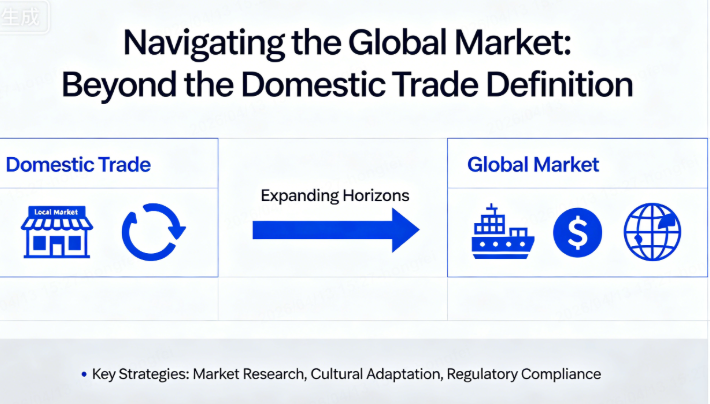
Table of Contents
What is the Domestic Trade Definition?
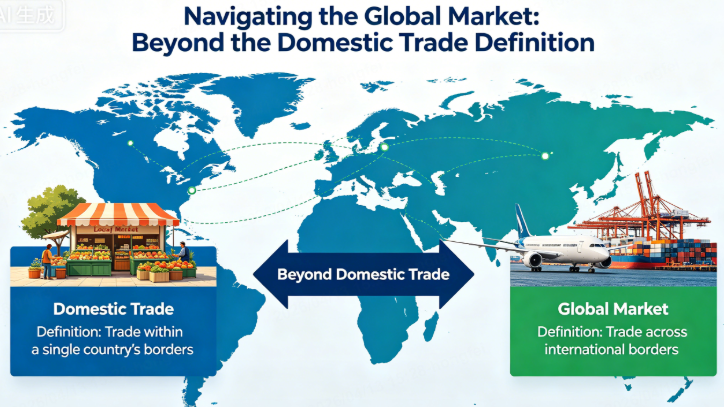
At its core, the domestic trade definition refers to the buying and selling of goods, services, or capital within the geographical borders of a single country. This form of commerce—often called internal or home-market trade—relies on a shared currency, uniform legal framework, and familiar logistics networks.
While domestic trade is essential for stabilizing local economies, it often limits business potential due to market saturation and higher cost structures. By contrast, international or global trade involves transactions across national borders, introducing your brand to diverse markets, specialized production capabilities, and, most importantly, global cost efficiency.
Key Differences: Domestic vs. Global Sourcing
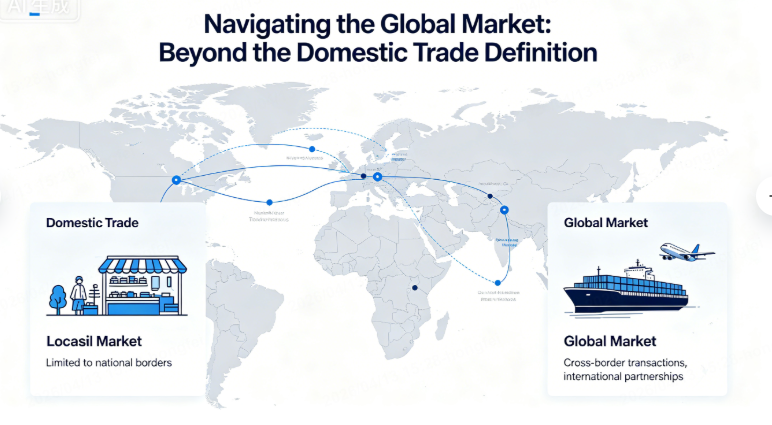
Transitioning from a domestic-only model to a global sourcing strategy requires a paradigm shift. Understanding these distinctions helps you mitigate risks and maximize ROI.
| Feature | Domestic Trade | Global Sourcing (B2B) |
|---|---|---|
| Market Reach | Limited by national borders | Global, accessible 24/7 |
| Cost Structure | Typically higher due to intermediaries | Lower; direct access to manufacturers |
| Logistics | Simplified, local transport | Complex but optimized via platforms |
| Regulations | Single legal framework | International compliance required |
| Supplier Choice | Restricted to local options | Thousands of global manufacturers |
Why Brands are Pivoting to Global B2B Platforms
As a strategy expert, I see a clear trend: successful companies are no longer reliant on single-source, local supply chains. They leverage platforms like LooperBuy to integrate global procurement into their operations.
- Direct Access to Manufacturers: Cutting out local middlemen significantly boosts your profit margins.
- Infinite Product Variety: Global platforms offer a range of products that local markets often cannot match due to regional industrial specialization.
- Logistics as a Service: Modern platforms have transformed complex international shipping into a seamless, low-cost experience for businesses of all sizes.
Expert Insight: Overcoming the Barriers to Entry
Many business owners fear that international trade is only for multinational giants. This is a misconception. With the right tools and digital infrastructure, the hurdles that once intimidated small and medium-sized enterprises (SMEs)—such as language barriers, quality assurance, and payment security—are effectively managed.
Actionable Steps for Global Sourcing:
- Conduct a Cost-Benefit Analysis: Compare the total cost of ownership (TCO) for local vs. imported goods. Remember to factor in shipping and potential tariffs.
- Use Reliable B2B Platforms: Partner with platforms that verify suppliers and offer end-to-end logistics support to minimize risks.
- Start Small: Begin with trial orders to test quality, communication, and lead times before committing to large-scale procurement.
Understanding Risks in International B2B Sourcing
While the benefits of global sourcing are substantial, they come with unique risks that require a proactive management strategy. Recognizing these challenges is the first step toward building a resilient business.
- Supply Chain Disruptions: Global events, from natural disasters to geopolitical tensions, can cause bottlenecks. Diversifying your supplier base is essential to mitigate these risks.
- Quality Control: Distance makes physical inspections harder. Utilizing platforms that provide third-party quality assurance services is vital.
- Regulatory Complexity: Different countries have different compliance standards. Staying informed and using platforms that understand international trade regulations simplifies this process.
Strategic Risk Mitigation for Long-Term Success
To succeed in the global marketplace, you must move beyond reactive measures. A sophisticated risk management strategy includes:
- Proactive Supplier Due Diligence: Never engage with a manufacturer without verifying their credentials, production capabilities, and compliance history.
- Digital Visibility Tools: Leverage data and analytics to track shipments, monitor supplier performance in real-time, and identify potential issues before they become crises.
- Hybrid Sourcing Models: Mitigate risk by blending domestic and global sourcing. Keep critical, high-speed items local while sourcing specialized or cost-sensitive components globally.
Conclusion: The Future is Global
While understanding the domestic trade definition is vital for local operations, your true growth capacity lies in global commerce. By bridging the gap between local brands and global production hubs through professional B2B sourcing platforms, businesses can secure the pricing, variety, and reliability needed to dominate their markets.
Ready to scale your business internationally? Visit LooperBuy today to explore a world of manufacturing possibilities and start sourcing directly from the world’s most competitive production centers.
References
- CliffsNotes: Understanding Domestic and International Trade
- Global Sources: Domestic vs. Global Trade Definition
- Alibaba Seller Blog: Differences Between Domestic and International Trade
- India Index: Comparing Domestic and International Trade
- FCTEMIS: Differences Between Domestic and Foreign Trade
- Auditive: Strategies for Managing Risks in International Procurement
- Oxford College of Procurement: Minimising Risks in International Sourcing
- Drip Capital: How to Mitigate Risks in International Business
FAQ (Frequently Asked Questions)
1. What is the simplest domestic trade definition?
Domestic trade is the buying and selling of goods and services strictly within a country’s national borders.
2. Why should a brand switch to global sourcing?
Global sourcing offers access to lower production costs, a wider variety of products, and better scalability that local markets often cannot provide.
3. Is international trade too risky for small businesses?
Not with modern B2B platforms. Tools like LooperBuy help reduce risk through supplier vetting, secure payment systems, and managed logistics.
4. How does global trade differ from domestic trade regarding logistics?
Domestic logistics are typically simpler, whereas global trade involves cross-border complexities like customs, international freight, and diverse shipping regulations.
5. How can I start sourcing globally?
Start by identifying reliable B2B platforms, conducting a total cost of ownership (TCO) analysis, and beginning with small trial orders to verify product quality and delivery timelines.
Article Summary:
Discover the essential domestic trade definition and learn why global sourcing is the key to business scalability. This guide explores the strategic differences between local and international trade, provides actionable insights for managing risks, and helps brand owners optimize their supply chains.
Hot tags: B2B sourcing platform, global supply chain, domestic trade definition, international procurement, wholesale manufacturing, cross-border trade, import export business, manufacturing cost efficiency, direct factory sourcing, B2B logistics solutions.