Over the past 12 years of advising international brand owners, wholesalers, and industrial buyers on electrical equipment sourcing from China, one question has come up more often than any other: Which type of circuit breaker is designed to be reconditioned—and which type must never be?
The short answer is straightforward, but the implications for your procurement strategy, compliance risk, and bottom line are anything but.
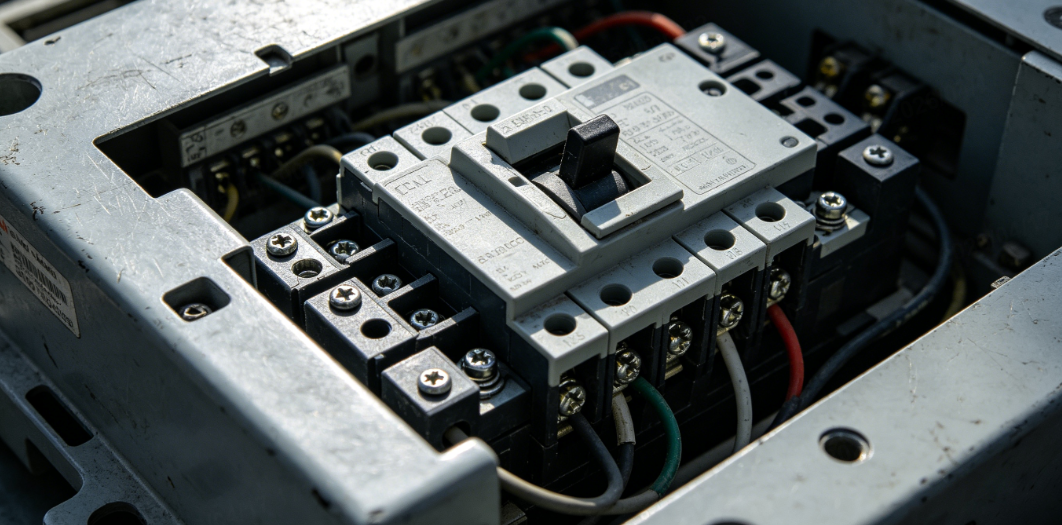
Low‑voltage and medium‑voltage power circuit breakers (LVPCBs and MVPCBs) are designed to be reconditioned, while molded‑case circuit breakers (MCCBs) are prohibited from reconditioning under the National Electrical Code (NEC). That distinction isn’t just technical—it’s regulatory, financial, and reputational.
Let me walk you through exactly what the code says, where the savings are, and how to source reconditioned breakers safely and cost‑effectively through a trusted B2B sourcing platform like LooperBuy.
Table of Contents
What the National Electrical Code (NEC) Actually Says About Circuit Breaker Reconditioning
If you’re a B2B buyer sourcing electrical equipment, the NEC is your compliance bible. The 2020 edition introduced Section 240.88, which provides a clear, enforceable list of which overcurrent devices can and cannot be reconditioned.
Here’s the exact breakdown:
| Circuit Breaker Type | Reconditioning Permitted? | NEC Reference |
|---|---|---|
| Molded‑case circuit breakers (MCCBs) | NO | 240.88(A)(1) |
| Low‑voltage power circuit breakers (LVPCBs) | YES | 240.88(A)(2) |
| Medium‑voltage power circuit breakers (MVPCBs) | YES | 240.88(A)(2) |
| High‑voltage circuit breakers | YES | 240.88(A)(3) |
| Low‑voltage electronic trip units | NO | 240.88(B)(1) |
| Electromechanical protective relays and CTs | YES | 240.88(B)(2) |
Why does this matter so much? Molded‑case breakers have sealed, non‑serviceable mechanisms that cannot be reliably restored to factory safety standards. Using a reconditioned MCCB isn’t just a code violation—it’s a serious safety hazard. The NEC requires that the original listing mark be removed from reconditioned equipment and replaced with a new “reconditioned” certification mark.
For a deeper look at the broader regulatory landscape, the ANSI/PEARL Electrical Equipment Reconditioning Standard provides the industry‑recognized procedures for safely reconditioning circuit breakers, transformers, and switchgear. If you’re sourcing reconditioned breakers, insist that your supplier follows PEARL‑accredited practices—it’s the best way to ensure you’re getting a safe, code‑compliant product.
Why Reconditioned Power Circuit Breakers Make Financial Sense for B2B Buyers
The economics of reconditioning are compelling—especially when you’re managing procurement budgets at scale.
Reconditioned circuit breakers typically cost 30% to 60% of new units, while factory‑refurbished breakers with warranties are priced at 50% to 70% of new. For large‑capacity air circuit breakers (ACBs) that can cost thousands of dollars new, the savings add up quickly.
Beyond the upfront price advantage, reconditioning also delivers:
- Faster lead times – New breakers from major manufacturers can have long backorders. Reconditioned units are often available immediately, keeping your projects on schedule.
- Vintage equipment compatibility – Many older industrial facilities use circuit breakers that are no longer in production. Reconditioning is often the only way to get a direct replacement without costly system‑wide upgrades.
- Lower environmental impact – Companies like Schneider Electric collect used breakers, disassemble them, and test them to the same standards as new products—delivering the same warranty length while reducing CO2 emissions.
For B2B buyers, the value proposition is clear: reconditioned low‑ and medium‑voltage power circuit breakers offer a compliant, cost‑effective alternative to new equipment—without compromising on safety or performance—when sourced from qualified suppliers.
Industry in Action: How Major Players Are Reconditioning Circuit Breakers
Let me share a few real‑world examples that demonstrate the viability of this market.
Case 1: ABB’s Direct Replacement at a Danish Power Plant
The Nordværk waste‑to‑energy plant in Denmark needed to upgrade aging Emax circuit breakers that had been in service since the plant opened in 2005. Spare parts were no longer available. ABB’s solution replaced only the mobile part of each breaker with a dedicated Emax 2 part. The entire exchange took just 10 minutes per breaker, with minimal downtime for a critical facility.
Case 2: Schneider Electric’s Circular Economy Model
Schneider Electric collects used circuit breakers, disassembles them, and upgrades them with the latest accessories and software. Each refurbished unit is tested to the same standards as new products and carries the same length of warranty.
Case 3: Reverse Engineering for Obsolete Hospital Breakers
Researchers used 3D scanning and additive manufacturing to restore a high‑power circuit breaker in a hospital environment—where conventional replacement would have meant high costs, prolonged downtime, and direct impact on patient safety.
These cases prove a critical point: when you work with qualified suppliers who follow established reconditioning protocols (PEARL, ANSI, IEC), reconditioned breakers are not only safe but often the most practical solution available.
Sourcing Reconditioned Circuit Breakers from China: What B2B Buyers Need to Know
China is home to some of the world’s largest circuit breaker manufacturing hubs—particularly Yueqing in Zhejiang Province and the Pearl River Delta. Suppliers in these regions often achieve 30–50% lower costs compared to European or North American manufacturers, thanks to economies of scale and localized supply networks.
However, when it comes to reconditioned breakers, price should never be the sole decision factor. Here’s what you need to verify before placing an order:
- Certifications – Look for UL, IEC, or PEARL accreditation. The ANSI/PEARL Standard covers everything from 600V circuit breakers to 38kV switchgear.
- Documentation – The reconditioner must provide a new nameplate with “reconditioned” labeling and the date of reconditioning.
- Testing records – Insist on proof that every reconditioned breaker has been tested to applicable standards (e.g., ANSI C37.50, IEEE C37.59) before shipment.
- Warranty – Reputable reconditioners offer warranties—typically one year for parts and labor. If a supplier won’t stand behind their work, walk away.
How LooperBuy Streamlines Your Circuit Breaker Sourcing
Navigating the complexities of reconditioned circuit breaker sourcing—supplier vetting, compliance verification, logistics coordination—can overwhelm even experienced procurement teams. This is where LooperBuy makes the difference.
As a one‑stop B2B sourcing platform, LooperBuy connects international brand owners, wholesalers, and industrial buyers with vetted Chinese manufacturers of electrical equipment. Our advantages include:
- Product variety – From miniature circuit breakers (MCBs) and molded‑case breakers (MCCBs) to air circuit breakers (ACBs), vacuum circuit breakers (VCBs), and SF6 breakers—we cover the full spectrum.
- Vetted suppliers – We work only with manufacturers who hold recognized certifications (UL, IEC, CCC, CE) and maintain proper quality management systems.
- Global logistics at competitive rates – We handle everything from factory pickup to ocean freight and last‑mile delivery, with transparent pricing and no hidden fees.
- Low minimum order quantities – Whether you’re testing a new market with 100 units or placing a full container order of 5,000+, we work with your volume.
Conclusion
So, which type of circuit breaker is designed to be reconditioned? The NEC gives you a clear answer: low‑ and medium‑voltage power circuit breakers (LVPCBs and MVPCBs) are permitted, while molded‑case circuit breakers (MCCBs) are strictly prohibited.
For B2B buyers, understanding this distinction isn’t just about compliance—it’s about unlocking significant cost savings, reducing project lead times, and accessing replacement parts for aging equipment that manufacturers no longer support.
The reconditioned circuit breaker market is growing, driven by industrial demand for cost‑effective, sustainable electrical solutions. But success depends on working with qualified suppliers who follow established standards like PEARL/ANSI and the NEC.
Ready to source reconditioned circuit breakers for your next project? Contact LooperBuy today for a free sourcing consultation and custom quote.
Frequently Asked Questions (FAQ)
Q1: Can molded‑case circuit breakers (MCCBs) ever be reconditioned under any circumstances?
A: No. The NEC 2020, Section 240.88(A)(1), explicitly states that molded‑case circuit breakers shall not be permitted to be reconditioned. This is a strict prohibition with no exceptions, as MCCBs have sealed, non‑serviceable mechanisms that cannot be reliably restored to factory safety standards.
Q2: What’s the typical cost difference between a new power circuit breaker and a reconditioned one?
A: Reconditioned low‑ and medium‑voltage power circuit breakers typically cost 30% to 60% of new units. Factory‑refurbished breakers accompanied by a warranty are generally priced at 50% to 70% of new equipment.
Q3: How do I verify that a reconditioned circuit breaker is safe and code‑compliant?
A: Look for reconditioners accredited under the ANSI/PEARL Electrical Equipment Reconditioning Standard. Ensure the unit carries a new nameplate with “reconditioned” labeling, the date of reconditioning, and the responsible organization’s mark. Request testing documentation confirming compliance with applicable standards like ANSI C37.50 or IEEE C37.59.
Q4: What types of circuit breakers are most commonly reconditioned in industrial B2B markets?
A: Low‑ and medium‑voltage air circuit breakers (ACBs), vacuum circuit breakers (VCBs), SF6 circuit breakers, and oil circuit breakers from major manufacturers like ABB, Siemens, Eaton, GE, and Square D are the most commonly reconditioned types.
Q5: Can reconditioned circuit breakers be sourced directly from Chinese manufacturers?
A: Yes. China has major circuit breaker manufacturing hubs—particularly Yueqing in Zhejiang Province and the Pearl River Delta—with suppliers offering 30–50% cost advantages compared to Western counterparts. However, B2B buyers must rigorously verify certifications, testing protocols, and compliance with NEC and PEARL standards before placing orders.
Article Introduction
Which circuit breakers can be reconditioned under NEC 2020? Low‑ and medium‑voltage power circuit breakers are permitted—molded‑case breakers are strictly prohibited. This expert B2B guide covers code requirements, cost savings, industry case studies, and safe sourcing practices for international buyers.
Top 10 High‑Search‑Volume B2B Keywords for This Article
Hot tags: reconditioned circuit breaker, low voltage power circuit breaker reconditioning, NEC 240.88 compliance, B2B electrical equipment sourcing China, molded case breaker prohibition, refurbished circuit breaker supplier, ANSI PEARL reconditioning standard, circuit breaker wholesale China, power circuit breaker replacement parts, industrial electrical procurement
References
- National Fire Protection Association. (2020). NFPA 70: National Electrical Code (NEC) 2020 Edition, Section 240.88 – Reconditioned Equipment. nfpa.org
- Electrical License Renewal. (2020). 240.88 Reconditioned Equipment – NEC Code Change Summary. electricallicenserenewal.com
- Electrical License Renewal. (2023). 110.20 Reconditioned Equipment – General Requirements. electricallicenserenewal.com
- Professional Electrical Apparatus Reconditioning League (PEARL). (2024). ANSI/PEARL Electrical Equipment Reconditioning Standard (EERS). pearl1.org
- TRC Companies. (2025). Circuit Breaker Repair and Refurbishment – Comprehensive Capabilities for All Major Breaker Types. trccompanies.com
- IAEI Magazine. (2021). Certification of Refurbished Electrical Equipment Under the NEC. iaeimagazine.org
- ABB. (2024). Refurbishment / Reconditioning of Medium Voltage Circuit Breakers – Factory Approved with Warranty. new.abb.com
- Energy Digital. (2024). ABB Future‑Proofs Energy with Power Plant Modernisation – Nordværk Case Study. energydigital.com
- World Economic Forum. (2024). This company cuts CO2 emissions by giving products a second life – Schneider Electric Circular Economy. weforum.org
- IEEE Xplore. (2022). Reconditioned Low‑Voltage Circuit Breakers: Considering Electrical Safety for Applications in Industry. ieeexplore.ieee.org
- Alibaba.com. (2025). Circuit Breaker Supplier Guide: Evaluate Chinese Manufacturers for B2B Procurement. alibaba.com
- Electrical Trader. (2026). New vs Used Circuit Breakers: Reliability Comparison – Pricing and Warranty Analysis. electricaltrader.com
- IMEG Corp. (2023). 2023 NEC: Using Reconditioned Equipment? Buyer Beware! imegcorp.com