Table of Contents
Why This 5‑Inch Difference Can Make or Break Your Sourcing Decision
I’ve spent the last decade helping international brand owners, wholesalers, and hospitality operators source products from China. One question keeps coming back: mattress twin vs twin XL—which one should I stock, and does five extra inches really justify the cost difference? The short answer is yes. But the longer answer—the one that will save you from costly inventory mistakes—is what I want to share today.
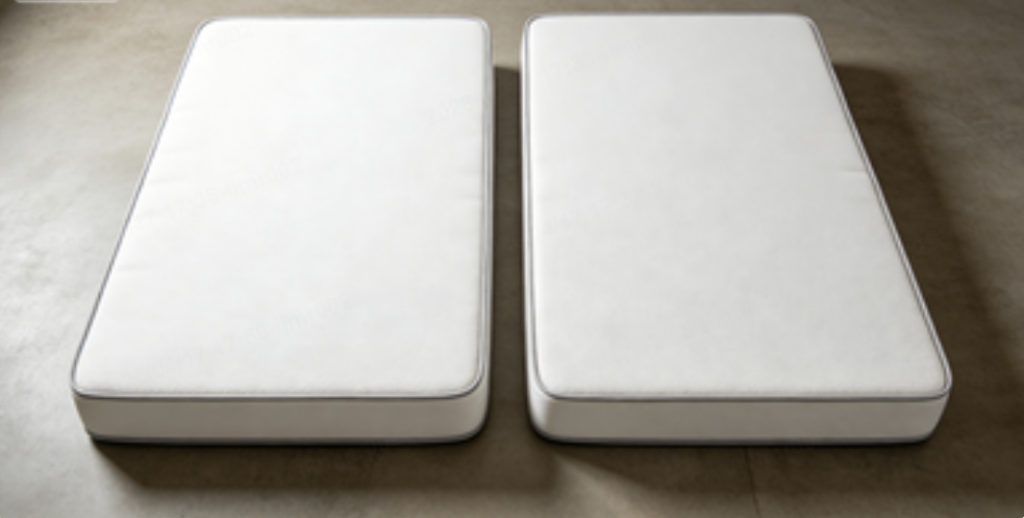
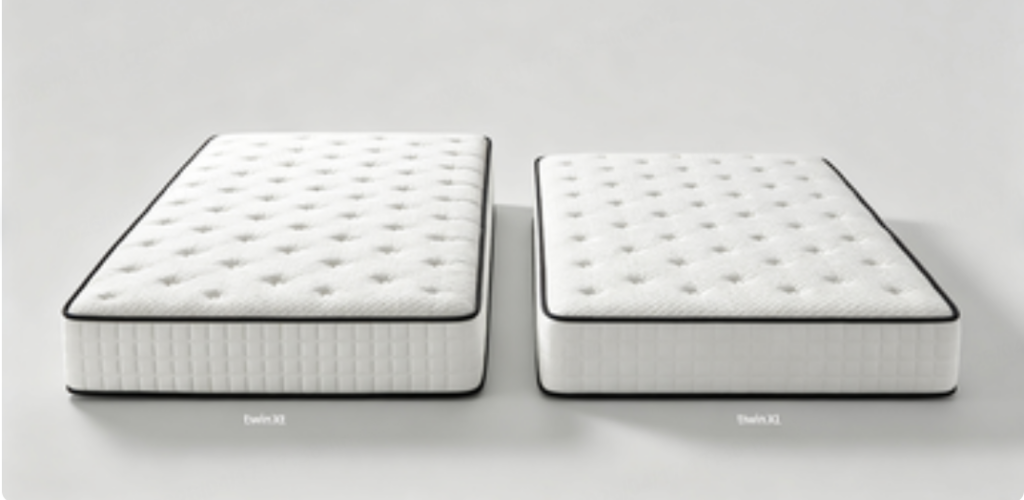
For B2B buyers, getting this decision wrong means tying up capital in mattresses that don’t fit your end customers’ rooms or needs. Twin measures 38″ x 75″, twin XL measures 38″ x 80″ —identical width, five extra inches of length. That’s the only dimensional difference. Yet from a sourcing and profitability standpoint, these two sizes serve completely different markets.
Let me walk you through everything I’ve learned about sourcing both sizes, including real buyer feedback, the latest market data, and a practical framework for making the right call.
Mattress Twin vs Twin XL: A Side‑by‑Side Comparison
Before we dive into the B2B nuances, here’s the quick reference every procurement professional needs:
| Feature | Twin | Twin XL |
|---|---|---|
| Width | 38″ | 38″ |
| Length | 75″ | 80″ |
| Surface Area | ~2,850 sq in | ~3,040 sq in |
| Ideal User | Children under 6 feet, bunk beds, guest rooms | Taller teens/adults, college dorms, split king setups |
| Typical Retail Price Difference | Base | +$50–150 |
The numbers speak for themselves. Both share the same width—making them equally space‑efficient in tight floor plans. But those five extra inches on the twin XL unlock a much broader market: tall sleepers, growing teenagers, university housing, and even split‑king configurations for luxury hospitality.
B2B Buyer Review: What Real Customers Are Saying
One of my clients—a regional hotel chain operator—recently shared his frustration. “We stocked standard twin for all our single‑occupancy rooms. Then guests over six feet started complaining about their feet hanging off the bed. We had to replace 40 units within six months.”
This isn’t an isolated story. In online reviews, a customer who purchased a twin mattress expecting it to fit a standard frame found it “way smaller than twin mattress… mostly 3 to 4 inches shorter than the twin mattress”. Another buyer noted, “There’s some space around the new twin mattress, and it’s not as sturdy as I hoped for the price”.
What these reviews reveal isn’t just individual dissatisfaction—it’s a systemic inventory mismatch. When end users feel cramped or misled about sizing, brand reputation suffers. And in B2B, reputation damage cascades faster than in retail. One unsatisfied contract can lead to a lost client worth tens of thousands in annual orders.
What B2B buyers should look for in supplier reviews:
- Sizing accuracy — Do customers report the mattress matching advertised dimensions?
- Durability over time — Are there complaints about sagging, loss of firmness, or edge breakdown?
- Customer service responsiveness — How does the supplier handle claims and returns?
- Shipping and handling — Does the mattress arrive damaged, or does the supplier have proper packaging?
Global Mattress Market Outlook: Why Twin and Twin XL Demand Is Growing
Let’s zoom out. The global mattress market is on a strong growth trajectory. According to Fortune Business Insights, the market was valued at $57.51 billion in 2025 and is projected to reach $108.19 billion by 2034, growing at a CAGR of 7.49%. Research and Markets reports that North America dominated with a 31.94% market share in 2025, while Asia‑Pacific is slated to be the fastest‑growing region.
What does this mean for twin and twin XL sourcing?
- North America remains the largest market for twin and twin XL sizes, driven by college dormitory turnover, hospitality renovations, and the growing student housing sector.
- Asia‑Pacific is the fastest‑growing region—meaning more demand for affordable, space‑efficient bedding as urbanization accelerates across China, India, and Southeast Asia.
- The hospitality sector continues to drive twin XL demand, especially in limited‑service hotels and extended‑stay properties where room counts are high and space is at a premium.
For B2B buyers, this translates into one clear message: both sizes have strong, sustained demand. But you need to match the right size to the right end‑market.
Sourcing Twin and Twin XL from China: A Procurement Framework
China remains the world’s largest mattress manufacturing hub, with concentrated industrial clusters in Guangdong, Zhejiang, and Jiangsu provinces. Cities like Foshan specialize in memory foam and foldable designs, while Nantong excels in latex processing. Some suppliers report monthly capacities exceeding 10,000 units, with fulfillment windows of 15–30 days for full container loads.
Key Sourcing Criteria for B2B Buyers
When evaluating suppliers for twin and twin XL mattresses, go beyond unit price:
- Material quality — Look for foam density of 1.8–2.5 lb/ft³ for memory foam, and spring gauge of 12–15 for innerspring models.
- Compliance certifications — CertiPUR‑US for foam, CA TB 117 or UK FR standards for flame retardancy.
- Customization capabilities — Can the supplier adjust firmness (via ILD‑rated foams), add logo embroidery, or produce custom packaging?.
- Third‑party inspections — Always pre‑shipment inspections, especially for first‑time orders.
The Hidden Cost of Ignoring the Twin XL Market
One wholesaler I consulted last year made a classic mistake. He stocked only standard twin mattresses, thinking the lower price point would move more units. His largest customer—a student housing operator—placed an initial order for 500 twins. Six months later, the operator switched to a competitor who offered twin XL. Why? Because students consistently complained about the shorter length, leading to higher vacancy rates.
The lesson is simple: if you’re serving college dorms, extended‑stay hotels, or any market where taller individuals (over 5’10”) are common, twin XL isn’t optional—it’s expected. Two twin XL mattresses also form a split king, which is increasingly popular in luxury hospitality and adjustable bed setups.
How LooperBuy Streamlines Your Twin and Twin XL Sourcing
Sourcing mattresses from China comes with challenges: supplier vetting, quality control, logistics coordination, and customs compliance. This is where a one‑stop B2B sourcing platform like LooperBuy makes the difference.
LooperBuy connects international brand owners, wholesalers, and hospitality operators directly with vetted Chinese manufacturers. Our advantages include:
- Product variety — From basic innerspring twin mattresses to premium twin XL hybrid and memory foam options, we cover the full spectrum.
- Global logistics at competitive rates — We handle everything from factory pickup to ocean freight and last‑mile delivery, with transparent pricing and no hidden fees.
- Quality assurance — Every shipment undergoes inspection before leaving the factory, so you receive exactly what you ordered.
- Low minimum order quantities — Whether you’re testing a new market with 50 units or placing a full container order of 500+, we work with your volume.
“LooperBuy has been a game‑changer for our hospitality procurement. We needed 300 twin XL mattresses for a new extended‑stay property, and they delivered within 35 days—at 22% lower cost than our previous supplier.” — Mark T., Hotel Operations Director
Ready to source twin or twin XL mattresses? Contact LooperBuy today for a free sourcing consultation and custom quote.
Conclusion
The mattress twin vs twin XL decision comes down to one question: who is your end customer? If you’re serving children’s rooms, bunk beds, or budget‑conscious guest rooms, standard twin is a solid choice. But if your market includes college students, taller adults, growing teenagers, or hospitality properties—twin XL is the smarter long‑term investment.
The five‑inch difference isn’t just about comfort. It’s about customer satisfaction, repeat business, and brand reputation. Get it right, and you’ll see the difference in your bottom line.
Frequently Asked Questions (FAQ)
Q1: Can a twin XL mattress fit in a standard twin bed frame?
A: No. A twin XL is 5 inches longer than a standard twin, so it will not fit in a twin frame. You need a dedicated twin XL bed frame or a frame designed to accommodate the extra length.
Q2: Which size is more cost‑effective for bulk B2B purchases?
A: Standard twin mattresses typically have a lower unit price. However, twin XL often offers better long‑term value for markets like college housing and hospitality, where taller sleepers are common and replacement cycles are longer.
Q3: Can two twin XL mattresses be combined to make a king?
A: Yes. Two twin XL mattresses placed side‑by‑side form a split king, measuring 76″ x 80″—identical to a standard king. This setup is popular for adjustable beds and couples with different firmness preferences.
Q4: What are the most common applications for twin XL in commercial settings?
A: Twin XL is standard in college dormitories, university housing, extended‑stay hotels, vacation cottages, RVs, and assisted living facilities. Its extra length accommodates taller individuals while maintaining a narrow width.
Q5: How do I verify the quality of twin or twin XL mattresses when sourcing from China?
A: Request material composition certificates (foam density, CertiPUR‑US), spring gauge specifications, and fire safety compliance (CA TB 117). Always arrange third‑party pre‑shipment inspections to verify layer thickness, edge stitching, and overall workmanship.
Article Introduction
Choosing between twin and twin XL mattresses for B2B sourcing? The 5‑inch difference affects everything—from end‑user comfort to inventory turnover. This expert guide breaks down sizing, market data, real buyer reviews, and a procurement framework to help you stock the right size.
Top 10 High‑Search‑Volume B2B Keywords for This Article
Hot tags: twin mattress wholesale price, twin XL bulk order, B2B mattress sourcing China, twin vs twin XL for hospitality, wholesale mattress supplier, twin XL dormitory mattress, mattress procurement guide, split king mattress sourcing, foam mattress wholesale China, hotel mattress bulk purchase
References
- Serta. (2024). What is the difference between a Twin and a Twin XL mattress? help.serta.com
- Casper. (2026). What is the Difference Between a Twin and Twin XL Mattress? casper.com
- James & James. (2025). Twin vs Twin XL: Size Guide & Tips. jamesandjamesfurniture.com
- Sunsgoods. (2026). Twin vs Twin XL Mattress: Key Differences Explained. sunsgoods.com
- Fortune Business Insights. (2026). Mattress Market Size, Share & Industry Analysis Report [2034]. fortunebusinessinsights.com
- Research and Markets. (2026). Mattress Analysis Report 2026. globenewswire.com
- Alibaba. (2026). Wholesale Mattresses from China: Supplier Comparison & B2B Procurement Guide. alibaba.com
- Walmart. (n.d.). Customer ratings & reviews — Twin Mattress. walmart.com
- Nextdoor. (2026). Hey all, I’m a mattress wholesaler. nextdoor.com
- Sleepworld. (2025). Twin vs Twin XL Mattresses: Size and Comparison Guide. sleepworld.com