B2B vs B2C is more than who you sell to—it shapes sourcing, logistics, and growth. Learn how modern B2B ecommerce works, why it’s outpacing B2C, and how Looperbuy’s China sourcing and dropshipping solutions help global sellers scale with less inventory risk and more control.
The traditional B2B vs B2C explanation—who you sell to and how they buy—is no longer enough for modern brands navigating global supply chains, China sourcing, and cross‑border fulfillment. As a consultant helping merchants transition from manual procurement to digital, China‑enabled supply chains, I’ve learned that the most successful teams don’t just define their model; they design their operations around it.
In this guide, we will explore the real operational differences between B2B and B2C today, why B2B ecommerce is growing so fast, and how platforms like Looperbuy make B2B sourcing and dropshipping surprisingly agile—even for small brands and marketplace sellers.
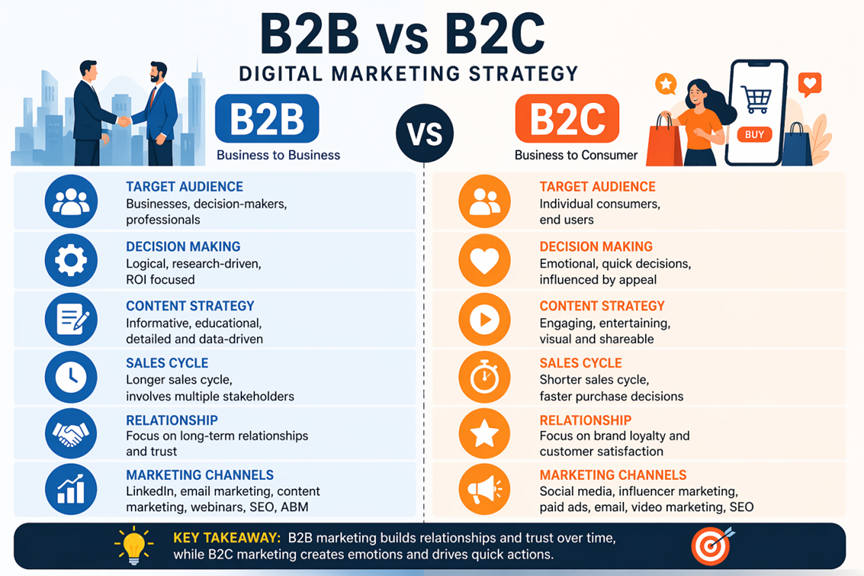
Table of Contents
What Do B2B and B2C Actually Mean Today?
B2B: Selling to Businesses, Not Browsers
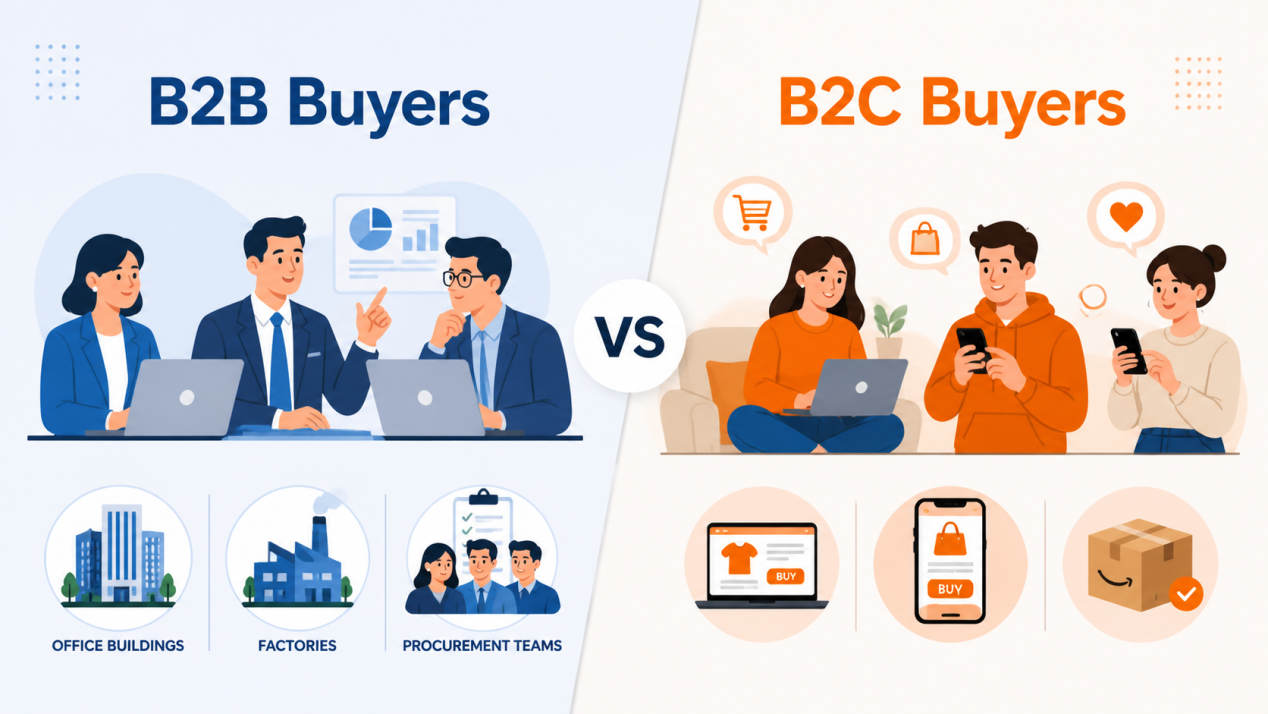
At its core, B2B means selling products or services to other companies rather than end consumers. These buyers are typically manufacturers, wholesalers, distributors, retailers, or professional buyers in larger organizations. [litium]
Classic B2B examples include software vendors like Salesforce, infrastructure providers like Microsoft Azure, and marketing platforms such as Mailchimp, all of which sell primarily to teams and organizations rather than individuals. In each case, purchase decisions involve multiple stakeholders—finance, IT, operations, and leadership—and are judged on productivity, profitability, and risk mitigation. [litium]
B2C: Selling to the Final Consumer
By contrast, B2C models focus on direct sales to end users, usually via ecommerce sites, marketplaces, or retail channels. Platforms such as Amazon, Airbnb, and social networks like Meta’s Facebook serve individual consumers whose decisions are often emotional, convenience‑driven, and made by one person or one household. [litium]
Where B2B buyers weigh ROI and workflow impact, B2C consumers are more likely to respond to perceived value, branding, reviews, and ease of checkout. [litium]
Key Differences Between B2B and B2C You Can’t Ignore
For global sellers sourcing from China in 2026, three dimensions are particularly critical: buyer intent, the sourcing cycle, and operational complexity.
Buyer Intent and Decision Process
– B2B buyers look for solutions that improve productivity, reduce costs, or create new revenue streams, often requiring approval from multiple departments. [litium]
– B2C buyers make purchases to satisfy personal needs or desires, usually with a shorter and more emotional decision path. [litium]
In B2B, a single large customer can drive a significant portion of revenue, which means losing one contract can materially impact the business—so retention, service quality, and pricing stability matter a lot. In B2C, risk is spread across many smaller buyers, making acquisition and brand visibility more critical. [deloittedigital]
Customer Life Cycle and Relationship Depth
– B2B relationships tend to be long‑term, contract‑driven, and built on trust and performance over time. [litium]
– B2C relationships are often shorter, with customers switching brands quickly if price, convenience, or experience change. [litium]
For B2B sellers using China sourcing, this longer relationship is actually an advantage: once you align product quality, lead times, and pricing with your buyers’ expectations, you can scale together on predictable terms. [looperbuy]
Operational Complexity and Marketing Costs
B2B marketing is often more complex and costly per customer, while B2C focuses on broad reach and emotional appeal. In practice, that means B2B brands invest heavily in content, sales enablement, procurement integrations, and customized quoting, whereas B2C leans on mass campaigns, reviews, and rapid testing of offers. [salsify]
Why B2B Ecommerce Is Growing Faster Than B2C
Global B2B ecommerce has already surpassed B2C in total volume and continues to grow at a remarkable pace. Analyst reports estimate B2B ecommerce could exceed $60 trillion by 2030, driven by digitization of procurement and the rise of self‑service portals. [novatize]
Several trends stand out in 2026:
– Digital‑first buying journeys: Many B2B manufacturers and distributors now generate the majority of their growth from online channels, not traditional sales reps. [salsify]
– Self‑service commerce: A large share of B2B buyers prefer placing orders and reorders through digital portals, with 61% indicating a rep‑free experience is often their first choice. [oro-commerce.ekino]
– Omnichannel purchasing: B2B buyers regularly use multiple channels—web, marketplaces, chat, email, and offline meetings—throughout a single buying cycle. [salsify]
For global sellers, this shift means that B2B buyers now expect faster quote responses, transparent stock information, and real‑time tracking—capabilities that platforms like Looperbuy can power with integrated sourcing and logistics workflows. [looperbuy]
Operational Reality: B2B vs B2C in Global Sourcing
When you add China sourcing and cross‑border dropshipping into the equation, the typical B2B vs B2C distinctions become even more practical. [looperbuy]
Product and Pricing Strategy
– B2B sellers often work with tiered pricing, volume discounts, and custom configurations for different buyers. [litium]
– B2C sellers focus on standard SKUs, clear retail pricing, and promotional cycles. [litium]
Platforms like Looperbuy provide wholesale rates directly from factory suppliers, allowing B2B sellers to build margin structures that reward volume and long‑term commitments, while still testing small batches where needed. [looperbuy]
Inventory, Risk, and Fulfillment
Traditional B2B required large upfront inventory, warehousing, and complex international logistics planning. Now, with integrated dropshipping and flexible storage services, sellers can adopt a more agile approach: [litium]
– No‑inventory models: Dropshipping lets merchants sync customer orders directly to factories or warehouses, who then ship on their behalf.
– Hybrid models: Sellers can combine bulk orders (for predictable demand) with one‑piece dropshipping for long‑tail SKUs or new market tests.
Looperbuy, for example, connects merchants to over 10,000 certified factories in China, offers free warehousing for up to 90 days, and supports multi‑currency payments to simplify cross‑border operations. [looperbuy]
B2B vs B2C in Practice
| Dimension | B2B Commerce (2026) | B2C Commerce (2026) |
| Primary buyer | Company decision makers | Individual consumers |
| Buying cycle | Longer, multi‑stakeholder | Shorter, often single decision |
| Key driver | ROI, efficiency, risk control | Emotion, convenience, brand |
| Price model | Tiered, negotiated, contract | Fixed, promo‑driven |
| Relationship horizon | Long‑term, repeat contracts | Mixed, from one‑off to loyal |
| Inventory approach | Bulk + flexible fulfillment | Lean inventory, faster turnover |
Where Looperbuy Fits in a B2B Strategy
From a practitioner’s perspective, Looperbuy reduces friction at exactly the points where traditional B2B sourcing is most painful—supplier discovery, negotiation, logistics, and payment. [looperbuy]
End‑to‑End Sourcing and Dropshipping
Looperbuy’s platform is designed to help merchants who want to source from China without managing multiple intermediaries, conflicting quotes, or fragmented logistics partners. Key capabilities include: [looperbuy]
– Direct factory access: Merchants connect to certified factories without middlemen, securing factory‑level pricing and clearer production timelines. [looperbuy]
– One‑piece MOQ dropshipping: New sellers can start with extremely low minimum order quantities, then scale up into bulk discounts as volumes grow. [looperbuy]
– “Traceless” fulfillment: The platform supports shipping that hides supplier information, allowing merchants to maintain brand control. [looperbuy]
Flexible Logistics and Storage
For B2B brands, logistics is often the main risk center. Looperbuy mitigates this with:
– Free warehousing up to 90 days, which makes it possible to buy in bulk, schedule outbound shipments more strategically, and still avoid long‑term storage costs. [looperbuy]
– Global shipping partners, offering full‑process tracking from China to destination markets. [looperbuy]
– Multi‑channel integrations, including connections to platforms like Shopify, Mercado Libre, Noon, and TikTok for streamlined listing and ordering. [looperbuy]
This combination allows B2B sellers to operate closer to B2C agility—rapid product testing, regional inventory positioning, and fast replenishment—while still maintaining wholesale margins. [looperbuy]
A Practical Framework for Choosing B2B vs B2C
Below is a practical framework used in consulting projects with cross‑border sellers. [looperbuy]
Step 1: Clarify Your Primary Buyer
Ask yourself: Who controls the budget for the products you sell?
– If it is a procurement manager, retailer, or operations lead, you are likely in a B2B model.
– If it is the end user purchasing for personal use, you are likely in B2C.
Step 2: Map the Buying Cycle
Document each step from first discovery to repeat purchase, including decision makers and approvals. In B2B, you’ll usually see stages like requirements gathering, vendor evaluation, trial, contract, and renewal, whereas B2C flows tend to be more linear (discover‑compare‑buy‑review).
Step 3: Align Sourcing and Fulfillment
For B2B, prioritize:
– Reliable lead times over maximum assortment
– Transparent factory relationships over anonymous wholesale
– Flexible bulk + dropshipping models to support both key accounts and smaller buyers
Here, platforms like Looperbuy allow you to design an operating model that reflects these priorities without building your own sourcing office in China. [looperbuy]
How Digital‑First B2B Sellers Use Looperbuy in Real Life
To illustrate how these concepts play out, consider three types of global sellers using a China‑enabled supply chain.
1. Emerging D2C brand testing wholesale
– Starts with B2C via its own ecommerce site.
– Uses Looperbuy’s one‑piece MOQ and dropshipping to test SKUs and find reliable factories. [looperbuy]
– Once demand stabilizes, negotiates bulk pricing for key products and introduces a B2B wholesale catalog for retailers. [looperbuy]
2. Marketplace seller scaling into private label
– Sells generic goods via major marketplaces.
– Works with Looperbuy’s OEM/ODM services to develop branded versions and custom packaging. [looperbuy]
– Gradually transitions toward higher‑margin, B2B‑leaning relationships (e.g., supplying other sellers or regional distributors).
3. Traditional wholesaler modernizing procurement
– Historically relies on offline importers and long contracts.
– Shifts sourcing to Looperbuy, gaining direct access to factories and centralized logistics tracking. [looperbuy]
– Uses digital ordering workflows to reduce manual paperwork and shorten the procurement cycle. [looperbuy]
In each scenario, the seller uses digital tools to keep the strategic strengths of B2B (relationship depth, volume, ROI focus) while borrowing the speed and UX expectations of B2C. [salsify]
Action Steps for Global Sellers Considering B2B
If you operate or plan to operate a B2B model and want to leverage China sourcing without increasing risk, consider the following steps:
1. Audit your current buyer mix
Identify whether most of your revenue comes from companies or end consumers and segment your strategy accordingly.
2. Define a sourcing playbook
Document rules for factory selection, quality expectations, lead times, and escalations. Leveraging platforms like Looperbuy can simplify this by giving you access to vetted suppliers and integrated logistics. [looperbuy]
3. Design a hybrid fulfillment model
Combine bulk orders for core SKUs with dropshipping for long‑tail products and new market tests to reduce inventory risk. [looperbuy]
4. Strengthen buyer experience across channels
Even in B2B, buyers expect digital convenience—clear product information, reliable stock data, and easy reordering. Use your sourcing platform’s integrations to connect catalog and ordering across marketplace, ecommerce, and offline channels. [deloittedigital]
5. Monitor performance and adjust
Track margins, delivery performance, and buyer retention across B2B accounts, then tune your sourcing and logistics approach accordingly. [commercetools]
Frequently Asked Questions
Q1: Can a small seller really benefit from a B2B sourcing platform?
Yes. With one‑piece MOQ, integrated dropshipping, and factory‑level pricing, small sellers can test products, avoid inventory risk, and still negotiate better terms as they grow. [looperbuy]
Q2: How is B2B different from wholesale for marketplace sellers?
Wholesale is a form of B2B, but modern B2B involves digital portals, direct factory relationships, and flexible fulfillment models tailored to different buyer segments. [salsify]
Q3: What risks should I watch when sourcing from China?
Key risks include inconsistent quality, long lead times, payment friction, and fragmented logistics. Working with a platform that centralizes factory vetting, inspection, warehousing, and tracking can significantly reduce these risks. [looperbuy]
Q4: Can I serve both B2B and B2C buyers at the same time?
Yes. Many brands sell directly to consumers while also supplying retailers or distributors, often using different pricing, packaging, and lead‑time agreements for each buyer type. [novatize]
Q5: How does dropshipping fit into a B2B model?
Dropshipping can support B2B by handling fulfillment for smaller buyers, pilot projects, or regional partners, while bulk orders handle your largest contracts. Platforms like Looperbuy make it possible to run both models from one sourcing and logistics stack. [looperbuy]
References
1. Virtocommerce. “B2B vs. B2C: Definition, Differences, Examples.” [litium]
2. Looperbuy. “B2B China Sourcing Platform & Dropshipping Solutions.” [looperbuy]
3. Looperbuy. “Dropshipping Revolution: Connect with 10,000 Certified Factories in China.” [looperbuy]
4. Looperbuy. “About Us.” [looperbuy]
5. Salsify. “2026 B2B Ecommerce Trends: Modern Intelligence, Trust, and Buying.” [salsify]
6. Novatize. “25 Ecommerce Trends to Watch in 2026.”[novatize]
7. Deloitte Digital. “2026 B2B Commerce Research.” [deloittedigital]
8. Commercetools. “Pivotal Trends and Predictions in B2B Digital Commerce in 2026.” [commercetools]
9. Looperbuy. “Supply Chain Consulting: How LooperBuy’s One‑Stop B2B Sourcing Platform Transforms Global Procurement.” [looperbuy]
10. Looperbuy. “Top 10 Dropshipping Vendors in China.” [looperbuy]