Table of Contents
Why Children’s Toy Shopping Carts Matter More Than You Think
When most parents think about toys, they envision dolls, action figures, or building blocks. But there’s a category of toy that stands out for its educational value, imaginative potential, and developmental benefits: children’s toy shopping carts. These delightful miniature versions of grocery carts aren’t just toys—they’re powerful learning tools that foster creativity, cognitive development, and social skills.
Research from the National Association for the Education of Young Children (NAEYC) shows that pretend play with objects like shopping carts helps children develop problem-solving abilities, language skills, and emotional regulation. When children push these carts, they’re not merely imitating adults; they’re engaging in complex role-playing that builds their understanding of the world.
Key Considerations When Selecting the Perfect Cart
Safety First: What Every Parent Should Know
Children’s toy shopping carts may seem simple, but safety should always be the top priority. Look for carts made from non-toxic materials, with no sharp edges or small parts that could present choking hazards. The American Academy of Pediatrics recommends checking for certification labels like ASTM (American Society for Testing and Materials) to ensure products meet safety standards.
Weight capacity is another critical factor. Some carts can hold up to 50 pounds, making them suitable for storing toys and books, while others are designed purely for pretend play. Consider how your child might use the cart now and in the future to make the best choice.
Size and Scalability: Finding the Right Fit
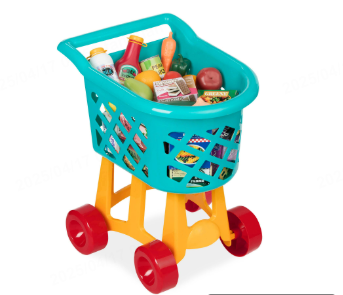
The dimensions of a toy shopping cart should align with your child’s age and the available play space. Toddler-friendly carts typically measure 12-15 inches in height, while larger models can reach up to 24 inches. Many parents appreciate adjustable-height carts that grow with their child, extending the toy’s useful life.
Storage considerations shouldn’t be overlooked. Some carts fold flat for easy storage, while others feature built-in organization systems like baskets or hooks. For small living spaces, space-saving designs become particularly valuable.
Educational Value: More Than Just Play
The best toy shopping carts incorporate learning opportunities. Look for features like:
- Counting elements: Numbered items or quantity recognition activities
- Color identification: Vibrant, distinct colors that help with early recognition
- Fine motor skill development: Small handles, velcro closures, or sorting components
- Language building: Play food with recognizable shapes and names that encourage vocabulary expansion
Brands like Melissa & Doug and Hape excel at integrating these educational elements seamlessly into play.
Types of Children’s Toy Shopping Carts: A Comprehensive Overview
Classic Wooden Carts: Timeless Appeal with Lasting Benefits
Wooden toy shopping carts have seen a resurgence in popularity, and for good reason. These sturdy, eco-friendly options often feature:
- Natural beauty: Unpainted wood that showcases grain patterns
- Durability: Construction that withstands years of play
- Open-ended play: Simple designs that encourage creative scenarios
- Sustainability: Materials that are renewable and biodegradable
Models from brands like Plan Toys and KidKraft often include accessories like wooden play food and cloth shopping bags, enhancing the play experience.
Plastic Innovations: Modern Features for Contemporary Play
Plastic carts offer unique advantages that wooden options can’t match. Modern designs frequently include:
- Lightweight construction: Easier for young children to maneuver
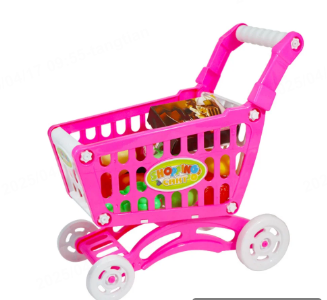
- Molded details: Built-in features like scanners or conveyor belts
- Easy cleaning: Smooth surfaces that wipe clean quickly
- Affordability: Generally lower price points than wooden alternatives
The Step2 Fresh Mart Grocery Cart is a standout in this category, featuring a working scale and electronic scanner that introduces early math concepts.
Themed and Character Carts: When Imagination Meets Recognition
For children with specific interests, themed shopping carts can transform playtime. Options include:
- Supermarket themes: Realistic details that mimic grocery stores
- Princess or castle designs: Encouraging imaginative scenarios
- Dinosaur or space adventures: Themed play that sparks creativity
- Licensed character carts: Featuring favorites from shows or movies
These specialized carts often come with matching accessories that deepen the role-playing experience.
Creative Ways to Enhance Play with Shopping Carts
Learning Through Play: Educational Activities to Try
Parents and educators can maximize the educational potential of toy shopping carts with these activities:
- Grocery math: Create shopping lists with quantities and practice counting
- Nutrition lessons: Sort play food into food groups and discuss healthy choices
- Budgeting basics: Assign prices to items and introduce simple money concepts
- Language games: Encourage descriptive language by asking about colors, shapes, and textures
These activities align with early childhood education standards while feeling like fun to children.
Multi-Child Play: Fostering Social Skills
When multiple children play with shopping carts, valuable social development occurs. Scenarios naturally encourage:
- Turn-taking: Sharing the cart or taking turns at the “checkout”
- Collaboration: Working together to stock shelves or create shopping lists
- Conflict resolution: Negotiating over desired items or cart usage
- Role assignment: Creating family roles like shopper, cashier, or stocker
These interactions build essential social-emotional skills that benefit children throughout their lives.
Eco-Conscious Choices: Sustainable Shopping Carts for Little Ones
The Growing Demand for Green Toys
As environmental awareness increases, parents seek sustainable options for their children. Eco-friendly toy shopping carts often feature:
- Recycled materials: Plastic made from post-consumer waste or reclaimed wood
- Non-toxic finishes: Water-based paints and natural stains
- Biodegradable components: Parts that decompose safely at end-of-life
- Local manufacturing: Reduced carbon footprint from shorter supply chains
Brands like Green Toys and Bajo Toys lead the way in sustainable children’s products.
Benefits Beyond the Environment
Choosing eco-friendly shopping carts provides additional advantages:
- Healthier play: Reduced exposure to harmful chemicals
- Teachable moments: Introducing children to sustainability concepts
- Longevity: Durable construction that withstands years of use
- Resale value: Well-made items that maintain value for secondhand markets
These benefits make sustainable choices appealing beyond just environmental concerns.
Conclusion
Children’s toy shopping carts represent more than just another plaything—they’re versatile tools for development, learning, and family connection. By considering safety, educational value, and sustainability, parents can select carts that provide hours of enjoyment while supporting critical growth areas. Whether through classic wooden designs, innovative plastic models, or themed adventures, these toys offer opportunities for creativity, skill-building, and quality time that extend far beyond the playroom.
How to Purchase:https://looperbuy.com/search?keywords=children%27s+toy+shopping+carts
Questions & Answers
What age range are most children’s toy shopping carts designed for?
The majority of toy shopping carts are designed for children ages 2-6, though some models accommodate younger toddlers (18 months+) with lower heights and simplified features. Higher-end carts often remain relevant through age 8 when combined with advanced play scenarios like running a pretend business.
How can toy shopping carts aid in a child’s development?
These toys support multiple developmental domains: cognitive skills through problem-solving and planning, social-emotional growth via role-playing, fine motor development when handling small accessories, and language expansion as children describe their activities and negotiate with playmates.
Are there toy shopping carts that work with other toy systems?
Yes! Many carts are compatible with major toy systems. Wooden carts often work with Lego Duplo and wooden block sets, while plastic carts may connect with Fisher-Price Little People accessories or Playmobil figures. Check product specifications for compatibility notes.
Can toy shopping carts be used outdoors?
Most carts can be used outdoors, but consider material suitability. Wooden carts may require protective finishes for prolonged outdoor use, while plastic carts are generally weather-resistant. Look for UV-protected plastics to prevent fading in sunlight.
What should I do if my child loses interest in their toy shopping cart?
Revitalize interest by rotating accessories, creating new scenarios (like a farmer’s market instead of a grocery store), or incorporating technology through scanning apps designed for toy cash registers. Sometimes a simple “cart wash” with water and mild soap can make the toy feel new again.