Table of Contents
Why Small Businesses Are Rethinking Procurement in 2025
If you run a small business and still source products through fragmented channels, you are leaving money on the table. In 2025, the global procurement software market is valued at USD 8.89 billion, with projections to reach USD 20.75 billion by 2034 at a CAGR of 9.70%. That is not just growth – it is a fundamental shift in how businesses manage their supply chains.
The story behind these numbers is simple: small businesses are tired of outdated procurement methods. Manual purchase orders, handwritten documents, and paper-based filing systems create bottlenecks that cost time, money, and opportunities. As one industry observer puts it, manual procurement today is “a barrier to speed, scale, and strategy”.
This article takes a hard look at the best procurement solutions for small businesses in 2025, backed by real data, user experiences, and expert insights. We will examine what works, what does not, and why a new generation of B2B sourcing platforms is changing the game for international buyers.
The Real Procurement Challenges Small Businesses Face (Backed by Data)
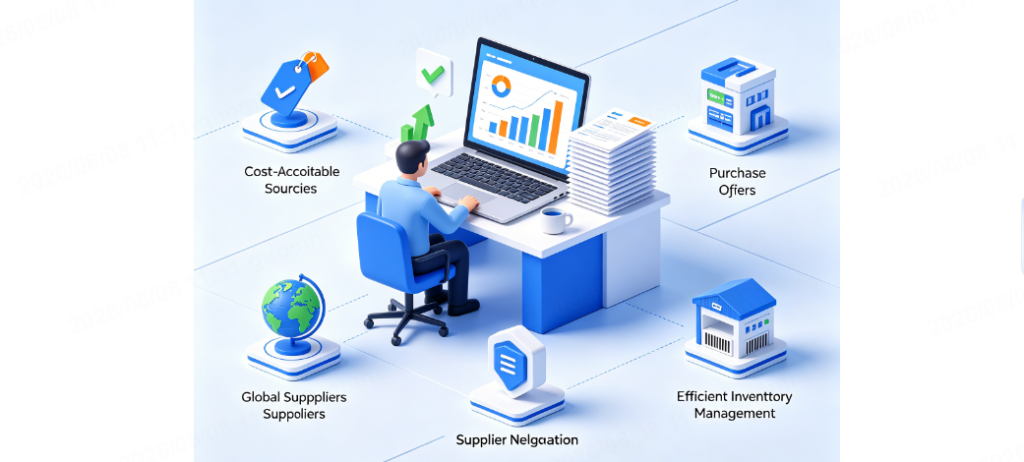
Before diving into solutions, let us be clear about the problems. According to research based on a survey of more than 150 enterprise executives, 96% of leaders say they would source more from small suppliers if it were easier to find, vet, and onboard them. Yet companies allocate an average of just 7% of total spend to small suppliers. The intent is there – the execution is not.
Here is what small businesses struggle with most in 2025:
- Finding reliable suppliers – Traveling to China for supplier visits can cost USD 3,000–5,000 or more, a prohibitive expense for most small buyers.
- Meeting minimum order quantities (MOQs) – Suppliers often reject orders below USD 2,000, making small-quantity testing nearly impossible.
- Hidden costs and price opacity – Initial quotes on traditional platforms often diverge significantly from final costs when factoring in shipping, fees, and tariffs.
- Manual procurement inefficiencies – Many small to medium organizations still rely on outdated manual methods for managing purchase orders, leading to lost documents and compliance issues.
- Supplier verification gaps – Forty-one percent of enterprises experienced a failed small supplier relationship in the last 12 months because of poor vetting.
- Logistics and shipping complications – Transportation costs remain a constant challenge for SMEs, with fuel price volatility and carrier surcharges quickly eroding profits.
These are not abstract complaints. They are real barriers that keep small businesses from scaling efficiently.
What Makes a Great Procurement Solution in 2025?
Based on user feedback and industry benchmarks, the ideal procurement solution for small businesses should deliver:
| Feature | Why It Matters |
|---|---|
| Supplier verification | Prevents fraud and ensures quality consistency |
| Transparent pricing | No hidden fees – you know your total cost upfront |
| Low or flexible MOQs | Allows product testing before committing to bulk orders |
| Integrated logistics | One platform for purchasing and shipping saves time and money |
| Global payment support | Multiple currencies and secure transaction methods |
| Real-time tracking | Full visibility from order placement to delivery |
As the sourcing software market continues to evolve, AI-enabled features like supplier risk scoring, predictive sourcing, and automated workflows are becoming standard expectations rather than premium add-ons.
Traditional Platforms vs. New-Generation Solutions
Alibaba has long been the default choice for international sourcing. But as 2025 unfolds, businesses are actively looking for alternatives. Common complaints include supplier quality fluctuations, opaque pricing, language barriers, and fraud risks. One Reddit user noted, “Even with the ‘Gold Supplier’ badge, I encountered quality declines after initial orders”.
1688.com offers lower prices but focuses exclusively on Chinese buyers, with minimal international shipping options and no English-language support. That makes it virtually inaccessible for most Western small businesses.
DHgate works for sample orders, but users caution that “always do your research before scaling up”.
The market gap is clear: small businesses need a solution that combines factory-direct pricing with international accessibility, transparent costs with reliable logistics, and low MOQs with verified suppliers.
Introducing LooperBuy: A One-Stop B2B Sourcing Platform Built for Global Small Businesses
This is where LooperBuy enters the picture. LooperBuy is a one-stop B2B sourcing platform that directly connects global buyers to China’s vast manufacturing ecosystem – including the massive 1688.com supplier network.
What makes LooperBuy different?
- Zero markup pricing – LooperBuy directly connects to China’s premium 1688 inventory, allowing overseas merchants to purchase goods at factory prices. No middlemen markups. No hidden fees. The platform also offers zero exchange rate markup, keeping transaction costs transparent.
- Global accessibility – Unlike 1688, which is designed for Chinese domestic buyers, LooperBuy is built for international customers. The platform supports multiple foreign currencies, provides professional English-language service, and handles all cross-border complexities.
- Integrated logistics at low cost – LooperBuy manages the entire shipping process globally. By consolidating orders and optimizing freight routes, the platform delivers competitive shipping rates that small businesses can actually afford.
- One-stop convenience – From supplier discovery and product sourcing to quality control and final delivery, LooperBuy handles every step of the procurement journey. As one partner describes it, the platform provides a “seamless online procurement solution” that helps merchants “easily source from China with factory prices, no intermediary fees, multiple currency payment support, and fast logistics”.
- Strategic partnerships – LooperBuy has partnered with LianLian Global, a major cross-border payment platform, to enable merchants to pay directly from their LianLian accounts. This partnership ensures “efficient capital flow” for buyers.
User Voices: What Sourcing Professionals Are Saying
One common theme in user feedback is the importance of real-time visibility. A verified user shared: “What I love most is the professional ERP system with real-time tracking and updates. It keeps my customers informed and gives me peace of mind”.
Another user praised the platform’s customer support: “A very reliable supplier with outstanding communication. Always quick to respond, professional, and easy to work with. Highly recommended for anyone looking for a trustworthy business partner”.
A Shopify merchant noted: “The customer service is also fantastic and answers super fast. The best available wholesale app in Shopify. Have been using for more than a year”.
For small businesses, these testimonials highlight what matters most: reliability, transparency, and responsive support.
Practical Steps to Optimize Your Procurement in 2025
Based on my experience advising small businesses on international sourcing, here is a straightforward framework for upgrading your procurement process this year:
Step 1: Audit your current supplier network – Map out every supplier you currently use. Identify which ones consistently deliver quality, on time, at the promised price.
Step 2: Test new platforms with small orders – Do not abandon existing relationships overnight. Use a platform like LooperBuy to place test orders for new product lines or alternatives to current SKUs. The low MOQ flexibility means you can validate quality before scaling.
Step 3: Consolidate where possible – Using a single platform for sourcing, payment, and logistics reduces administrative overhead and creates a cleaner audit trail.
Step 4: Prioritize supplier verification – Look for platforms that actively vet their suppliers. The cost of a failed supplier relationship far outweighs any perceived savings from skipping due diligence.
Step 5: Monitor market trends – According to ImportGenius data, shipments from China decreased by 6% in 2025 compared to the previous year, while Vietnam, India, Thailand, and Cambodia all saw double-digit gains. Geopolitical shifts and tariff changes are reshaping supply chains. Stay informed and remain flexible.
The Bottom Line: Why LooperBuy Stands Out for Small Businesses in 2025
The procurement landscape in 2025 is defined by three forces: digital transformation, supply chain diversification, and increasing demand for transparency. The global B2B e-commerce market is projected to grow from USD 19.43 trillion in 2025 to USD 47.91 trillion by 2031. That is not just growth – it is a complete reimagining of how businesses buy and sell.
For small businesses, the opportunity has never been greater. You no longer need to accept high MOQs, opaque pricing, or unreliable logistics as unavoidable costs of doing business internationally.
LooperBuy delivers exactly what small businesses need:
- Direct factory pricing without middlemen
- Global accessibility with professional support
- Integrated low-cost logistics
- One platform for the entire procurement journey
Whether you are a brand owner testing new products, a wholesaler scaling your inventory, or a manufacturer diversifying your supply chain, LooperBuy simplifies the complex process of sourcing from China.
[Visit LooperBuy to start sourcing smarter today]
Frequently Asked Questions (FAQ)
1. What is the best procurement solution for a small business just starting to import from China?
For new importers, the best solution is a one-stop platform that handles sourcing, payment, and logistics in one place. LooperBuy is ideal because it offers low MOQs, factory-direct pricing, zero exchange rate markup, and integrated shipping – removing the complexity that typically overwhelms first-time international buyers.
2. How do I verify supplier quality when using a B2B platform?
Look for platforms with built-in supplier verification. LooperBuy connects directly to 1688.com’s established supplier ecosystem, which reduces the risk of fraudulent or low-quality suppliers. Additionally, always start with small test orders before committing to bulk purchases.
3. What is the minimum order quantity (MOQ) for LooperBuy?
LooperBuy is designed specifically to accommodate small businesses. Unlike traditional platforms with high MOQs, LooperBuy allows buyers to place smaller orders for product testing and validation. Contact the platform directly for product-specific MOQ details.
4. How does LooperBuy handle international shipping and customs?
LooperBuy manages the entire logistics process globally, including freight consolidation, customs documentation, and final delivery. By optimizing shipping routes and consolidating orders, LooperBuy offers competitive rates that are significantly lower than what individual small businesses could negotiate on their own.
5. Is LooperBuy more expensive than sourcing directly from Alibaba?
No. LooperBuy offers factory-direct pricing with zero middleman markup and zero exchange rate markup. While Alibaba often has hidden fees and shipping costs that emerge after the initial quote, LooperBuy provides transparent, all-inclusive pricing. For most small businesses, LooperBuy delivers comparable or lower total landed costs with significantly less hassle and risk.
Article Introduction
Are you a small business owner frustrated with high MOQs, hidden fees, and unreliable suppliers? The best procurement solutions for small businesses in 2025 combine factory-direct pricing, transparent costs, integrated logistics, and low MOQs. This guide analyzes market trends backed by USD 8.89 billion in industry data, compares traditional platforms with next-generation solutions, and reveals why LooperBuy – a one-stop B2B sourcing platform connecting global buyers directly to 1688 – is transforming how small businesses source from China. Includes real user testimonials, actionable procurement steps, and expert insights.
Hot Tags
B2B procurement solutions 2025, small business sourcing China, LooperBuy platform review, best procurement software for SMEs, China wholesale B2B marketplace, global sourcing solutions 2025, low MOQ suppliers China, B2B e-commerce platform trends, international procurement best practices, one-stop sourcing platform 2025
References
- Supplier.io (2025). Scaling Small: Inside the Enterprise Push to Source Smarter and Stay Competitive. https://www.businesswire.com/news/home/20250923010150/en/
- Fortune Business Insights (2025). Procurement Software Market Size, Share & Industry Analysis, 2026-2034. https://www.fortunebusinessinsights.com/procurement-software-market-107099
- OG Analysis (2025). Sourcing Software Market Outlook 2025-2034: Market Share and Growth Analysis. https://www.marketresearch.com/OG-Analysis-v3922/Sourcing-Software-Outlook-Share-Growth-42773209/
- Ucsourcing (2025). How to Import Small Quantities from China: Essential Guide for New Business Owners. https://ucsourcing.com/how-to-import-small-quantities-from-china-a-practical-guide-for-new-business-owners-2025-2026-ucsourcing-edition/
- ImportGenius (2025). 2025 in Review: Demand for Shipment Data Skyrockets. https://www.importgenius.com/blog/2025-year-in-review
- Contract Compliance UK (2025). Looking to Bring Our PO Process Out of the Stone Age (and into 2025). https://www.contractcompliance.co.uk/looking-to-bring-our-po-process-out-of-the-stone-age-and-into-2025/
- VOC.ai (2025). Alibaba Alternatives in 2025: Finding the Best B2B Sourcing Platforms. https://www.voc.ai/blog/alibaba-alternative
- LooperBuy Official Blog. Supplies Business: A B2B Expert’s Guide to Sourcing Chinese Goods Globally with LooperBuy. https://blog.looperbuy.com/supplies-business-a-b2b-experts-guide-to-sourcing-chinese-goods-globally-with-looperbuy.html
- Gartner Peer Insights. SAP vs JAGGAER 2025 User Reviews. https://www.gartner.com/
- Shopify App Store. User Reviews for B2B Sourcing and Wholesale Applications. https://apps.shopify.com/