Table of Contents
Why Understanding CFR vs CIF Matters More Than Ever in 2025
As a B2B sourcing and logistics strategist with over a decade of experience helping international brand owners, wholesalers, and manufacturers navigate cross-border trade, I’ve seen far too many importers sign contracts without fully grasping the critical differences between CFR and CIF.
The result? Unexpected costs, insurance nightmares, and damaged buyer-seller relationships.
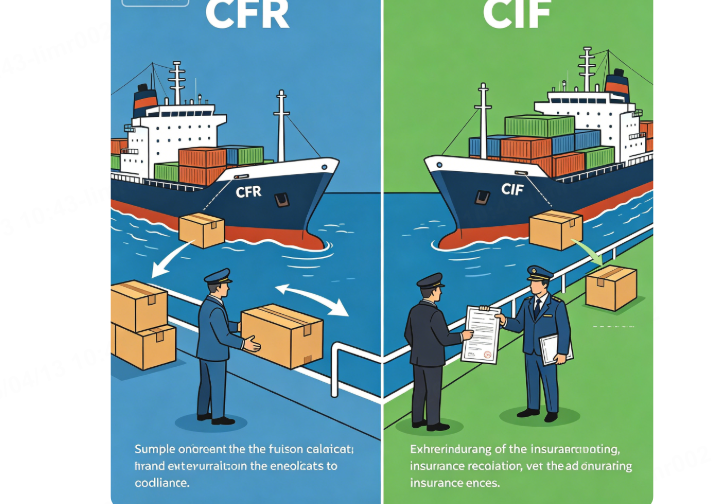
CFR (Cost and Freight) and CIF (Cost, Insurance and Freight) are two of the most widely used Incoterms in maritime trade—especially when sourcing from China. Both terms require the seller to arrange and pay for shipping to the destination port. But that one-word difference—”Insurance”—carries enormous implications for your bottom line and risk exposure.
In this guide, I’ll break down exactly what CFR and CIF mean in plain English, compare their responsibilities side by side, and help you decide which term works best for your business. I’ll also show you how partnering with a reliable one-stop sourcing platform like LooperBuy can eliminate much of the complexity and risk associated with both terms.
Pro Tip: Whether you choose CFR or CIF, having a trusted partner to vet suppliers and manage logistics makes all the difference. LooperBuy connects global buyers directly with vetted Chinese suppliers, offering factory-direct pricing and seamless logistics worldwide.
What Is CFR? Cost and Freight Explained
CFR (Cost and Freight) is an Incoterm for sea or inland waterway transport. Under CFR, the seller pays for shipping and freight costs to get the goods to the named destination port. However—and this is crucial—risk transfers from seller to buyer as soon as the goods are loaded onto the vessel at the port of origin. The buyer assumes all risk of loss or damage during the sea voyage, even though the seller arranged the shipping.
Seller‘s Responsibilities Under CFR:
- Deliver goods on board at the export port
- Handle export clearance and documentation
- Pay ocean freight to the destination port
- Provide commercial invoices, packing lists, and bills of lading
- Notify the buyer once goods are loaded
Buyer’s Responsibilities Under CFR:
- Arrange and pay for cargo insurance from the loading port
- Bear all risks once goods are on board
- Handle import customs clearance and duties
- Pay unloading costs at the destination port
- Arrange inland transportation from the port
CFR works well for experienced importers who want to control their own insurance coverage and keep freight costs lower. The buyer can shop around for insurance policies that fit their specific needs, rather than accepting whatever minimum coverage the seller provides.
What Is CIF? Cost, Insurance and Freight Explained
CIF (Cost, Insurance and Freight) is the sibling term to CFR, with one key addition: the seller must also procure minimum marine insurance for the goods during transit. Like CFR, CIF applies only to sea and inland waterway shipments, and risk still transfers to the buyer once goods are loaded onto the vessel at the origin port—not when the goods arrive at destination.
Seller‘s Responsibilities Under CIF:
- All CFR seller responsibilities PLUS
- Procure minimum marine insurance (typically Institute Cargo Clauses C)
- Provide insurance coverage for at least 110% of the invoice value
Buyer’s Responsibilities Under CIF:
- Same as CFR (risk after loading, import clearance, unloading, inland transport)
- Can purchase additional insurance if the seller’s minimum coverage is insufficient
Critical Reality Check: Many buyers mistakenly believe that under CIF, the seller bears risk all the way to the destination port. This is not true. Under both CFR and CIF, risk transfers at the origin port once goods are loaded. The only difference is that CIF includes basic insurance arranged by the seller.
CFR vs CIF: The 2025 Comparison Table
| Aspect | CFR (Cost and Freight) | CIF (Cost, Insurance and Freight) |
|---|---|---|
| Freight Cost | Seller pays to destination port | Seller pays to destination port |
| Insurance | Buyer’s responsibility | Seller provides minimum cover (ICC C) |
| Insurance Value | N/A (buyer arranges) | Minimum 110% of invoice value |
| Risk Transfer | At origin port, upon loading | At origin port, upon loading |
| Export Clearance | Seller | Seller |
| Import Duties | Buyer | Buyer |
| Unloading at Destination | Buyer | Buyer |
| Best For | Experienced importers, non-fragile goods | Bulk commodities, buyers wanting convenience |
| Container Suitability | Yes | Not recommended for containerized goods |
Source: ICC Incoterms 2020 (valid through 2025, no major revision expected until 2027)
Insurance: The Real Difference Between CFR and CIF
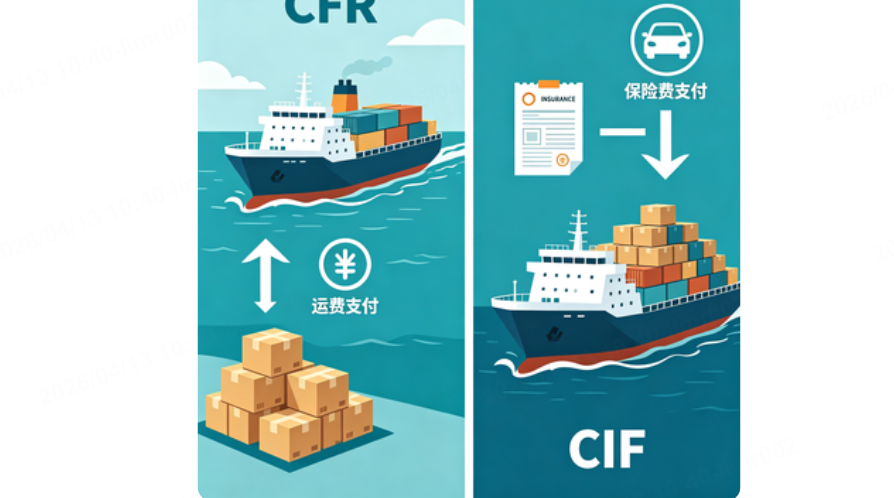
Let me be crystal clear: insurance is the ONLY substantive difference between CFR and CIF.
Under CFR, the buyer must arrange their own marine cargo insurance. This gives you—the importer—full control over coverage levels, deductibles, and insurance providers. If you‘re shipping high-value goods, you can purchase “all risks” coverage (ICC A) that protects against theft, breakage, and virtually every other peril.
Under CIF, the seller provides only the minimum required insurance—typically Institute Cargo Clauses C (ICC C). Here’s what ICC C actually covers:
- Fire and explosion
- Sinking, capsizing, or grounding of vessel
- Collision with other vessels
- General average sacrifice
What ICC C does NOT cover:
- Theft
- Breakage or damage during loading/unloading
- Water damage (except from sinking)
- Deliberate damage
- War risks
Most experienced importers will tell you: CIF’s minimum insurance is rarely adequate for anything but bulk commodities like grain or coal. For electronics, machinery, or consumer goods, you want better coverage—which means CFR may be the smarter choice so you can control your own insurance.
Pros and Cons: CFR vs CIF for Importers
CFR Advantages
- Lower total cost: No seller markup on insurance premiums
- Better coverage options: You choose the policy that fits your goods
- More control: You can vet the freight forwarder and shipping route
- Flexibility: Works well for both bulk and containerized cargo
CFR Disadvantages
- More work for the buyer: You must arrange insurance yourself
- Risk of forgetting coverage: If you fail to insure, you bear full loss
- Requires experience: Not ideal for first-time importers
CIF Advantages
- Convenient: Seller handles insurance, one less thing for you to manage
- Predictable pricing: Insurance cost included in the quoted price
- Good for beginners: Less knowledge required on the buyer’s side
- Works for bulk commodities: Grains, ores, and raw materials
CIF Disadvantages
- Minimum coverage only: ICC C leaves significant gaps
- Seller chooses the insurer: You have no say in policy terms
- Hidden markup: Sellers often inflate insurance and freight costs
- Not suitable for containers: ICC explicitly recommends against CIF for containerized goods
Expert Insights: How to Choose Between CFR and CIF
After analyzing hundreds of B2B import transactions, here‘s my practical advice:
Choose CFR when:
- You’re an experienced importer with established insurance relationships
- You‘re shipping high-value or fragile goods (electronics, machinery, luxury items)
- You want full control over your supply chain
- You’ve partnered with a reliable sourcing platform like LooperBuy that can vet suppliers and ensure compliance
Choose CIF when:
- You‘re new to importing and want the simplest possible transaction
- You’re shipping bulk commodities where minimum coverage is adequate
- You fully understand that CIF insurance is minimal and accept that risk
- You‘ve verified the seller’s freight and insurance costs are reasonable
One caveat from the trenches: Many Chinese suppliers prefer CIF because it allows them to mark up freight and insurance costs for additional profit. If a supplier strongly pushes CIF over CFR, ask for a detailed breakdown of freight and insurance components. You might be surprised by the markup.
Sourcing from China: Why Your Incoterm Choice Starts with the Right Partner
Here‘s the reality that many Incoterm guides overlook: the best CFR or CIF terms in the world won’t save you if your supplier is unreliable.
China remains the global epicenter for B2B sourcing, offering product diversity unmatched anywhere else. Chinese manufacturing covers over 90% of global B2B supply categories, from industrial components and electrical supplies to consumer goods and custom manufacturing parts. Chinese suppliers typically offer B2B pricing 25-40% lower than European or North American alternatives, supported by mature supply chains and economies of scale in manufacturing hubs like the Pearl River Delta and Yangtze River Delta.
This is where LooperBuy changes the game. As a one-stop B2B sourcing platform, LooperBuy directly connects global buyers with vetted Chinese suppliers on 1688.com, eliminating middlemen and their markups. The platform offers:
- Zero hidden fees: Factory-direct pricing with no middleman markup
- Seamless logistics: Global shipping with transparent cost breakdowns
- Supplier verification: Only legitimate, vetted suppliers
- Multi-currency payments: Integrated with LianLian Global‘s payment network
When you source through LooperBuy, you’re not just choosing between CFR and CIF—you‘re ensuring that whichever term you select is backed by a supplier who actually understands and honors their obligations.
2025 Updates: What’s Changed for CFR and CIF
While the ICC has not issued major Incoterms revisions (the next update is expected around 2030), several regional changes in 2025 affect both CFR and CIF shipments:
- US de minimis changes: Low-value CFR shipments face new scrutiny
- GCC 12-digit HS codes: Mandatory for shipments to Gulf Cooperation Council countries
- EU green shipping regulations: Environmental compliance adds costs
- China export controls: Stricter documentation requirements for certain categories
Bottom line: Whether you choose CFR or CIF, working with a platform that stays current on trade regulations is essential. LooperBuy’s logistics team monitors these changes so you don’t have to.
Common Mistakes to Avoid (From Real Importer Feedback)
“I thought CIF meant the seller was responsible until my goods arrived. When half my shipment was damaged, I learned the hard way that risk transfers at loading, not delivery.” — Mark T., Electronics Importer
“Under CFR, I saved 8% on my total landed cost by arranging my own insurance through a broker. The seller‘s CIF quote had a 12% markup on freight alone.” — Sarah L., Home Goods Wholesaler
“My biggest mistake was not specifying the exact destination port in my CFR contract. The supplier shipped to a different port, and I paid thousands in extra inland freight.” — David K., Machinery Buyer
Top mistakes to avoid:
- Assuming CIF covers you all the way to your door (it doesn’t)
- Forgetting to arrange insurance under CFR (you bear 100% of loss)
- Not specifying the exact named port in your contract
- Accepting CIF for containerized goods (use CIP instead)
- Failing to verify your supplier‘s freight forwarding credentials
Conclusion: Making the Right Choice for Your Business
CFR vs CIF isn’t about which term is “better”—it‘s about which term fits your business experience, risk tolerance, and operational capabilities.
If you’re new to importing or shipping low-risk bulk commodities, CIF offers simplicity and convenience (just understand its insurance limitations).
If you‘re experienced, shipping higher-value goods, or want maximum control over your supply chain, CFR typically delivers better coverage and lower total cost.
But regardless of which term you choose, success starts with the right sourcing partner. LooperBuy provides the supplier verification, logistics infrastructure, and pricing transparency you need to make either CFR or CIF work for your business.
Ready to optimize your China sourcing strategy? Visit LooperBuy to connect with vetted Chinese suppliers, compare CFR and CIF quotes, and start saving on your next B2B purchase.
References
- FreightAmigo. (2025). Understanding CIF Incoterm: Cost, Insurance, and Freight in International Shipping. Retrieved from https://www.freightamigo.com/en/blog/logistics/understanding-cif-incoterm-cost-insurance-and-frei/
- FreightAmigo. (2025). CFR Incoterm详解:成本加运费. Retrieved from https://www.freightamigo.com/sc/blog/logistics/cfr-incoterm-understanding-cost-and-freight-in-shipping/
- FreightAmigo. (2025). CFR in Maritime Trade: Understanding Cost and Freight Incoterms. Retrieved from https://www.freightamigo.com/en/blog/incoterms/cfr-in-maritime-trade-understanding-cost-and-freight-incoterms/
- FreightAmigo. (2025). CIF Incoterm: Understanding the Cost, Insurance, and Freight Contract. Retrieved from https://www.freightamigo.com/en/blog/logistics/cif-incoterm-understanding-the-cost-insurance-and-freight-contract/
- ICC Academy. (2024). Incoterms® 2020: CFR or CIF? Retrieved from https://academy.iccwbo.org/incoterms/article/incoterms-2020-cfr-or-cif/
- Maersk. (2023). The 5 most important Incoterms® when shipping to or from China. Retrieved from https://www.maersk.com.cn/ru-ru/logistics-explained/customs-and-compliance/2023/10/03/incoterms-china
- Stockwells. (2025). Key shipping terms deep dive: CFR vs CIF. Retrieved from https://stockwells.com.au/key-shipping-terms-deep-dive-cfr-vs-cif/
- Alibaba. (2025). CIF and CFR Supplier Guide: Strategic Sourcing, Risk Mitigation & Top Performers. Retrieved from https://www.alibaba.com/price-comparison/cif-and-cfr
- LooperBuy. (n.d.). Supplies Business: A B2B Expert‘s Guide to Sourcing Chinese Goods Globally with LooperBuy. Retrieved from https://blog.looperbuy.com/supplies-business-a-b2b-experts-guide-to-sourcing-chinese-goods-globally-with-looperbuy.html
Frequently Asked Questions (FAQ)
Q1: What is the main difference between CFR and CIF?
The main difference is insurance. Under CIF, the seller must provide minimum marine insurance coverage. Under CFR, the buyer arranges their own insurance. All other responsibilities—freight costs, risk transfer, export clearance—are identical.
Q2: Does risk transfer at the same point under CFR and CIF?
Yes. Under both CFR and CIF, risk transfers from seller to buyer once the goods are loaded onto the vessel at the port of origin—not when they arrive at the destination port.
Q3: Which is cheaper for the buyer, CFR or CIF?
CFR is typically cheaper because you remove the seller‘s markup on insurance. However, you must factor in the cost of purchasing your own insurance policy. In most cases, CFR still comes out ahead.
Q4: Can I use CFR or CIF for air freight?
No. Both CFR and CIF are strictly for sea and inland waterway transport. For air freight, use CPT (Carriage Paid To) or CIP (Carriage and Insurance Paid To).
Q5: Which Incoterm is better for first-time importers from China?
CIF is often easier for beginners since the seller handles insurance. However, understand that CIF provides only minimum coverage. For valuable goods, consider CFR so you can purchase better insurance, or work with a sourcing platform like LooperBuy that can guide you through both options.
Article Summary
Confused about CFR vs CIF? This expert guide breaks down the key differences in insurance, risk transfer, and costs. Learn which Incoterm saves you money and protects your cargo when sourcing from China. Plus, discover how LooperBuy simplifies global B2B procurement.
Hot Tags: CFR vs CIF, CFR Incoterms, CIF Incoterms, Cost and Freight, Cost Insurance and Freight, CFR vs CIF for importers, Incoterms 2025 China, B2B sourcing from China, CFR shipping terms, CIF shipping terms
10 High-Search-Volume B2B Keywords: CFR vs CIF, CFR Incoterms, CIF Incoterms, Cost and Freight shipping, Cost Insurance and Freight, CFR vs CIF for importers, Incoterms 2025 guide, China B2B sourcing platform, international trade terms comparison, CFR CIF difference explained