As a quality management consultant who has helped over 200 B2B procurement teams across North America and Europe vet suppliers in China, I get one question more than any other: what’s the difference between ISO 9000 and ISO 9001, and which one actually matters when I’m sourcing products?
It‘s a fair question—and the answer often surprises even experienced buyers.
Here’s the truth: Many procurement professionals assume these two are interchangeable. They‘re not. Understanding the distinction between ISO 9000 vs 9001 can mean the difference between partnering with a supplier who talks about quality and one who’s actually certified to deliver it.
In this guide, I‘ll break down exactly what each standard does, show you how to evaluate ISO 9001-certified suppliers in China, and give you a practical framework that goes beyond the certificate. Whether you’re sourcing electronics from Shenzhen, industrial components from Jiangsu, or consumer goods from Zhejiang, this information will save you from costly mistakes.
Table of Contents
What Is ISO 9000? The Foundation of Quality Management
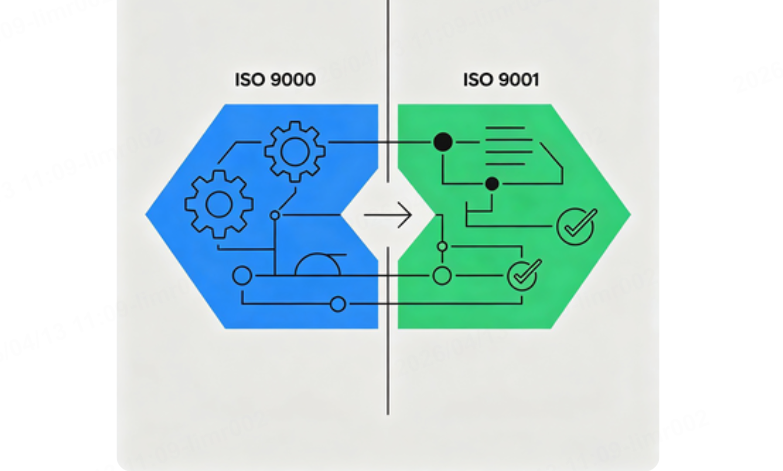
ISO 9000 is not a certification. It‘s a family of international standards that defines the principles and frameworks for quality management systems (QMS), helping organizations ensure consistent quality, customer satisfaction, and continual improvement.
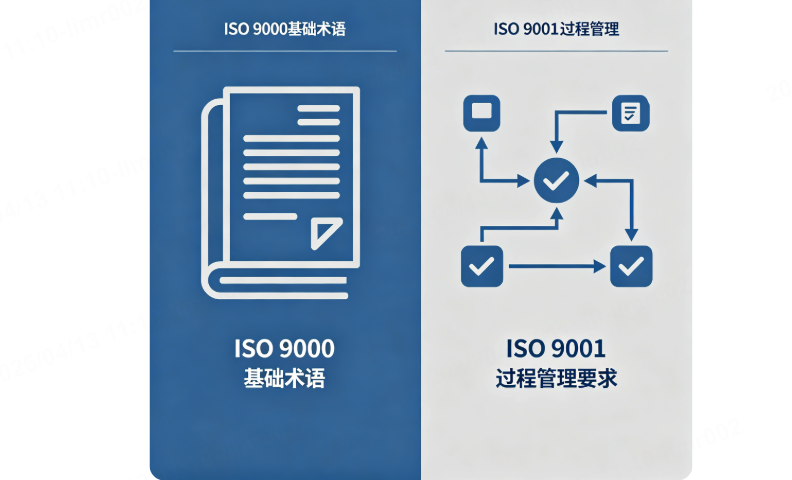
The ISO 9000 family includes four core standards: ISO 9000:2015 (fundamentals and vocabulary), ISO 9001:2015 (requirements for a QMS), ISO 9004:2009 (guidance for sustained success), and ISO 9011:2011 (auditing guidelines). Organizations can only be certified to ISO 9001, not to “ISO 9000.”
Think of ISO 9000 as the “why” —the theoretical foundation. It defines the seven quality management principles: customer focus, leadership, engagement of people, process approach, improvement, evidence-based decision making, and relationship management.
For manufacturers, ISO 9000 serves as a training resource. A production team might use it to understand the definitions of nonconformities, the importance of process-based thinking, and the rationale behind continual improvement. But ISO 9000 alone doesn’t prove anything about a supplier‘s actual quality performance.
What Is ISO 9001? The Certifiable Standard That Matters for Sourcing
ISO 9001 is the most well-known standard within the ISO 9000 family—and the only one organizations can be certified against. It specifies the precise requirements for establishing, implementing, maintaining, and continually improving a QMS.
If ISO 9000 is the “why,” then ISO 9001 is the “how.” It requires certified suppliers to document processes, maintain traceability, conduct internal audits, and implement corrective actions.
For B2B buyers, this translates into fewer disruptions, higher product consistency, and stronger compliance. ISO 9001 certification signals that a supplier has a structured approach to quality management—not just a plaque on the wall.
The numbers tell the story. In 2026, the ISO 9001 segment accounted for the largest management system certification market share at 7.15%, driven by its broad applicability across industries. And in China alone, 2024 saw 128,000 new ISO 9001-certified enterprises, a 9.3% year-over-year increase, with certification cycles shortening from 12 months to just 3–6 months.
ISO 9000 vs 9001: Side-by-Side Comparison for B2B Buyers
Aspect
ISO 9000
ISO 9001
What It Is
A family of standards + foundational document
A specific, certifiable standard within the family
Essential for supplier qualification and risk reduction
Sources: The Knowledge Academy, Smithers, AMREP
Key Differences Between ISO 9000 and ISO 9001
Let me walk you through the differences that actually matter when evaluating suppliers.
Scope and Purpose: Theory vs. Practice
ISO 9000 provides the foundation and framework for understanding quality management principles and terminology. ISO 9001 establishes the specific requirements for establishing a QMS and serves as the basis for certification.
In practical terms: A supplier who references “following ISO 9000 principles” isn’t telling you much. A supplier who holds active ISO 9001 certification from an IAF-recognized body has been independently audited and verified against a global standard.
Certification Status: The Critical Distinction
This is where many buyers get confused. ISO 9000 cannot be certified. It is informational and provides foundational knowledge. ISO 9001 is the certification standard that organizations can achieve after meeting its requirements.
If a supplier claims “ISO 9000 certification,” that’s a red flag—it doesn‘t exist. Always ask for ISO 9001 certification and verify it through the issuing body.
Requirements: General Guidelines vs. Specific Clauses
ISO 9000 is descriptive rather than prescriptive. It doesn’t contain requirements that can be audited against. ISO 9001, by contrast, lays out specific clauses (Clauses 1–10) that organizations must meet, covering everything from leadership commitment to performance evaluation and improvement.
How to Evaluate ISO 9001-Certified Suppliers in China: A Practical Framework
China remains a dominant force in global manufacturing, with numerous industrial clusters where ISO 9001 compliance is common and supported by mature infrastructure. Guangdong Province (Shenzhen, Dongguan) excels in electronics and precision engineering. Jiangsu Province (Nantong, Suzhou) is renowned for heavy machinery and industrial equipment. Zhejiang and Fujian provinces are key centers for textiles and emerging tech.
But here’s what most sourcing guides won‘t tell you: ISO 9001 certification alone doesn’t guarantee performance. A supplier may pass an audit but struggle with on-time delivery, communication delays, or inconsistent quality. The real differentiator lies in how ISO principles are embedded into daily operations—not just paperwork, but culture.
Here‘s my three-tier evaluation framework:
Tier 1: Compliance Verification
Request a copy of the ISO 9001 certificate issued by an IAF-recognized body (e.g., TÜV, SGS)
Confirm the certification scope covers design, production, and inspection processes relevant to your product
Check the expiration date—lapsed certifications are more common than you’d think
Tier 2: Operational Metrics That Actually Matter
On-time delivery rate: Top performers consistently exceed 98%
Reorder rate: A rate above 50% typically indicates strong customer satisfaction
Response time: Suppliers who reply within 2–4 hours demonstrate operational discipline
Defect rates: Request historical data on quality incidents and corrective actions
Tier 3: Technical Depth and Customization Capability
Evaluate in-house capabilities like CNC machining, mold design, or surface finishing
Assess flexibility on minimum order quantities—some suppliers accommodate prototypes as low as 10 pieces
Request sample inspection reports and first-article test data
Leading Chinese suppliers exemplify this framework. Take Shanghai Bene High Pressure Container Co., which maintains a 100% on-time delivery record and 50% reorder rate—metrics that suggest genuine adherence to quality systems. Or Nantong Starway Engineering, which holds a 100% on-time delivery record with flexible MOQs down to single pieces for CNC-machined parts.
What B2B Buyers Are Saying: Real Feedback from the Field
“I used to think ISO 9001 was just a piece of paper. Then we sourced from a supplier who had the certificate but 72% on-time delivery. Now I check both. The certificate gets you in the door; the metrics keep you there.” — David R., Procurement Director
“My biggest mistake was not verifying the scope of certification. The supplier‘s ISO 9001 covered their packaging line—but not the electronic assembly we were buying. Different scopes, different risks.” — Lisa M., Supply Chain Manager
“When we switched to sourcing from ISO 9001-certified Chinese suppliers exclusively, our defect rate dropped by 40% in six months. The key was moving beyond the certificate and looking at reorder rates—suppliers with over 50% reorder rates never let us down.” — James L., Operations Manager
What’s Coming in 2026: The ISO 9001 Revision
For procurement professionals, staying current matters. The International Organization for Standardization (ISO) is currently revising ISO 9001:2015, with the new version—expected to be ISO 9001:2026—scheduled for release in fall 2026, likely in October or November.
The revision, which began in late 2023, reached a major milestone in August 2025 with the release of the Draft International Standard (DIS). The overall extent of changes is moderate and less extensive than the 2015 update. Key changes expected include:
Quality culture and ethical behavior added as a leadership requirement
Clearer separation of risk and opportunity management
Digitalization and emerging technologies integrated into improvement clauses
Climate change amendments integrated into Clauses 4.1 and 4.2
For B2B buyers sourcing from China, this means: by early 2027, you should start asking suppliers about their transition plans to ISO 9001:2026. The transition period is typically 2–3 years, so proactive suppliers will already be preparing.
The LooperBuy Advantage: Sourcing from Quality-Certified Chinese Suppliers
Understanding the difference between ISO 9000 and ISO 9001 is essential—but finding suppliers who actually hold valid certification and perform to high standards is the real challenge.
That‘s where LooperBuy changes the game. As a one-stop B2B sourcing platform, LooperBuy directly connects global buyers with vetted Chinese suppliers on 1688.com, eliminating middlemen and their markups. LooperBuy was founded in 2024 to help global businesses source quality products from China at factory-direct prices, with zero hidden fees and seamless logistics.
Whether you’re sourcing ISO 9001-certified industrial components or consumer goods, LooperBuy offers:
Supplier verification to ensure certification claims are legitimate
Factory-direct pricing with zero middleman markup
Seamless global logistics with transparent cost breakdowns
Multi-currency payments integrated with LianLian Global
Ready to source quality-certified products from China? Visit LooperBuy today to connect with verified suppliers who don‘t just talk about quality—they deliver it.
References
AMREP. (2026). ISO 9000 vs ISO 9001: What‘s the Difference? Retrieved from https://amrepinspect.com/blog/iso-9000-vs-9001-difference
Smithers. (2025). ISO 9001 vs. ISO 9000: What’s the Difference? Retrieved from https://www.smithers.com/resources/2025/october/iso-9001-vs-iso-9000-understanding-differences
The Knowledge Academy. (2025). Difference Between ISO 9000 and ISO 9001. Retrieved from https://www.theknowledgeacademy.com/sg/blog/iso-9001-vs-iso-9000-key-differences/
ISMS.online. (2025). What is ISO 9000? Retrieved from https://www.isms.online/iso-9000/
Fortune Business Insights. (2026). Management System Certification Market Size, Share. Retrieved from https://www.fortunebusinessinsights.com/management-system-certification-market-111346
163.com. (2025). 中国ISO9001认证服务市场发展白皮书(2025版). Retrieved from https://m.163.com
Alibaba.com. (2025). ISO 9001-Certified Supplier Guide: Evaluate & Source Verified Manufacturers. Retrieved from https://www.alibaba.com/price-comparison/iso-9001-supplier
Alibaba.com. (2025). Strategic Sourcing from ISO 9001-Certified Suppliers: Guide for B2B Buyers. Retrieved from https://www.alibaba.com/price-comparison/iso-9001-approved-supplier-list-template
Alibaba.com. (2025). Strategic Sourcing from ISO-Certified Manufacturers: Guide for B2B Buyers. Retrieved from https://www.alibaba.com/price-comparison/iso-meaning-manufacturing
Alibaba.com. (2025). ISO-Certified Manufacturing Suppliers in China: Quality, Customization & Performance Data. Retrieved from https://www.alibaba.com/price-comparison/iso-certification-requirements-for-manufacturing-company
DNV. (2025). Revision of ISO 9001 – Quality Management System. Retrieved from https://www.dnv.com/assurance/Management-Systems/new-iso/transition/iso-9001-revision/
AFNOR. (2025). 关注质量未来,共筑卓越基石——AFNOR法标认证关于ISO9001:2015标准修订进展的通报. Retrieved from http://www.afnor.org.cn
LooperBuy. (n.d.). Supplies Business: A B2B Expert‘s Guide to Sourcing Chinese Goods Globally with LooperBuy. Retrieved from https://blog.looperbuy.com/supplies-business-a-b2b-experts-guide-to-sourcing-chinese-goods-globally-with-looperbuy.html
LooperBuy 连连国际合作新闻. (2025). 连连国际牵手LooperBuy,解锁跨境B2B寻源新时代. Retrieved from https://kuajingren.com
Frequently Asked Questions (FAQ)
Q1: What is the main difference between ISO 9000 and ISO 9001? ISO 9000 is a family of standards that defines quality management principles and terminology. ISO 9001 is a specific, certifiable standard within that family that specifies actionable requirements for a Quality Management System (QMS). In simple terms: ISO 9000 is the “why,” ISO 9001 is the “how.”
Q2: Can a supplier be “ISO 9000 certified”? No. ISO 9000 cannot be certified. It is an informational standard that provides foundational knowledge. Only ISO 9001 (and the other industry-specific derivatives like AS9100 and IATF 16949) can be certified. If a supplier claims “ISO 9000 certification,” that’s a red flag.
Q3: Which ISO standard should I look for when sourcing from China? For most B2B sourcing, look for ISO 9001 certification from an IAF-recognized accreditation body. But don’t stop there. Verify the certificate, check the scope, and evaluate operational metrics like on-time delivery rates (above 98%) and reorder rates (above 50% is excellent).
Q4: Is ISO 9001 certification enough to guarantee supplier quality? No. Certification is a baseline—not a guarantee. A supplier can pass an audit but struggle with on-time delivery or communication. The best procurement teams use a three-tier framework: compliance verification, operational metrics, and technical capability assessment.
Q5: When is the next ISO 9001 revision coming, and how does it affect sourcing? ISO 9001:2026 is expected to be released in fall 2026 (October/November), replacing ISO 9001:2015. Key changes include quality culture, clearer risk management, and digitalization requirements. By early 2027, buyers should ask Chinese suppliers about their transition plans. The transition period will be 2–3 years.
Article Summary
Confused about ISO 9000 vs ISO 9001? This expert guide breaks down the key differences between quality management theory and certifiable standards—and shows B2B buyers how to evaluate ISO 9001-certified suppliers in China for reliable, consistent quality.
Hot Tags: ISO 9000 vs 9001, ISO 9001 certification, ISO 9000 family of standards, quality management system, ISO 9001 certified suppliers, B2B sourcing China, ISO 9001 requirements, ISO 9000 vs ISO 9001 difference, supplier quality management, procurement quality standards
10 High-Search-Volume B2B Keywords: ISO 9000 vs 9001, ISO 9001 certification, ISO 9000 family of standards, quality management system, ISO 9001 requirements, ISO 9001 certified suppliers China, B2B sourcing quality standards, ISO 9001 vs 9000 difference, supplier quality management, procurement quality assurance