In the modern landscape of international commerce, few stories are as compelling or as disruptive as the rise of the ultra-fast fashion giant, Shein. For brand owners, wholesalers, and manufacturers looking to optimize their procurement, a deep-dive case study of shein offers far more than just a lesson in fashion; it provides a masterclass in supply chain agility, digital integration, and the democratization of manufacturing. As a veteran SEO content strategist and supply chain expert, I have watched the traditional “slow” fashion model crumble under the weight of Shein’s data-driven approach.
The secret to their success lies in their ability to bridge the gap between consumer demand and factory production in near real-time. For B2B buyers, the challenge has always been how to replicate this efficiency without the billion-dollar tech stack. This is where a One-Stop B2B Sourcing Platform like LooperBuy enters the frame. By providing direct access to Chinese manufacturers and offering seamless global logistics, platforms like LooperBuy allow even mid-sized wholesalers to adopt the “Shein way” of doing business—agile, diverse, and incredibly cost-effective.
Table of Contents
The Digital Backbone: How Shein Revolutionized the Traditional Supply Chain
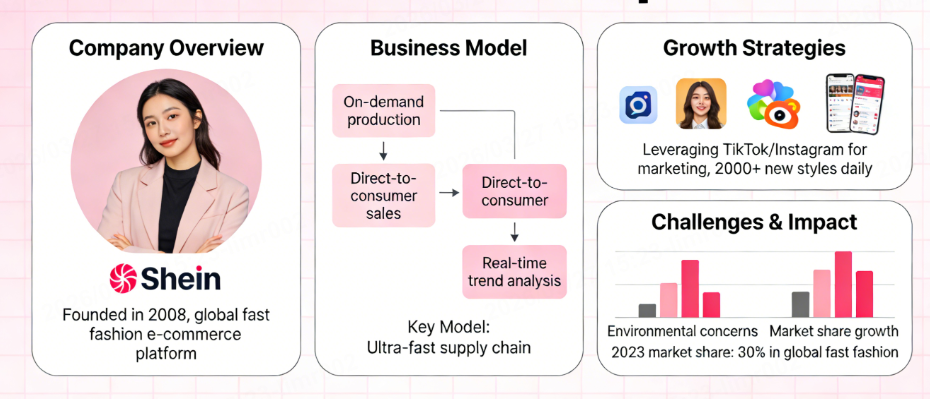
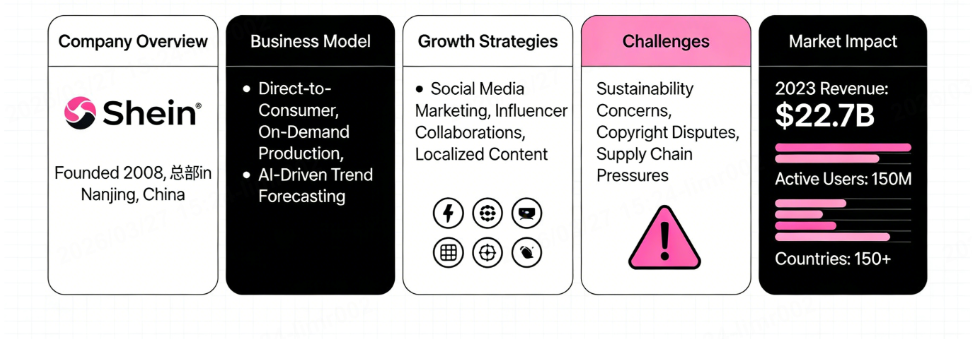
To understand the case study of shein, one must first look at their technological infrastructure. Unlike traditional retailers that plan seasons months in advance, Shein operates on a “test and repeat” model that relies on granular data.
Real-Time Demand Sensing and Big Data Integration
The core of Shein’s strategy is its proprietary software that connects directly to the factory floor. They monitor social media trends, search queries, and competitor sites to predict what will sell tomorrow. This isn’t just “fast fashion”; it is “on-demand fashion.” For a B2B wholesaler, this means the end of the era of massive, risky inventory bets. By using a platform like LooperBuy, you can tap into this same ecosystem of Chinese manufacturers who are now accustomed to this high-speed, data-oriented production style.
The Small-Batch (C2M) Manufacturing Model
Historically, Chinese factories demanded massive Minimum Order Quantities (MOQs). Shein changed the game by convincing thousands of small-to-medium-sized workshops to accept orders as small as 100 pieces. This “Customer-to-Manufacturer” (C2M) model minimizes deadstock and allows for rapid iteration. If a design flops, the loss is minimal. If it goes viral, the factory can scale production to thousands of units in days. This flexibility is exactly what LooperBuy offers to its global B2B clients, providing a diverse range of products without the barrier of traditional high MOQs.
A Granular Look at Factory Digitization
One often overlooked aspect of the case study of shein is how they digitized their supplier’s internal processes. They provided factories with free software to manage production, allowing Shein to see exactly how much fabric was left or which sewing machines were idle. This level of transparency is what B2B platforms are now striving to provide. When you source through a professional platform, you are essentially gaining a window into the manufacturing hub of the world, ensuring that your production timelines are met with surgical precision.
Key Takeaways for B2B Wholesalers and Brand Owners
While Shein targets the B2C market, the underlying principles of their success are highly applicable to the B2B sector. Brand owners can learn how to mitigate risk and maximize profit by focusing on the “back-end” efficiencies.
Reducing Inventory Risk through Agility
The greatest killer of B2B profitability is unsold inventory sitting in a warehouse. By adopting a “pull” supply chain rather than a “push” supply chain, businesses can respond to market shifts. LooperBuy facilitates this by offering global logistics that are both fast and affordable, allowing you to ship smaller, more frequent batches from China rather than tying up all your capital in a single, massive sea freight shipment that might be irrelevant by the time it arrives.
The Importance of Direct Manufacturer Communication
Shein’s success is built on the elimination of the “middleman” markups. They don’t buy from wholesalers; they are the bridge to the factory. For a foreign brand owner, finding a reliable factory in China used to require a local office or a sourcing agent. LooperBuy democratizes this access. As a one-stop B2B platform, we provide the infrastructure for you to procure goods directly from the source, ensuring that you get the lowest possible price while maintaining control over the product specifications.
Diversification as a Competitive Shield
Shein adds thousands of new SKUs daily. While a typical B2B wholesaler doesn’t need that volume, the ability to pivot across categories is vital. If electronics are lagging, perhaps home goods are surging. The LooperBuy advantage is our “species complete” catalog—we offer everything from industrial components to consumer textiles. This variety allows our B2B partners to diversify their offerings based on real-time market data, much like the Shein model.
Decoding the Logistics: Global Fulfillment at Lightning Speed
Logistics is where most B2B operations fail. The case study of shein shows that “fast” doesn’t have to mean “expensive” if you optimize your shipping lanes.
Cross-Border E-commerce Warehouse Optimization
Shein ships most of its goods directly from warehouses in China to the end consumer, bypassing the need for expensive domestic retail space. For B2B buyers, this translates to the “Direct-to-Warehouse” model. Instead of paying for multiple hand-offs, LooperBuy optimizes the route from the Chinese factory directly to your regional distribution center. Our global logistics convenience means we handle the customs, the documentation, and the final mile delivery at a fraction of the cost of traditional freight forwarders.
Leveraging Low-Cost Global Shipping Networks
Shein took advantage of international postal treaties to keep costs low. While B2B shipments are larger, the principle of “logistics as a service” remains. By consolidating the volume of thousands of B2B buyers, LooperBuy secures Tier-1 shipping rates that are usually reserved for Fortune 500 companies. This allows our users to maintain high margins even when importing goods halfway across the globe.
Navigating Customs and Compliance
A major part of any case study of shein involves how they manage the complexities of international trade. For a B2B buyer, customs can be a nightmare of delays and unexpected fees. Professional sourcing platforms provide the necessary “regulatory air cover.” We ensure that all products meet the compliance standards of the destination country, whether it’s CE marking for Europe or UL certification for the US, protecting your brand from legal and logistical setbacks.
Sustainability and Ethical Sourcing in the Age of Ultra-Fast Production
As an industry expert, I must address the “elephant in the room”: the environmental impact of the Shein model. This is where the next generation of B2B sourcing must evolve.
Moving Toward a Greener Supply Chain
The “on-demand” model is actually more sustainable in terms of waste—it produces only what is needed. However, the carbon footprint of air shipping and the ethics of labor remain concerns. At LooperBuy, we encourage our partners to use our consolidated sea freight options to reduce carbon emissions and to source from our “Verified Ethical” factory list. This allows you to reap the benefits of the Shein model’s efficiency while maintaining the ESG (Environmental, Social, and Governance) standards that modern consumers demand.
The Rise of Technical and Recycled Materials
Modern Chinese manufacturing is at the forefront of sustainable material science. In our platform, we’ve seen a surge in B2B demand for recycled polyesters and organic cottons. By using a sophisticated sourcing platform, you can find the specific sustainable materials that set your brand apart, proving that “fast” and “responsible” are not mutually exclusive.
Transparency as a Brand Asset
Today’s brand owners need to tell a story. If you can prove that your products are sourced efficiently with minimal waste, you gain a competitive edge. The digital tracking provided by LooperBuy gives you the data you need to show your customers exactly where their products came from and how they were made, turning your supply chain into a marketing powerhouse.
How to Apply the Shein Framework Using LooperBuy’s One-Stop Platform
Replicating a case study of shein success doesn’t require a billion dollars; it requires the right partner. Here is the operational blueprint for using LooperBuy to dominate your market.
Step 1: Identify “Niche” Trends
Use digital tools to find what is missing in your local market. Don’t try to be “everything for everyone.” Find a specific product category—perhaps sustainable yoga gear or high-tech kitchen gadgets.
Step 2: Source Directly via LooperBuy
Search our extensive database of Chinese manufacturers. Look for those with high ratings and low MOQs. Reach out directly through the platform to customize your designs.
Step 3: Optimize Your Logistics
Choose the shipping method that matches your “Time-to-Market” needs. Use air freight for samples and initial “test” batches, then switch to our low-cost sea or rail freight options for bulk replenishment once a product is proven.
Step 4: Scale with Confidence
As your volume grows, LooperBuy scales with you. Our platform handles the increased complexity of larger orders, ensuring that your quality remains consistent even as your production triples.
Expert Insight: The Future of Global B2B Trade
The “Shein-ification” of the world is inevitable. Consumers now expect variety, low prices, and instant gratification. For the B2B sector, this means the end of the traditional “Wholesaler-as-a-Gatekeeper” model. The new winners will be those who can provide “Wholesale-as-a-Service”—offering a curated, constantly updated stream of products sourced directly from the global factory floor.
LooperBuy is built for this future. We aren’t just a website; we are your global procurement office. By integrating the lessons of the case study of shein into a professional B2B environment, we empower you to compete with the giants. The world is getting smaller, and the distance between a great idea and a finished product is shrinking every day.
Conclusion
In summary, the case study of shein is not just about a clothing brand; it is a blueprint for the future of all trade. It proves that data, agility, and direct-to-factory relationships are the only ways to survive in an era of rapid change. For brand owners and wholesalers, the path forward is clear: embrace digitization, reduce your inventory risk, and leverage the power of a one-stop sourcing platform. LooperBuy provides the tools, the logistics, and the manufacturers you need to transform these insights into a profitable reality. The future of your business is in your hands—and it’s just one click away.
Related Questions & Answers
· What makes Shein’s supply chain different from traditional fast fashion like Zara?
While Zara revolutionized fast fashion with a 3-week lead time, Shein has shortened this to as little as 3-7 days. Zara relies on large regional hubs and physical stores, whereas Shein is almost entirely digital, using real-time data to drive production in thousands of small, independent factories across China.
· How can a small B2B wholesaler compete with Shein’s prices?
A small wholesaler can compete by using a platform like LooperBuy to access the same factory-direct pricing that Shein enjoys. By focusing on a specific niche or “B2B-only” product categories (like industrial equipment or specialized textiles), and by using consolidated shipping to lower logistics costs, smaller players can maintain very competitive margins.
· What are the risks of adopting an ultra-fast sourcing model?
The primary risks are quality control and intellectual property concerns. When moving fast, details can be missed. This is why using a One-Stop B2B Sourcing Platform is crucial; we provide local inspection services and verify suppliers to ensure that speed doesn’t come at the expense of quality or legal compliance.
· Is the Shein model applicable to industries outside of fashion?
Absolutely. We see this model being applied to home electronics, furniture, and even automotive accessories. Any industry where consumer tastes change rapidly or where “overproduction” is a high financial risk can benefit from the small-batch, data-driven C2M model.
· How does LooperBuy handle the logistics for my B2B orders?
LooperBuy offers an integrated logistics solution. Once your order is ready at the factory in China, we handle the pickup, the international freight (Air, Sea, or Rail), the customs clearance in your home country, and the final delivery to your warehouse. Our goal is to make international sourcing as easy as domestic shopping.
References:
- Harvard Business Review – The Tech Strategy Behind Shein’s Success
- Statista – Growth of Global Ultra-Fast Fashion Market 2022-2027
- LooperBuy Official – Strategic B2B Sourcing Handbook 2026
- Supply Chain Dive – Analyzing the C2M Manufacturing Revolution
- MIT Technology Review – How Data Science is Reshaping Manufacturing
Article Brief
This expert analysis provides a detailed case study of shein, focusing on the digital and logistical strategies that have made it a global powerhouse. It translates these lessons for the B2B sector, demonstrating how wholesalers and brand owners can use the LooperBuy platform to achieve similar levels of agility and price-competitiveness. The article covers the C2M manufacturing model, global logistics optimization, and the future of sustainable, on-demand B2B procurement.
Hot Tags:
Global Supply Chain Agility; B2B Manufacturing Solutions; China Factory Direct Sourcing; Digital Procurement Platform; Ultra Fast Fashion Strategy; Low MOQ Wholesale; Cross Border Logistics Excellence; C2M Business Model; One Stop Sourcing Platform; International Trade Optimization