A structured, digital RFQ process helps global B2B sellers source reliably from Chinese suppliers while reducing inventory and logistics burden. This guide explains RFQ basics, document types, process steps, and how platforms like Looperbuy turn RFQs into a strategic sourcing advantage.
A well-structured Request for Quotation (RFQ) can transform global sourcing from a time consuming, risky process into a predictable engine for growth, especially when combined with a digital B2B procurement platform like Looperbuy.
Table of Contents
What Is a Request for Quotation in Modern B2B Procurement?
A Request for Quotation (RFQ) is a formal document that invites external suppliers to submit price offers and commercial terms for clearly defined products or services. In practice, it is the step where buyers already know *what* they need and want to understand *how much it will cost* and *under which conditions*. [maplesourcing]
In global trade, RFQs are especially important for commodity-style procurement, where specifications, quantities, and delivery requirements can be described in detail and price becomes a primary decision factor. Platforms like Looperbuy strengthen this process by turning RFQs into structured digital workflows rather than scattered emails and spreadsheets, which reduces errors and speeds up supplier comparison. [sourcingint]
RFQ, RFI, and RFP: Getting the Sequence Right
Before buyers launch an RFQ, they often need to clarify their problem, their market, and available options. Three documents support this journey: [stripe]
– RFI (Request for Information): Used when the buyer is exploring the market and wants to understand vendor capabilities, solution types, and indicative costs. [businesskitz]
– RFP (Request for Proposal): Used when the buyer has a defined business challenge and needs vendors to propose complete solutions, approaches, and pricing models. [stripe]
– RFQ (Request for Quotation): Used when specifications and quantities are fixed and the focus is on price, commercial terms, and service levels. [maplesourcing]
An effective B2B procurement platform can orchestrate this sequence: collect insights via RFIs, shortlist solution approaches via RFPs, and finally run competitive RFQs for standardized items or repeat orders. When Looperbuy supports this end to end flow, buyers can move from “uncertain exploration” to “confident buying” with fewer emails, clearer documentation, and cleaner audit trails.
Key RFQ Types and When to Use Them
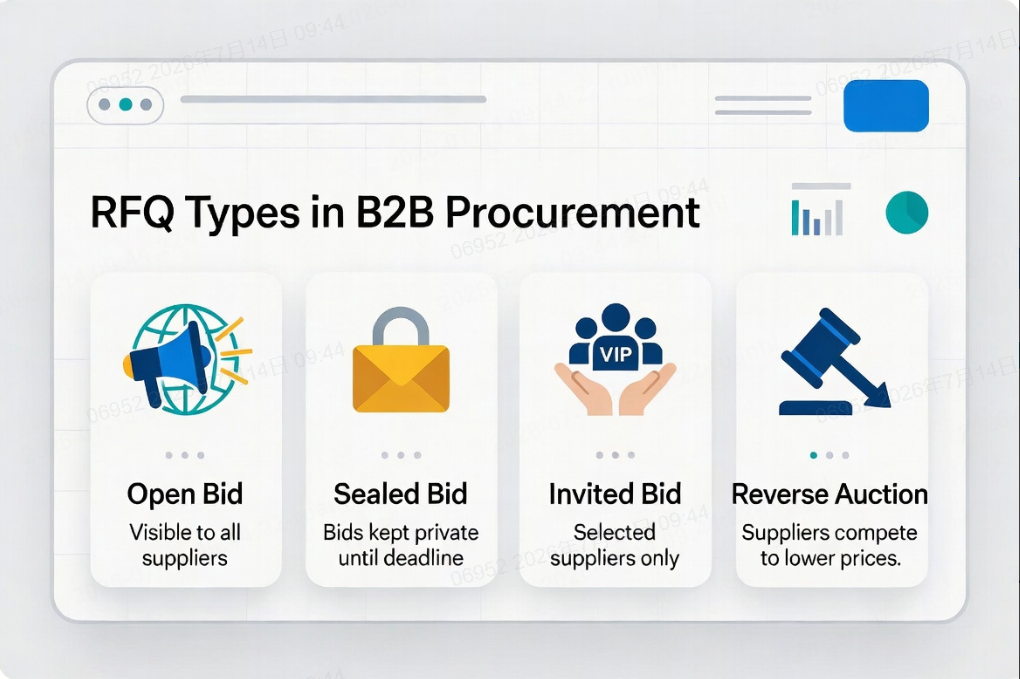
Different RFQ formats exist to match different procurement strategies and risk profiles. [sievo]
– Open bid RFQ: All participants can see pricing as bids come in, which encourages competition but may lead to unhelpful price signaling among suppliers. [sievo]
– Sealed bid RFQ: Bids are hidden until the deadline and opened collectively, increasing transparency and reducing the risk of collusion. [getatoz]
– Invited bid RFQ: Only pre qualified or trusted suppliers are invited to participate, improving quality and speed but limiting competition. [businesskitz]
– Reverse auction RFQ: Suppliers compete to offer the lowest acceptable price, often as a second round when initial bids are above target thresholds. [sievo]
For global buyers working with Looperbuy, a hybrid approach is common: invited bids for strategic categories where quality and reliability matter most, and reverse auctions for highly standardized, high volume SKUs where price optimization is critical. [sourcingint]
The RFQ Process in Six Practical Steps
From my experience guiding procurement teams and digital commerce projects, successful RFQs tend to follow a clear, repeatable process. [getatoz]
1. Prepare the RFQ Brief
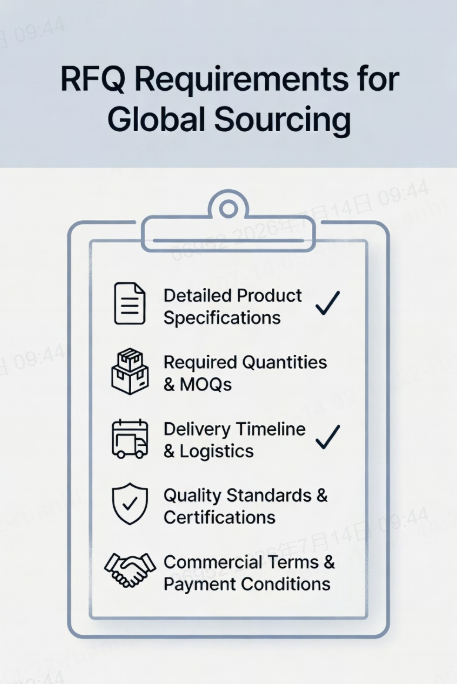
A strong RFQ starts with a precise, complete brief, including: [businesskitz]
– Product or service specifications.
– Required quantities and delivery timelines.
– Payment terms and contractual conditions.
– Evaluation criteria and scoring methods.
– Submission format and deadlines.
Time invested here is never wasted: global data shows that clearer RFQs reduce clarification emails and shorten cycle times significantly. When buyers build their RFQ in Looperbuy, they can standardize templates, attach drawings or compliance documents, and ensure every vendor sees the same information.
2. Build the Supplier List
Selecting 3–8 qualified suppliers balances competition with manageability. Buyers should assess financial stability, production capacity, export experience, and compliance history before inviting suppliers to bid. [maplesourcing]
A platform driven approach allows Looperbuy to surface verified manufacturers and trading companies with proven track records, certifications, and on time delivery data, rather than leaving buyers to search manually. [sourcingint]
3. Issue and Manage the RFQ
Once the RFQ is ready, it must be sent with clear instructions and a realistic response window. Best practice is to provide: [sievo]
– Structured price templates.
– Channels for questions and clarifications.
– Confirmations of receipt and timeline expectations.
Digital RFQ modules can automate notifications, manage Q&A centrally, and ensure all suppliers receive identical clarifications, avoiding information asymmetry. Looperbuy can host these interactions in one interface, helping buyers avoid fragmented email threads and version confusion.
4. Receive and Analyze Responses
When bids arrive, confidentiality and data integrity become critical. Buyers should: [businesskitz]
– Lock submissions at the deadline.
– Normalize data using a consistent template.
– Compare total cost of ownership, not just unit prices.
Advanced platforms combine pricing analysis, delivery performance data, and risk scoring to help buyers see beyond headline prices. In cross border sourcing, factors such as customs duties, freight, packing standards, and Incoterms should be part of the comparison, not an afterthought. [prokuria]
5. Select and Award
Selection should be documented, traceable, and aligned with pre announced criteria. Evaluation teams typically consider: [getatoz]
– Quality and specification match.
– Total landed cost.
– Supplier reliability and communication.
– Long term partnership potential.
Award decisions made through a platform can be logged against the RFQ record, creating a digital audit trail that is valuable for finance, compliance, and future sourcing exercises. [sourcingint]
6. Close the RFQ and Capture Learnings
Finally, buyers should communicate outcomes clearly, sign contracts, and invite feedback from both internal stakeholders and suppliers. Documenting lessons learned—such as unclear specifications or repetitive questions—helps refine future RFQs and templates. [sievo]
When Looperbuy supports this full lifecycle, RFQs evolve from one off documents into a continuous improvement loop for global procurement teams.
How Digital Platforms Like Looperbuy Transform RFQs
From an industry perspective, RFQs are no longer just static documents—they are nodes inside automated procurement workflows. Several trends are reshaping how RFQs work in practice: [sourcingint]
– Automation of RFQ distribution and reminders reduces cycle times by up to 50% in many organizations.
– AI assisted vendor selection evaluates historical performance, lead times, and compliance risks, improving shortlist quality. [sourcingint]
– Real time analytics provide visibility into price trends, supplier response times, and win rates across categories.
Looperbuy can embed RFQs into:
– Global product catalogs where buyers pick SKUs and trigger RFQs for new suppliers or alternative brands. [businesskitz]
– Dropshipping and no inventory models, allowing sellers to request quotes for fulfillment and logistics without owning stock. [sourcingint]
– OEM/ODM collaboration, where detailed specifications and iteration histories are essential for custom manufacturing. [maplesourcing]
For international B2B sellers, this means they can scale assortment and reach while keeping procurement predictable and capital light.
Reducing Inventory and Logistics Burden with RFQs and Dropshipping
Many global B2B sellers now aim to sell more SKUs without holding more inventory. RFQs, combined with platforms like Looperbuy, play a central role in this shift.
By running RFQs directly against Chinese manufacturers and exporters, sellers can:
– Negotiate factory level pricing for on demand orders. [maplesourcing]
– Secure service level agreements for handling, packaging, and direct shipments to end customers, effectively enabling dropshipping. [sourcingint]
– Transfer warehousing, picking, packing, and cross border logistics responsibilities to specialist partners. [maplesourcing]
This model reduces:
– Inventory risk (no need to overstock uncertain items).
– Warehouse and staff costs in destination markets.
– Operational complexity for small and mid size B2B sellers.
From my work with procurement teams, the critical success factor is a precise RFQ that covers logistics and fulfillment terms as thoroughly as product specifications. [getatoz]
Practical Checklist: What to Include in a High Impact RFQ
To help buyers using Looperbuy or similar platforms, the following checklist condenses best practices into a working structure. [sievo]
Core sections:
1. Company and project overview.
2. Product/service specifications (including standards and certifications).
3. Quantity breakdown and forecasting assumptions.
4. Delivery timelines and preferred Incoterms.
5. Packaging, labeling, and documentation requirements.
6. Quality inspection and testing expectations.
7. Payment terms and currency.
8. Warranty, after sales, and return conditions.
9. Evaluation criteria and scoring weights.
10. Submission format, deadline, and contact details.
Global sourcing additions:
– Customs and compliance responsibilities.
– Data needed for HS codes and export declarations.
– Requirements for digital integration (EDI, API, portal access).
When buyers build RFQs with these elements, they receive comparable, apples to apples quotes and can make confident decisions faster. [businesskitz]
Common RFQ Pitfalls and How to Avoid Them
Even experienced teams fall into recurring traps. Based on industry cases and the examples from large organizations, several pitfalls stand out. [getatoz]
– Ambiguous specifications lead to inconsistent offers and extended clarification cycles. Clear technical and commercial definitions prevent this. [maplesourcing]
– Over emphasis on unit price ignores total cost of ownership, including freight, duties, defects, and delays. [stripe]
– Limited competition from only one or two suppliers increases risk of dependency and weakens negotiation leverage. [sievo]
– Poor documentation of decisions undermines transparency and future review. Digital trails inside platforms solve much of this. [businesskitz]
Looperbuy can help by enforcing template completeness, tracking all RFQ activity, and highlighting missing information before RFQs are published.
Example RFQ Structure for Looperbuy Users
The following outline shows how a typical RFQ can be structured inside a B2B procurement workflow for global buyers and sellers. [maplesourcing]
| RFQ Section | Key Content |
| Introduction | Buyer profile, project context, timeline. |
| Scope of Supply | Product names, SKUs, specs, drawings. |
| Quantity & Delivery | Volumes, schedule, Incoterms, destinations. |
| Quality & Compliance | Standards, testing, certifications, audits. |
| Logistics & Fulfillment | Packaging, dropshipping, documentation. |
| Commercial Terms | Payment methods, currency, warranty. |
| Evaluation Criteria | Price, quality, lead time, risk scoring. |
| Submission Instructions | Format, deadline, contact, Q&A process. |
This structure provides clarity for both buyers and suppliers and is particularly effective when standardized across teams and categories. [businesskitz]
Action Oriented Guidance for Global B2B Sellers
For global B2B sellers looking to expand product lines using Looperbuy while avoiding inventory risk, a clear sequence of actions is helpful. [sourcingint]
1. Identify categories where you want to expand (e.g., industrial components, packaging, tools).
2. Define specifications and service levels in detail, including end customer expectations. [maplesourcing]
3. Use standardized RFQ templates in Looperbuy to reach multiple Chinese manufacturers simultaneously. [sievo]
4. Compare offers on total landed cost and reliability, not just price. [stripe]
5. Pilot dropship models with selected suppliers, tracking lead times and defect rates.
6. Scale winning combinations of products and suppliers, documenting RFQ learnings for future iterations. [businesskitz]
By treating RFQs as a strategic tool rather than administrative paperwork, B2B sellers can build flexible, asset light supply chains that support international growth without heavy investment in stock or warehouses.
FAQs
1. When should I use an RFQ instead of an RFP?
Use an RFQ when specifications, quantities, and delivery requirements are well defined and your main goal is to compare prices and commercial terms. Use an RFP when you need complete solution proposals or creative approaches to a complex business problem. [stripe]
2. How many suppliers should I invite to an RFQ?
Inviting 3–8 qualified suppliers usually provides enough competition without overwhelming your analysis. In high risk categories, you may add more bidders but should prioritize quality and reliability over sheer numbers. [getatoz]
3. What makes an RFQ “clear” for suppliers?
Clear RFQs include detailed product specs, delivery timelines, evaluation criteria, and submission instructions, all written in concise language and supported by templates or examples. This clarity reduces misunderstandings and speeds up bid preparation. [maplesourcing]
4. How does a platform like Looperbuy improve the RFQ process?
It digitizes RFQ templates, centralizes communication, automates reminders, and aggregates analytics on supplier performance and pricing trends. This helps buyers make data driven decisions and build more resilient sourcing strategies.
5. Can RFQs support dropshipping and no inventory models?
Yes. RFQs can include logistics, packaging, and fulfillment requirements, allowing buyers to negotiate end to end service terms with manufacturers and trading companies. Combined with a B2B platform, this enables sellers to offer wide assortments without owning stock. [businesskitz]
References
1. Virto Commerce Blog – “Request for Quotation: RFQ Meaning, Free Template, Examples. RFP and RFQ Difference.” [businesskitz]
2. Maplesourcing – “Request for Quotation in Procurement: Examples and Best Practices.”[maplesourcing]
3. Sievo – “The Request for Quotation (RFQ) Process in 6 Steps.” [sievo]
4. Teamwork – “The Request for Quote (RFQ) Process: A Comprehensive Guide.” [teamwork]
5. Sourcingint – “The Future of B2B Procurement – Automation, Insights, and Zero Waste.” [sourcingint]
6. Stripe – “When should a business use a Request for Quote?” [stripe]
7. Getatoz – “Mastering RFQs: A Comprehensive Guide to Request for Quotation in B2B Procurement.”[getatoz]
8. BusinessKitz – “Master the Request for Quotation Process: Your Complete Guide.” [businesskitz]
9. Prokuria – “Request for Quotation (RFQ): Everything Procurement Teams Need to Know.” [prokuria]