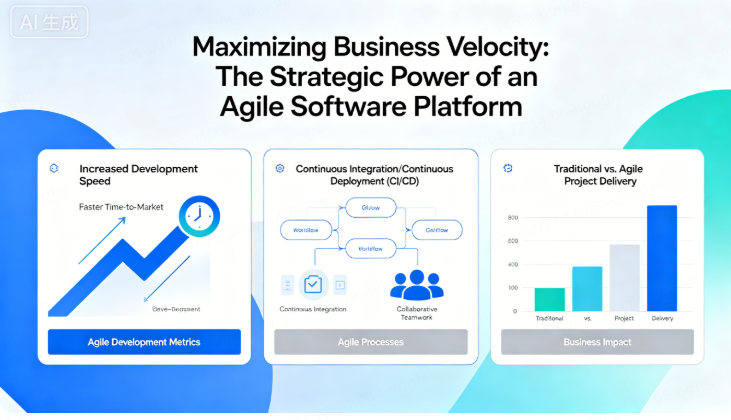
In the fast-evolving world of global B2B commerce, rigidity is the enemy of growth. For brands, wholesalers, and producers, the ability to adapt to market fluctuations, supply chain shifts, and changing customer expectations is no longer a luxury—it is a competitive necessity. As an industry strategist, I’ve seen countless organizations struggle not because their vision lacked clarity, but because their technical foundation was brittle.
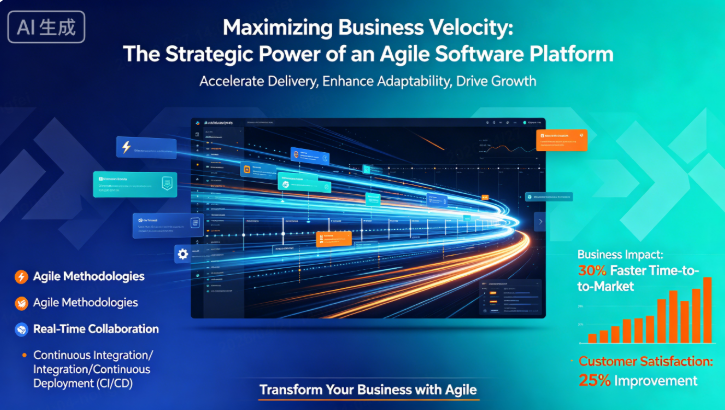
This is where the concept of an agile software platform becomes the cornerstone of modern business success. By integrating agility directly into your digital architecture, you move beyond mere “software maintenance” and into true business velocity.
Table of Contents
Understanding the Agile Software Platform Concept
An agile software platform is more than a collection of tech tools; it is a dynamic ecosystem designed to embody the principles of the Agile Manifesto. It moves away from monolithic, legacy systems that require months of development for minor updates and shifts toward a modular architecture.
At its core, an agile platform prioritizes:
- Individuals and interactions over processes and tools.
- Working software over comprehensive documentation.
- Customer collaboration over contract negotiation.
- Responding to change over following a strict, outdated plan.
For a B2B sourcing platform—like the one we operate at LooperBuy—this modularity is essential. It allows us to integrate global logistics, diverse product categories, and buyer-specific pricing modules without destabilizing the core commerce engine.
Why Agile Development Tools Are Essential for Modern B2B
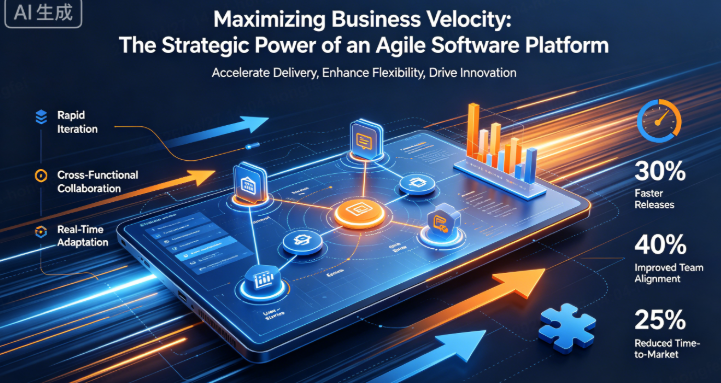
Many B2B companies still rely on heavy, closed-source legacy platforms that trap them in “vendor lock-in.” This makes scaling—or even basic updates—a slow and expensive process. Implementing agile development tools and platforms changes the equation by providing:
- Real-time Market Responsiveness: You can deploy features, test pricing, and integrate new shipping partners in days rather than months.
- Modular Flexibility: Minimal co-dependency between modules ensures that if one part of your system (e.g., a payment gateway) needs updating, the entire site doesn’t crash.
- Enhanced Collaboration: These platforms empower cross-functional teams to work on discrete parts of the system simultaneously, reducing bottlenecks.
- Data-Driven Iteration: Early and frequent feedback loops from real users allow you to build what the market actually needs, not just what was on a roadmap from a year ago.
Bridging the Gap: Global Sourcing and Digital Infrastructure
One of the biggest challenges in global B2B trade is bridging the gap between physical supply chain complexity and digital user experience. LooperBuy leverages the agile approach to solve this:
| Feature | Legacy Approach | Agile Platform Approach |
|---|---|---|
| System Updates | Massive, risky releases | Continuous, low-risk deployments |
| Integrations | Complex, custom coding | Modular, API-first flexibility |
| Market Adaptation | Months of planning | Weeks (or days) of iteration |
| User Feedback | Delayed feedback loops | Real-time user-driven updates |
By adopting an agile mindset, brands can source goods from China, manage complex international logistics, and present a seamless interface to global buyers with unprecedented speed and efficiency.
Deep Dive: The Anatomy of a Truly Agile Architecture
To achieve true agility, companies must look beyond the surface. An agile software platform is typically built on three foundational pillars: Microservices, Headless Commerce, and API-first design.
1. Microservices: The Power of Autonomy
In a legacy system, everything is interconnected. If you change the checkout process, you might accidentally break the tax calculator. Microservices break these functions into independent, small services. This means your team can update the logistics tracking module without touching the product catalog.
2. Headless Commerce: Flexibility in Front-end
By decoupling the front-end (what the customer sees) from the back-end (where the data lives), you gain the freedom to innovate. You can redesign your mobile interface for faster sourcing without needing a total database migration.
3. API-first Design: Seamless Integration
An API-first approach ensures that your platform can “talk” to any third-party tool—whether it’s an ERP, a CRM, or a global shipping aggregator. For B2B platforms, this is non-negotiable.
Industry Case Study: Scaling through Agility
Consider a mid-sized European brand looking to expand its sourcing to China. In a traditional setup, setting up a new supply chain integration takes months. With an agile software platform, the process changes:
- Week 1: API connection established with the sourcing platform.
- Week 2: Inventory data mapped to the dashboard via the modular interface.
- Week 3: Real-time logistics tracking integrated.
- Week 4: First shipment dispatched with automated customs documentation.
This isn’t theory; this is the reality of using an agile software platform to turn weeks of administrative drag into days of productive trade.
Overcoming Internal Resistance to Agile Transformation
Adopting this technology is a cultural shift as much as a technical one. Many organizations fail because they try to implement “agile” tools within a “waterfall” management style. To succeed, consider these strategies:
- Executive Buy-in: Leadership must understand that agility is about risk management. By deploying in smaller increments, you significantly reduce the risk of massive system failures.
- Cross-Functional Squads: Break down silos. Your developers, supply chain managers, and sales teams should sit in the same “agile pods” to ensure that the software being built aligns with real business needs.
- Psychological Safety: Allow teams to experiment. If a new pricing feature doesn’t drive higher conversion, the “agile” way is to pivot quickly, not to punish the team for the attempt.
Data-Driven Decision Making in B2B Platforms
One of the most powerful aspects of an agile software platform is the ability to leverage data for rapid iteration. Unlike legacy systems that provide reports once a month, agile systems provide real-time dashboards.
- A/B Testing for B2B: Just like in B2C, B2B platforms can test which product descriptions or pricing tiers lead to higher conversion rates for bulk orders.
- Automated Logistics Optimization: Using real-time data to find the lowest-cost shipping routes is a core requirement for a “One-Stop Sourcing Platform.” An agile platform updates these routes automatically as market conditions shift.
Conclusion
In the modern digital landscape, the goal of an agile software platform is simple: to create a foundation that grows with your business. By moving away from legacy constraints and embracing a modular, responsive architecture, brands and wholesalers can significantly reduce the “time-to-market” for new features and react dynamically to global trade opportunities. At LooperBuy, we believe that the integration of agile technology and global supply chain transparency is the future of B2B.
References
- Virtocommerce Blog: Defining an Agile Platform
- Agile Manifesto (The Core Values)
- Gartner Magic Quadrant for Digital Commerce (2025)
- The State of Agile Development (Industry Report)
Frequently Asked Questions (FAQ)
1. What is the biggest benefit of an agile software platform for B2B?
The primary benefit is business velocity. It allows companies to adapt to market shifts rapidly without massive technical overhead.
2. Is “Agile” only for software developers?
No. Agile is a mindset that should be adopted by product managers, operations teams, and even marketing departments to improve collaboration and results.
3. Does moving to an agile platform require replacing everything?
Not necessarily. You can take an “agile” approach by starting with a microservices or API-first strategy, gradually decoupling modules from your legacy system.
4. How does agility help in global B2B sourcing?
It enables platforms to integrate rapidly changing logistics data, currency fluctuations, and localized regulatory requirements into the user experience in real-time.
5. What is the role of customer feedback in agile development?
Feedback is the engine of agility. It informs every iteration, ensuring that the platform’s development is aligned with actual user needs rather than internal assumptions.
Article Statistics:
- Article Summary: This article provides a deep-dive into the strategic importance of an agile software platform for global B2B organizations. It covers the technical anatomy (microservices, API-first design), the cultural shifts required for success, and how platforms like LooperBuy utilize these technologies to optimize supply chains and increase business velocity.
- Hot tags: B2B e-commerce platform, global sourcing strategy, agile software development, supply chain optimization, wholesale business solutions, cross-border trade, digital commerce transformation, API-first architecture, procurement automation, B2B scalable infrastructure.