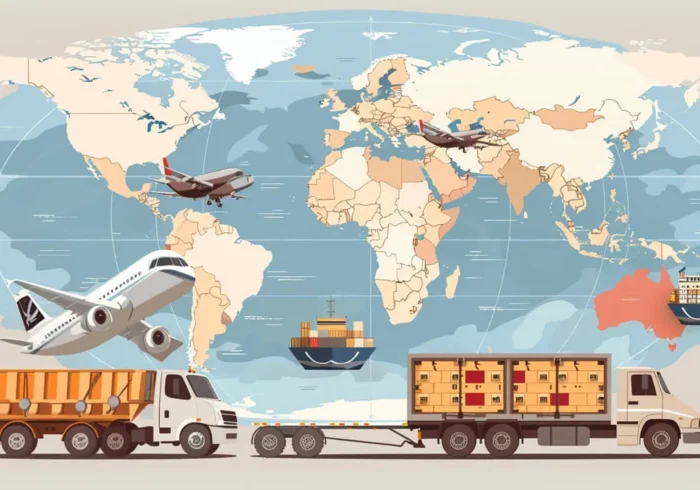
The landscape of international logistics is undergoing a profound transformation as we move deeper into 2026. For businesses, manufacturers, and supply chain managers, the term “swift global shipping” is no longer just about the physical speed of cargo movement; it now encapsulates the total agility required to navigate a complex environment defined by geopolitical uncertainty, shifting trade policies, and rapid technological integration. Organizations are moving away from traditional, linear shipping models and toward highly resilient, multi-destination strategies designed to mitigate risk while maintaining operational efficiency. In this era, the ability to pivot and adapt is the true measure of a successful logistics operation, as static plans are increasingly vulnerable to sudden global shifts.
Table of Contents
The New Reality of International Freight Logistics
As global trade enters a new phase, shipping strategies are being fundamentally reshaped by external pressures. Companies that once relied on rigid, single-source logistics chains are now adopting flexible, modular approaches to prevent total system failure during localized disruptions. The era of “just-in-time” delivery is being modified by a “just-in-case” philosophy, where buffers, redundancy, and flexibility play a central role in maintaining customer satisfaction and brand loyalty.
Navigating Market Volatility and Geopolitical Risk
The shipping environment in 2026 is characterized more by calculated risk management than by clear, sustained growth momentum. Geopolitical tensions continue to be the primary driver of operational uncertainty. Regional conflicts and persistent instability in key maritime corridors—such as major transit chokepoints and essential shipping lanes—force carriers to frequently alter routes, leading to unpredictable transit times and cost fluctuations. Furthermore, the persistent influence of trade policies, including tariff volatility and changing regulatory frameworks, compels shippers to constantly re-evaluate their landed-cost models and logistics partners. These macroeconomic forces mean that planning for the fastest route is often secondary to planning for the most secure and predictable route.
Addressing the Capacity and Pricing Paradox
While disruptions create immediate, localized capacity crunches, the broader industry is still grappling with long-term overcapacity. Significant investment in new vessels and expanded fleet sizes over the past few years has created a surplus of global shipping capacity that, in a cooling or muted demand environment, threatens to depress freight rates. However, this overcapacity is often masked by the systemic inefficiencies caused by forced rerouting, vessel slow-steaming, and persistent port congestion. Shippers find themselves in a delicate balance, where they must secure reliable space without being overly exposed to the cost volatility that comes with highly unstable trade lanes. Managing these costs requires deep collaboration between shippers and carriers to ensure that long-term contracts remain equitable even when market conditions shift unexpectedly.
Strategic Adaptations for Modern Supply Chains
To achieve swift global shipping performance in this climate, companies are prioritizing resilience and end-to-end visibility. The goal is to move from reactive crisis management to proactive supply chain design. This involves a structural rethink of how goods move from origin to final destination, incorporating data-driven foresight.
The Rise of Nearshoring and Regional Diversification
Geographic proximity has become a cornerstone of modern logistics strategy. As companies seek to minimize the risks associated with long-distance, high-exposure ocean freight, nearshoring—shifting manufacturing closer to the final point of consumption—has accelerated significantly. By utilizing regional manufacturing hubs and leveraging favorable trade agreements, such as those within North America, Europe, and evolving Southeast Asian clusters, businesses can drastically reduce transit times, lower costs, and enhance their ability to respond to shifting market demand. This regionalization does not eliminate the need for global shipping, but it changes its role, making it a supportive, high-value layer rather than the sole backbone of the supply chain.
The Digital Transformation of Logistics
Technology is the primary enabler of agility in 2026. Advanced logistics platforms are now standard tools for optimizing complex, multi-carrier networks. The integration of AI and digital twins allows companies to model various disruption scenarios, enabling them to make informed decisions about inventory placement and routing long before a crisis hits. Furthermore, the adoption of digital documentation, such as electronic bills of lading and blockchain-based customs filings, is streamlining port clearance and reducing the administrative bottlenecks that have historically plagued international shipping. Predictive analytics, fueled by massive amounts of historical and real-time data, are now being used to predict port congestion weeks in advance, allowing for dynamic, pre-emptive rerouting that keeps goods moving swiftly despite external hurdles.
Advancements in Autonomous Logistics and Last-Mile Delivery
A notable trend in 2026 is the early-stage, scaled adoption of autonomous technologies in freight movement. While fully autonomous container ships are still in the developmental or regulatory-testing phase, autonomous drones for warehouse logistics, short-haul freight trucks, and automated sorting systems are significantly reducing human-related delays. These advancements contribute to the overall “swiftness” of the supply chain by minimizing downtime, reducing human error, and allowing 24/7 operations. As labor costs rise globally, the transition toward automation is no longer just a trend for large multinational corporations but is becoming a standard operational requirement for mid-sized firms looking to maintain their competitive edge in a globalized market.
Operational Excellence and Global Integration
Achieving swiftness in global shipping is a multi-faceted endeavor that combines physical logistics optimization with high-level data intelligence. It requires an organizational culture that rewards adaptability and invests in talent capable of handling complex, high-pressure logistics scenarios.
Enhancing Reliability Through Multi-Carrier Models
Relying on a single carrier is increasingly viewed as a structural vulnerability. Instead, leading organizations are deploying sophisticated multi-carrier logistics strategies. By maintaining relationships with a diverse range of transport providers—including ocean liners, air freight integrators, and boutique regional carriers—shippers gain the flexibility to pivot between air, sea, and intermodal options based on real-time port data and capacity availability. This approach, while more complex to manage, provides the necessary safety net to maintain supply chain flow when specific routes are compromised. The integration of cloud-based freight marketplaces has made it easier than ever for companies to source alternative capacity at short notice, ensuring that cargo never sits idle waiting for a single provider’s schedule.
The Imperative of End-to-End Visibility
In an era where uncertainty is the only constant, data is the most valuable commodity in logistics. Achieving true end-to-end visibility—from the supplier’s floor to the final customer—is the ultimate objective for shipping managers. Companies that invest in real-time tracking, granular data analytics, and cross-functional collaboration are better positioned to predict bottlenecks and adjust their shipping strategies proactively. This level of insight not only improves operational efficiency but also builds the consumer trust necessary for long-term growth. When a customer knows exactly where their shipment is, and more importantly, when it will arrive despite global complications, the relationship between the buyer and the supplier strengthens, creating a competitive advantage based on reliability rather than just price.
Sustainability as a Catalyst for Efficiency
Sustainability and speed are often viewed as opposing goals, but in 2026, they are increasingly linked through efficiency. Efficiency-focused logistics strategies—such as optimizing container loads to reduce empty miles, choosing fuel-efficient transport corridors, and consolidating shipments—reduce both carbon footprints and operational costs. Regulatory requirements regarding emissions reporting are also pushing companies to map their supply chains with greater precision, which in turn leads to better operational control and visibility. Swift global shipping is, in many ways, becoming synonymous with lean, green shipping. By eliminating waste in the form of unnecessary transport legs or excessive dwell times, companies are simultaneously improving their environmental impact and their shipping velocity.
Investing in Human Capital and Collaborative Partnerships
Finally, the human element cannot be ignored. The complexity of modern shipping requires professionals who are as skilled in data analysis and crisis management as they are in traditional logistics operations. Companies that prioritize ongoing training for their logistics teams are better able to harness the power of new software tools and strategic frameworks. Building a resilient supply chain is a human-centric endeavor that relies on strategic foresight and the ability to interpret complex global signals. Furthermore, moving from a transactional relationship to a strategic partnership with logistics service providers is becoming the norm. By sharing data and forecasts with carriers, shippers are finding that they are prioritized during capacity shortages, proving that relationship management is just as important as digital tools in navigating the logistics landscape.
Conclusion
The pursuit of “swift global shipping” in 2026 demands a shift in mindset from simple speed to comprehensive, sustainable resilience. As businesses grapple with the ongoing impacts of geopolitical instability, shifting trade regulations, and technological disruption, the ability to adapt quickly and effectively has become the defining competitive advantage. By embracing nearshoring, investing in AI-driven visibility tools, diversifying logistics networks, fostering strategic partnerships, and prioritizing lean operational models, companies can turn the challenges of today’s complex global trade environment into opportunities for long-term stability and success. The future of shipping belongs to those who view agility as the most important metric in their logistics dashboard, ensuring that goods move efficiently regardless of the global climate.
To ensure your logistics operations remain as resilient and efficient as the strategies discussed above, discover streamlined, high-value procurement solutions at https://looperbuy.com/.
Article Summary:
This article explores the evolving landscape of global shipping in 2026, emphasizing that “swift shipping” now requires agility in the face of geopolitical uncertainty and supply chain volatility. It highlights key trends such as the strategic move toward nearshoring, the crucial role of AI and digital technologies in improving visibility, the rise of automation, and the necessity of diversifying logistics through multi-carrier models to mitigate risks. Businesses are encouraged to shift from reactive management to proactive, resilient supply chain design to navigate this complex trade environment.
Hot Tags:
Swift Global Shipping; International Logistics; Supply Chain Resilience; Freight Forwarding; Ocean Freight Trends; Global Trade 2026; Digital Logistics; Nearshoring Strategy; Maritime Transportation; Port Congestion; Trade Policy Impact; Supply Chain Visibility; Multi-Carrier Logistics; AI In Logistics; Geopolitical Risk Management; Container Shipping; Intermodal Transport; Inventory Optimization; Landed-Cost Analysis; Logistics Technology; Sustainable Shipping; Regional Supply Chains; Import Export Efficiency; Transit Time Reduction; Demand Forecasting; Shipping Capacity; Trade Agreements; Supply Chain Agility; Global Trade Intelligence; Logistics Innovation
Related Questions & Answers
· How has the definition of “swift global shipping” changed in 2026?
It has evolved from a focus on mere physical speed to a focus on organizational agility and operational resilience, allowing companies to respond rapidly to unforeseen global disruptions through data-driven decision-making.
· Why is nearshoring a popular strategy in the current shipping climate?
Nearshoring reduces reliance on volatile long-distance maritime routes, significantly cuts transit times, lowers costs, and helps companies leverage regional trade agreements to bypass tariff uncertainties and geopolitical tensions.
· What role does AI play in modern global shipping?
AI is used to model complex disruption scenarios, optimize multi-carrier network planning, predict port congestion, and provide the deep, real-time end-to-end visibility needed to make proactive logistics decisions.
· How are companies managing the challenge of shipping overcapacity?
Businesses are becoming more strategic in their capacity procurement, using advanced data analytics to avoid being overexposed to the rate volatility that often follows supply-demand imbalances, while focusing on high-efficiency routes.
· Why is a multi-carrier logistics model recommended for businesses today?
A multi-carrier model eliminates the risks associated with dependency on a single provider, offering the flexibility to switch transport modes and routes instantly when specific parts of the supply chain face congestion or regional instability.