Table of Contents
Introduction
A real pearl necklace is a symbol of timeless elegance and sophistication. Whether worn at a grand wedding or paired with a casual outfit to add a touch of refinement, a genuine pearl necklace is a classic piece of jewelry that has been cherished for centuries. In today’s market, with countless imitation pearls available, it is essential to understand how to identify authentic pearls and appreciate their unique charm. In this guide, we will explore the types, care, and purchasing tips for real pearl necklaces, helping you choose the perfect pearl necklace to complement your style.
The Allure of Real Pearl Necklaces
Symbol of Elegance and Refinement
Pearl necklaces have long been regarded as a symbol of elegance and refinement. They reflect the wearer’s taste and status, evoking a sense of grace and femininity. From the classic white pearl necklaces beloved by Hollywood stars to the vibrant colored pearl necklaces that showcase individuality, pearls have become a timeless choice in the world of jewelry.
Unique Natural Beauty
Real pearls are formed within mollusks when an irritant is introduced, prompting the secretion of layers of nacre over time. This natural process endows pearls with unique imperfections and a luminous glow. Unlike imitation pearls, which often appear overly shiny and uniform, genuine pearls possess a subtle luster and rich overtones that exude authenticity and charm.
Types of Pearls and Pearl Necklaces
Freshwater Pearls
Freshwater pearls are cultivated in rivers and lakes, primarily in China. They come in a wide variety of shapes, sizes, and colors, including white, pink, purple, and more. Over 90% of freshwater pearls are irregularly shaped, such as oval, baroque, and semi-baroque, making them highly sought after for their uniqueness. Freshwater pearls are composed entirely of nacre, making them more durable than saltwater pearls and less prone to chipping or damage. Their sizes range from approximately 2.0 mm to 15.0 mm, offering consumers a wide range of choices.
Saltwater Pearls
Akoya Pearls
Akoya pearls are the most well-known type of saltwater pearls, harvested primarily in Japan, China, Korea, and Vietnam. They are renowned for their high luster and beautiful appearance. Akoya pearls are typically small, with an average size of 7 mm, though they can grow up to 10 mm. They are usually perfectly round but sometimes come in baroque shapes. Their colors include white, gray, cream, and blue, with pink, silver, or green overtones. Japanese Akoya pearls are considered the finest, with Hanadama Akoya pearls being the top-tier selection. Akoya pearls were the first to be cultured in the 1920s, making pearls more accessible and affordable.
South Sea Pearls
South Sea pearls are the most prestigious of all pearl varieties, originating mainly from Australia, the Philippines, and Indonesia. They are the largest pearls, ranging in size from 8.0 mm to 20.0 mm. South Sea pearls are available in two primary colors: white and gold. Golden South Sea pearls, in particular, are highly sought after for their distinctive elegance. Most South Sea pearls are irregularly shaped, so perfectly round South Sea pearls command very high prices. These pearls are ideal for statement jewelry, and even single pearl designs can make a bold fashion statement.
Tahitian Pearls
Tahitian pearls, often referred to as “black pearls,” are primarily harvested in French Polynesia. They come in a range of dark hues, including black, gray, charcoal, and dark green, with peacock, green, purple, and other overtones. Tahitian pearls are the only naturally dark pearls on the market and are highly prized for their unique colors and overtones. They range in size from 8.0 mm to 15.0 mm. While round Tahitian pearls are the most expensive, irregularly shaped ones offer more color and shimmer, making them a more affordable option. Tahitian pearls have an internationally recognized quality standard, with only pearls containing at least 0.8 mm of nacre thickness being exported from Tahiti.
How to Identify Genuine Pearl Necklaces
Consistency in Shape and Size
Natural pearls rarely achieve perfect roundness or uniformity due to their organic formation process. They often exhibit slight irregularities in shape. Cultured pearls, while more uniform due to controlled conditions, can also vary, especially in lower-quality varieties. Imitation pearls, on the other hand, are machine-made and typically exhibit near-perfect uniformity. When evaluating a strand of pearls, slight variations in size and shape suggest authenticity. However, this criterion should be used alongside other tests.
Weight and Temperature
Genuine pearls are denser due to their layers of nacre, making them heavier than imitation pearls. When picked up, real pearls feel solid and cool to the touch, gradually warming to body temperature after a few seconds. Imitation pearls often feel lighter and warmer initially, as they lack the dense nacre layers. Holding the pearls in your hand and assessing their weight and temperature can provide initial clues about their authenticity.
Surface Texture
The surface of real pearls is slightly rough to the touch, while imitation pearls may feel overly smooth or have a surface resembling fish scales. You can gently rub the pearls against your teeth—real pearls will feel gritty, whereas imitation pearls will feel smooth.
Drill Hole Inspection
In genuine pearls, the drill hole is typically neat with minimal chipping, and you can often observe a slight concentric build-up of nacre layers inside the hole. Imitation pearls may reveal their core material (e.g., glass or plastic) around the drill hole, with signs of peeling or flaking due to the coating used to mimic nacre. A magnifying glass can help identify these details.
How to Care for Pearl Necklaces
Storage
Always store your pearl necklace in a soft pouch or jewelry box to prevent scratches and tangling. Avoid storing it with hard gemstones like diamonds, as they can damage the pearls.
Cleaning
After wearing your pearl necklace, gently wipe it with a soft cloth to remove any residue. For deeper cleaning, use a neutral detergent diluted in water. Soak the pearls briefly, then gently scrub them with a soft toothbrush. Rinse thoroughly with clean water and pat dry with a soft cloth. Avoid exposing pearls to harsh chemicals, perfumes, or lotions, as they can damage the delicate surface.
Wearing Tips
Pearls are relatively soft and can be easily scratched or corroded. Avoid wearing pearl necklaces during activities like housework or exercise. It is advisable to put on your pearl necklace after applying makeup and perfume. Regularly check the wear and tear of the necklace cord and restring it promptly if signs of fraying appear.
How to Choose the Perfect Pearl Necklace
Determine Your Style
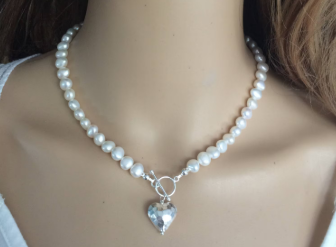
Pearl necklaces come in various styles, such as classic single-strand designs, trendy multi-strand styles, and unique pendant necklaces. Choose a style that aligns with your personal taste and the occasions you plan to wear it for. Classic white pearl necklaces are ideal for formal events, while colored pearl necklaces or irregularly shaped baroque pearl necklaces can add a touch of individuality to casual outfits.
Consider Pearl Type and Quality
Different pearl types vary in value and characteristics. Akoya pearls are known for their high luster and are a popular choice for classic pearl necklaces. South Sea pearls and Tahitian pearls are more luxurious and suitable for special occasions. Freshwater pearls offer a wide range of shapes and colors and are a more affordable option. When selecting pearls, consider factors such as size, shape, color, luster, and surface quality to ensure they meet your expectations.
Budget and Purpose
Pearl necklaces vary in price depending on pearl type, quality, and craftsmanship. Set a budget based on your financial situation and the purpose of the purchase. If you are buying a pearl necklace as a gift, consider the recipient’s preferences and needs. For everyday wear, freshwater pearl necklaces or lower-grade Akoya pearl necklaces are practical choices. For important occasions, investing in a high-quality South Sea pearl or Tahitian pearl necklace may be worth the investment.

The Value of Real Pearl Necklaces
Rarity and Scarcity
Natural pearls are extremely rare and valuable due to their limited formation conditions and low yield. Cultured pearls, while more accessible, also hold value because of the time, effort, and expertise required to cultivate them. High-quality pearls with exceptional luster, rare colors, and perfect shapes are particularly valuable.
Historical and Cultural Significance
Pearls have a long history of cultural and symbolic significance. In ancient times, they were revered as symbols of nobility, wealth, and power. In many cultures, pearls symbolize purity, femininity, and happiness. Owning a real pearl necklace not only adds elegance to your wardrobe but also connects you to this rich cultural heritage.
Investment Potential
High-quality pearl necklaces, especially those featuring rare pearl types like South Sea pearls and Tahitian pearls, have the potential to appreciate over time. As pearls become increasingly scarce and demand remains steady, their value may rise, making them a worthwhile investment for collectors and enthusiasts.
Conclusion
Real pearl necklaces are timeless jewelry pieces that embody elegance and sophistication. Whether you choose a classic freshwater pearl necklace, a luxurious South Sea pearl necklace, or a mysterious Tahitian pearl necklace, each option offers unique charm and value. By understanding how to identify genuine pearls, care for your pearl necklace properly, and select the right pearl necklace based on your needs, you can enjoy the timeless beauty of pearls and preserve their luster for generations to come. Pearl necklaces are not just accessories; they are treasures that carry cultural heritage and personal sentiment, enriching your life with beauty and meaning.
How to Purchase:https://looperbuy.com/search?keywords=real+pearl+necklace
Questions and Answers About Pearl Necklaces
Q: How can I tell if a pearl necklace is real?
You can identify a real pearl necklace by checking for consistency in shape and size, testing its weight and temperature, observing surface texture, and inspecting the drill hole. Real pearls often exhibit slight irregularities in shape and size, feel heavier and cooler to the touch, have a slightly rough surface texture, and feature neat drill holes with visible nacre layers.
Q: How much is a real pearl necklace worth?
The value of a real pearl necklace depends on factors such as pearl type, size, shape, color, luster, and surface quality. For example, a single-strand 5 mm freshwater pearl necklace may range from £50 to several hundred pounds, while South Sea pearl and Tahitian pearl necklaces are more expensive due to their rarity and superior quality.
Q: How should I care for my pearl necklace?
Store your pearl necklace in a soft pouch or jewelry box to prevent scratches. After wearing, gently wipe it with a soft cloth. Avoid exposing it to harsh chemicals, and clean it periodically with a neutral detergent diluted in water. When not in use, store it in a cool, dry place.
Q: What are the differences between freshwater and saltwater pearls?
Freshwater pearls are cultivated in rivers and lakes, primarily in China, and come in diverse shapes, sizes, and colors. They are composed entirely of nacre and are more durable. Saltwater pearls include Akoya pearls, South Sea pearls, and Tahitian pearls. Akoya pearls are known for their high luster and classic appearance; South Sea pearls are the largest and most prestigious; and Tahitian pearls are the only naturally dark pearls on the market, each with unique charm and value.
Q: Can I wear pearl necklaces daily?
Pearl necklaces can be worn daily, but they require careful maintenance. Avoid exposing them to harsh chemicals, perfumes, and lotions, and store them properly to prevent damage. Wearing pearl necklaces daily can add elegance to your outfits, but be mindful of potential wear and tear.