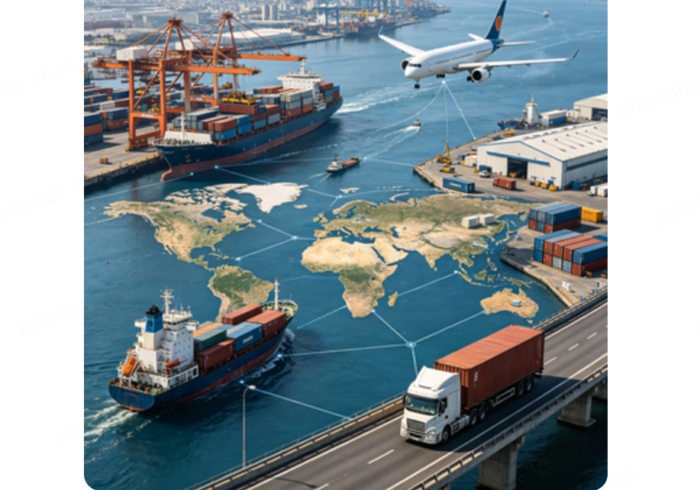
In the high-stakes world of international procurement, the battle for market dominance is often won or lost in the “middle ground” of logistics. For B2B brand owners, wholesalers, and manufacturers, the binary choice between slow, cheap sea freight and fast, expensive air freight has long been a source of frustration. However, a third pillar has emerged as the definitive solution for agile supply chains: rail transport. When examining the advantages of railroads, particularly within the context of the China-Europe Railway Express and other transcontinental links, it becomes clear that rail is the “Goldilocks” of logistics—offering the perfect balance of speed, cost, and reliability.
As a premier One-Stop B2B Sourcing Platform, LooperBuy has witnessed firsthand how the strategic use of rail corridors transforms the competitive landscape for our clients. By sourcing directly from China’s massive manufacturing base and leveraging rail’s unique strengths, businesses can achieve a level of supply chain fluidity that was previously reserved for only the largest conglomerates. This article provides an expert-level deep dive into why rail is the future of B2B sourcing and how you can harness these benefits to scale your operations.
Table of Contents
The Economic Logic: Why Rail is the “Sweet Spot” for B2B Profitability
The primary driver for any B2B decision is the bottom line. The advantages of railroads start with a compelling financial narrative that challenges the traditional dominance of maritime shipping.
Cost-Efficiency vs. Air Freight and Speed vs. Sea Freight
Rail transport is approximately 70% cheaper than air freight and roughly twice as fast as sea freight. For a wholesaler importing high-value consumer electronics or specialized machinery, this “middle ground” is revolutionary. By shifting from air to rail, you can drastically reduce your landed cost without waiting the 35-45 days typically required for ocean transit. On the LooperBuy platform, we help our partners calculate this ROI, showing that the interest saved on “capital tied up in transit” often pays for the logistics upgrade itself.
Stability in Pricing and Surcharge Mitigation
Ocean freight is notoriously volatile, with “peak season surcharges” and “blank sailings” causing havoc for B2B budget planning. Rail rates, while subject to change, are generally more stable and less prone to the wild fluctuations of the container shipping market. This predictability is a massive advantage for manufacturers who need to maintain consistent pricing for their downstream B2B clients.
Reduced Inventory Carrying Costs
The faster your goods move from the Chinese factory to your warehouse, the less capital you have sitting idle. Rail transit from major Chinese hubs like Xi’an or Chengdu to Western Europe typically takes 15 to 18 days. This shorter lead time allows brand owners to operate with leaner inventories, improving cash flow and reducing the risk of “deadstock” if market trends shift.
Operational Excellence: Reliability and the “Species Complete” Advantage
Beyond the balance sheet, the operational advantages of railroads provide a foundation of reliability that sea and air struggle to match.
Unmatched Schedule Reliability and Weather Resilience
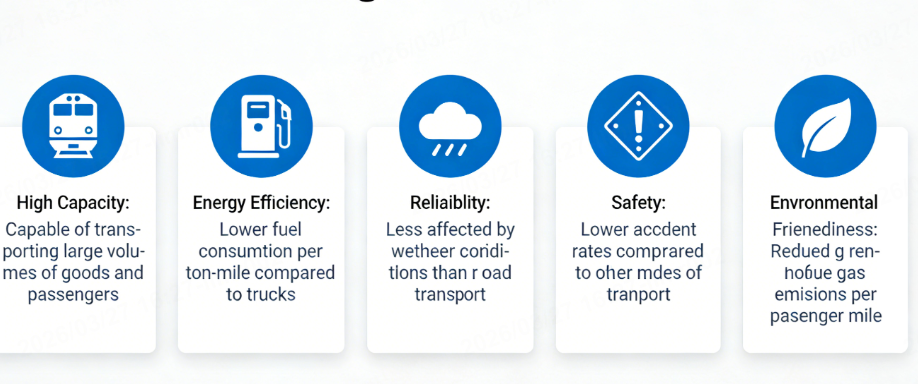
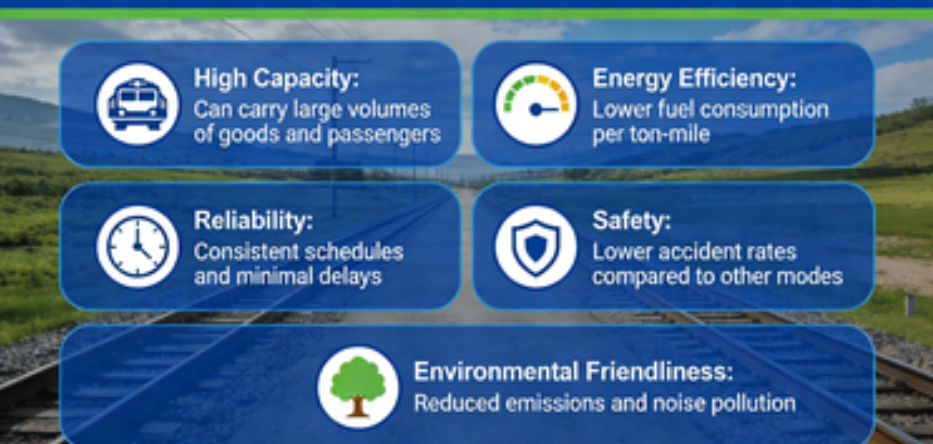
Unlike ships, which are at the mercy of port congestion, canal blockages (like the Suez or Panama canals), and extreme weather at sea, trains operate on rigorous fixed schedules. Rail is remarkably resilient to weather disruptions, ensuring that your B2B shipments arrive with “Swiss-watch” precision. For a production firm relying on “Just-in-Time” (JIT) components from China, this reliability is not just a benefit—it’s a necessity.
Leveraging the “Species Complete” Sourcing Model
One of China’s greatest strengths is its “species complete” manufacturing ecosystem—the ability to produce almost any component or finished good in existence. LooperBuy connects you to this vast variety. Rail transport is uniquely suited to this diversity because it can easily handle “LCL” (Less than Container Load) shipments for a variety of product categories. Whether you are sourcing industrial valves, textiles, or tech gadgets, rail allows you to mix and match goods into a single, efficient logistics stream.
The Intermodal Synergy: From Factory Gate to Warehouse Door
Rail does not exist in a vacuum. Its true power is unlocked through intermodal connectivity. At LooperBuy, we manage the “first mile” trucking from the factory to the rail terminal and the “last mile” delivery from the destination terminal to your warehouse. This seamless integration ensures that the advantages of railroads are felt throughout the entire journey, providing a true door-to-door B2B service.
Strategic Value: Sustainability and Risk Mitigation in 2026
As we move further into 2026, the strategic importance of rail is being amplified by global environmental standards and geopolitical shifts.
The Green Supply Chain: Meeting ESG Mandates
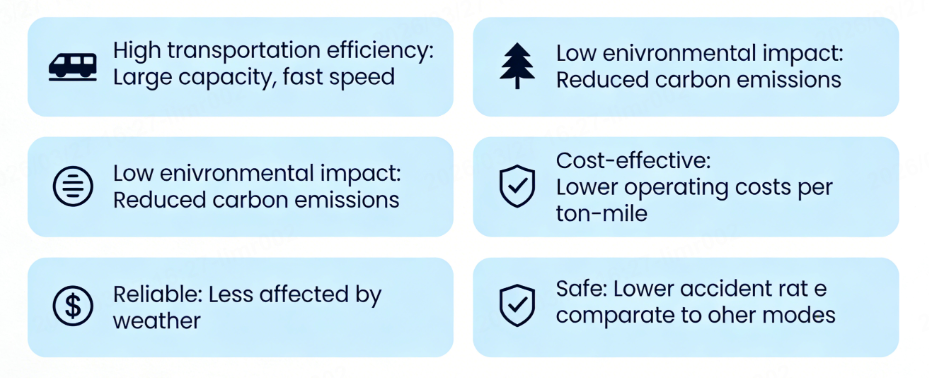
Sustainability is no longer a “buzzword”; it is a B2B requirement. Rail transport is significantly more environmentally friendly than either air or road transport. Trains emit up to 90% less CO2 than airplanes and are considerably more efficient per ton-kilometer than trucks. For brand owners looking to enhance their ESG (Environmental, Social, and Governance) profile, shifting volume to rail is one of the most effective ways to lower the corporate carbon footprint.
Geopolitical Risk Hedging and Route Diversification
Recent disruptions in the Red Sea and other maritime choke points have highlighted the danger of over-reliance on a single shipping mode. The “New Silk Road” (the Silk Road Economic Belt) provides a vital land-based alternative. By diversifying your logistics mix to include rail, you protect your B2B supply chain from localized maritime crises, ensuring that your goods keep moving even when the seas are closed.
Simplified Customs and the “One-Belt” Advantage
International rail corridors, particularly those leaving China, have benefited from streamlined customs procedures. Transit countries have harmonized their documentation (such as the CIM/SMGS consignment note), which reduces administrative delays at borders. LooperBuy leverages these high-speed administrative channels to ensure your goods aren’t just moving fast on the tracks, but also moving fast through the paperwork.
Deep Dive: The Technical Superiority of Modern Rail Logistics
To truly appreciate the advantages of railroads, one must look at the technical innovations that have made this mode so attractive for high-end B2B sourcing.
Security and Cargo Protection
Rail containers are subject to less physical stress than those on a ship (no “heavy seas” movement) and are easier to secure than trucks during rest stops. Modern rail corridors are equipped with sophisticated tracking and security systems, including GPS e-locks that alert operators the moment a container is tampered with. This makes rail an ideal choice for high-value B2B goods like pharmaceuticals or premium electronics.
Temperature-Controlled Rail Solutions (Reefers)
A common misconception is that rail is only for “dry” goods. In reality, “Reefer” (refrigerated) containers on trains are now a standard offering. These units can maintain precise temperatures across the extreme climates of Central Asia, allowing B2B wholesalers of perishable goods or temperature-sensitive chemicals to source from China with total confidence.
The Scalability of Rail Infrastructure
Rail terminals in hubs like Duisburg, Lodz, and Xi’an have seen massive investment in automation. These “Smart Ports” on land can process thousands of containers daily with minimal human error. For a B2B platform like LooperBuy, this infrastructure allows us to scale your shipping volume instantly—whether you are moving ten containers or a hundred, the rail system can absorb the growth without the “bottlenecking” often seen in ocean shipping.
How LooperBuy Maximizes the Rail Advantage for Your Business
While the advantages of railroads are clear, navigating the complexity of international rail requires an expert partner. LooperBuy is built to bridge this gap.
Direct Access to Rail-Hub Manufacturers
Many of China’s most efficient factories are located in inland provinces like Sichuan and Henan. Traditionally, these factories had to ship goods to the coast first—a redundant and expensive step. By using rail, LooperBuy can ship directly from these inland hubs to your global destination, cutting out hundreds of miles of unnecessary inland transport and lowering your overall procurement price.
Unified Quality Control and Consolidation
Before your goods hit the tracks, LooperBuy performs rigorous quality inspections. We can also consolidate orders from multiple manufacturers into a single rail container. This allows small-to-medium-sized B2B buyers to enjoy “Full Container Load” (FCL) pricing and security, even if their individual orders are smaller.
Real-Time Digital Visibility
Our platform provides a “single pane of glass” view of your rail shipments. You can track your container as it moves across the Eurasian land bridge, receiving automated updates on customs status and estimated time of arrival (ETA). This level of transparency is essential for modern B2B operations that demand high-velocity data to match their high-velocity goods.
Expert Perspective: The 2027 and Beyond Outlook
The trajectory of rail logistics is clear: it is becoming more digital, more green, and more integrated. We anticipate that by 2027, “autonomous freight trains” will begin to further reduce operational costs, while the expansion of the rail network into Southeast Asia (via the China-Laos-Thailand links) will open up even more sourcing opportunities for B2B buyers.
LooperBuy is committed to remaining at the forefront of these developments. We don’t just see ourselves as a sourcing platform; we are a strategic logistics partner. By helping you leverage the advantages of railroads, we empower your brand to be faster than the competition, more sustainable than the status quo, and more profitable than ever before.
Conclusion
In conclusion, the advantages of railroads represent a structural shift in how global B2B trade is conducted. Rail offers a unique synergy of speed, cost-efficiency, and environmental responsibility that neither sea nor air can provide in isolation. For the modern brand owner, wholesaler, or manufacturer, integrating rail into your supply chain via a One-Stop B2B Sourcing Platform like LooperBuy is the most effective way to secure a competitive edge. By sourcing directly from China, utilizing “species complete” catalogs, and trusting in the reliability of the rails, you are not just moving goods—you are moving your business forward into a more agile and prosperous future. The tracks are laid, the trains are moving, and the opportunity is yours to seize.
Related Questions & Answers
· How does the cost of rail compare to other shipping methods for B2B?
Rail is the “middle ground” in logistics. It is typically 50-70% cheaper than air freight and roughly 20-30% more expensive than sea freight. However, when you factor in the “time value of money” (getting your goods to market 20 days faster than sea), the total landed cost and impact on cash flow often make rail the most profitable choice for high-value or time-sensitive B2B products.
· Which B2B industries benefit the most from the advantages of railroads?
While almost any industry can benefit, rail is particularly advantageous for electronics, automotive parts, high-end textiles, and industrial machinery. These are sectors where the goods have a high value-to-weight ratio and where “Time-to-Market” is critical for maintaining a competitive edge over other wholesalers or manufacturers.
· Is rail transport from China safe for fragile or high-value goods?
Yes, rail is extremely safe. Modern rail containers experience less “turbulence” than airplanes and none of the “pitch and roll” of ocean vessels. Furthermore, international rail corridors utilize advanced GPS tracking and high-security terminals. LooperBuy adds an extra layer of protection by performing pre-shipment inspections and ensuring professional loading techniques.
· Can LooperBuy handle “Less than Container Load” (LCL) via rail?
Absolutely. One of our core strengths is consolidation. We can take smaller orders from different B2B buyers or different manufacturers and combine them into a single rail container. This allows smaller businesses to enjoy the advantages of railroads without needing to fill an entire 40-foot container on their own.
· How do I deal with customs when shipping via rail from China?
Customs is often the most daunting part of international trade, but rail corridors have made it much simpler. LooperBuy handles all the necessary documentation, including export licenses in China and import clearances at the destination. We ensure that your shipment complies with all local regulations, preventing delays and ensuring a smooth “door-to-door” delivery experience.
References:
- UIC – International Union of Railways: The Future of Eurasian Rail Corridors
- World Bank – Analysis of the China-Europe Railway Express Economic Impact
- LooperBuy – Strategic Guide to B2B Sourcing and Intermodal Logistics
- European Commission – Sustainable Transport and the Green Deal
- CSIS – The Belt and Road Initiative: Progress and Challenges in 2026
Article Brief:
This expert-led article explores the advantages of railroads for B2B brand owners and wholesalers sourcing from China. It highlights the “middle ground” benefits of rail—balancing the speed of air with the cost of sea. The content covers economic ROI, operational reliability, ESG benefits, and technical security, while demonstrating how the LooperBuy platform simplifies this complex logistics chain for global B2B buyers.
Hot Tags:
B2B China Sourcing; Rail Freight Advantages; China-Europe Railway Express; Global Logistics Solutions; One-Stop Sourcing Platform; LooperBuy Supply Chain; Wholesale Shipping Strategy; Intermodal Freight Efficiency; Sustainable B2B Sourcing; China Manufacturing Logistics