
Learn how to identify reliable B2B manufacturing and sourcing companies in China. Through legal credential verification, on-site factory audits, quality control (QC) system assessments, logistics capability testing, and specialized expert evaluations, you can confidently select a trusted partner—such as Looperbuy—to drive the growth of your global B2B business.
A reliable B2B manufacturing sourcing company in China is one that is transparent, properly licensed, financially stable, technically capable, and consistently delivers on quality, lead time, and communication. In practice, verifying this means combining online due diligence, formal compliance checks, and real-world performance tests before you commit serious volume or long‑term contracts. [maplesourcing]
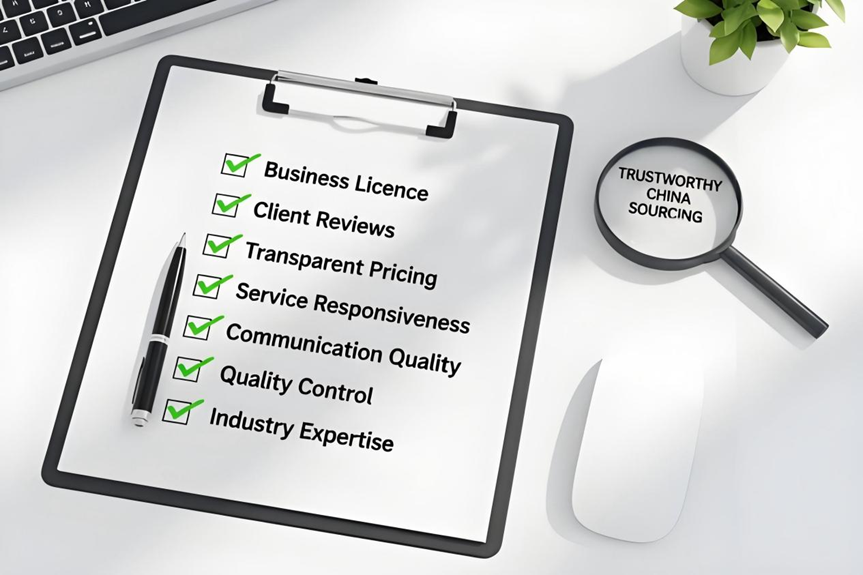
Table of Contents
Why Verification Matters More Than Ever
If you run a global B2B business, choosing the wrong China sourcing partner can damage your brand, drain cash flow, and permanently erode customer trust. As someone who has worked with dozens of manufacturers and sourcing agents across key hubs like Shenzhen, Ningbo, and Foshan, I’ve seen reliable partners become strategic assets—and weak ones turn into ongoing liabilities.
In this guide, we’ll walk step by step through how to verify a reliable B2B manufacturing sourcing company in China, with practical tactics you can apply whether you’re sourcing via platforms like Alibaba, 1688, Global Sources, or through an integrated service provider such as Looperbuy.
Understanding B2B Manufacturing Sourcing in China
China’s manufacturing ecosystem includes large export‑oriented factories, specialized niche producers, trading companies, and hybrid sourcing agents who coordinate everything from product development to fulfillment. A B2B manufacturing sourcing company sits between you and the factories, helping you identify suppliers, negotiate, handle quality control, and often manage consolidation and logistics. [statrys]
For B2B sellers using dropshipping or inventory‑light models, reliable sourcing partners can reduce stock risks, warehouse costs, and operational complexity, especially when they combine procurement with fulfillment and cross‑border logistics support. This is where platforms like Looperbuy differentiate themselves—by offering product sourcing plus end‑to‑end order handling rather than just lead generation. [maplesourcing]
The Framework for Verifying Reliability
Experience: Real‑World Track Record
A reliable sourcing company should demonstrate proven experience with similar products, regions, and business models (wholesale, D2C, marketplace sellers, etc.). Look for: [qualityinspection]
– Case studies with measurable outcomes (e.g., defect reduction, lead time improvement, landed cost optimization). [qualityinspection]
– Product category depth—electronics, industrial parts, packaging, fashion, etc.—not just generic claims. [ciprocess]
– References from brands in your size range and target markets (US, EU, UK, etc.). [qualityinspection]
From a practitioner’s perspective, I put more weight on three solid, detailed case studies than on a long portfolio of logos that never mention results. [maplesourcing]
Expertise: Technical and Operational Competence
Expert sourcing teams understand manufacturing processes, compliance requirements, and cost structures, not just price negotiation. When assessing expertise, check: [qualityinspection]
– Ability to talk clearly about your product’s materials, tolerances, packaging, and testing requirements.
– Knowledge of international standards relevant to your industry (CE, RoHS, REACH, FDA, etc.). [qualityinspection]
– Structured supplier vetting frameworks (background checks, factory audits, quality system reviews). [qualityinspection]
Companies like Sofeast have published multi‑step verification processes combining on‑site audits, engineering capability reviews, and legal due diligence—this is the level of rigor you should expect from any “expert” sourcing partner. [qualityinspection]
Authoritativeness: External Validation and Industry Presence
Authoritativeness comes from external signals that the company is recognized and accountable. Check: [statrys]
– Registration in official government or trade bodies (e.g., HKTDC, local commerce bureaus). [youtube]
– Speaking roles at trade shows, webinars, or industry associations. [industryweek]
– Consistent thought leadership: blogs, whitepapers, and guides that go beyond surface‑level tips. [statrys]
A sourcing company that publishes detailed guides on vetting suppliers, managing quality, and optimizing logistics is usually investing in long‑term credibility, not quick arbitrage. [statrys]
Trustworthiness: Transparency and Risk Management
Trustworthiness is about how the company handles risk, transparency, and conflicts of interest. Essential signals include: [maplesourcing]
– Clear disclosure of whether they are an agent, trading company, or direct manufacturer. [maplesourcing]
– Transparent fee structure (commission, project fees, margin on goods) and written agreements. [statrys]
– Proactive discussions around IP protection, quality liabilities, and dispute resolution. [qualityinspection]
In my own sourcing projects, the most reliable partners were those who pushed back when a request endangered quality or compliance, instead of just saying “yes” to secure the order. [linkedin]
Step‑by‑Step: How to Verify a Reliable China Sourcing Company
Start with Basic Legitimacy Checks
Before anything else, confirm that the sourcing company is a real, legally registered business in China or Hong Kong. [fobsourcify]
Key checks:
1. Business license & registration
– Request a copy of the business license and verify it in official government databases (you’ll need the Chinese name and registration number). [fobsourcify]
– Confirm business scope aligns with sourcing, trading, and export activities. [fobsourcify]
2. Export license & tax registration
– If they handle export directly, check that they hold an export license or work with declared export agents. [fobsourcify]
– Verify tax registration and the existence of a corporate bank account (avoid partners asking for personal accounts). [youtube]
3. Company structure & location
– Confirm registered address, office, and operational sites (warehouses, QC centers). [fobsourcify]
– Use Google Maps, Baidu Maps, and video calls to cross‑check reality against their website and brochures. [qualityinspection]
Evaluate Their Supplier Vetting Process (Beyond “We Have Good Factories”)
A reliable sourcing company should have a repeatable, documented supplier verification process. Ask them to walk you through, step by step. [china-quality-inspection]
Look for these components:
– Background checks: Online reputation review, litigation records, credit reports, ownership structure. [qualityinspection]
– Factory audits: On‑site visits, production line review, capacity assessment, quality system inspection. [china-quality-inspection]
– Engineering capability evaluation: Ability to understand drawings, tolerances, and test plans. [china-quality-inspection]
– Social compliance and safety: Labor practices, safety measures, and environmental controls when relevant. [china-quality-inspection]
A Practical 5‑Layer Vetting Framework
Drawing on current best practices and field experience, you can benchmark any sourcing partner against a 5‑layer vetting framework. [eriusourcing]
1. Identity and legality – Business license, export license, ownership, legal records.
2. Operational capacity – Factory audits, machinery, production planning, staffing, peak capacity.
3. Quality systems – ISO 9001 (verified), QC procedures, incoming and outgoing inspection, testing labs. [qualityinspection]
4. Financial and commercial stability – Payment terms, credit history, dispute patterns, pricing consistency. [quickbooks.intuit]
5. Relationship and communication – Responsiveness, clarity, willingness to share data and accept audits. [linkedin]
Check Real‑World Experience and Case Studies
On paper, many sourcing companies look similar. What separates the reliable ones is specific, verifiable evidence of performance. [maplesourcing]
Ask for:
– At least 3 recent case studies (past 12–24 months) in your product category or logistics model (e.g., dropshipping to EU, Amazon FBA, B2B wholesale). [statrys]
– Metrics like defect rate reduction, on‑time delivery percentage, cost savings, lead time improvements. [maplesourcing]
– The ability to talk through what went wrong in difficult projects and how they fixed it. [qualityinspection]
From an expert’s lens, I treat vague “success stories” as red flags; a reliable partner can explain trade‑offs, constraints, and lessons learned, not just the highlight reel. [qualityinspection]
Test Communication, Flexibility, and Problem‑Solving
In B2B manufacturing sourcing, how your partner reacts to change often reveals more than any certification. [linkedin]
Five Expert‑Level Micro‑Tests You Can Run
Inspired by practical advice from sourcing specialists, here are five subtle tests that reveal reliability: [linkedin]
– Ask for factory floor photos or a short video “this week”
If they can’t produce current visuals, they may be a trading layer without real factory access. [linkedin]
– Introduce a controlled change mid‑discussion
For example, adjust material spec or MOQ and see whether they give realistic implications (cost, lead time, risk) instead of instant “no problem.” [linkedin]
– Request worst‑case lead time, not just ideal
Reliable partners will talk openly about peak season, raw material delays, and contingency plans. [linkedin]
– Talk directly to the engineer or production manager
If you can only access sales reps and they avoid involving technical staff, be cautious. [qualityinspection]
– Watch for consistency across emails, samples, and timelines
Reliability shows up as *consistent follow‑through*, not perfection. [linkedin]
These micro‑tests are simple but powerful; over multiple projects, they often predict whether a sourcing partner will still be dependable in year three, not just month one. [qualityinspection]
Verify Quality Control and Inspection Capabilities
Your sourcing partner should have structured quality control integrated into their workflow, not treated as an optional add‑on. [china-quality-inspection]
Essential elements:
– Defined inspection stages: pre‑production, during production (DUPRO), and pre‑shipment. [qualityinspection]
– Clear AQL levels, sampling plans, and defect categorization for your product types. [qualityinspection]
– Access to independent inspection agencies or in‑house QC teams in major manufacturing hubs. [china-quality-inspection]
– Reporting with photos, measurement data, and corrective actions—not just “passed/failed.” [china-quality-inspection]
On projects where we combined on‑site audits with robust DUPRO and final inspections, we saw a durable drop in defect rates and fewer emergency air shipments to fix problems. [china-quality-inspection]
Assess Logistics, Dropshipping, and Fulfillment Competence
If you rely on dropshipping or distributed fulfillment, your sourcing partner becomes part of your customer experience. Platforms like Looperbuy aim to remove the need for stock, warehousing, and directly managing logistics, which is powerful—but only if the underlying operations are robust. [statrys]
Verify:
– Warehouse locations and coverage (mainland China, Hong Kong, cross‑border hubs).
– Integration with major carriers and fulfillment services (ePacket alternatives, express, DDP solutions). [ciprocess]
– Ability to manage SKU consolidation, packaging customization, and labeling for B2B and D2C shipments. [ciprocess]
– Transparent tracking, exception handling, and claims processes when shipments go wrong. [ciprocess]
From a UX perspective, I recommend running small pilot orders to multiple regions to observe real‑world transit times, damage rates, and customer feedback before scaling. [ciprocess]
Legal, Compliance, and IP Protection
Reliable sourcing companies take compliance and IP seriously, because they know that long‑term relationships depend on it. [fobsourcify]
Check:
– Whether they use China‑enforceable contracts for supply, IP, and confidentiality, ideally drafted or reviewed by lawyers familiar with Chinese law. [fobsourcify]
– Their processes for brand protection, including avoiding unauthorized over‑production and gray‑market sales. [qualityinspection]
– How they document and manage certifications, testing reports, and regulatory filings needed for your destination markets. [qualityinspection]
Experienced importers often combine a sourcing partner’s framework with their own compliance checks, especially in regulated categories (electronics, toys, medical, food‑contact materials). [fobsourcify]
Leveraging Looperbuy as Your B2B Sourcing Partner
As an online B2B procurement platform, Looperbuy is positioned to act not just as a connector but as a strategic sourcing and dropshipping partner for global B2B sellers. When you evaluate Looperbuy—or any similar platform—against the criteria in this guide, focus on: [maplesourcing]
– How it reduces the need for inventory, warehousing, and direct logistics management, especially for cross‑border B2B and D2C models. [statrys]
– The transparency of its supplier network, vetting standards, and QC processes.
– The robustness of its order fulfillment infrastructure, including multi‑channel integration and shipment tracking.
How to Verify Before You Commit
To make this practical, here’s a numbered checklist you can follow:
1. Confirm legal registration and export capability (licenses, bank accounts, legal records). [fobsourcify]
2. Review their documented supplier vetting and QC process, including sample reports and audit templates. [china-quality-inspection]
3. Evaluate case studies and references from similar businesses and product categories. [maplesourcing]
4. Run micro‑tests on communication and flexibility (factory photos, specification changes, worst‑case lead time). [linkedin]
5. Pilot orders across different destinations to validate logistics performance and customer experience. [ciprocess]
6. Align contracts, compliance, and IP protections with your legal counsel. [fobsourcify]
7. Monitor performance metrics (OTD, defect rates, response time) and keep a backup supplier option. [quickbooks.intuit]
FAQ: Verifying China B2B Sourcing Companies
Q1: What’s the fastest way to spot a risky China sourcing company?
Look for mismatches between their website, registration details, and actual operational footprint—especially if they cannot provide a valid business license, corporate bank account, or recent factory photos. [linkedin]
Q2: Do I always need an on‑site factory audit?
Not always, but audits dramatically reduce risk, especially for higher‑value products or long‑term programs; many importers start with remote checks and then perform audits once they narrow to a few serious candidates. [china-quality-inspection]
Q3: Are online platforms like Alibaba or Global Sources enough for verification?
They are useful starting points, but platform verification should be supplemented with independent checks—legal records, audits, QC reviews—before large orders. [youtube]
Q4: How can I verify quality control if I’m not a technical expert?
Request sample QC reports, ask about AQL, and, where needed, hire third‑party inspection agencies that specialize in your product category. [qualityinspection]
Q5: What’s the role of a sourcing agent versus a platform like Looperbuy?
Traditional agents focus on supplier identification and negotiation, while platforms like Looperbuy combine sourcing with order fulfillment, dropshipping, and logistics orchestration, which can significantly reduce operational complexity for B2B sellers. [statrys]
References
1. Maplesourcing – “7 Key Factors to Vet Reliable China Sourcing Companies”[maplesourcing]
2. QualityInspection.org – “Sourcing from China 101, Part 3: How to Verify a Manufacturer”[qualityinspection]
3. QualityInspection.org – “China Supplier Verifications: Series of Articles”[qualityinspection]
4. Ériu Sourcing – “How to Vet a Chinese Supplier (2026)” [eriusourcing]
5. FOB Sourcify – “Verify China Company from China: The Ultimate Guide 2026″[fobsourcify]
6. Statrys – “China Sourcing Agent Guide 2026: How to Find Reliable Suppliers”[statrys]
7. Alibaba – “How To Choose A Chinese Factory Supplier” [alibaba]
8. China Quality Inspection – “Essential Best Practices for Vetting Chinese Suppliers”[china-quality-inspection]
9. Intuit QuickBooks – “10 Ways to Find & Verify Chinese Suppliers You Can Trust”[quickbooks.intuit]
10. Mustajab Ahmed – “5 ways to vet Chinese suppliers that work” (LinkedIn post)[linkedin]