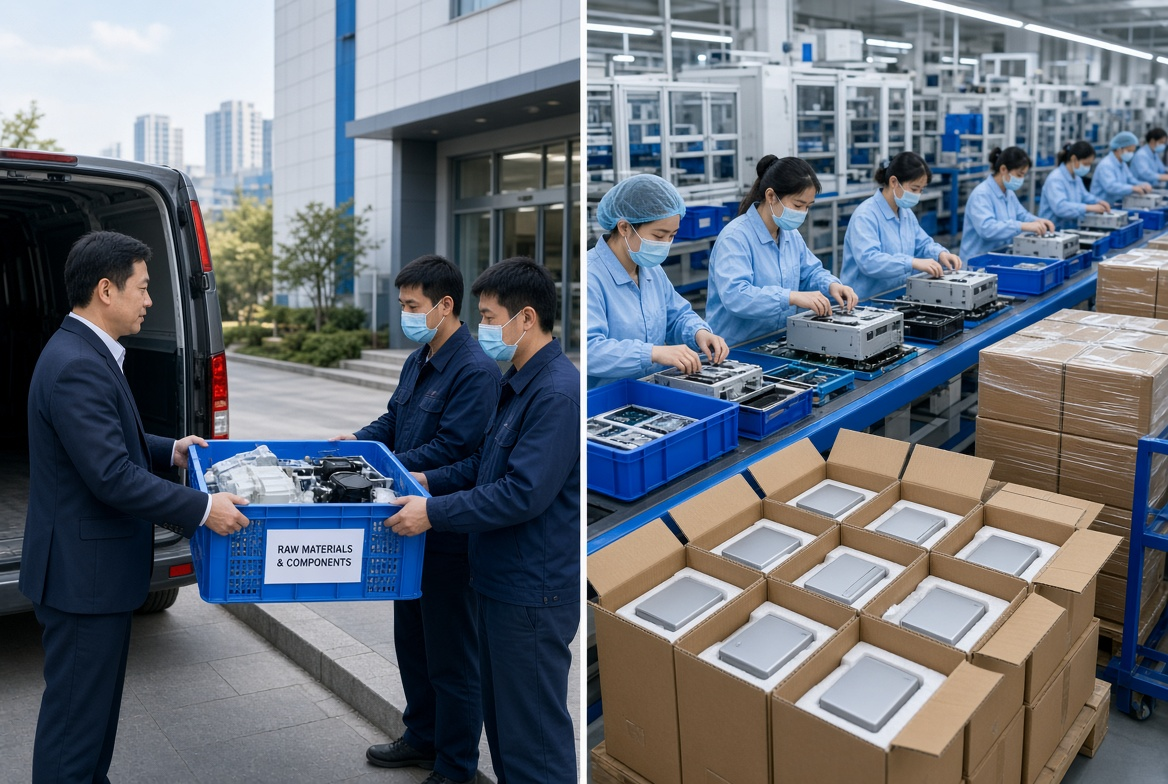
Understand the difference between toll manufacturing and contract manufacturing. Compare material ownership, costs, quality control, risk, flexibility, and ideal use cases. Learn how global B2B sellers can source from China, manage inventory, and streamline fulfillment with Looperbuy.
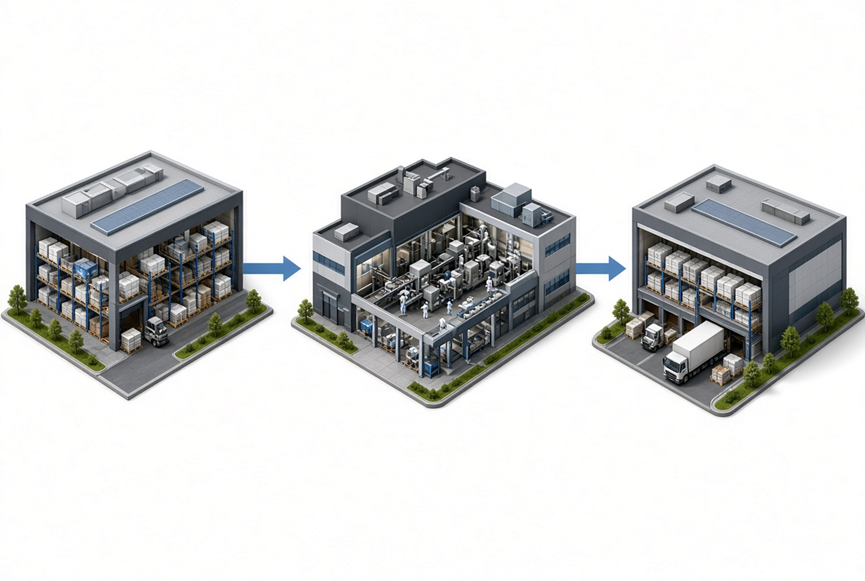
When you source products from China, choosing between toll manufacturing and contract manufacturing determines who buys materials, who controls production, who carries inventory risk, and how much operational work stays on your team. The right model is not simply the cheaper one—it is the model that matches your product maturity, supply-chain capability, cash-flow position, and quality-control requirements.
For global B2B sellers, brand owners, wholesalers, and ecommerce operators, this decision also affects what happens after production: inspection, warehousing, order fulfillment, and international delivery. A flexible sourcing and fulfillment partner can help turn a finished product into inventory that is ready to ship without forcing you to build a large warehouse operation of your own.
Table of Contents
What Is Contract Manufacturing?
Contract manufacturing is an outsourcing arrangement in which a business hires a third-party factory to make products according to its specifications. Depending on the agreement, the manufacturer may source raw materials and components, organize production, perform quality checks, package the goods, and prepare them for shipment.
The buyer typically retains control of the brand, product design, specifications, and commercial strategy. The manufacturing partner contributes production capacity, supplier relationships, technical know-how, labor, machinery, and operational systems.
For example, a B2B seller may provide a factory with product drawings, packaging artwork, quality standards, target pricing, and purchase forecasts. The factory then sources approved materials, produces the goods, performs in-process checks, packs the units, and delivers the order to the buyer’s warehouse, freight forwarder, or fulfillment provider.
This model is commonly used for:
– Consumer electronics and accessories
– Apparel, footwear, and private-label products
– Home goods and furniture
– Hardware and tools
– Automotive components
– Beauty, personal-care, and consumer packaged goods
– Industrial products with repeatable specifications
The key advantage is operational simplicity. Instead of coordinating multiple material vendors, the buyer works primarily with one manufacturing partner.
However, contract manufacturing does not mean the buyer should become passive. Product specifications, approved-material lists, inspection requirements, change-control procedures, intellectual-property protections, and delivery terms should be documented before mass production begins.
What Is Toll Manufacturing?
Toll manufacturing, sometimes called toll processing, is a more specialized arrangement. The client supplies the raw materials, ingredients, semi-finished goods, or proprietary components, while the toll manufacturer provides the equipment, workforce, production process, and technical capability required to convert those inputs into a finished or semi-finished product.
In simple terms:
– The client owns the materials
– The toll manufacturer performs the processing service
– The client pays a tolling or processing fee
– The finished goods are returned to the client or shipped according to the client’s instructions
Toll manufacturing is especially relevant when material selection is central to product quality, regulatory compliance, cost control, or intellectual-property protection.
Typical examples include:
– A chemical company sends compounds to a processor for blending, milling, coating, or packaging.
– A food brand supplies key ingredients to a facility for mixing and filling.
– A cosmetics company provides a proprietary formula or active ingredients for batch production.
– A pharmaceutical business supplies approved ingredients to a qualified manufacturing facility.
– An electronics business provides customer-owned chips, boards, or high-value components for assembly.
Toll manufacturing focuses on processing client-owned materials, while contract manufacturing usually covers a broader, end-to-end production scope.
Toll Manufacturing vs. Contract Manufacturing at a Glance
| Decision Factor | Toll Manufacturing | Contract Manufacturing |
| Material ownership | The client normally owns and supplies materials or components | The manufacturer often procures materials as part of the service |
| Scope of work | Processing, assembly, blending, coating, filling, or another defined production step | Broader production service that may include sourcing, manufacturing, packaging, and logistics preparation |
| Client control | Higher control over materials, approved suppliers, and formulations | More delegation to the manufacturer, though specifications still guide production |
| Buyer workload | Higher; the buyer manages material procurement, inventory, and inbound logistics | Lower; the manufacturer manages more procurement and production activity |
| Cost structure | Processing fees plus client-managed material and transport costs | Quoted product cost often combines materials, labor, overhead, and manufacturing margin |
| Supply-chain risk | Buyer carries more responsibility for material quality, availability, and delivery | Manufacturer carries more operational responsibility, depending on contract terms |
| Best fit | Proprietary inputs, specialized materials, strict formulation control | Private label, scalable product launches, standard consumer and industrial goods |
| Flexibility | Strong for material-specific or technically specialized projects | Strong for scaling finished-goods production, but product changes may require formal renegotiation |
Neither model is universally better. The question is: Which party is better positioned to manage the material supply chain?
The Most Important Difference: Who Controls the Inputs?
The largest practical difference is not the factory floor. It is control of materials before production begins.
In toll manufacturing, the client may select every raw material supplier, purchase every input, arrange inbound transport, and maintain ownership records throughout production. This approach can be valuable when a product depends on proprietary ingredients, regulated inputs, expensive parts, or a tightly controlled bill of materials.
In contract manufacturing, the factory may handle supplier selection and purchasing within an agreed specification. This can reduce administrative burden and may improve purchasing efficiency because established factories often have supplier networks, purchasing volume, and familiarity with local procurement conditions.
But buyers should not assume that “factory-sourced” automatically means “equivalent.” If material consistency matters, the contract should state:
– Approved material grades and technical standards
– Approved supplier list or supplier-qualification criteria
– Acceptable substitutions and prohibited substitutions
– Sample approval requirements
– Testing and inspection methods
– Documentation requirements
– Notification and approval procedures for process or material changes
For regulated product categories, these controls are especially important. The U.S. Food and Drug Administration’s guidance on drug contract manufacturing emphasizes documented quality agreements that clearly define each party’s manufacturing responsibilities. While this guidance applies specifically to drugs, the operating principle is useful across many product categories: responsibility should be written, specific, and auditable rather than assumed.
Cost: Look Beyond the Unit Price
A lower factory quotation does not always create a lower total sourcing cost. The best way to compare models is to evaluate landed operational cost, not just unit price.
A practical comparison includes:
Total Sourcing Cost=Materials+Processing/Production+Quality Control+Packaging+Transport+Storage+Fulfillment+Risk Cost
Toll manufacturing cost considerations
Toll manufacturing can be attractive when you already have favorable material contracts or when your inputs are unique. However, it can add operational costs through:
– Separate procurement administration
– Minimum-order quantities for materials
– Inbound freight to the factory
– Material storage and insurance
– Inventory reconciliation
– Waste, yield-loss, and scrap accountability
– Delays caused by late or incomplete material deliveries
Contract manufacturing cost considerations
Contract manufacturing may carry a higher per-unit quote because the factory manages sourcing, purchasing, and inventory. Yet it can lower the buyer’s management burden and reduce coordination failures.
Ask the manufacturer to separate, where possible:
– Material cost
– Labor cost
– Tooling or setup cost
– Packaging cost
– Testing or certification cost
– Freight-related charges
– Minimum-order requirements
– Cost impact of volume changes
– Cost impact of design or specification changes
Expert sourcing advice: Compare two complete scenarios. One should model your own procurement and toll-processing costs; the other should model the manufacturer’s end-to-end contract-manufacturing quote. The lower-risk option is often more profitable than the lowest headline price.
Risk Allocation: The Contract Must Match Reality
Both manufacturing models involve risk. The key is to assign each risk to the party that can actually control it.
In toll manufacturing, clarify:
– Who is responsible if client-provided materials fail incoming inspection?
– Who owns material loss, scrap, or damage during processing?
– What yield rate is expected?
– Who pays for rework caused by equipment failure or process deviation?
– How are unused materials counted and returned?
– Who arranges inbound materials and outbound finished-goods shipping?
– Who approves changes to the process, packaging, or production schedule?
In contract manufacturing, clarify:
– Who qualifies and monitors material suppliers?
– What happens if a material becomes unavailable?
– Can the factory substitute materials without written approval?
– Who bears the cost of defective materials procured by the factory?
– What are the inspection, defect, rework, refund, and replacement procedures?
– What is the lead-time commitment and remedy for avoidable delays?
– Who owns tooling, molds, dies, artwork, and product documentation?
A strong agreement should include a quality plan, not just a price and delivery date. It should define product specifications, acceptance criteria, sampling rules, inspection records, corrective-action procedures, and authority for approving production changes.
How to Choose the Right Model
Use this decision framework before requesting quotations.
Choose toll manufacturing if:
– You own proprietary formulas, ingredients, or components.
– You need strict control over raw-material origin and quality.
– You already have qualified suppliers for key inputs.
– Your product requires specialized processing rather than full product development.
– You have the operational capacity to manage material inventory and transport.
– The value of material control outweighs the added coordination workload.
Choose contract manufacturing if:
– You want a factory to source materials and manage production.
– You are launching a private-label or branded product without an established supply base.
– You need to reduce internal procurement and production-management workload.
– You are scaling quickly and want one primary production partner.
– Your product specifications are clear enough for a factory to execute consistently.
– You want to focus more resources on sales, customer acquisition, product development, and market expansion.
Consider a hybrid model if:
– You provide only high-risk or proprietary components.
– The factory sources standard materials, packaging, and secondary parts.
– You want to protect a critical input while reducing procurement workload.
– You need manufacturing flexibility without surrendering full control of your product’s most important elements.
A hybrid approach is common in practice. For example, a brand may supply a proprietary controller board while the manufacturer sources housings, cables, fasteners, packaging, and standard electronic components.
A Practical Sourcing Workflow for China
For overseas B2B sellers, the manufacturing decision should connect directly to inventory and fulfillment planning. Buying large volumes without a clear fulfillment plan can create unnecessary capital pressure, storage costs, and slow-moving inventory.
A practical workflow looks like this:
1. Define the product and sourcing model. Decide whether you will supply key materials or ask the factory to manage complete procurement.
2. Build a technical specification package. Include drawings, dimensions, materials, color standards, packaging requirements, quality standards, compliance requirements, and acceptable defect levels.
3. Screen potential suppliers. Evaluate factory capability, relevant product experience, quality systems, communication responsiveness, production capacity, and willingness to document commitments.
4. Request samples and verify performance. Test samples against the same specification that will govern mass production. Do not rely only on catalog images or verbal assurances.
5. Document commercial and quality terms. Confirm pricing, minimum order quantity, lead time, payment milestones, intellectual-property protections, inspection method, rework procedures, and change-control rules.
6. Manage production visibility. Use pre-production confirmation, in-process updates where appropriate, and pre-shipment inspection for products where defects would be costly.
7. Connect production to fulfillment. Instead of automatically shipping all inventory to your own warehouse, consider sending approved products to a sourcing and fulfillment partner that can consolidate goods, store inventory, process customer orders, and arrange cross-border delivery.
For businesses that source from multiple Chinese suppliers, consolidation can be particularly useful. It can reduce fragmented shipments, simplify inventory handling, and help sellers avoid building a large in-house storage and logistics operation. The World Bank’s Logistics Performance Index measures the efficiency of trade logistics across national supply chains, illustrating why customs processes, infrastructure, shipment reliability, and logistics competence remain material business considerations—not an afterthought after production is complete.
Quality, Compliance, and Responsible Sourcing
Price and production speed matter, but sustainable sourcing depends on visibility and accountability.
Before placing a substantial order, ask suppliers about:
– Product-specific certifications and test reports
– Traceability of key materials and components
– Factory quality-control procedures
– Social and environmental compliance documentation where relevant
– Subcontracting policy
– Product safety and labeling requirements for your target market
– Records for incoming inspection, in-process inspection, and final inspection
– Corrective-action process for recurring quality problems
The OECD’s due-diligence guidance encourages companies to identify, prevent, mitigate, track, and communicate how they address potential adverse impacts across operations and supply chains. This provides a useful framework for buyers who want sourcing decisions to account for labor conditions, environmental impacts, anti-corruption concerns, and broader supply-chain risk.
Practical takeaway: A supplier’s promise is not a control system. Use written specifications, sample approval, documented inspections, production records, and clear escalation procedures.
Final Recommendation
Toll manufacturing and contract manufacturing solve different problems.
Choose toll manufacturing when your competitive advantage depends on materials, formulations, or components that you need to own and control. Choose contract manufacturing when you want a capable factory to manage more of the sourcing and production process so your team can focus on building demand and serving customers.
For many international sellers, the strongest model combines reliable Chinese manufacturing with flexible post-production services: quality inspection, consolidation, storage, order processing, and direct delivery. Looperbuy can help global B2B sellers source products from China and manage fulfillment without requiring them to carry excessive inventory, operate their own warehouse, or coordinate every shipping step independently.
Ready to simplify your China sourcing and fulfillment workflow? Contact Looperbuy to discuss supplier sourcing, product consolidation, warehousing, and dropshipping support for your business.
FAQs
1. Is toll manufacturing cheaper than contract manufacturing?
Not always. Toll manufacturing can reduce processing costs when you already control material purchasing, but you must also account for inbound freight, storage, material administration, yield loss, and inventory management. Contract manufacturing may have a higher unit quote, yet it can reduce internal coordination costs because the factory handles more of the supply chain.
2. Who owns raw materials in toll manufacturing?
The client generally owns the raw materials or components in a toll-manufacturing arrangement. The toll manufacturer receives those materials, performs agreed processing or assembly services, and returns the finished or semi-finished goods according to the contract.
3. Can a business use both toll and contract manufacturing?
Yes. A hybrid arrangement can work well when a buyer supplies proprietary or high-value components while the manufacturer sources standard materials and manages the rest of production. This can balance control, confidentiality, cost, and operational simplicity.
4. What should be included in a manufacturing agreement?
At minimum, include product specifications, pricing, minimum order quantity, delivery terms, quality standards, inspection procedures, intellectual-property provisions, change-control requirements, confidentiality obligations, defect and rework procedures, payment terms, and dispute-resolution mechanisms.
5. How can I protect intellectual property when manufacturing in China?
Use clear contracts and non-disclosure provisions, limit access to sensitive files where practical, separate critical components or formulas when appropriate, document ownership of tooling and designs, work with vetted partners, and maintain records of product development and communications. Legal protections should be tailored to your market, product, and commercial structure.
6. Is contract manufacturing suitable for small B2B sellers?
Yes, provided the supplier’s minimum order quantity, payment terms, lead time, and quality expectations fit the seller’s resources. Smaller sellers often benefit from contract manufacturing because it reduces the need to build their own procurement and production-management capabilities.
7. How does fulfillment fit into a China sourcing strategy?
Fulfillment begins after production but should be planned before an order is placed. Products may need inspection, labeling, consolidation, storage, pick-and-pack services, and international shipping. A sourcing and fulfillment partner can help sellers hold inventory closer to production and ship orders as demand occurs, which may reduce warehouse and management overhead.
References
1. Global Sources. “[Toll Manufacturing vs Contract Manufacturing: What’s the Difference?]” Definitions, comparison points, industry use cases, benefits, and risks of toll and contract manufacturing.
2. U.S. Food and Drug Administration. “[Contract Manufacturing Arrangements for Drugs: Quality Agreements].” Guidance on documenting responsibilities between product owners and contracted manufacturing facilities.
3. World Bank. “[Logistics Performance Index: China].” Trade-logistics performance data and indicators.
4. World Bank Data360. “[Logistics Performance Index].” Overview of the World Bank’s logistics benchmarking dataset.
5. Swiss State Secretariat for Economic Affairs. “[OECD Due Diligence Guidance].” Overview of practical due-diligence recommendations for responsible business conduct across value chains.
6. Australian National Contact Point. “[OECD Due Diligence Guidance].” Supply-chain due-diligence processes covering risk identification, mitigation, monitoring, communication, and remediation.