In our daily lives, iPhones have become an indispensable part of our routines, and charging cables are one of the most frequently used accessories. Many users have questions about the length of iPhone charging cables, such as the standard length of the cable that comes with the iPhone and the available lengths of third-party cables. In this article, we will explore these topics in depth.
Table of Contents
Understanding iPhone Charging Cable Length
Standard Length of Apple’s Original Charging Cable
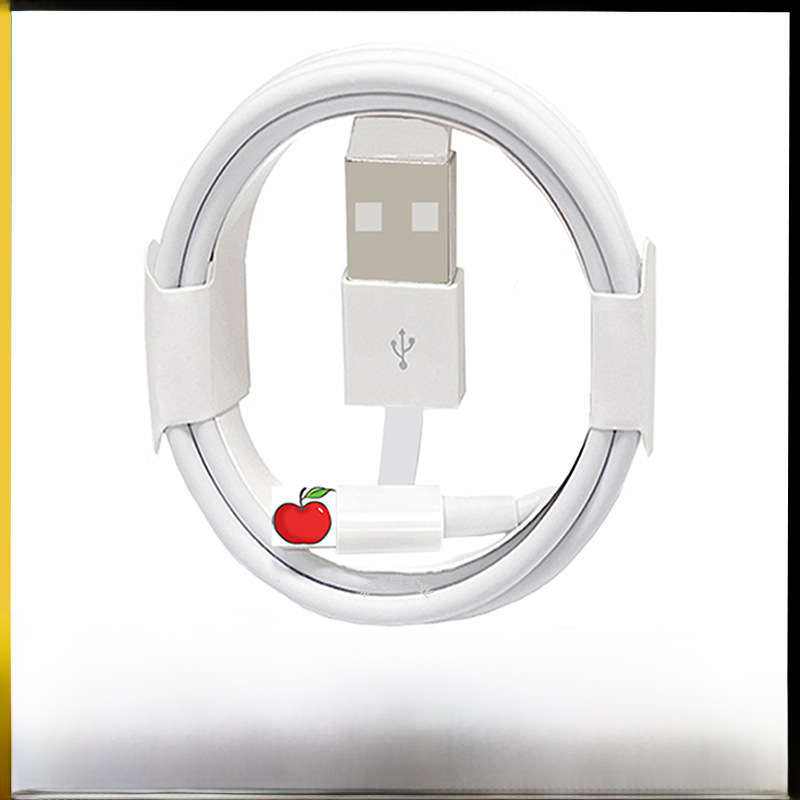
Apple typically includes a charging cable with each iPhone. The standard length of this cable is approximately 1 meter (3.3 feet). For example, the Lightning to USB-C cable sold on Apple’s official website is 1 meter long. However, in 2023, there were rumors that Apple might extend the length of its charging cables to 1.5 meters (4.9 feet) for the iPhone 15 series, but this was not confirmed as the final bundled cable length.
Common Lengths of Third-Party Charging Cables
Third-party charging cables come in a variety of lengths to meet different user needs. Generally, the lengths range from 0.3 meters (0.98 feet) to 3 meters (9.8 feet) or more. For instance, travel chargers often have shorter lengths of around 0.45 meters (1.48 feet) to 0.6 meters (1.97 feet), offering portability and convenience for charging on the go. Desktop chargers or heavy-duty chargers may have longer lengths of 1.5 meters (4.9 feet) to 3 meters (9.8 feet), allowing users to charge their devices while maintaining greater flexibility and mobility.
Factors Influencing Charging Cable Length Selection
Charging Needs and Usage Scenarios
- Daily Home Use: If you primarily charge your iPhone at home, a 1-meter (3.3-foot) cable is usually sufficient. This length allows you to place your phone on a bedside table or desk while charging, enabling convenient use of the device during the process.
- Travel Use: When traveling, a shorter charging cable of 0.45 meters (1.48 feet) to 0.6 meters (1.97 feet) is more practical. It occupies less space in your luggage and is easy to carry. Such cables are ideal for charging in hotel rooms or during commutes.
- Desktop or Office Use: For users who often charge their iPhones while working at a desk, a longer cable of 1.5 meters (4.9 feet) to 2 meters (6.6 feet) is recommended. This allows you to position your phone farther away from the power outlet while still keeping it within reach for use during charging.
Charging Speed Requirements
Charging speed is another factor to consider when selecting a cable. Apple’s official 1-meter (3.3-foot) Lightning to USB-C cable supports fast charging. When paired with a compatible fast-charging adapter, it can charge an iPhone from 0% to 50% in about 30 minutes. However, some third-party cables may not support fast charging due to material or design limitations. If you need fast charging, ensure the cable you choose is labeled with features like “fast charging” or “supports USB-C Power Delivery” to meet your speed requirements.
Types of iPhone Charging Cables
Lightning to USB-C Cables
This is the most common type of iPhone charging cable currently available. It connects the iPhone’s Lightning port to a USB-C port on a power adapter or computer. Apple’s original Lightning to USB-C cable is 1 meter (3.3 feet) long. Third-party Lightning to USB-C cables come in various lengths, such as 0.5 meters (1.6 feet), 1.2 meters (3.9 feet), and 2 meters (6.6 feet). When purchasing, ensure the cable is MFi-certified (Made for iPhone/iPad/iPod) to guarantee compatibility and safety.
USB-C to USB-C Cables
With the transition of newer iPhones to USB-C ports, USB-C to USB-C cables are gaining popularity. These cables feature a USB-C connector on both ends, connecting the iPhone’s USB-C port to a USB-C power adapter or computer. The lengths of USB-C to USB-C cables also vary. For example, the USB-C to USB-C charging cable included with the iPhone 15 is 1 meter (3.3 feet) long. Third-party USB-C to USB-C cables are available in lengths ranging from 0.3 meters (0.98 feet) to 3 meters (9.8 feet) or more.
Braided Cables
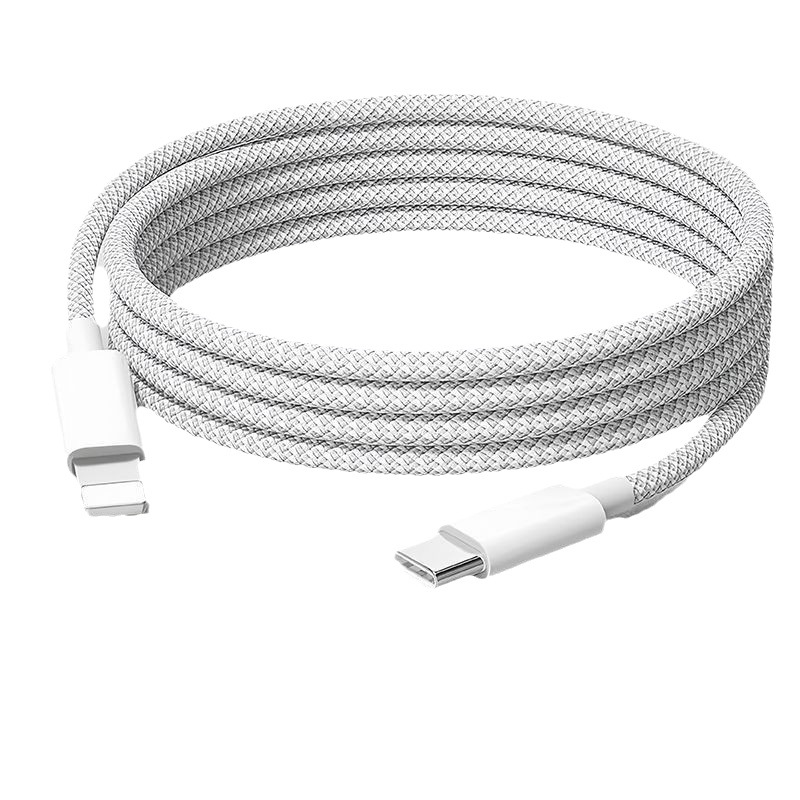
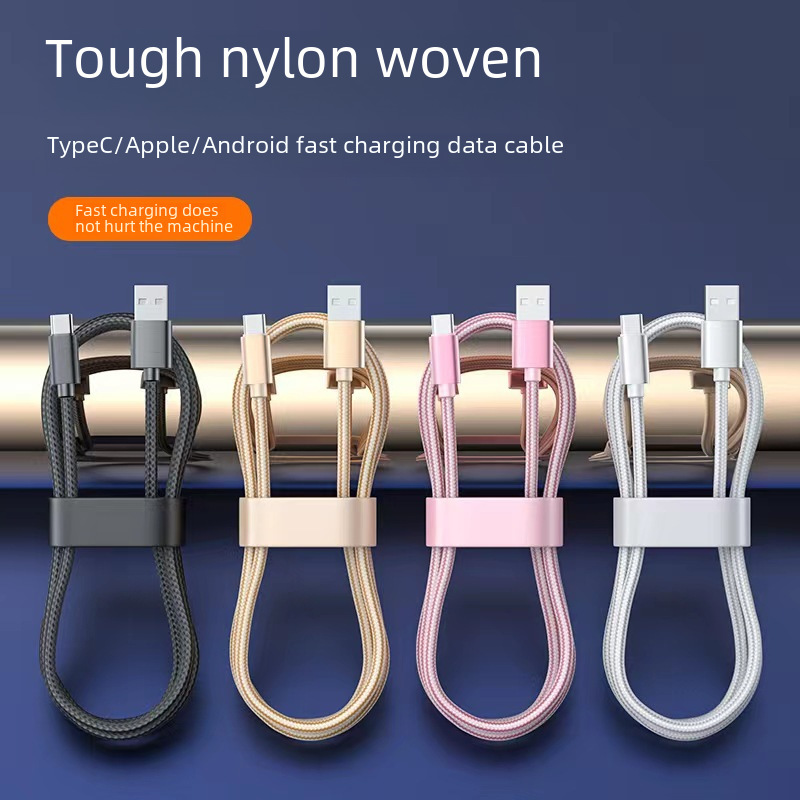
Braided cables are known for their durability and resistance to tangling. They come in various lengths, typically from 1 meter (3.3 feet) to 2 meters (6.6 feet). The braided exterior not only enhances the cable’s aesthetic appeal but also increases its lifespan by reducing fraying and damage caused by frequent bending.
How to Choose an iPhone Charging Cable
Assessing Length Requirements
Determine the length of the charging cable based on your charging needs and usage scenarios. If you primarily charge your iPhone in a fixed location at home or in the office, a longer cable (1.2 meters/3.9 feet to 2 meters/6.6 feet) offers greater flexibility and convenience. For travel or portability, a shorter cable (0.45 meters/1.48 feet to 0.6 meters/1.97 feet) is more suitable.
Evaluating Cable Quality
- Material: High-quality charging cables typically use durable materials such as braided nylon or Kevlar for the outer layer, which enhance resistance to wear and tear. The connectors should be made of sturdy metal to ensure stable connections.
- Certifications: Look for cables with MFi certification or USB-IF certification. These certifications indicate that the cable meets Apple’s or the USB Implementers Forum’s standards, ensuring compatibility and safety with your iPhone.
Considering Charging Speed
If you need fast charging, choose a cable that supports fast-charging technology. For example, Apple’s official Lightning to USB-C cable and USB-C to USB-C cable can support fast charging when paired with a compatible fast-charging adapter. Some third-party cables also advertise fast-charging capabilities, but verify their performance through user reviews or professional testing reports.
Evaluating Brand and Price
Well-known brands generally offer higher-quality cables and better after-sales support. However, they may be priced higher. If you prefer a balance of quality and affordability, consider reputable third-party brands with good user reviews. Avoid purchasing overly cheap cables, as they may compromise on material quality and safety, potentially damaging your iPhone or posing safety risks.
Maintenance Tips for iPhone Charging Cables
Proper Coiling
When storing charging cables, avoid coiling them tightly or bending them at sharp angles, as this can damage the internal wires and reduce the cable’s lifespan. Instead, use cable organizers or Velcro ties to loosely bundle the cable.
Gentle Handling
When unplugging the cable, grip the connector rather than pulling on the cable itself to prevent strain on the connection point. Avoid excessive bending or twisting of the cable during use.
Keeping the Cable Clean
Prevent the cable connectors from getting dirty or dusty. Use a dry cloth to clean the connectors periodically to ensure good contact during charging.
Avoiding Overloading
Do not charge multiple devices simultaneously using a single charging cable and splitter, as this may overload the cable and adapter, affecting charging efficiency and potentially causing safety issues.
The Evolution of iPhone Charging Cables
From 30-Pin to Lightning
Before the Lightning connector, iPhones used a 30-pin connector. The 30-pin connector was relatively large and only supported single-sided insertion. In 2012, Apple introduced the Lightning connector, which was smaller, supported double-sided insertion, and offered faster data transfer speeds and more stable charging performance. The Lightning to USB cable became the mainstream charging cable for iPhones at the time.
From Lightning to USB-C
Starting with the iPhone 15 series, Apple transitioned to USB-C ports, marking a new phase in iPhone charging cables. USB-C to USB-C cables offer faster data transfer speeds and higher charging power compared to Lightning cables. This change not only improves user experience but also aligns with the industry trend toward USB-C standardization, enabling greater compatibility between devices.
Environmental Impact of Charging Cables
Material Sustainability
The materials used in charging cables have environmental implications. Traditional cables often use PVC (polyvinyl chloride) for insulation, which can release harmful substances during production and disposal. Some eco-friendly charging cables now adopt more environmentally sustainable materials, such as TPE (thermoplastic elastomer), which are easier to recycle and less harmful to the environment.
Longevity and Waste Reduction
Choosing high-quality, durable charging cables can extend their lifespan, reducing the frequency of replacements and minimizing electronic waste. By properly maintaining charging cables, such as avoiding rough handling and preventing damage, users can further prolong their usability and reduce environmental impact.
Conclusion
The length of iPhone charging cables varies depending on the type and manufacturer. Apple’s original Lightning to USB-C cable is typically 1 meter (3.3 feet) long, while third-party cables offer a wider range of lengths, from compact travel cables to extra-long desktop cables. When selecting a charging cable, consider factors such as charging needs, usage scenarios, charging speed requirements, cable quality, brand, and price. Additionally, proper cable maintenance can extend its lifespan. With the evolution of iPhone charging cables, from 30-pin to Lightning and now to USB-C, users have more options to meet their diverse charging needs.
How to Purchase:https://looperbuy.com/search?keywords=iphone+charging+cable
Related Questions and Answers
Q: Why do third-party charging cables vary in length?
A: Third-party charging cables come in different lengths to cater to the diverse needs of users. Shorter cables are convenient for travel and portability, while longer cables provide greater flexibility and convenience for home or office use. Manufacturers design cables of various lengths to meet the demands of different usage scenarios.
Q: Do longer charging cables affect charging speed?
A: Longer charging cables may slightly reduce charging efficiency due to increased resistance in the cable. However, with advancements in technology, the impact of cable length on charging speed has become less significant. High-quality long cables can still deliver relatively fast charging speeds. For fast charging, it is recommended to use cables and adapters that support fast-charging technology.
Q: Are third-party charging cables safe to use?
A: Some third-party charging cables are safe to use, while others may pose risks. To ensure safety, choose cables from reputable brands with certifications like MFi or USB-IF. These certifications indicate that the cable meets relevant safety and compatibility standards, reducing the likelihood of damaging your iPhone or causing safety hazards.
Q: How can I prolong the lifespan of my iPhone charging cable?
A: To extend the lifespan of your iPhone charging cable, avoid forcefully bending or twisting the cable, prevent the cable from being stepped on or pulled, and store it properly. Use cable organizers or Velcro ties to loosely bundle the cable, and keep it clean and dry. Additionally, avoid overcharging your iPhone or using the cable with incompatible adapters.
Q: Can I use a USB-C to Lightning cable with older iPhone models?
A: USB-C to Lightning cables are primarily designed for newer iPhone models. However, if your older iPhone model supports Lightning charging and the cable’s Lightning connector is compatible, you can use it. Before purchasing, check the cable’s compatibility with your specific iPhone model to ensure it works properly.
Hot Tags:How Long Is An iPhone Charging Cable;iPhone Charging Cable Length;Standard iPhone Charging Cable Length;Types of iPhone Charging Cables;Choosing iPhone Charging Cables;Third-Party iPhone Charging Cables;Apple Original Charging Cable;Charging Cable Length Comparison;Charging Cable Compatibility;Charging Cable Maintenance