Table of Contents
The Basics of Drop Shipping
What is Drop Shipping?
Drop shipping is a retail fulfillment method where online stores sell products without keeping them in stock. When a customer places an order, the store forwards it to a drop shipping supplier who handles delivery to the customer. This model removes common retail challenges like buying, storing, and shipping inventory, making it an efficient order fulfillment method with low overhead.
How Does Drop Shipping Work?
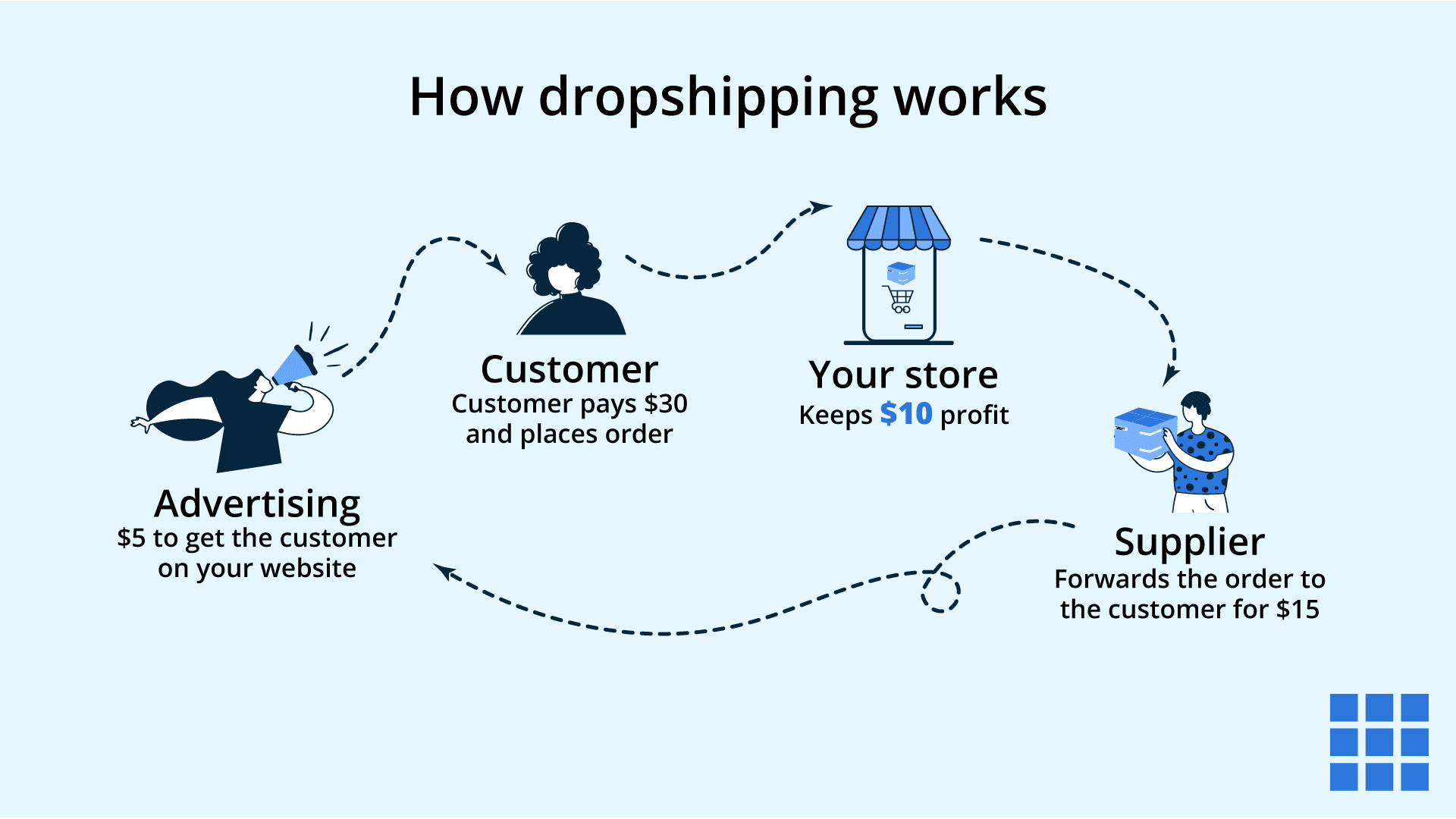
The drop shipping process involves several key steps. First, the retailer sets up an online store and lists products for sale. When a customer places an order, the retailer forwards the order details to the supplier. The supplier then packages and ships the product directly to the customer. The retailer charges the customer, and the supplier charges the retailer for the product and shipping services. The customer receives the product directly from the supplier, but the seller’s information appears on the packaging and invoices.
Key Players in the Drop Shipping Model
- Retailer: The retailer is the face of the business, responsible for marketing, customer service, and sales. They set prices, collect payments, and handle customer inquiries.
- Supplier: The supplier is responsible for storing, packaging, and shipping the products. They may be manufacturers, wholesalers, or specialized drop shipping companies.
- Customer: The customer purchases products from the retailer’s online store and receives the products directly from the supplier.

Advantages of Drop Shipping
Low Startup Costs
One of the primary advantages of drop shipping is the low startup investment required. Entrepreneurs can start an e-commerce business with minimal upfront capital since they don’t need to purchase inventory or manage storage facilities. This makes drop shipping accessible to a wide range of individuals and businesses.
No Inventory Management
With drop shipping, businesses don’t need to hold inventory. This eliminates the costs and complexities associated with warehousing and inventory management. Retailers can focus on marketing and sales rather than logistical operations.
Flexibility and Scalability
Drop shipping offers flexibility in product selection and scalability of the business. Retailers can easily add or remove products from their store without the burden of leftover inventory. This allows businesses to quickly adapt to market trends and customer demands. The model also scales well, as retailers can increase their product offerings and order volumes without significant additional investment.
Disadvantages of Drop Shipping
Lower Profit Margins
Due to the competitive nature of the drop shipping model and the division of profits between the retailer and supplier, profit margins can be relatively low. Retailers often have to price products competitively to attract customers, which can further reduce profit margins.
Limited Control Over Product Quality and Shipping
Since retailers don’t handle the products directly, they have limited control over product quality, packaging, and shipping. This can lead to inconsistencies in customer experience and potential issues with product defects or shipping delays. Retailers must rely on their suppliers to maintain quality and efficiency in order fulfillment.
Dependency on Suppliers
The success of a drop shipping business heavily depends on the reliability and performance of suppliers. If suppliers experience stock shortages, shipping delays, or operational issues, it can negatively impact the retailer’s business and customer satisfaction. Building and maintaining strong relationships with suppliers is crucial for the smooth operation of a drop shipping business.
Conclusion
Drop shipping offers an attractive business model for entrepreneurs looking to enter the e-commerce space with minimal upfront investment and operational complexity. By understanding the basics of drop shipping, its advantages and disadvantages, businesses can make informed decisions about whether this model suits their goals and capabilities. Successful drop shipping requires careful supplier selection, effective marketing strategies, and a focus on customer service to overcome the challenges associated with this model.
If you want to enhance your drop shipping efficiency, directly connect with China Quality Inventory 1688 and enjoy high-quality factory prices for your products,you can use looperbuy, a one-stop purchasing-logistics solution:https://looperbuy.com/
Related Questions & Answers
· What are the main benefits of the drop shipping model?
The main benefits include low startup costs, no need to hold inventory, flexibility in product selection, and scalability of the business. This model allows entrepreneurs to focus on marketing and sales while minimizing upfront investment and operational complexity.
· How does drop shipping differ from traditional retail?
In traditional retail, businesses purchase and store inventory, then sell it directly to customers. In contrast, drop shipping eliminates the need for businesses to hold inventory. Instead, when a customer places an order, the retailer forwards it to a supplier who ships the product directly to the customer. This reduces costs and risks associated with inventory management.
· What challenges can arise in drop shipping?
Common challenges include lower profit margins due to competition and profit-sharing with suppliers, limited control over product quality and shipping, dependency on supplier reliability, and potential issues with inventory tracking and shipping costs.
· How can businesses overcome the limitations of drop shipping?
Businesses can overcome limitations by carefully selecting reliable suppliers, building strong relationships with them, implementing effective marketing strategies to increase profit margins, and using automation tools to streamline order processing and improve customer service.
· What is the role of a drop shipping supplier?
A drop shipping supplier is responsible for storing, packaging, and shipping products to customers on behalf of the retailer. They play a crucial role in the drop shipping model by handling the physical aspects of order fulfillment, allowing retailers to focus on sales and marketing activities.
Hot Tags: Drop Shipping Business Model; E-commerce Fulfillment; Low-Cost E-commerce; Online Retail Solutions; Inventory-Free Business; Drop Shipping Suppliers; E-commerce Entrepreneurship; Online Store Management; Retail Innovation