Composable commerce migration lets B2B platforms move beyond rigid legacy systems into modular, API‑first architectures. Learn key principles, real‑world risks, and a practical roadmap to replatform with minimal disruption while improving CX, scalability, and long‑term cost control.
Working with B2B commerce platforms across Europe and Asia over the past decade, I’ve seen one pattern repeat again and again: brands that migrate to composable commerce early gain a structural advantage in speed, CX, and cost control — especially in complex cross‑border supply chains. In this guide, I’ll share a practical, experience-based roadmap for composable commerce migration that builds on Virto Commerce’s 8 core principles and extends them with fresh B2B‑focused insights for platforms like Looperbuy. [commercetools]
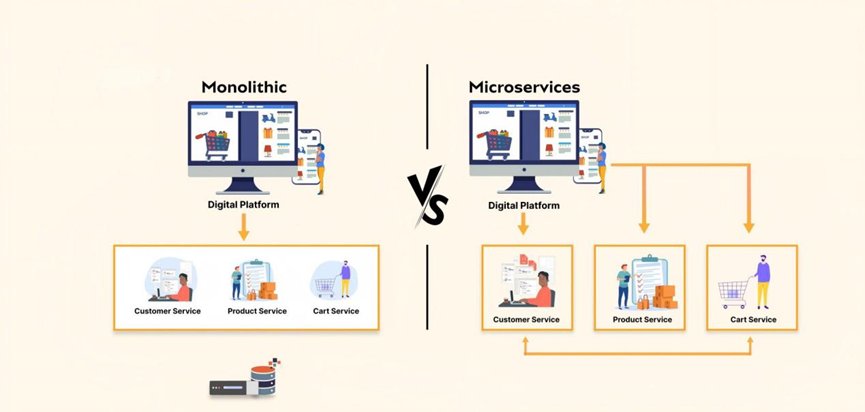
Table of Contents
What is composable commerce migration?
Composable commerce is an architectural approach where your ecommerce stack is built from modular, API-first components (catalog, pricing, checkout, search, OMS, PIM, etc.) that you can assemble, replace, and scale independently. Migration, in this context, means moving from a legacy or monolithic platform to this modular setup without disrupting day‑to‑day business. [salesforce]
For B2B marketplaces and sourcing platforms — especially those dealing with Chinese suppliers and global buyers — composable commerce is not just a “nice to have”. It is a way to keep up with complex contract terms, multi‑currency pricing, and the need for flexible logistics and payment workflows that change market by market. [business-money]
Why B2B companies migrate to composable commerce
From my consulting work with enterprise B2B brands, three migration triggers show up consistently, and Virto’s CTO highlights the same patterns from a platform provider perspective.
– You want to grow, but your current platform can’t scale without spiraling operational costs (slow onboarding, long order processing times, frequent manual workarounds).
– You’ve lost institutional knowledge of the legacy system and it’s risky or expensive to customize or even maintain it.
– Your engineering leaders push for a modern stack because any meaningful roadmap item effectively requires rewriting large portions of the old codebase.
Modern composable platforms let you focus internal development on the business‑specific features that differentiate you — while relying on robust, battle‑tested components for “commodity” features like basic catalog, cart, and checkout. For a platform like Looperbuy, that means investing more engineering time into supplier integration, cross‑border compliance, and fulfillment orchestration instead of rebuilding generic ecommerce plumbing. [commercetools]
Big bang vs iterative migration: what actually works
In theory, you can either switch everything at once (“big bang”) or migrate step by step. In practice, the full big bang replatform almost never happens — and Virto’s CTO is very explicit about this.
– A big bang shutdown of the old system tends to cause revenue loss, operational chaos, and a long gap between investment and visible value.
– An iterative approach, where legacy and composable systems coexist for a while, lets you ship a first MVP in 3–4 months, test in production, and then expand in controlled sprints.
From the perspective of search engine optimization and user experience, an iterative rollout is also safer. You can preserve existing URL structures, gradually introduce new experiences, and monitor how search traffic and conversion behave as specific flows (e.g., procurement requests, RFQs, or cross‑border payment pages) move to the new stack.
Core principles for successful composable commerce migration
Virto Commerce summarizes eight migration principles that I’ve also seen succeed in real‑world projects, especially at B2B scale. Below, I’ll restate and expand them from a practitioner’s viewpoint.
1. Understand your legacy system in detail
The migration work truly starts with a brutal, honest mapping of how your current system works today.
– Document real user flows for buyers, sellers, and internal teams (catalog managers, operations, finance, support).
– Capture integrations, data dependencies, and hidden manual steps that live in spreadsheets or chat threads.
Virto recommends workshops, recordings, and shadowing employees to build this 360‑degree view, and in my experience that step is non‑negotiable if you want to avoid rebuilding the wrong things in the new stack.
2. Start from pain points, not from modules
Teams often ask, “Should we migrate catalog, pricing, or checkout first?” Virto’s CTO advises the opposite: start from what hurts your processes the most.
If your biggest pain is managing cross‑border shipping rules and supplier SLAs, then the first composable module should be the one that orchestrates logistics and lead times, not the one that’s already stable. For a platform like Looperbuy, that might mean prioritizing a composable order‑routing and fulfillment module before touching the front‑end catalog UX.
3. Don’t just replicate the legacy system
One of the biggest hidden risks is “composable in name only” — rebuilding the same workflows with the same constraints, only with a more modern tech stack.
Virto explicitly warns against trying to make the old system composable module by module. Instead, treat the coexistence of legacy and new as an opportunity to redesign flows around today’s customer expectations: faster onboarding, more transparent pricing, and clearer shipment tracking across borders.
4. Build internal allies and early adopters
Because both systems will run in parallel for a while, you need early adopters inside your company who will use the new platform first and give hard feedback.
Virto suggests exposing maybe 15% of users to the new system initially, with clear incentives like bonuses or discounts, while maintaining the old system as a safety net. In B2B, I often recommend starting with one region, one vertical, or one supplier segment to keep complexity manageable while still testing real‑world demand.
5. Design for the long term
Composable commerce is meant to keep you flexible for many years, so your integration and data architecture must be future‑proof from day one.
Virto’s Atomic Architecture approach uses a middleware layer to manage data flows and integrate Packaged Business Capabilities (PBCs), keeping point‑to‑point connections to a minimum. The practical benefit is that you can later add new capabilities — for example, integrating Looperbuy with a new payment provider or 3PL partner — without breaking existing services.
6. Migrate by complete capabilities, not by “smallest number of pieces”
A common misconception is that migrating fewer components automatically reduces risk. Virto’s experience suggests the opposite: pick a clearly bounded capability (for example, “international buyer self‑service onboarding”) and fully migrate everything that supports 1–2 roles before moving on.
That means front‑end flows, back‑end services, data models, and reporting for that capability should all move together, so you don’t end up with half‑migrated processes that confuse users and teams.
7. Invest heavily in testing and team training
The composable ecosystem evolves roughly every six months, which creates both a technology gap and a knowledge gap.
Virto points out that relying solely on an internal team used to legacy systems is unrealistic; bringing in external integration experts accelerates delivery and creates a structure for your team to learn alongside them. For complex B2B platforms, this mix of in‑house domain expertise and external technical leadership is often what keeps migration timelines on track.
8. Don’t reinvent the wheel: use out‑of‑the‑box services
There is little ROI in building your own hosting, DevOps stack, and generic ecommerce capabilities when mature, cloud‑native, API‑first platforms already exist. [commercetools]
Virto, for example, offers more than 80 Packaged Business Capabilities — from catalog and search to checkout — so you can focus development on your differentiation rather than on basic infrastructure. This principle directly aligns with cost control goals for B2B procurement platforms looking to scale without bloating their engineering budgets.
Key risks of composable commerce migration (and how to avoid them)
Virto’s migration experience with enterprises reveals three high‑impact risks that match what many B2B teams underestimate at the planning stage.
Risk 1: Building the wrong product — slowly
If you try to deliver a “perfect” end state before releasing anything to users, you can spend 18–24 months only to discover that the new system doesn’t solve real‑world problems.
The mitigation is straightforward but demanding: ship a first MVP within 3–4 months that supports a full end‑to‑end scenario for a critical role (for example, sales reps or key account buyers), then iterate. Virto illustrates this with a U.S. custom apparel company that moved from a homegrown system to a composable platform and saw order processing reduced from hours to minutes in the first MVP.
Risk 2: Poor architecture and data design
Designing a new system without modern architectural principles can create the same scaling problems you were trying to escape: weak integrability, unclear data dependencies, and cyclical connections between services.
A dedicated middleware layer, clear domain boundaries, and PBC‑based decomposition help avoid this by making data flows explicit and controlled. For a cross‑border platform, that means you can treat pricing, compliance, logistics, and payments as separate domains that still work together cleanly.
Risk 3: Skills and knowledge gaps
Many organizations underestimate the level of expertise required for composable migration and assume the existing team can “learn on the go”.
Virto stresses the need to assess which competencies you have and which you must bring in — and to plan for ongoing training, not just one‑off implementation support. In my own projects, the most successful teams treat migration as both a technology initiative and an organizational learning program.
A real‑world migration example: custom apparel company
Virto describes working with a U.S.‑based company that designs, produces, and distributes custom apparel — an archetypal case for B2B commerce complexity.
– They started with a dedicated migration workshop bringing together technical and business stakeholders to map architecture, workflows, and desired outcomes.
– The team then analyzed the legacy system’s entities and relationships, redesigned the product and data architecture, and clarified which features should be customized or built from scratch.
Within three months, they delivered a minimum viable product where sales representatives could process orders in minutes instead of hours, proving the value of an incremental, capability‑by‑capability migration approach.
How composable commerce benefits B2B procurement platforms like Looperbuy
Although Virto’s article is vendor‑agnostic, its principles translate directly to platforms focused on global sourcing and dropshipping of Chinese products for B2B buyers. [global.lianlianpay]
– Flexibility and personalization: Composable commerce lets you tailor experiences for different buyer types, geographies, and procurement workflows without rebuilding the entire system for each segment. [business-money]
– Integration with suppliers and logistics: Modular, API‑driven services make it easier to connect with multiple suppliers, payment providers, and logistics partners — crucial for one‑stop cross‑border procurement. [business-money]
– Cost optimization: You pay for and maintain only the components you need, and you can update or replace specific modules without a full platform rebuild, reducing long‑term IT and operational costs. [business-money]
From a buyer’s perspective, this translates into more transparent lead times, smoother payments, and better control over inventory risk — exactly the value proposition that a platform like Looperbuy aims to deliver.
Practical migration steps for B2B teams
Based on Virto’s principles and industry best practices, a pragmatic migration roadmap for B2B ecommerce leaders could look like this. [macrometa]
1. Run a migration discovery workshop with cross‑functional stakeholders to capture current flows and pain points.
2. Define your first MVP capability, focusing on the single most painful process, such as cross‑border order management or supplier onboarding.
3. Choose a composable platform that is API‑first, cloud‑native, and supports PBC‑style decomposition of business capabilities. [commercetools]
4. Design the target architecture with a middleware layer that centralizes integrations and data flows to avoid point‑to‑point sprawl.
5. Implement and test the MVP with a small, motivated group of internal users and selected external customers, using feature flags and controlled rollouts.
6. Iterate based on real usage data, then expand to additional capabilities and user segments while keeping the legacy system as a fallback until you’re confident in full cutover.
Recommended FAQs
1. What is the difference between headless and composable commerce?
Headless separates front end from back end via APIs, while composable breaks the entire commerce stack into modular, independently deployable services that you can assemble and swap as needed. [salesforce]
2. How long does a composable commerce migration usually take?
Timelines vary by scope, but many enterprises can launch a first MVP capability in about 3–4 months and then migrate additional processes in iterative sprints over 12–24 months. [macrometa]
3. Is composable commerce suitable for smaller B2B businesses?
Yes, but the benefits are highest for businesses with complex workflows, multi‑region operations, or frequent changes in product, pricing, or logistics; smaller teams often use managed platforms to reduce operational overhead. [business-money]
4. How risky is running legacy and composable systems in parallel?
With careful architectural design, feature flags, and clear rollback options, parallel operation actually reduces risk by allowing gradual rollout and real‑world testing before full cutover. [macrometa]
5. What skills do we need in‑house for a successful migration?
You need strong product ownership, solution architecture, and API integration skills, complemented by external composable commerce or system integration experts who can guide the initial design and implementation. [macrometa]
References
– Virto Commerce. “Composable Commerce Migration: How to Do It Right? Tips from Virto Commerce’s CTO.” (2025). [https://virtocommerce.com/blog/composable-commerce-migration]
– Salesforce. “What Is Composable Commerce?” (2024). [https://www.salesforce.com/ap/commerce/composable/guide/] [salesforce]
– Business Money. “7 key benefits of implementing composable commerce in B2B.” (2024).
– Macrometa. “Composable Commerce Migration Best Practices.” (2024). [https://www.macrometa.com/ecommerce-seo-tools/composable-commerce-migration] [macrometa]
– commercetools. “Why migrating to a composable model sparks joy for B2Bs.” (2025).