Table of Contents
Summary
This is happening faster than many expected.
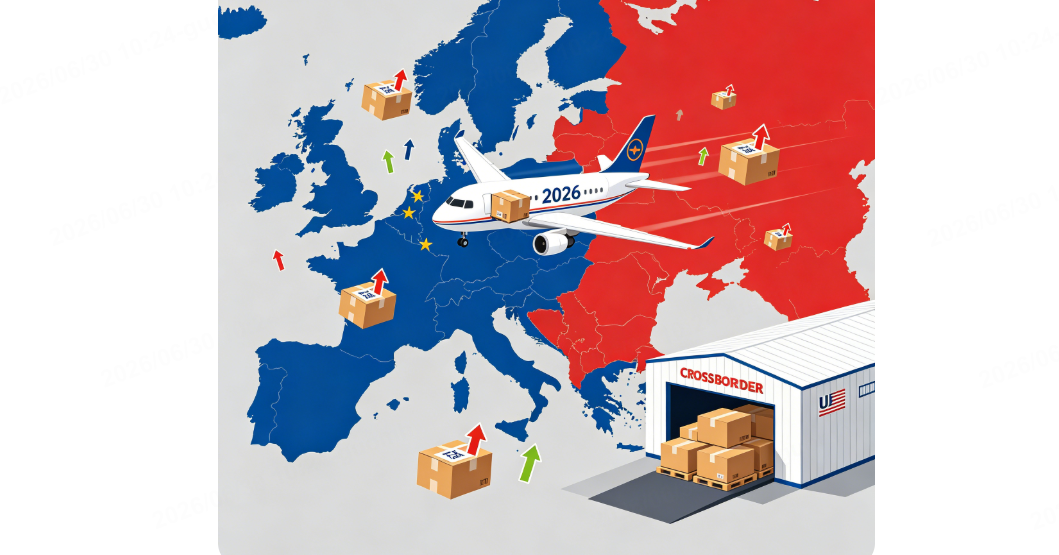
The EU Council has officially approved a new regulation confirming that starting July 1, 2026, all cross-border parcels under €150 will be subject to a €3 fixed customs fee per shipment, effectively ending the 15-year low-value duty-free exemption.
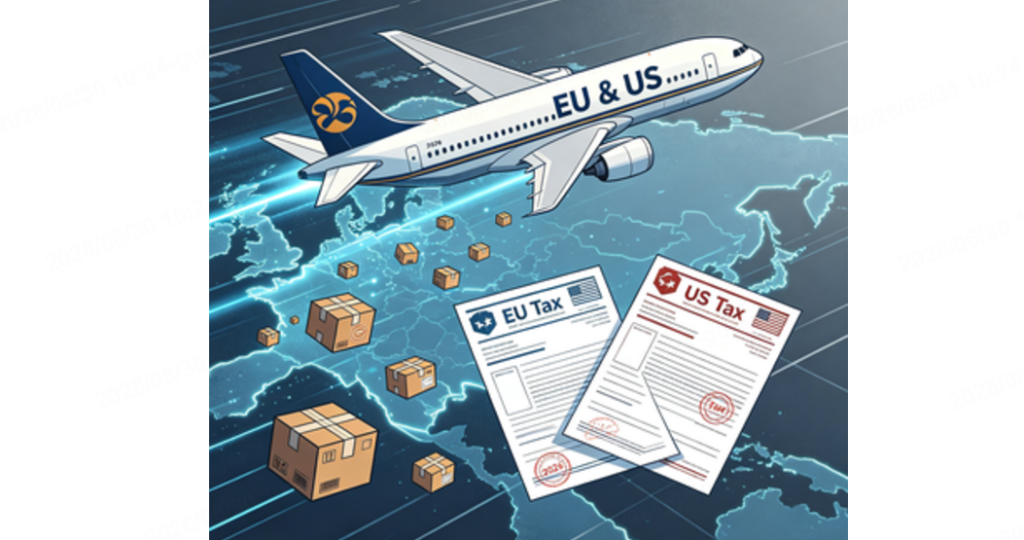
In the United States, the change came even earlier. From May 2025, parcels from Mainland China and Hong Kong lost their $800 de minimis exemption. By August 2025, this policy had been extended globally to all countries.
Two of the world’s largest consumer markets have, back-to-back, closed the same door.
Recalculating the Cost Structure
The policy itself is not complex. What is complex is how it reshapes real business economics.
In the EU, customs duties will be calculated based on HS code classification rather than per parcel. If a single package contains multiple product categories, the duty is charged separately—for example, €6 per parcel in mixed-category shipments.
From November 2026, an additional €2 customs handling fee will be introduced. The total extra cost per parcel could reach €5–€8.
For products priced between €10–€20, this essentially eliminates profit margins.
Categories such as:
- Home goods
- Daily consumer products
- 3C accessories
are all directly affected, especially those relying on high-volume, low-margin models.
In the US, imported parcels from China can now face significant duties under postal channels, and customs clearance times are also increasing. The traditional model of shipping small parcels directly to US consumers is now under pressure from both cost and delivery delays.
This is not an isolated issue.
In 2024 alone, the EU processed 4.6 billion low-value parcels, of which 91% came from China. The policy directly targets the dominant operational model of modern cross-border e-commerce.
Where the Industry Is Heading
After policy tightening, market reactions are becoming clear.
Warehouse capacity in Europe is already tightening. In 2026, outbound shipments to Europe are expected to double compared to 2025, while warehouse supply is far from sufficient.
The logic is straightforward:
Pre-stock goods in overseas warehouses → fulfill locally → avoid per-order import duties.
This significantly improves cost structure compared to direct shipping.
However, execution is complex.
It requires coordination across:
- sourcing suppliers
- domestic consolidation warehouses
- logistics routing
- customs compliance
- overseas payment systems
Each step is manageable individually, but building the full supply chain end-to-end is difficult for most sellers.
What LooperBuy Can Do
📦 Supply Side
- Direct access to Chinese source factories across multiple categories
- Supports both small-batch mixed orders and full-container procurement
- Eliminates unnecessary middle-layer markups
- Helps reduce sourcing costs under rising tariff pressure
🚚 Logistics & Fulfillment
- Consolidates orders from multiple suppliers into domestic hubs for combined shipping
- Reduces the number of HS code categories per shipment, helping lower EU tariff exposure
- Batch shipping reduces per-unit logistics costs compared to fragmented direct shipping
- Global logistics network covering 190+ countries, including Europe, Latin America, the Middle East, and Africa
💳 Payment Infrastructure
- Integrated with LianLian Pay, supporting 20+ currencies
- Buyers can pay in local currency without opening Chinese bank accounts or handling FX conversion
- Suitable for sellers operating across multiple international markets
🔍 Visibility & Quality Control
End-to-end tracking from production to final delivery.
Quality inspection is conducted before shipment, reducing packaging and product issues that often lead to overseas returns.
Given rising return shipping costs under new tariff policies, reducing post-sale losses has become increasingly important.
When It Makes Sense to Re-evaluate Your Model
Not every seller needs to change immediately, but the following scenarios deserve attention:
- Businesses relying heavily on direct-to-consumer small parcel shipping, where rising tariffs have already eroded profit margins
- Sellers planning to pre-stock inventory in Europe or Latin America but struggling with fragmented supplier, logistics, customs, and payment coordination
- Multi-platform or multi-market operators who need a unified end-to-end supply chain system
EU regulations taking effect from July 1, 2026, and already-tight US import policies indicate that this is not a short-term disruption.
Major platforms and leading sellers are already adjusting their inventory strategies. Delaying adaptation may lead to higher warehousing costs and increased logistics pressure later.
Conclusion
The 2026 regulatory changes in Europe and the US are fundamentally reshaping cross-border e-commerce.
The traditional small-parcel direct shipping model is losing viability, while bulk overseas warehousing and integrated supply chain systems are becoming the new standard for sustainable growth.
LooperBuy combines:
- consolidated logistics
- standardized compliance workflows
- factory-direct sourcing
- multi-currency payment systems
to help global B2B buyers and sellers reduce tariff pressure, improve operational stability, and expand into emerging markets such as Latin America, the Middle East, and Europe.
In a volatile global trade environment, strengthening supply chain resilience is the key to maintaining long-term profitability.