A practitioner’s guide to the new infrastructure connecting global buyers with Chinese suppliers
I spent the better part of last year watching B2B procurement teams struggle with the same problem: China offers the deepest product ecosystem on the planet, but accessing it efficiently remains frustratingly fragmented. The suppliers are there. The pricing is competitive. The logistics networks exist. What was missing, until recently, was a coherent multi channel network approach that could stitch these pieces together into something usable.

That’s changing. And the implications for brands, wholesalers, and manufacturers sourcing from China are significant.
Table of Contents
What Multi Channel Network Actually Means in B2B Sourcing
The term multi channel network originated in the creator economy, where MCNs aggregate independent content producers under a unified operational umbrella . The core logic is simple: individual creators gain leverage, resources, and distribution they couldn’t access alone.
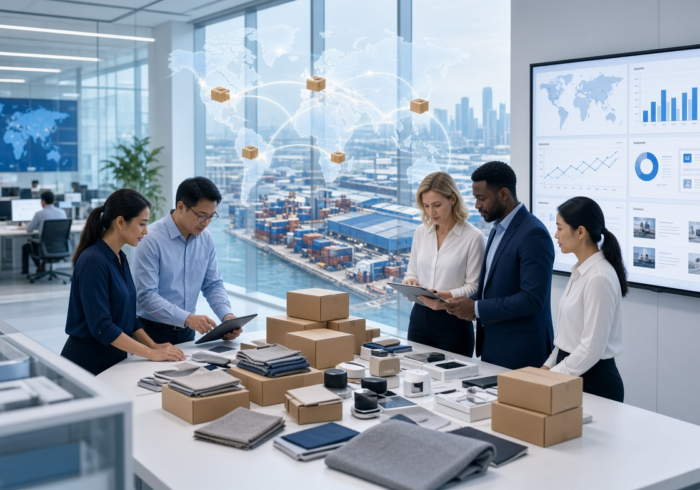
The same architecture now applies to B2B trade. A multi channel network in this context connects three essential layers: product discovery across multiple Chinese marketplaces, consolidated logistics and fulfillment infrastructure, and unified payment and quality assurance mechanisms. Instead of navigating Alibaba, 1688, Made-in-China, and dozens of regional platforms independently, buyers access them through a single operational layer.
Why Traditional B2B Sourcing Breaks Down
Most international buyers approach Chinese sourcing through a single channel. They find a supplier on one platform, negotiate directly, and hope the logistics and quality control work out. This works for simple, low-risk orders. It fails as soon as volume increases or product complexity grows.
The data supports this. A 2024 B2B Buyer Report found that 74% of B2B buyers would switch suppliers if they encountered a better online experience elsewhere . Meanwhile, 44% cited transparency around shipping costs and fees as their primary checkout requirement. The single-channel approach rarely delivers either.
Global B2B e-commerce reached USD 36 trillion by 2026, with Asia-Pacific generating 69.23% of revenue . China’s export engine alone accounted for USD 2.1 trillion, where B2B transactions represent 78% of sales. The infrastructure is there. The access model has lagged behind.
How a Multi Channel Network Solves the Sourcing Gap
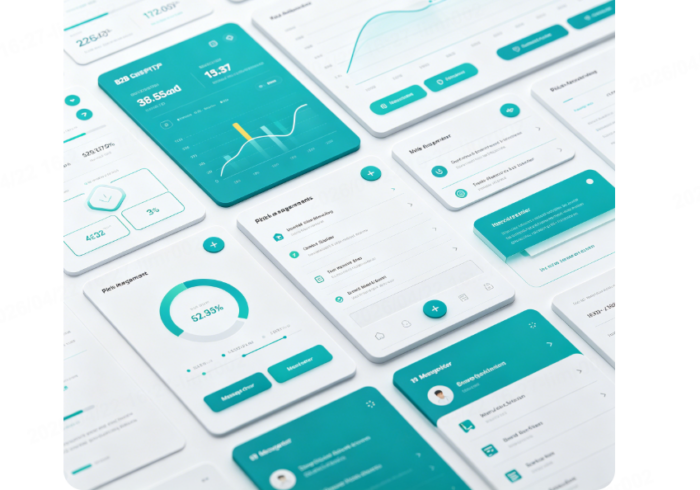
Platforms like LooperBuy operate as the connective tissue between fragmented Chinese supply and global demand. The model works because it addresses the three failure points that consistently plague cross-border B2B procurement.
Unified Product Discovery Across Multiple Channels
Chinese manufacturing capacity is spread across platforms that don’t talk to each other. 1688 serves domestic buyers with lower pricing but primarily Chinese-language interfaces and limited international payment options . Alibaba offers English support but at higher prices due to its global positioning. Made-in-China specializes in industrial categories but lacks the breadth of consumer goods.
A multi channel network approach aggregates these sources. Buyers search once and access products from factories, trading companies, and wholesalers across multiple Chinese ecosystems. The practical result: broader product variety without the overhead of maintaining accounts and supplier relationships across five different platforms.
Consolidated Logistics and Cost Optimization
Shipping from China to international destinations follows predictable cost structures. Express courier for packages under 20kg runs $6 to $12 per kilogram . Sea freight for full container loads drops to $0.08 to $0.20 per kilogram for 40-foot containers . The gap between these extremes is enormous, and choosing wrong erodes margins quickly.
A multi channel network doesn’t just aggregate suppliers. It aggregates shipping volume. When orders from multiple buyers flow through shared logistics infrastructure, individual buyers access rates normally reserved for high-volume shippers. The difference between paying $10/kg and $6/kg on a 100kg order is $400. That’s margin recovered.
Quality Assurance and Transaction Security
The Trustpilot reviews for similar intermediary services reveal what buyers actually value: security, responsiveness, and problem resolution when things go wrong . One reviewer described a transaction where “Looper m’a remboursé dès que je l’ai demandé, intégralement” after a seller disappeared . Another noted the platform “sécurise les transactions” in a way that made an €8,300 international purchase feasible .
This is the trust layer that single-channel sourcing lacks. A multi channel network provides verification, escrow-style payment protection, and dispute resolution across the entire procurement chain.
A Practical Framework for Global Buyers
Here’s how sourcing through a multi channel network works in practice for a brand or wholesaler:
Step 1: Product specification and sourcing. Define your requirements clearly, including materials, certifications, and target pricing. Submit through the platform rather than searching individually across Chinese marketplaces.
Step 2: Supplier verification and sampling. The network handles factory verification, sample coordination, and quality inspection. This eliminates the “shell trading company pretending to be a manufacturer” problem that plagues direct sourcing .
Step 3: Consolidated logistics planning. Based on order volume and urgency, the platform routes shipments through optimal channels: express for time-sensitive samples, air freight for mid-volume replenishment, sea freight for bulk orders.
Step 4: Quality inspection and fulfillment. Products consolidate at a Chinese warehouse for inspection, relabeling, and export preparation before international shipping.
This workflow compresses what traditionally requires multiple agents, freight forwarders, and inspection services into a single operational layer.
Looking Ahead: The Infrastructure Layer of Global Sourcing
The B2B e-commerce market is projected to grow at 16.2% CAGR through 2031, reaching USD 47.91 trillion . The platforms that win won’t be the ones with the most suppliers listed. They’ll be the ones that make sourcing across Chinese supply chains feel as straightforward as ordering from a domestic distributor.
The multi channel network model represents that infrastructure. Not a marketplace, but an operational layer that connects discovery, logistics, and trust into something coherent. For global brands and wholesalers, that’s the difference between dabbling in Chinese sourcing and building a reliable supply chain around it.
Ready to streamline your China sourcing? Explore how LooperBuy’s multi channel network connects you to verified suppliers, consolidated logistics, and protected transactions.
Frequently Asked Questions
What is a multi channel network in B2B sourcing?
A multi channel network in B2B sourcing is an operational layer that connects buyers to multiple Chinese supplier platforms, consolidated logistics, and unified quality assurance. Instead of managing separate relationships across Alibaba, 1688, and other channels, buyers access everything through one interface.
How does LooperBuy differ from Alibaba or 1688?
Alibaba serves global buyers but at higher price points. 1688 offers lower domestic pricing but primarily Chinese-language interfaces and limited international payment support. LooperBuy operates as a multi channel network, aggregating products from multiple Chinese sources while providing the logistics, payment protection, and English-language support that international buyers need.
What shipping methods are available for China-to-international orders?
Options range from express courier (2-5 days, $6-$12/kg for small parcels) to air freight (5-10 days, $3-$8/kg for mid-volume) to sea freight (25-40 days, $0.08-$0.25/kg for full containers). The optimal choice depends on order volume, urgency, and product characteristics.
How does the platform protect buyers from supplier fraud?
Reputable multi channel networks provide supplier verification, payment escrow, and dispute resolution. Funds are held until delivery is confirmed, and platforms intervene when sellers fail to deliver. Trustpilot reviews consistently highlight refund processing and responsive support as key differentiators.
Can small brands access the same pricing as large wholesalers?
Yes. The multi channel network aggregates volume across buyers, giving smaller brands access to logistics and supplier pricing that would otherwise require much larger order commitments. This democratization of sourcing infrastructure is one of the model’s core advantages.
References
- Emerald Publishing. “Relational bonds strategy, organizational learning and B2B performance: the case of multi-channel network.” 2025. https://www.emerald.com/jbim/article/40/13/212/1297914/
- Trustpilot. “Looper Reviews.” https://pl.trustpilot.com/review/looper.fr
- Trustpilot. “Looper Reviews – Sweden.” https://se.trustpilot.com/review/looper.fr
- Trustpilot. “Looper Reviews – Netherlands/Belgium.” https://nl-be.trustpilot.com/review/looper.fr
- WorldFirst. “1688 vs Alibaba: Which is better?” 2025. https://www.worldfirst.com/nz/blog/importing-from-china/1688-vs-alibaba/
- Credilinq. “1688 vs Alibaba: Which is better for sourcing from China.” 2026. https://credilinq.ai/blogs/1688-vs-alibaba-sourcing-guide
- WEILONG LOGISTIC. “Shipping Cost From China To USA Per Kg.” 2026. https://www.weilong-sz.com/shipping-cost-from-china-to-usa-per-kg/
- Market Research Reports. “B2B E-commerce – Market Share Analysis, Industry Trends & Statistics.” 2026. https://www.marketresearch.com/Mordor-Intelligence-LLP-v4018/B2B-commerce-Share-Trends-Statistics-45767209/
- U.S. International Trade Administration. “eCommerce Sales & Size Forecast.” https://www.trade.gov/ecommerce-sales-size-forecast
- Research and Markets. “B2B E-Commerce Market – Global Industry Size, Share, Trends, Opportunity, and Forecast, 2021-2031.” 2026. https://www.researchandmarkets.com/reports/6041782/b2b-e-commerce-market-global-industry-size
Hot Tags
multi channel network B2B sourcing, China wholesale platform for global buyers, one-stop sourcing from China, B2B procurement logistics optimization, direct China factory sourcing, global B2B e-commerce trends, reliable China supplier verification, cross-border shipping cost reduction, wholesale product sourcing platform, China export fulfillment services