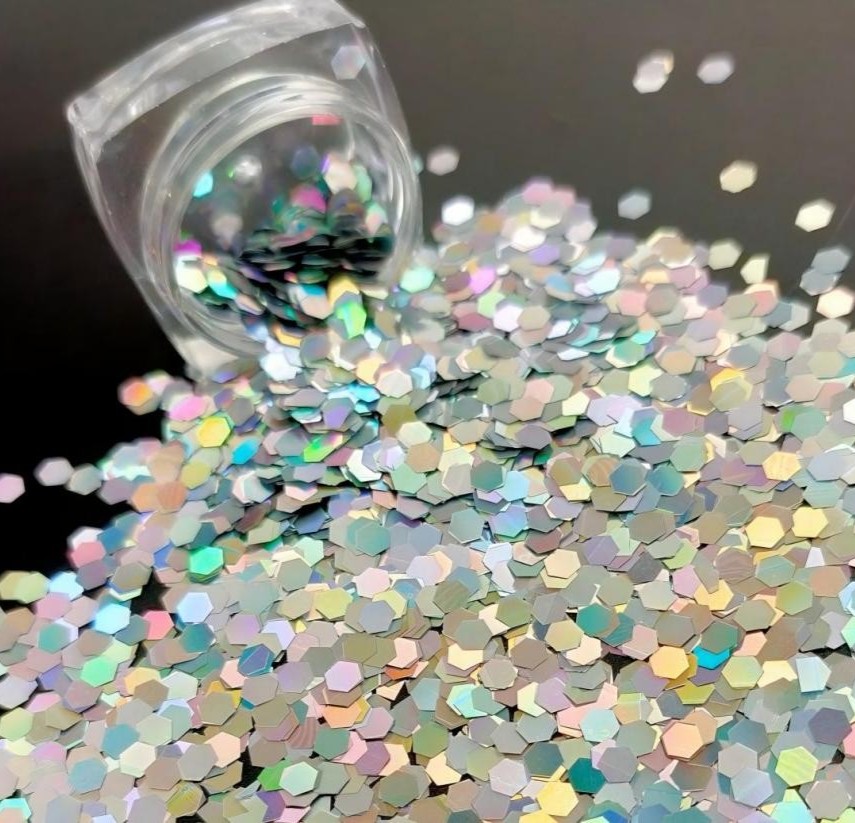
Who uses the most glitter? Explore the mystery of the world’s largest glitter buyer, major industrial applications, changing microplastics rules, and practical sourcing advice. Learn how B2B sellers can choose compliant glitter products, verify suppliers, and source efficiently from China.

The world’s largest consumer of glitter has never been publicly confirmed—but the answer is likely far more industrial than most people expect. While cosmetics, crafts, and party supplies are highly visible consumers, glitter is also a functional material used in coatings, packaging, textiles, fishing lures, agricultural deterrents, and specialty manufacturing.
For B2B buyers, the important question is not simply “Who buys the most glitter?” It is: which glitter type, specification, compliance status, and packaging format best fits the final product and destination market? This guide examines the mystery, separates evidence from speculation, and provides a practical sourcing framework for importers, wholesalers, private-label brands, and dropshipping sellers.
Table of Contents
The Mystery Behind the World’s Largest Glitter Buyer
The mystery began with reporting by *The New York Times* in 2018. Glitterex, a major glitter manufacturer, reportedly declined to identify its largest customer, explaining that the relationship was protected by confidentiality. That refusal triggered years of theories across social media, consumer media, and manufacturing circles.
The original story did not confirm whether the buyer was a company, a government organization, or a specific industry. Therefore, claims that the buyer is the military, an automaker, or a shipbuilder should be treated as speculation—not established fact.
Still, the secrecy is understandable from a commercial perspective. A large-volume buyer may have a proprietary formulation, a distinctive product finish, or a supply agreement that provides a competitive advantage. In specialty materials, the composition, particle size, coating technology, and optical effect can all be commercially sensitive.
What can be stated with confidence
Glitter is used in multiple high-volume commercial categories:
– Cosmetics and personal-care products
– Arts, crafts, toys, and seasonal decorations
– Fashion textiles, footwear, and accessories
– Automotive, architectural, and industrial coatings
– Printed packaging, labels, greeting cards, and promotional materials
– Fishing lures and outdoor sporting goods
– Agricultural reflective tapes and bird-deterrent products
– Event décor, party supplies, and wedding products
The visible consumer market may make crafts and cosmetics seem dominant. However, industrial applications can consume substantial quantities because glitter-like effect pigments and reflective flakes are often incorporated into large production runs of paints, coatings, films, packaging, and fabrics.
Why the identity may remain confidential
A supplier’s largest customer may be hidden for ordinary business reasons:
| Commercial reason | Why it matters |
| Confidentiality agreements | Large buyers often require suppliers not to disclose commercial relationships |
| Proprietary formulations | A unique shimmer, color shift, or coating effect can distinguish a finished product |
| Competitive sourcing | Revealing volume or supplier information can weaken a buyer’s negotiating position |
| Regulatory sensitivity | The exact use case may involve market-specific compliance or technical specifications |
| Reputation management | A buyer may prefer not to be associated publicly with plastic glitter or microplastic concerns |
For a B2B sourcing business, this mystery is useful mainly as a reminder: glitter is not one universal product category. It is a collection of materials, finishes, particle sizes, and application-specific specifications.
What Glitter Actually Is
Glitter consists of small, reflective particles engineered to catch and scatter light. Traditional modern glitter is commonly made from synthetic polymer films, often with metallic or colored coatings. Depending on the product, suppliers may use PET-based films, aluminum-coated films, pigments, mineral components, cellulose-based substrates, or other materials.
The final visual effect depends on several variables:
– Particle size: Fine glitter creates a smoother shimmer; larger flakes create a stronger sparkle.
– Particle shape: Hexagonal cuts are common, but square, rectangular, star, heart, and irregular flakes are also used.
– Color: Options include metallic, holographic, iridescent, fluorescent, pearlescent, and color-shifting finishes.
– Coating: Coatings affect reflectivity, chemical resistance, solvent resistance, heat resistance, and color performance.
– Substrate material: The base material affects durability, biodegradability claims, compliance status, and suitable end uses.
– Application medium: Glitter behaves differently in glue, water-based ink, solvent ink, epoxy, nail gel, paint, resin, plastic, or textile printing paste.
Glitter, effect pigment, and mica are not interchangeable
Many buyers use the word “glitter” loosely, but sourcing decisions should be more specific.
| Material category | Typical appearance | Common applications | Buyer consideration |
| Loose glitter flakes | Noticeable sparkle and visible particles | Crafts, décor, party products, textile decoration | Higher risk of shedding and regulatory scrutiny |
| Fine cosmetic shimmer | Smaller, refined reflective effect | Makeup, nail products, body products | Must match intended cosmetic use and destination-market rules |
| Metallic effect pigments | Smooth metallic or pearlescent finish | Automotive paint, coatings, plastics, inks | Often selected for technical performance rather than visible flakes |
| Mica-based pigments | Pearlescent or satin sheen | Cosmetics, soap, resin, paint | Appearance and permitted use vary by formulation and market |
| Biodegradable glitter | Glitter-like effect from alternative materials | Eco-focused crafts, packaging, cosmetics | Verify the exact biodegradability claim and conditions |
A product listing that simply says “eco-friendly glitter” is not enough for a professional buyer. Request the technical documentation, intended-use information, material declaration, safety data sheet, and relevant testing or compliance evidence before placing a large order.
Which Industries Are the Largest Glitter Consumers?
There is no verified public ranking of the world’s top glitter buyers. However, the following industries represent the most commercially significant demand areas.
Cosmetics and personal care
Cosmetics are one of the best-known glitter markets. Glitter-like effects are used in eye products, lip products, nail products, body shimmer, hair accessories, and seasonal beauty collections.
For this sector, appearance alone is not sufficient. Buyers must consider:
– Whether a color additive is permitted for the intended use
– Whether the ingredient is appropriate for eye-area, lip-area, or external-only use
– Particle-size requirements and physical safety considerations
– Batch consistency and traceability
– Stability in the formula, including resistance to solvents, oils, water, and UV exposure
– Labeling and ingredient-listing requirements in the destination market
In the United States, color additives used in cosmetics must be approved and listed under FDA regulations for their intended use. FDA notes that color-additive violations are a common reason for warning letters and import detentions.
Practical sourcing lesson: Never assume that “cosmetic-grade” is a complete compliance claim. Ask the supplier which exact material, color, and intended cosmetic application the documentation supports.
Arts, crafts, toys, and DIY products
Craft glitter is a high-volume, highly visible consumer category. It is used in school projects, decorative kits, greeting cards, children’s activity products, holiday ornaments, resin crafts, and party supplies.
This category is attractive to e-commerce sellers because it can be sold in small, lightweight, colorful packs. Yet it also creates recurring operational problems:
– Loose-particle leakage during shipping
– Cross-contamination between colors
– Poor labeling or missing warnings
– Damage from low-quality lids and bags
– Inconsistent particle size or color between batches
– Market restrictions on conventional loose plastic glitter
For brands selling in the European Union, the regulatory distinction matters greatly. The European Commission states that the EU microplastics restriction began applying on October 17, 2023. Loose glitter made from non-biodegradable, insoluble plastic is included for uses without a transitional period, such as certain arts-and-crafts and toy uses. Glitter that is biodegradable, soluble, natural, or inorganic is outside the restriction’s microplastics scope.
Fashion, textiles, and accessories
Glitter is widely used in footwear, bags, costumes, eveningwear, holiday garments, heat-transfer designs, fashion jewelry, and fabric printing. Demand tends to rise around holiday seasons, festivals, weddings, carnivals, and special-event periods.
For textile applications, buyers should test:
– Wash resistance
– Flexibility after curing
– Abrasion resistance
– Adhesion to the base fabric
– Color transfer
– Heat resistance during pressing or drying
– Shedding during normal use
A visually impressive sample can fail after only a few washes. For that reason, brands should request pre-production samples and test the finished material under real use conditions rather than approving only a loose glitter swatch.
Paints, coatings, inks, and packaging
This is where glitter becomes more technical. Decorative coatings, specialty inks, label finishes, luxury packaging, promotional displays, and certain automotive-style paints may use reflective flakes or effect pigments to create depth, sparkle, metallic effects, or color shifts.
Unlike a craft glitter product, the purchasing decision here often depends on:
– Dispersion quality
– Solvent compatibility
– Heat resistance
– Chemical resistance
– Particle-size distribution
– Opacity and reflectivity
– Printability
– Surface adhesion
– Long-term stability
For example, a premium beverage label may need a subtle metallic shimmer that remains stable during high-speed printing and does not crack during application. A large-flake craft glitter may look attractive in a sample photo but be entirely unsuitable for production printing.
Fishing lures and outdoor products
Fishing-lure manufacturers use reflective flakes to mimic fish scales and light flashes underwater. Glitter may be embedded in soft-plastic lures, painted finishes, resin bodies, or coating systems.
This category rewards precise sourcing. The right particle size and reflective behavior can influence the final lure’s appearance in sunlight, shallow water, and different water conditions. Buyers often need custom color blends, including silver, gold, holographic, pearl, chartreuse, red, and multi-color flakes.
Agriculture and bird deterrence
Reflective materials can be used in bird-deterrent tape and crop-protection products. Light reflections and movement are intended to discourage birds from landing in protected areas.
Here, the sourcing focus shifts from appearance to durability. A farm-use reflective product may need UV resistance, weather resistance, tear resistance, and stable performance outdoors. This is a reminder that not every glitter-related product is decorative; some are functional.
The Regulatory Shift Reshaping Glitter Demand
The biggest sourcing change is not about color trends. It is about material composition and release risk.
Traditional loose plastic glitter can contribute to microplastic pollution when particles are released into the environment. This has led regulators, retailers, and consumers to demand alternatives or more controlled product formats.
The European Commission clarifies that the restriction concerns glitter made of non-biodegradable, insoluble plastic. It does not automatically ban all glitter. Natural, inorganic, soluble, and biodegradable glitter may fall outside the definition of restricted microplastics, depending on the product and use case.
What B2B sellers should do now
If you sell glitter-containing products internationally, use this checklist before buying inventory:
1. Identify the destination market. Requirements differ across the EU, United States, United Kingdom, Australia, and other markets.
2. Define the end use precisely. A loose craft glitter, glitter embedded in a cured coating, cosmetic shimmer, and decorative packaging finish may face different requirements.
3. Request material disclosure. Ask whether the product is made from non-biodegradable synthetic polymer, cellulose, glass, mineral material, metal, or another substrate.
4. Verify claims before marketing. Do not use “biodegradable,” “compostable,” “plastic-free,” “non-toxic,” or “cosmetic safe” without supplier evidence that matches the exact item.
5. Check packaging performance. Fine particles can escape through weak seals, caps, or zipper bags. Require drop tests and leak tests where relevant.
6. Order samples before scaling. Compare color, particle size, odor, static behavior, adhesion, and packaging across multiple suppliers.
7. Keep product records. Store invoices, specifications, certificates, test reports, batch information, and supplier communications in one place.
A better product strategy: sell the result, not just the glitter
Rather than listing a generic “100-color glitter set,” successful online sellers can build clearer product offers around specific outcomes:
– Biodegradable glitter for eco-conscious party décor
– Fine holographic glitter for resin-art projects
– Solvent-resistant glitter for nail-art suppliers
– Heat-resistant glitter for textile-transfer production
– Metallic flakes for custom fishing-lure makers
– Small private-label glitter kits for wedding favors
– Premium shimmer additives for handmade soap and candle brands
This approach improves product clarity, reduces buyer confusion, and makes it easier to create differentiated bundles.
How to Source Glitter Products From China
China offers a broad supplier base for glitter, pigments, craft supplies, packaging materials, beauty accessories, and customized private-label products. The opportunity is strong, but buyers should avoid treating glitter as a simple commodity.
A low unit price can become expensive if the product leaks, varies by batch, fails market requirements, or arrives with weak packaging.
Supplier evaluation checklist
| Evaluation area | Questions to ask suppliers |
| Material | What is the base material? Is it PET, cellulose, mica, glass, metal, or another substance? |
| Intended use | Is it for crafts, textiles, resin, packaging, cosmetics, or coatings? |
| Particle specification | What are the particle size, cut shape, thickness, and size distribution? |
| Performance | Is it solvent-resistant, heat-resistant, UV-resistant, wash-resistant, or chemical-resistant? |
| Compliance evidence | What documents support the intended sales market and product use? |
| Color consistency | Can the supplier provide batch samples and a color reference standard? |
| Packaging | Is the container leak-tested? What is the inner seal, carton configuration, and gross weight? |
| Customization | Can the supplier provide custom colors, blends, labels, logo stickers, jars, or retail kits? |
| Minimum order quantity | What is the MOQ for stock products, custom colors, and private-label packaging? |
| Lead time | How long are sampling, mass production, quality inspection, and shipment preparation? |
An expert sourcing workflow
For a first order, I recommend a controlled process rather than a large inventory commitment.
1. Start with three to five suppliers, not one.
2. Request the same specification from each supplier.
3. Order physical samples in the exact packaging you plan to sell.
4. Test for leakage, color variation, clumping, static, and particle consistency.
5. Confirm your shipping method and whether the material requires any special declaration.
6. Place a small pilot order.
7. Collect customer feedback and return reasons before expanding the SKU range.
8. Move to custom labels, curated kits, or branded bundles only after the product passes real market testing.
For global sellers, a sourcing and fulfillment partner can reduce complexity by coordinating supplier communication, consolidation, inspections, storage, repacking, and direct shipping. Looperbuy can support merchants who want to source Chinese products without building a large inventory position or managing every supplier and logistics step independently.
Final Takeaway
No one outside the relevant supply agreements can reliably identify the world’s largest glitter consumer. The enduring mystery is interesting, but it should not distract buyers from the more important commercial reality: glitter demand spans beauty, crafts, fashion, coatings, packaging, fishing, agriculture, and specialty manufacturing.
The strongest product opportunity is increasingly found in application-specific, compliant, well-packaged, and clearly documented materials. Whether you sell glitter craft kits, cosmetic accessories, decorative packaging, textile materials, or fishing-lure supplies, buyers will care about product performance and trust—not just sparkle.
If you are looking to source glitter products, eco-focused alternatives, private-label craft kits, beauty accessories, or customized packaging from China, work with Looperbuy to compare suppliers, reduce operational friction, consolidate purchases, and ship products directly to your customers worldwide.
FAQ
1. Who is the world’s largest consumer of glitter?
The largest consumer has not been publicly confirmed. Reporting around a major glitter manufacturer’s confidential buyer relationship sparked theories involving automotive, military, maritime, and industrial uses, but none of these theories has been verified publicly.
2. Is all glitter banned in the European Union?
No. The EU restriction does not ban all glitter. It targets certain non-biodegradable, insoluble plastic glitter and other intentionally added synthetic polymer microparticles. Biodegradable, soluble, natural, and inorganic glitter may be outside the restriction’s scope, depending on the specific material and use.
3. What is the best glitter type for crafts?
The best choice depends on the project. Fine glitter works well for smooth coverage and detailed art; chunky glitter creates a stronger visual effect; biodegradable options may suit environmentally focused product lines. Buyers should also consider packaging, shedding, material safety, and destination-market requirements.
4. Can I use any glitter in cosmetics?
No. A supplier’s “cosmetic-grade” label should not be treated as sufficient proof for every cosmetic application. In the United States, color additives used in cosmetics must be approved and listed for their intended use. Review the exact formula, colorant, intended use, and market-specific requirements before selling.
5. How can I tell if biodegradable glitter claims are reliable?
Ask for a full material declaration, the basis for the biodegradability claim, testing documentation, conditions required for degradation, and confirmation that the claim applies to the exact glitter product you will buy. Avoid relying solely on product photos, generic catalog descriptions, or verbal assurances.
6. What should I test before importing glitter products?
Test particle size, color consistency, odor, adhesion, leakage, packaging strength, performance in the intended application, and documentation for the target market. For retail products, also test shipping durability and customer usability.
7. Can glitter products be private labeled?
Yes. Many suppliers can provide custom colors, mixed sets, jars, bags, labels, logo stickers, inserts, and gift-ready packaging. Begin with a sample to confirm color consistency, container quality, and labeling before placing a large private-label order.
References
1. [Global Sources: Who are the Largest Consumers of Glitter?]
2. [The New York Times: The Glitter Factory That Won’t Reveal Its Top Customer]
3. [European Commission: Restriction of Microplastics Under Commission Regulation (EU) 2023/2055]
4. [U.S. Food and Drug Administration: Color Additives]
5. [U.S. Food and Drug Administration: Color Additives and Cosmetics Fact Sheet]
6. [Intertek: EU Restricts Microplastics in Products Under REACH]