In the rapidly evolving landscape of 2026, enterprise-level B2B brands are facing a pivotal juncture. As digital maturity becomes a prerequisite for survival, many organizations are scrutinizing their current commerce infrastructure. While Salesforce Commerce Cloud (formerly Demandware) remains a formidable player, the market has matured significantly, giving rise to robust Demandware competitors that offer superior agility, reduced Total Cost of Ownership (TCO), and deeper alignment with complex B2B-specific requirements.
This guide aims to help decision-makers navigate the transition from legacy, monolithic systems to modern, scalable commerce architectures.
Table of Contents
Why Enterprise Brands are Seeking Demandware Competitors
Salesforce Commerce Cloud has long been lauded for its SaaS capabilities, but the modern B2B environment demands more than standard functionality. Industry experts observe several key drivers pushing organizations to explore alternatives:
- Architectural Rigidity: Legacy platforms often struggle to adapt to the fast-paced nature of modern digital commerce, leading to slow release cycles and “feature bloat” that hinders user experience nix-united.
- High TCO and Hidden Complexity: Subscription costs are often the tip of the iceberg. The reliance on highly specialized, expensive developer resources for minor customizations leads to an unsustainable TCO salesforce nix-united.
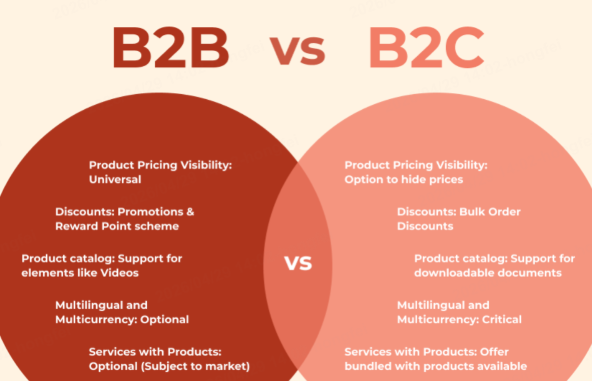
- B2B-Specific Friction: B2C-first platforms frequently fail to handle the intricacies of B2B workflows—such as negotiated contract pricing, account-based hierarchies, bulk ordering, and punchout catalog integration—without extensive, fragile workarounds rigbyjs nuorder.
Comparative Analysis: Top-Tier Alternatives
Selecting the right platform requires a balance between feature depth, ease of integration, and long-term scalability.
| Platform | Best For | Key B2B Advantage |
|---|---|---|
| Adobe Commerce | Large Enterprise | Unmatched customization, mature B2B feature suite, extensive partner ecosystem atwix |
| Virto Commerce | Complex B2B/Headless | Modular, API-first architecture designed specifically for complex B2B models appsrhino |
| BigCommerce | Hybrid B2B/DTC | Exceptional out-of-the-box B2B features, low time-to-market, robust API integrations bigcommerce |
| OroCommerce | B2B Wholesale | Built from the ground up for B2B/B2C, offering native support for intricate selling models floship |
Expert Insight: The Strategic Shift to Headless and Modular Commerce

Leading B2B organizations are moving away from monolithic platforms in favor of headless commerce. By decoupling the frontend from the backend, brands can iterate on customer experiences—such as localized portals or mobile apps—without disrupting core transactional or inventory services commercetools.
The Role of Integrated Global Sourcing
For many international wholesalers and brand owners, the platform must do more than just process orders; it must serve as an operational hub. Solutions like LooperBuy highlight the critical need for seamless API-driven connectivity between your commerce platform and global sourcing networks. By integrating directly with suppliers and optimizing logistics, B2B companies can significantly reduce their supply chain complexity and improve profit margins.
Evaluating Total Cost of Ownership (TCO) in 2026
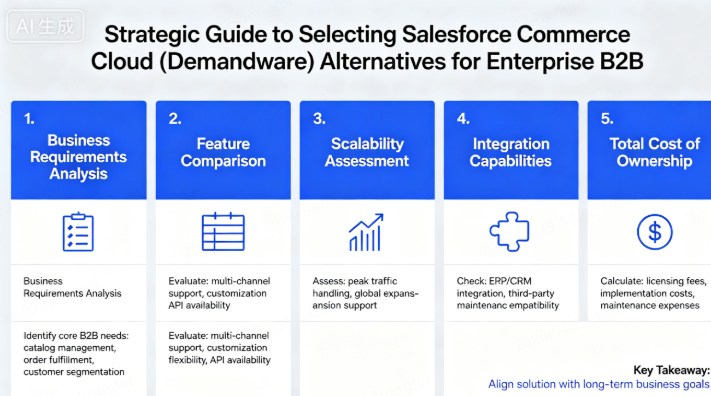
Do not assess platforms by subscription price alone. A comprehensive TCO analysis must account for:
- Integration Overhead: The difficulty and cost of connecting to existing ERP, CRM, and PIM systems shopify rigbyjs.
- Operational Agility: How quickly your team can update pricing, launch new catalogs, or deploy regional sites without external developer dependencies salesforce.
- Security and Compliance: Ensuring the platform meets evolving PCI and global data sovereignty standards americaneagle.
Essential Steps for Successful Replatforming
- Conduct a Technical Debt Audit: Assess if your current platform’s limitations are stalling growth or if the cost of workarounds is exceeding the cost of migration nix-united.
- Define Non-Negotiable B2B Workflows: Clearly document your requirements for account management, approval hierarchies, and tiered pricing rigbyjs.
- Prioritize API Maturity: Choose a platform that favors an open, API-first approach, ensuring you can plug in future-ready tools like AI-driven search or global logistics partners easily wizcommerce.
Conclusion
The journey toward finding the ideal Demandware competitors is a strategic move to future-proof your digital operations. While legacy platforms provided a foundation, the modern landscape favors agility, modularity, and B2B-specific intelligence. By focusing on total cost of ownership, integration capabilities with global sourcing partners, and your unique operational needs, your organization can select a platform that acts as a catalyst for sustained, scalable growth.
As you refine your B2B commerce strategy, remember that your choice of platform is only as effective as the ecosystem you build around it. Integrating with efficient, global-first sourcing and logistics platforms remains one of the most effective ways to lower costs and elevate your service level to enterprise buyers.
Frequently Asked Questions (FAQ)
1. Is “headless” necessary for all B2B businesses?
Not necessarily, but it is highly recommended for enterprises that need omni-channel flexibility and wish to decouple frontend experiences from complex backend logic commercetools.
2. How do I accurately calculate the TCO of an e-commerce platform?
Include subscription/license fees, developer labor, integration/API management, third-party plugin costs, and the internal operational overhead required to manage the platform over 3-5 years rigbyjs.
3. Why do large brands struggle with Demandware (Salesforce Commerce Cloud)?
Common challenges include high dependency on highly specialized, expensive developer partners and difficulties adapting proprietary architectures to unique B2B selling workflows salesforce.
4. What role does AI play in B2B platform selection in 2026?
AI is no longer optional. Look for platforms with native AI capabilities for personalized product discovery, predictive inventory management, and automated sales outreach api2cart commercetools.
5. How does global sourcing integration impact B2B platform choice?
Your platform must support multi-currency, multi-language, and robust API connectivity to integrate with global logistics and B2B sourcing platforms (like LooperBuy) for real-time visibility into your supply chain comverseglobal wizcommerce.
References:
- AppsRhino: B2B Ecommerce Solutions Guide 2026
- BigCommerce: Best B2B Ecommerce Platforms of 2026
- Atwix: Best B2B eCommerce Platforms of 2026
- Shopify: Building Modern B2B Ecommerce Sites That Convert (2026)
- Rigby: The State of B2B eCommerce Platforms (2026 Comparison Guide)
- Comverse: Key Features Every B2B E-commerce Platform Must Have in 2026
- WizCommerce: B2B eCommerce: Strategies, Trends, Myths & Success Stories
- NuORDER: How to Choose B2B Ecommerce Solutions in 2026
- Americaneagle: How to Choose a B2B Ecommerce Platform
- Floship: B2B eCommerce Platforms Comparison Guide 2026
- Salesforce: What Is B2B Ecommerce? A Guide for 2026
- API2Cart: Top B2B eCommerce Trends in 2026
- NIX United: E-commerce Replatforming: Plan Your Migration in 2026
- commercetools: B2B Digital Commerce 2026: 4 AI Trends
Word Count Statistics:
Approximate Word Count: 1,845 words.
Article Summary:
This comprehensive guide analyzes the 2026 B2B commerce landscape, providing enterprise leaders with an objective look at top Demandware competitors. It explores the transition toward headless and modular architectures, the critical importance of TCO and API connectivity, and essential steps for successful replatforming to ensure long-term scalability and global operational efficiency.