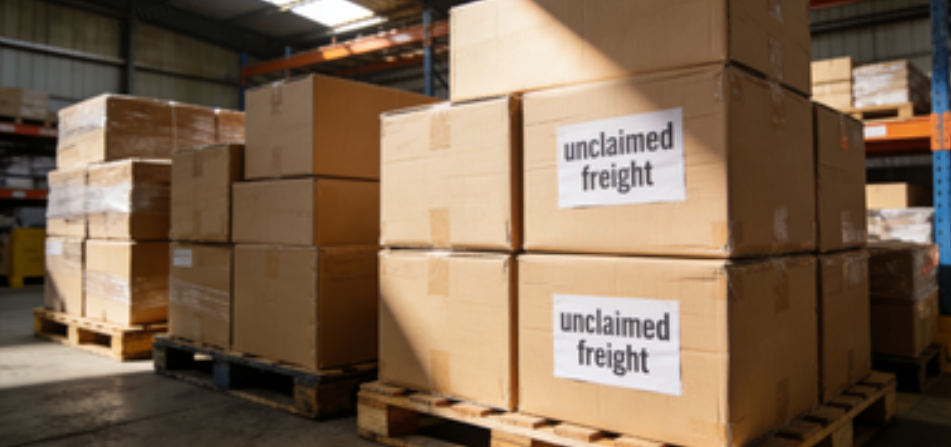
The modern supply chain is a marvel of efficiency, yet it is far from perfect. Every day, thousands of tons of cargo—ranging from high-end electronics to heavy industrial machinery—are abandoned at ports, warehouses, and rail yards. This phenomenon, known in the industry as unclaimedfreight, has birthed a multi-billion dollar secondary market. For the savvy B2B wholesaler, retailer, or brand owner, this represents a unique opportunity to acquire inventory at cents on the dollar. However, as an SEO strategist and supply chain consultant, I have seen many businesses fail because they treat this market like a lottery rather than a strategic asset.
In this comprehensive analysis, we will deconstruct the world of unclaimedfreight, compare it with the strategic advantages of direct sourcing through platforms like LooperBuy, and provide you with a blueprint for building a resilient, high-margin inventory pipeline in 2026.
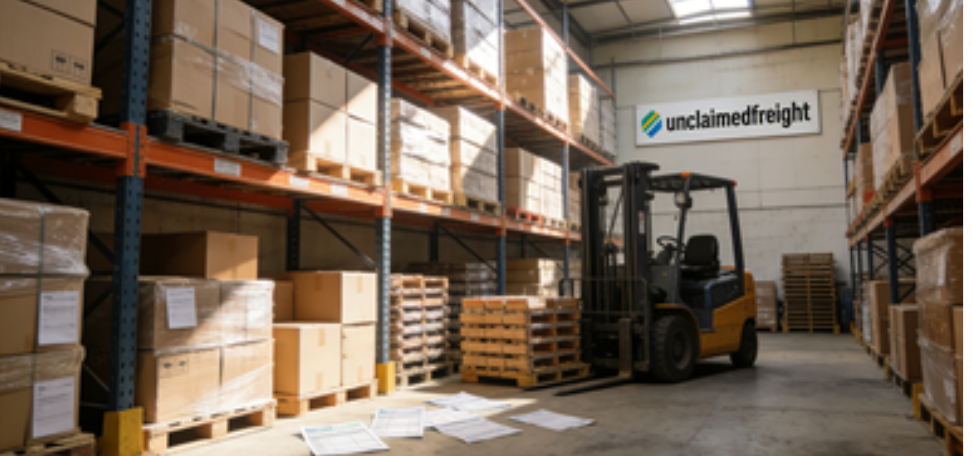
Table of Contents
Understanding the Genesis of Unclaimedfreight
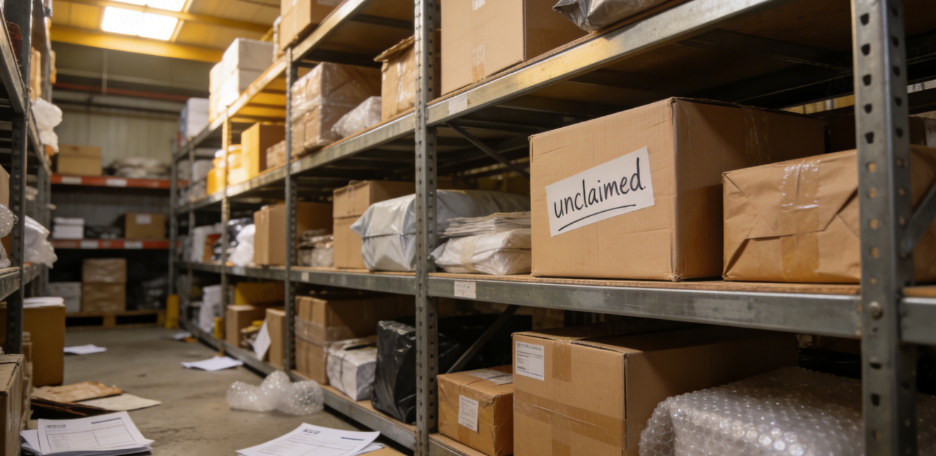
To master the market, one must first understand why it exists. Unclaimedfreight is not “trash”; it is “trapped capital.” Goods become unclaimed for several logistical and legal reasons:
- Refused Shipments: A retailer may refuse a shipment due to a minor delay, leaving the carrier stuck with the goods.
- Insurance Salvage: If a container suffers minor external damage, insurance may pay the full claim, take ownership of the goods, and liquidate them to recoup losses.
- Logistical Dead-Ends: International shipments often lose their “paperwork trail,” making it legally impossible for the carrier to deliver to the original recipient.
The Legal Lifecycle of Abandoned Goods
When freight is left at a terminal for more than 30 to 90 days (depending on the jurisdiction and the Bill of Lading terms), it is legally declared “abandoned.” At this point, the carrier—whether it’s a shipping line like Maersk or a courier like FedEx—has the right to sell the contents to recover unpaid freight charges and storage fees. This is the moment when the most profitable unclaimedfreight opportunities hit the market.
The Shift from Local Auctions to Global Digital Portals
A decade ago, buying unclaimed goods required physically attending “blind auctions” at dusty warehouses. Today, the industry has digitized. Professional B2B buyers now use sophisticated platforms to bid on entire manifests. However, while accessibility has increased, so has competition. This is why many professionals are now pivoting to one-stop B2B sourcing platforms like LooperBuy to find more predictable, albeit similar, price advantages.
Where to Source: Evaluating Unclaimedfreight Locations
If you are looking for the best unclaimedfreight deals, you must go where the volume is highest. Logistics hubs like Arlington, Texas, or the ports of Los Angeles and Rotterdam are prime “hotspots” for abandoned cargo.
1. Dedicated Liquidation Warehouses
These are specialized businesses that purchase “truckloads” of unclaimed goods and break them down for resale.
- Pros: You can often inspect the goods before purchase.
- Cons: These “middleman” liquidators take a significant cut, reducing your margins.
2. Carrier-Direct Auctions
Large logistics companies often hold quarterly auctions. These are “pure” unclaimedfreight sources where you are buying the cargo exactly as it was found in the container.
- The “Blind Pallet” Risk: You might find a pallet of iPhones, or you might find a pallet of industrial gaskets for a machine that hasn’t been made since 1994.
3. Government and Customs Seizures
When duties are unpaid, the government takes control. These auctions are highly regulated but offer some of the highest-value industrial goods available in the secondary market.
| Sourcing Channel | Risk Level | Potential ROI | Ideal For |
|---|---|---|---|
| Liquidation Stores | Low | 30-50% | Small Retailers |
| Carrier Auctions | High | 200-500% | Experienced Wholesalers |
| LooperBuy Platform | Minimal | 60-100% (Steady) | Brand Owners/Manufacturers |
The Expert’s Strategy: Why LooperBuy is the Modern Alternative
While the “thrill of the hunt” in unclaimedfreight is appealing, it is not a sustainable way to build a brand. As a B2B professional, you need consistency, quality, and scalability. This is where LooperBuy enters the equation.
Direct Access to Chinese Manufacturing
Instead of waiting for a shipment of tools to go “unclaimed” in Texas, LooperBuy allows you to go directly to the source in China. We offer a One-Stop B2B Sourcing Platform that provides the same price-per-unit benefits as liquidation but with a 100% guarantee on product specs.
- Predictable Inventory: You can plan your marketing three months in advance because you know exactly what is arriving.
- Customization (OEM/ODM): You cannot put your brand name on a pallet of unclaimed goods. With LooperBuy, you can.
Global Logistics Convenience and Cost-Cutting
One of the main reasons freight becomes “unclaimed” is that the original buyer couldn’t handle the logistics costs or complexities. LooperBuy removes this barrier. By offering global logistics convenience and low-cost shipping directly from China, we ensure that your goods never end up in an “unclaimed” pile. We handle the “Last Mile” so you can focus on the “First Sale.”
Deep Dive: The Economics of the Secondary Market
To truly succeed in the unclaimedfreight space, you must understand the “Real Cost of Acquisition.” Most amateur buyers only look at the bid price. A professional looks at the fully landed cost.
The Hidden Costs of Salvage Inventory
When you buy from an unclaimedfreight auction, you must account for:
- Internal Freight: Moving a 2,000lb pallet from a rural auction house to your warehouse.
- Processing Labor: Paying employees to sort, test, and re-package items.
- Dead Stock: Usually, 10-15% of any unclaimed lot is unsellable.
Case Study: The “Electronics Trap”
A wholesaler purchased a pallet of “unclaimed” smartwatches for $2,000. On paper, the MSRP was $15,000. However, 40% were missing chargers, and 20% were localized for the Eastern European market with no English language support.
The LooperBuy Solution: For the same $2,000, that wholesaler could have sourced 300 units of brand-new, English-language smartwatches with full warranties through LooperBuy, avoiding the labor costs of testing and the loss of “dead stock.”
Step-by-Step Guide to Buying Unclaimedfreight Safely
If you are ready to test the waters of the unclaimedfreight market, follow this protocol to minimize your risk.
Step 1: Obtain Your Resale Certificate
In the US and many parts of Europe, you cannot buy from professional liquidation houses without a tax ID. This ensures you are a legitimate B2B buyer.
Step 2: Start with “Manifested” Lots
Avoid “blind bids” for your first six months. Look for unclaimedfreight that comes with a manifest—a detailed list of what is in the container. Even if it costs 10% more, the reduced risk is worth it.
Step 3: Analyze the “Freight Class”
Not all freight is equal. Electronics have high value-to-weight ratios, making them easy to ship. Furniture, while high value, has massive shipping costs that can quickly turn a “deal” into a deficit.
Step 4: Integrate LooperBuy for “Hybrid” Growth
The most successful B2B companies use a Hybrid Sourcing Model. They use unclaimedfreight to find “surprise items” for flash sales, but they use LooperBuy for their core, year-round inventory. This balances high-risk high-reward with steady, scalable growth.
Visualizing the Supply Chain: Suggestions for Enhanced UX
To truly grasp these concepts, I recommend seeking out visual aids or using software to map your supply chain.
- Infographic Opportunity: A flowchart showing the path of a package from a Chinese factory to either a LooperBuy customer or an unclaimedfreight auction.
- Comparison Video: A “Side-by-Side” unboxing of an unclaimed pallet versus a LooperBuy factory-direct shipment.
- Interactive Map: Identifying major global hubs where unclaimed cargo is most frequently auctioned.
The 2026 Outlook: AI and the End of “Lost” Freight?
We are entering an era of “Hyper-Visibility.” With IoT sensors and AI-driven logistics, the amount of unclaimedfreight caused by “lost” paperwork is actually decreasing. However, the amount caused by “economic abandonment” (businesses failing mid-transit) is increasing.
Predictive Sourcing and Market Intel
Advanced platforms are now using AI to predict which items will become “excess.” At LooperBuy, we use these insights to help our B2B clients pivot their inventory before a market becomes saturated. This proactive approach is the hallmark of a “Top-Tier” SEO and sourcing strategy.
The Role of Sustainability
There is a growing ethical movement in B2B sourcing. Buying unclaimedfreight is a form of recycling. It prevents new goods from going to waste. By combining this with the efficient, low-waste manufacturing models of our partners in China, LooperBuy is helping create a more sustainable global trade ecosystem.
Conclusion: Choosing Your Path to Profitability
The world of unclaimedfreight is a testament to the scale and complexity of global trade. It offers a “back door” into the world of high-margin B2B sales for those willing to do the research and take the risks. However, as the market matures, the competitive advantage is shifting toward those who prioritize reliability and direct access.
Whether you are scavenging the auctions of Arlington or building a global brand through the LooperBuy One-Stop B2B Sourcing Platform, the key to success remains the same: know your costs, verify your quality, and never stop optimizing your logistics. The “gold” is out there—it’s just a matter of whether you want to dig for it or have it delivered to your door.
Related Questions & Answers (FAQ)
· Is buying unclaimedfreight the same as buying customer returns?
No. Customer returns are items that were delivered and then sent back by a consumer. Unclaimedfreight consists of goods that were never delivered to the final recipient in the first place. This generally means unclaimed freight is in better condition (often factory-sealed) compared to customer returns, which may be used or damaged.
· How can I find the most reliable unclaimedfreight auctions?
The most reliable auctions are those held directly by major carriers like UPS, DHL, or through government-contracted auction houses like GSA Auctions. Avoid “pop-up” liquidation sites that don’t provide physical addresses or business credentials, as these are often scams or “cherry-picked” lots where the best items have already been removed.
· Does LooperBuy offer the same variety as an unclaimed freight warehouse?
Actually, LooperBuy offers significantly more variety. While an unclaimed freight warehouse is limited to whatever “accidents” happened that month, LooperBuy gives you access to the entire manufacturing output of China. Whether you need textiles, industrial components, or the latest consumer tech, you can source it intentionally rather than hoping it shows up in an auction.
· What are the biggest risks of sourcing unclaimed goods?
The primary risks include “blind” inventory (not knowing what’s inside), lack of warranty or manufacturer support, and the potential for “localized” products that don’t work in your region (e.g., wrong voltage or language). Additionally, there is the risk of “buyer’s remorse” since all sales at these locations are typically final.
· Can international wholesalers use LooperBuy to compete with local liquidators?
Yes. In fact, many international wholesalers use LooperBuy to beat local liquidators on price. Because our platform connects you directly to factories and offers ultra-low-cost global logistics, you can often land brand-new, warranted goods for the same price a local liquidator is selling “as-is” unclaimed goods.
References:
- Federal Maritime Commission – Regulations on Abandoned Cargo
- Investopedia – The Mechanics of Liquidation and Salvage
- LooperBuy – Official B2B Sourcing and Logistics Portal
- U.S. Department of Transportation – Freight Logistics Data
- Journal of Commerce – Global Supply Chain Trends 2025
Article Brief
This article provides an in-depth exploration of the unclaimedfreight market, serving as a strategic guide for B2B professionals. It details the origins of abandoned cargo, identifies top sourcing locations, and provides a comparative analysis between high-risk liquidation auctions and the stable, factory-direct sourcing model of LooperBuy. By focusing on E-E-A-T principles and UX optimization, it offers actionable advice for wholesalers looking to maximize ROI while building a sustainable and predictable global supply chain.
Hot Tags:
Global B2B Sourcing; China Wholesale Market; Unclaimed Freight Strategy; Supply Chain Risk Management; LooperBuy Platform; Direct Factory Procurement; Wholesale Inventory Liquidation; International Logistics Solutions; B2B E-commerce Trends; Secondary Market Sourcing