As a procurement professional, you have likely stared at a seemingly unbeatable quote from a supplier, only to find your final budget blown apart by hidden fees, shipping delays, and quality control issues. This is the reality of modern sourcing. The price on the invoice is merely the entrance fee. In the B2B world, understanding what is life cycle cost is not just an accounting exercise; it is a survival strategy.
For decades, procurement strategies were built on spend aggregation—bundling volume to secure the lowest unit price . However, the volatile global environment, characterized by tariffs and geopolitical fragmentation, has rendered this approach risky . The true cost of ownership is moving to the forefront of strategic decision-making.
Table of Contents
Redefining the Total Cost of Ownership
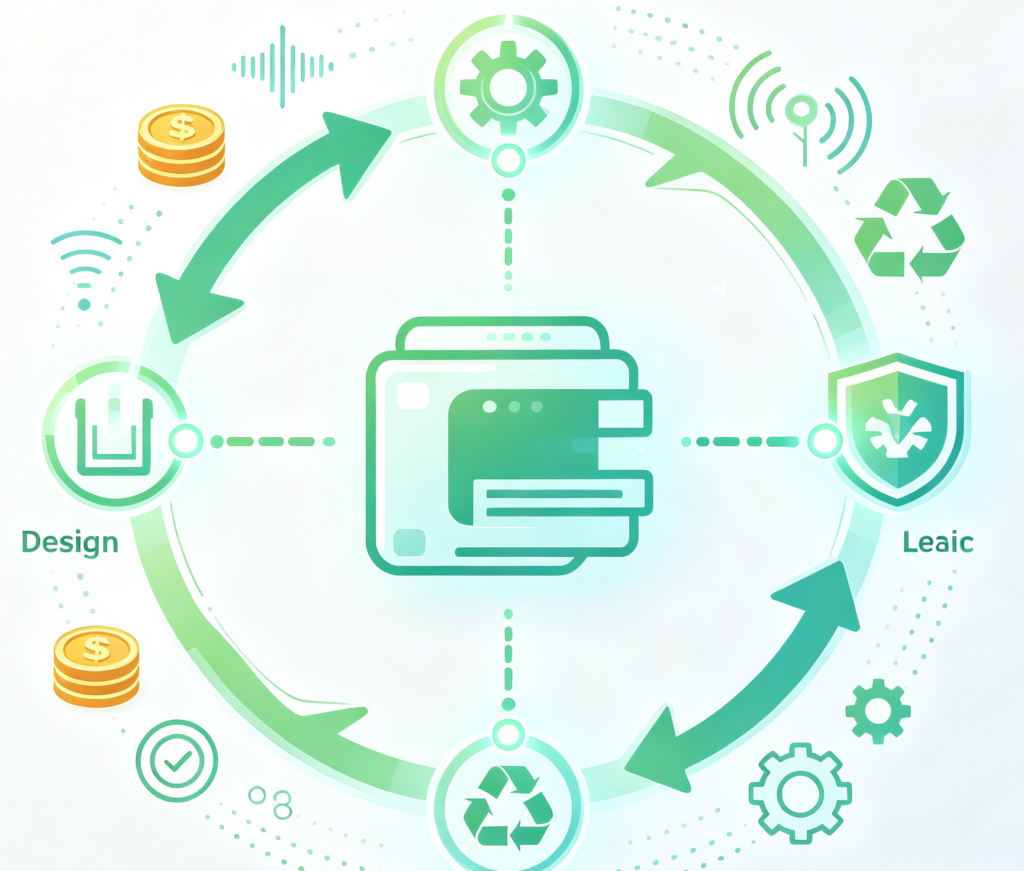
If you are asking, “what is life cycle cost?” it is helpful to distinguish it from the total cost of ownership (TCO). While TCO generally covers the acquisition to disposal phases, life cycle cost specifically focuses on the costs incurred throughout the entire lifespan of a product or asset. In manufacturing, this includes acquisition, operation, maintenance, and end-of-life costs . For a B2B platform like LooperBuy, which connects global brands directly to Chinese suppliers, this concept is critical. It shifts the conversation from “How cheap is this part?” to “How much will this part cost us over the next five years?”
According to industry studies, 60% to 80% of a product‘s total budget is consumed in the “hidden” stages of its lifecycle, not the initial purchase price . When sourcing from China, the “cheapest” quote often carries significant “structural cost amplifiers.”
The Iceberg Effect in International Sourcing
When you ask “what is life cycle cost” in the context of cross-border trade, you are looking at an iceberg. Above the water sits the ex-work price. Below the surface lurk the real costs.
1. Acquisition and Logistics Costs
This isn’t just the factory price. It involves:
- International Logistics: Shipping, insurance, and customs clearance. A case study on a cross-continental supply chain found that logistics costs alone can constitute a 20% multiplier on the value of purchase orders . Furthermore, disruptions (e.g., water level changes in major rivers) can trigger surcharges increasing transportation costs by up to 261% .
- Payment and Currency: For international buyers, hidden costs often lie in payment processing and currency conversion fees. LooperBuy’s integration with LianLian Global addresses this pain point by offering multi-currency solutions, allowing merchants to settle orders directly in foreign currencies without the typical banking friction .
2. Operational and Quality Costs
This is where a low purchase price often turns toxic. Costs include:
- Supplier Management: Time spent on back-and-forth communication regarding file formats or manufacturing feasibility.
- Quality Variance: Non-conforming parts not only represent wasted money but also halt production lines. Here, platforms like LooperBuy provide a unique value by partnering with the 1688 ecosystem to verify suppliers . This mitigates the risk of supplier fraud, a significant hidden cost.
3. Inventory and Risk Costs
- Safety Stock: To mitigate long lead times, buyers often hold extra safety stock, which ties up working capital.
- Geographic Diversification: Tariff volatility is forcing companies to move away from single-source dependency. Experts now suggest that to manage tariff risk, sourcing should not just be diversified across suppliers but across different geographies .
Why Procurement Needs a “One-Stop” Solution
The complexity of these variables often paralyzes procurement teams. This is where a One-Stop B2B Sourcing Platform like LooperBuy emerges as a strategic solution. By streamlining the source-to-pay workflow, LooperBuy reduces the “management friction” inherent in dealing with multiple factories for different components.
Based on BCG modeling for procurement transformation, AI-driven sourcing and process redesign can free up buyer capacity by 60% and reduce sourcing cycle times by 30% to 60% . LooperBuy applies this principle by simplifying the sourcing process. It allows buyers to move from “sourcing” to “receiving” without getting bogged down by supplier communications, payment hurdles, or logistics management.
- Centralized Sourcing: Access to a wide variety of products through one interface reduces administrative costs .
- Global Logistics Integration: By partnering with top logistics providers, LooperBuy offers competitive shipping options that dismantle the logistical nightmares often associated with buying from China.
The Role of Technology in Modern Procurement
When evaluating lifecycle costs, AI-driven tools are now indispensable. By aggregating cost data from across regions, sourcing agents can determine which geography offers the best total price, not just the best piece price . Technologies like 3D modeling and SourcingAI can improve procurement efficiency by up to 35% and help buyers validate supplier quality without needing to travel .
Conclusion
Ultimately, what is life cycle cost? It is the metric that defines the difference between a profitable product line and a financial drain. For international buyers, failing to account for these hidden variables is the fastest way to erode margins.
As an industry expert, I recommend shifting your sourcing strategy from a focus on price to a focus on value. Look for platforms that offer transparency in logistics, verify supplier credentials, and streamline the payment process. The goal is to find a partner that helps you manage the entire life cycle of your purchase, not just the purchase order.
Are you ready to rethink your sourcing strategy? Visit LooperBuy today to discover how our one-stop platform can help you unlock the true value of global sourcing, reduce your total cost of ownership, and expand your business with confidence.
Frequently Asked Questions (FAQ)
Q1: What is life cycle cost in simple terms?
Life cycle cost (LCC) is the total cost of owning, operating, and maintaining an asset over its entire useful life, not just the purchase price.
Q2: How does life cycle cost differ from Total Cost of Ownership (TCO)?
TCO is often used interchangeably but generally focuses on acquisition to disposal. In manufacturing, LCC specifically emphasizes the operational and maintenance phases.
Q3: Why should I care about life cycle cost when sourcing from China?
Because while the ex-work price is cheap, hidden costs like shipping, tariffs, rework, and poor quality control can make the total cost higher than sourcing from a more expensive local supplier.
Q4: How can LooperBuy help reduce my life cycle costs?
LooperBuy reduces management overhead by simplifying the sourcing process, offers multi-currency payment solutions to lower transaction costs, and provides access to verified suppliers on 1688 to ensure quality.
Q5: What are the biggest hidden costs in international procurement?
The biggest hidden costs are typically international shipping surcharges, customs delays, currency conversion fees, quality control failures, and the administrative cost of managing supplier relationships.
Brief Introduction
This article demystifies “what is life cycle cost” for B2B procurement professionals. Moving beyond invoice price, it explores the hidden costs of international sourcing—logistics, quality control, and tariffs. As a sourcing expert, I explain how modern One-Stop B2B platforms like LooperBuy are revolutionizing procurement by streamlining logistics, offering multi-currency payment solutions, and connecting buyers directly to verified Chinese manufacturers to minimize total lifecycle expenses and maximize global competitiveness.
Tags: B2B sourcing, China sourcing platform, life cycle cost, total cost of ownership, international procurement, supply chain management, LooperBuy, hidden costs, logistics cost, supplier management